
5 Steps to Buy Sustainable Coffee That Names the Farm
Sustainable coffee is coffee grown and traded in ways that protect soil, water, and forests while paying farmers fairly enough to stay in business. The single best buying move is to seek out roasters who can name the farm or cooperative behind the beans and who hold real, long-term sourcing relationships, not just a logo on the bag. Look for traceability, credible certifications like Fairtrade or Rainforest Alliance, and brands such as East View Coffee Company that publish who grows their coffee.
TL;DR:
- Sustainable coffee requires long-term sourcing from named farms or cooperatives, with traceability verifying environmental, social, and economic practices.
- Farm practices like regenerative agriculture, water-conscious processing, and shade-grown techniques are key indicators of verifiable sustainability.
- No single certification guarantees comprehensive sustainability; pairing certifications with direct sourcing and transparency offers a fuller assurance.
- Buyers should prioritize roasters with established farm relationships, clear origin naming, and packaging that reflects eco-friendly practices.
- Long-term relationships and paying a premium have a greater positive impact than certifications alone, especially when combined with traceability efforts.
Table of Contents
- What Does Sustainable Coffee Actually Mean?
- Which Farming and Processing Practices Actually Matter?
- What Do Coffee Certifications Actually Guarantee?
- How Do You Buy Sustainable Coffee Step by Step?
- Which Sustainable Coffee Options Are Worth Buying?
- How East View Coffee Puts These Practices Into Action
- Sustainability Is a Journey, Not a Checkbox
- Ready to Buy Coffee That Backs Its Own Claims?
- Where to Learn More About Sustainable Coffee
- Sources
- FAQ
What Does Sustainable Coffee Actually Mean?
Sustainable coffee rests on three pillars, and dropping any one of them breaks the whole idea. The environmental pillar covers soil health, water use, and biodiversity on and around the farm. The social pillar covers whether farmers and pickers earn enough to live on and whether their communities have stable schools, health care, and infrastructure. The economic pillar covers whether the whole supply chain, from farmer to roaster to retailer, can hold together over years rather than collapsing when prices dip.
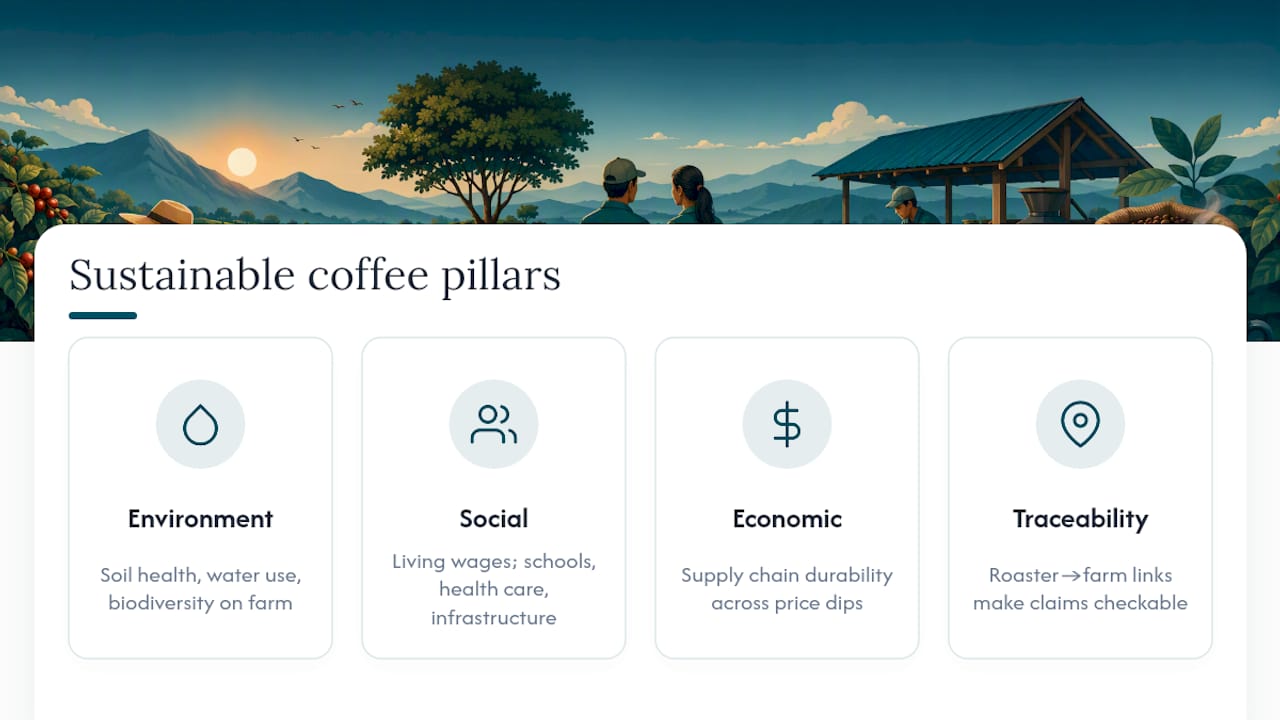
Most of coffee’s environmental footprint happens at origin, in the fields and processing stations, not in the roasting facility or the truck that delivers the bag. That’s why groups like World Coffee Research focus heavily on breeding hardier plant varieties and improving farm-level agronomy rather than downstream fixes. It’s also why a bag that only advertises “recyclable packaging” is answering the smaller half of the question.
Traceability ties these pillars together. When a roaster can point to a specific farm, cooperative, or region and describe the relationship behind it, sustainability claims become checkable instead of decorative.
Which Farming and Processing Practices Actually Matter?
Credible sustainable coffee shows up in specific, verifiable farm practices, not vague mission statements. The strongest signals include:
- Regenerative agriculture: composting, cover crops, and shade agroforestry that build soil carbon and reduce erosion.
- Water-conscious processing: recycling systems or dry-processing methods that cut the heavy water use of traditional wet milling.
- Forest protection: shade-grown canopies and no-deforestation sourcing, which matter because rising demand and climate pressure make coffee-driven deforestation a real risk, according to Conservation International.
- Farmer-facing programs: price premiums above commodity rates, multi-year contracts, agronomy training, and gender-equity initiatives that direct income specifically to women producers.
Agroforestry deserves a closer look because it does double duty. Planting shade trees alongside coffee protects biodiversity, and organizations like Trees argue it also builds long-term resilience against drought and heat, both increasingly common in coffee-growing regions.
Pro Tip: Ask a roaster one direct question: “Do you know the name of the farm or cooperative this coffee came from?” A vague answer about “sustainably sourced beans” without a name attached is a red flag, no matter how green the packaging looks.
What Do Coffee Certifications Actually Guarantee?
Labels help, but each one verifies a different, narrower slice of “sustainable” than most shoppers assume.
- Fairtrade guarantees a minimum price floor and a social premium paid to the cooperative, which Fairtrade’s own buying guide explains is meant to fund community projects. It does not, by itself, verify shade cover or biodiversity practices.
- Rainforest Alliance (built on the Sustainable Agriculture Standard) sets farm and landscape requirements around deforestation, water, and worker conditions, with less emphasis on guaranteed pricing.
- USDA Organic certifies growing practices free of synthetic pesticides and fertilizers. It says nothing about farmer pay or labor conditions, a gap worth remembering.
- Bird Friendly (Smithsonian) is narrower still, verifying shade-canopy structure specifically for migratory bird habitat, useful mainly for biodiversity-focused shoppers.
No single seal covers social, environmental, and economic sustainability at once. Pairing a certification with a roaster’s own traceability documentation, the kind covered in East View Coffee Company’s guide to Rainforest Alliance versus Fair Trade, gives a fuller picture than the sticker alone.
How Do You Buy Sustainable Coffee Step by Step?
Use this sequence at the shelf or the checkout page, in order:
- Scan for a named origin. A specific farm, region, or cooperative beats “sustainably grown” every time.
- Check the certification against what it actually covers. A Fairtrade seal tells you about pricing; it doesn’t tell you about shade cover.
- Favor roasters with direct or long-term sourcing relationships. Multi-year buying commitments protect farmers from price crashes far better than a one-time certified purchase.
- Inspect the packaging. Look for compostable or recyclable materials and any specific claim about carbon-neutral shipping, detailed in East View Coffee Company’s guide to eco-friendly packaging, rather than a generic “eco” icon.
- Consider a subscription or a price premium. Recurring orders give farmers predictable income instead of one-off demand spikes.
Coffee is the top beverage choice among American consumers, according to the National Coffee Association, which means household buying decisions genuinely move volume at scale. Since the deepest environmental and social impact sits at the farm, not the roastery, that buying power matters most when it’s aimed at origin-level practices.
Which Sustainable Coffee Options Are Worth Buying?
Once you’ve run the checklist, a few concrete options make it easy to act on it. Community Freshly Roasted Coffee works well as an everyday, approachable choice for shoppers who want a dependable cup while still backing farm-level sourcing commitments. Nocturne Decaf Freshly Roasted Coffee solves the real problem decaf drinkers face: most decaf options quietly drop sustainability sourcing altogether, and this one doesn’t. Catalyst Freshly Roasted Coffee comes specifically from women-owned farms, making it a direct pick for anyone prioritizing gender-equity sourcing over other factors.
Choosing among single origin, blends, or a subscription comes down to what you’re optimizing for:
- Single origin if traceability to one specific farm matters most to you.
- Blends if you want consistency in flavor while staying within a sustainably sourced range.
- A subscription if steady, predictable farmer income matters more than variety.
Whatever you choose, weigh traceability and sourcing partnerships heavier than packaging design or marketing copy.
How East View Coffee Puts These Practices Into Action
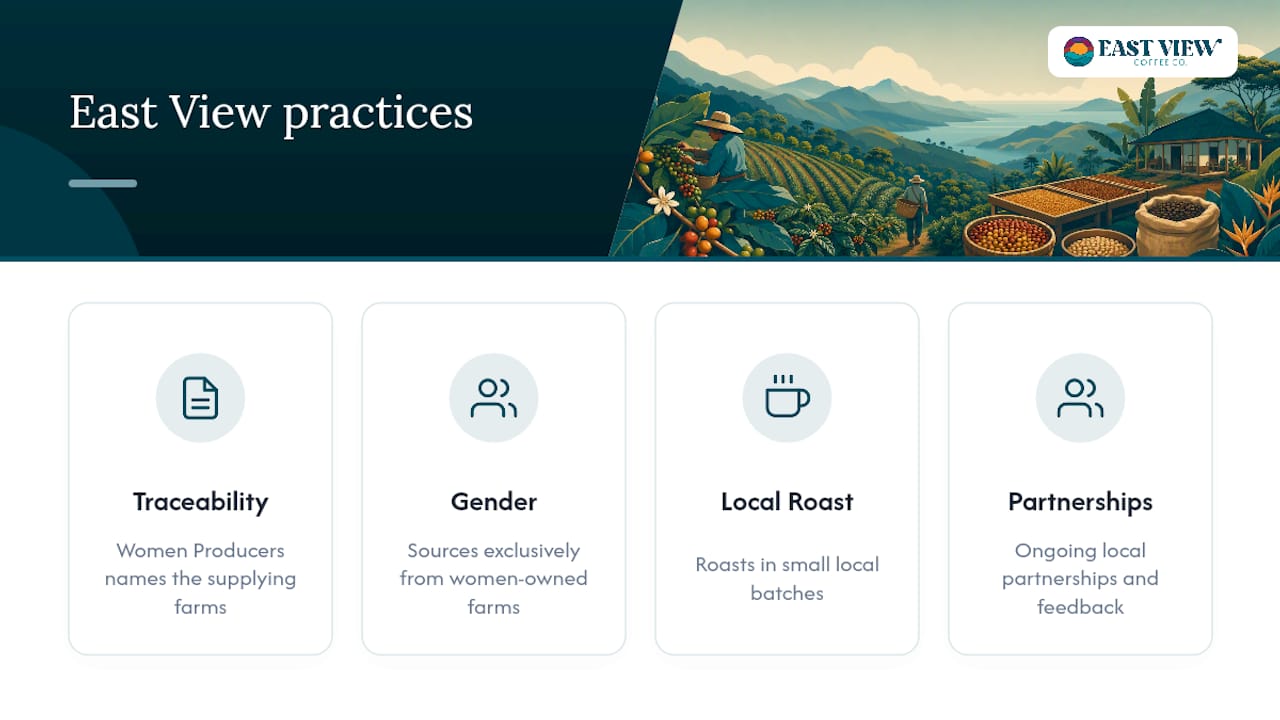
Some coffee roasters source exclusively from women-owned farms and roast in small batches locally, decisions that address traceability and gender-equity considerations. The Women Producers collection documents exactly whose farms supply the beans, turning “ethically sourced” from a slogan into a checkable claim. Local partnerships and customer feedback can indicate a company that treats farmer relationships as ongoing, not transactional. That approach lines up with the farm-to-cup sourcing model this guide recommends: name the farm, keep the relationship long-term, and let packaging and pricing reflect that commitment rather than just describe it.
Sustainability Is a Journey, Not a Checkbox
Certifications set a useful floor, but they freeze a moment in time. Long-term farm relationships and real transparency move with the farmer, year over year, which is why they’re the stronger signal. A subscription, a willingness to pay a premium, and a preference for traceable roasters do more for a farming community than any single certified bag ever will. If you remember one thing from this guide, make it the opening point: buy from roasters who can name the farm.
— Jenny
Ready to Buy Coffee That Backs Its Own Claims?
Some producers aim to offer traceable coffee that comes from named, women-owned farms and is roasted in small batches locally, rather than shipped in bulk from anonymous blends. That’s the concrete difference between reading a sustainability claim and being able to check one.
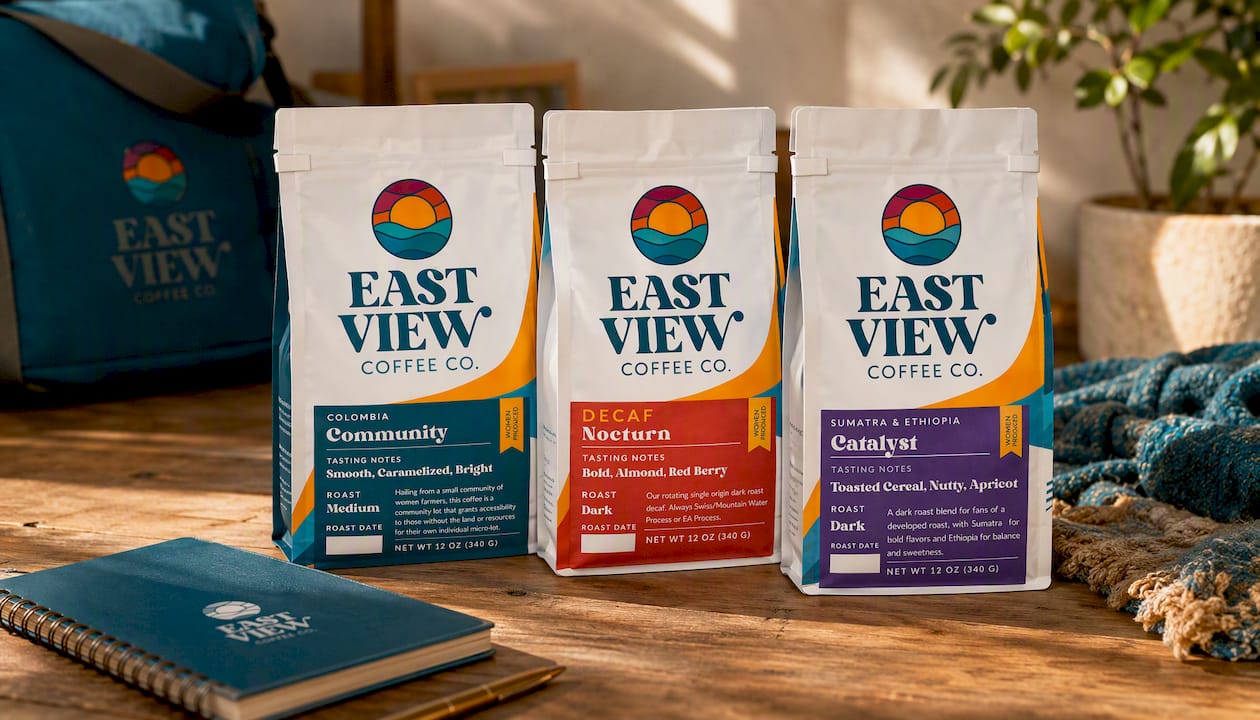
Start with Catalyst Freshly Roasted Coffee if the women-producer sourcing story matters most to you, or Community Freshly Roasted Coffee for an everyday cup that still backs the same farm partnerships. Decaf drinkers can get the same sourcing standard with Nocturne Decaf Freshly Roasted Coffee, and anyone who wants a lighter, brighter cup can browse the Light & Bright collection or the Dark & Bold lineup for a bolder profile. If steady, predictable farmer income is the priority, the Coffee Subscription turns a single purchase into ongoing support. Browse the full coffee collection and pick the option that matches where you landed on the checklist above.
Where to Learn More About Sustainable Coffee
For readers who want to go straight to primary sources, the Sustainable Coffee Challenge tracks sector-wide goals, World Coffee Research covers farm-level agricultural research, and the ILO documents labor standards across agricultural supply chains, coffee included. Fairtrade’s certification pages also lay out pricing and premium structures in more detail than any single article can.
Sources
- Homepage - Sustainable Coffee Challenge (en-US)
- How to Buy Ethical Coffee | Sustainable Coffee Brand Guide
- World Coffee Research
FAQ
Which Coffee Brand Is the Most Sustainable?
No single brand holds a universal title, since sustainability spans certifications, direct trade, and farmer pay, and brands vary in which they emphasize. Look for roasters that combine a recognized certification with named farm sourcing and long-term buying relationships, the same combination East View Coffee Company builds its women-owned-farm sourcing around.
What Is the Most Environmentally Friendly Way to Make Coffee?
Brewing methods matter less than sourcing decisions, since most of coffee’s environmental footprint occurs at the farm rather than in your kitchen. Choosing shade-grown, traceable beans and minimizing single-use pods or filters does more for the environment than switching brewing equipment.
Is Starbucks Coffee Sustainable?
Large chains often publish sustainability commitments and source a portion of their volume through certified or verified programs, but scale makes farm-by-farm traceability harder to guarantee across an entire menu. Shoppers wanting a more direct, checkable sourcing story typically look toward smaller roasters with named farm partnerships.
Which Coffee Chain Is the Most Ethical?
“Ethical” depends on which factor you weigh most: fair pay, certification coverage, or transparency about origin. Smaller, direct-trade roasters generally offer clearer answers to specific sourcing questions than large chains sourcing at national scale, simply because their supply chains involve fewer farms to track.
Do Certifications Alone Guarantee Sustainable Coffee?
No. Each certification, whether Fairtrade, Rainforest Alliance, or USDA Organic, verifies a specific slice of practice, such as pricing floors or pesticide use, but none covers every environmental and social dimension at once. Pairing a certification with roaster transparency and named-farm sourcing gives a far more complete picture than the seal alone.