
Farm to Cup Coffee: What It Really Means for Buyers
Farm to cup coffee means the beans in your bag can be traced to a specific farm or cooperative, with details on how the farmer was paid and how recently the coffee was roasted. That’s the whole definition. Everything else, the certifications, the QR codes, the photos of smiling farmers, is either evidence supporting that claim or marketing dressed up to look like it. Eastviewcoffee builds this into its model directly: coffee sourced from women-owned farms, roasted in small batches in Kenosha, Wisconsin, usually within days of shipping.
For a buyer, the practical payoff looks like this:
- Fresher coffee, because farm-to-cup roasters typically ship faster and print roast dates
- More money reaching the farmer, when payment terms are stated explicitly rather than implied
- A traceable story you can actually check, not just a label that sounds good
Key Takeaways
Farm-to-cup coffee delivers on its promise only when a roaster names the farm, states the payment terms, and prints a real roast date, not when it just uses the phrase.
| Point | Details |
|---|---|
| Definition matters | Farm-to-cup requires named farms, payment transparency, and roast-date freshness, not just a marketing phrase. |
| Traceability tech has limits | Blockchain and QR codes only work when paired with accurate data and real company commitment. |
| Verification has tiers | Storytelling and QR codes are low-cost; geolocation and forensic testing cost more and are less common among small roasters. |
| Check payment language first | Vague “ethically sourced” claims with no numbers or farm names are the clearest red flag. |
| Eastviewcoffee as an example | Sources from women-owned farms and roasts in small batches in Kenosha, Wisconsin, with published impact reporting. |
Table of Contents
- What Farm to Cup Actually Requires
- From Soil to Roast: Where Flavor and Fairness Get Made or Lost
- Why Farm-to-Cup Matters, and Where the Claims Get Shaky
- What Traceability Tech Can (and Can’t) Prove
- How to Shop for Real Farm-to-Cup Coffee
- The Gap Between Marketing and What Traceability Actually Delivers
- Where to Find Real Farm-to-Cup Coffee, Roasted This Week
- Sources
- FAQ
What Farm to Cup Actually Requires
A lot of coffee bags use the phrase loosely. Real farm-to-cup sourcing has five identifiable parts, and a roaster that can’t speak to most of them is probably using the term as decoration.
- A named farm or cooperative, not just a country or region
- Lot-level information, including harvest year and processing method
- Documented payment to producers, ideally with a stated premium above commodity or farmgate price
- Some traceability mechanism, whether that’s a QR code, a geolocated farm map, or a published sourcing report
- A visible roast date, since “farm-to-cup” loses meaning if the coffee sat in a warehouse for eight months
This is where the terminology gets confusing. Single-origin just means the beans came from one country or farm, with no claim about payment or relationship. Direct trade implies the roaster bought straight from the producer, skipping some middlemen, but the term has no legal definition, so anyone can use it. Certified coffee (Fair Trade, Organic, Rainforest Alliance) means a third party audited specific standards, which is real accountability but says nothing about freshness or roast quality. Farm-to-cup, done honestly, tries to combine traceability with freshness and fair payment. A credible roaster publishes farm names, harvest dates, and something about pricing, not just a flag icon and a country name.
From Soil to Roast: Where Flavor and Fairness Get Made or Lost
Coffee quality is decided long before it reaches a roaster’s warehouse, and every stage either adds value for the farmer or strips it away.
Altitude and soil set the ceiling for flavor. Coffee grown above 1,200 meters in mineral-rich volcanic soil develops more complex acidity and sugar content than lowland coffee, which is part of why single origin coffee from specific highland regions commands a premium. Variety matters too. Heirloom varieties like Bourbon or Typica tend to produce more nuanced cups than high-yield hybrids, though the hybrids are often easier for farmers to grow profitably.
Harvest practices come next. Hand-picking only ripe cherries, instead of stripping the branch, produces cleaner, sweeter coffee, but it’s slower and costs more in labor. This is one reason farmgate price coffee, the amount paid to the farmer at the point of sale, varies so widely: selective picking justifies a higher price, but only if the buyer actually pays for it.
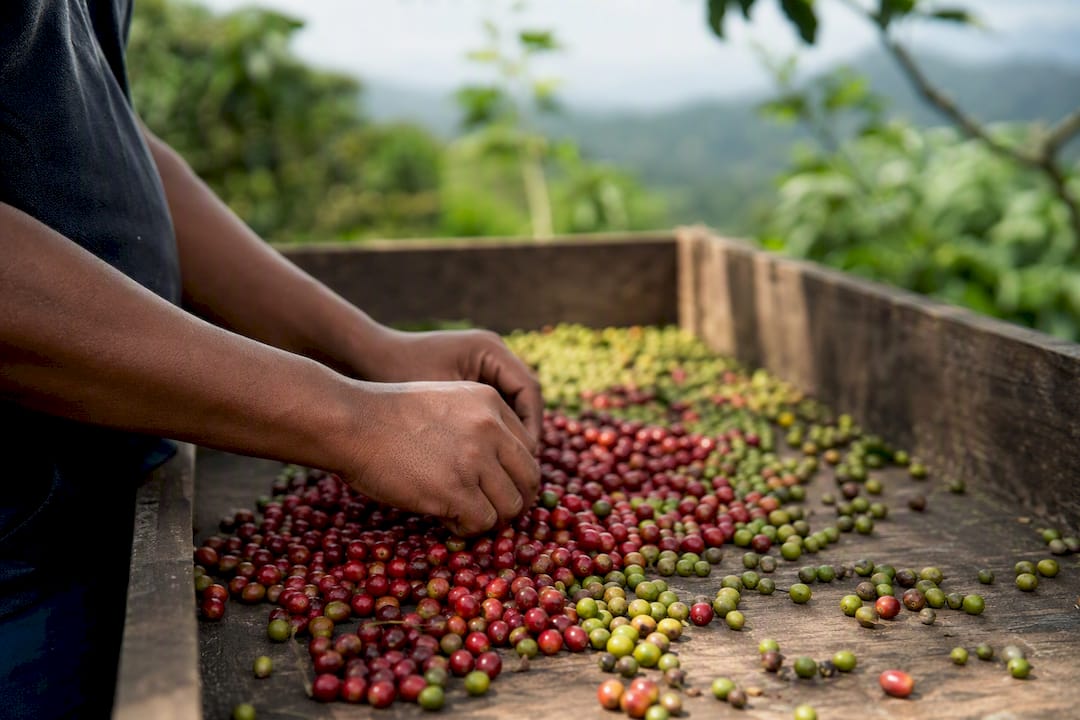
Processing method (washed, natural, or honey) shapes the cup as much as origin does. Washed coffee tends to taste cleaner and brighter; natural process coffee, dried with the fruit still on the bean, often turns out fruitier and heavier. None of this reaches your cup unless the milling, storage, and roasting that follow are handled with care.
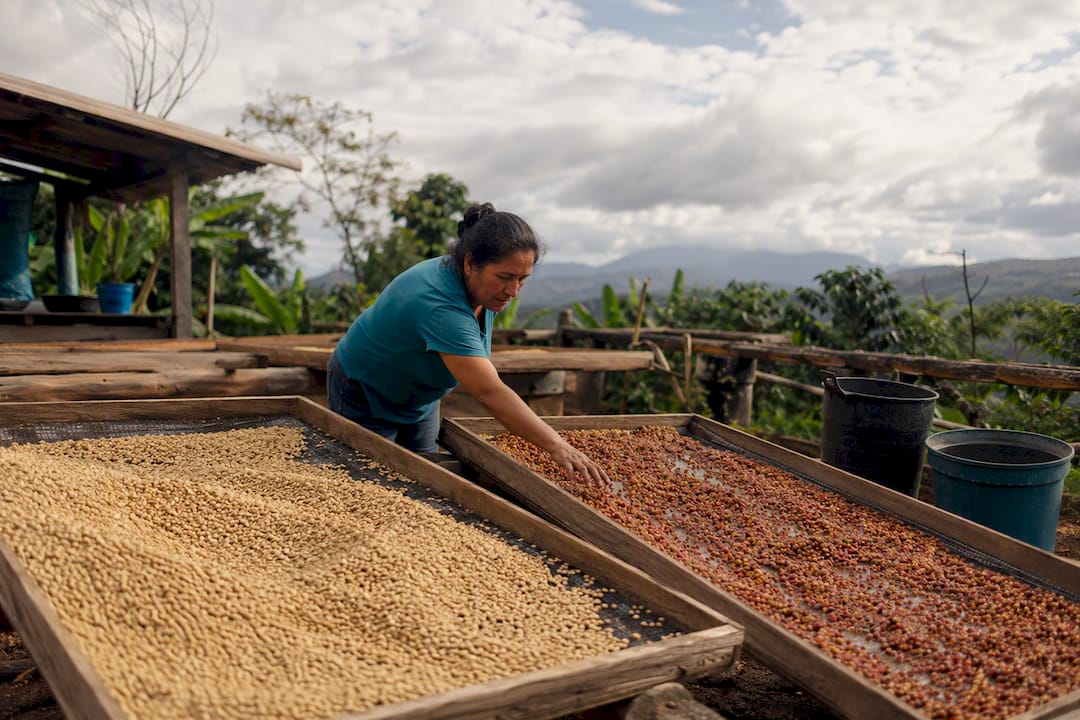
Pro Tip: Check the roast date, not the “best by” date. Whole bean coffee peaks in flavor within two to four weeks of roasting; a “best by” date stamped a year out tells you nothing useful.
Why Farm-to-Cup Matters, and Where the Claims Get Shaky
Lot-level, direct-sourced coffee usually tastes better because it’s fresher and handled with more intention at every step, from cherry selection to roast timing. That part isn’t controversial.
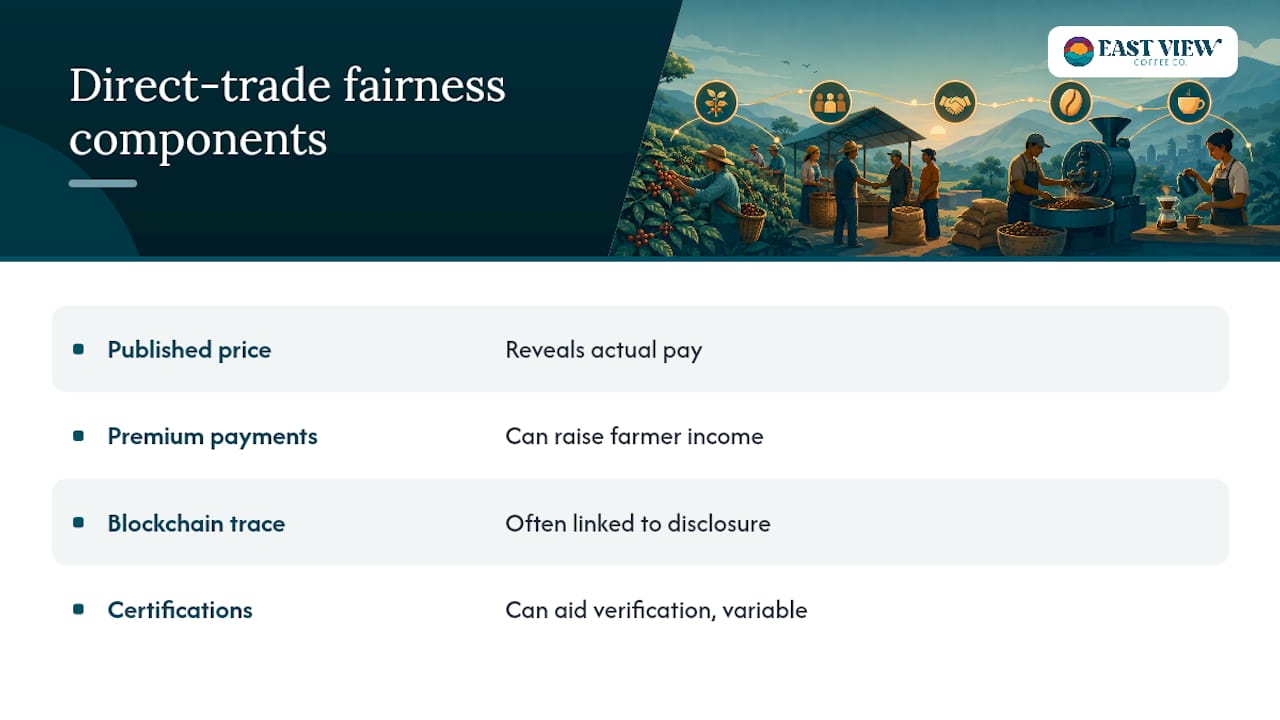
The fairness claims need more scrutiny. Direct relationships and stated premiums can meaningfully raise farmer income compared to selling into an anonymous co-op vs estate structure, but “direct trade” without a published price tells you nothing. Research on blockchain-labeled coffee products found that storytelling, packaging with blockchain information, and third-party certifications correlate with more fairness-relevant disclosure, but that correlation depends heavily on the individual company’s follow-through. A roaster with no story and no numbers is unlikely to be paying more, even if the bag says “ethically sourced.”
Environmental claims, like shade-grown or water-conscious processing, are real and often verifiable at the farm level, but they’re harder to confirm from a product page alone than a roast date is.
What Traceability Tech Can (and Can’t) Prove
QR codes and blockchain entries have become common on specialty bags, and they genuinely help, but they’re not magic. A systematic review of blockchain use in coffee supply chains found that the technology improves traceability only when paired with accurate source data and real organizational commitment. Blockchain can’t verify a lie; it can only make an honest record harder to tamper with after the fact.
The bigger obstacle is upstream. Industry reporting on new EU import rules points to the fragmented supply chain and remoteness of smallholder farms as the real bottleneck, not a lack of apps. Lots from dozens of small farms often get co-mingled before export, which makes farm-level claims genuinely hard to verify even for well-intentioned roasters.
There’s a rough hierarchy of verification confidence, and cost rises at each step:
| Verification Method | What It Confirms | Typical Cost/Access Level |
|---|---|---|
| Storytelling and published sourcing reports | Roaster’s stated relationship and practices | Low cost, accessible to any roaster |
| QR code or lot tracking | Specific lot, harvest date, sometimes farmer photos | Low to moderate, common among specialty roasters |
| Geolocated farm mapping | Exact plot location and farm boundaries | Moderate, requires field enumerators |
| Forensic chemical testing | Verified origin, even in roasted or ground coffee | High cost, used mainly by large buyers |
Smaller companies face significant barriers to full traceability due to infrastructure requirements for geolocation mapping and forensic testing that many independent roasters find hard to meet.
Small roasters and cooperatives typically operate at the storytelling and QR level, backed by direct supplier relationships and published impact data, rather than paying for forensic verification. That’s not a red flag by itself. It’s the realistic tier most ethical coffee brands operate in, and platforms like Trace exist specifically to help roasters document that tier credibly.
How to Shop for Real Farm-to-Cup Coffee
Reading a coffee bag or product page with some literacy saves you from paying a premium for a label that means nothing. Check for these before you buy:
- A named farm, estate, or cooperative, not just “Ethiopia” or “Colombia”
- A roast date within the last few weeks, not a vague “best by” stamp
- Processing method noted (washed, natural, honey)
- Explicit language about payment or premiums above farmgate price
- Some traceability mechanism, even a simple QR code linking to farmer information
- Packaging or sustainability claims that point to a published report, not just a leaf icon
When you’re unsure, ask directly. A roaster worth buying from should be able to answer:
- What farm or cooperative did this lot come from, and when was it harvested?
- How much of the price paid goes back to the producer?
- What’s the roast date, and how was this coffee shipped?
- What verification, if any, backs up the sourcing story?
If the answers are vague, “ethically sourced,” “supports farmers,” with no names, dates, or numbers, that’s the red flag. Locally sourced coffee claims and farm fresh coffee labeling should come with specifics. Vague language usually means there’s nothing concrete behind it.
The Gap Between Marketing and What Traceability Actually Delivers
The conventional advice on ethical coffee tells buyers to look for a certification logo and call it done. That advice undersells the problem. Certifications audit standards, they don’t guarantee freshness, and they don’t guarantee a farmer got paid more than the commodity rate that week.
What the research actually supports is more modest and more useful: traceability tools work when a company backs them with real commitment, and they fail quietly when a company doesn’t. A QR code on a bag is a starting point for verification, not proof of anything by itself. The same goes for the word “direct” on a label with no price attached.
If I had to tell a conscious buyer where to put their attention first, it wouldn’t be the tech. It would be the payment language and the roast date, two things a roaster either states plainly or doesn’t. Blockchain entries and farm maps are worth having, but they’re built on top of a relationship that either exists or doesn’t. Start there, and the rest of the verification ladder matters a lot less than the marketing around it suggests.
Where to Find Real Farm-to-Cup Coffee, Roasted This Week
Eastviewcoffee sources from women-owned farms and roasts every batch in small runs in Kenosha, Wisconsin, so the coffee you order was likely still green a few weeks earlier, not sitting in a distribution warehouse for months. That’s the concrete difference: freshness you can check against a printed date, and sourcing you can trace to farms named on the Coffee from Women Producers collection page, backed by the Impact Report detailing premium compensation and community partnerships.
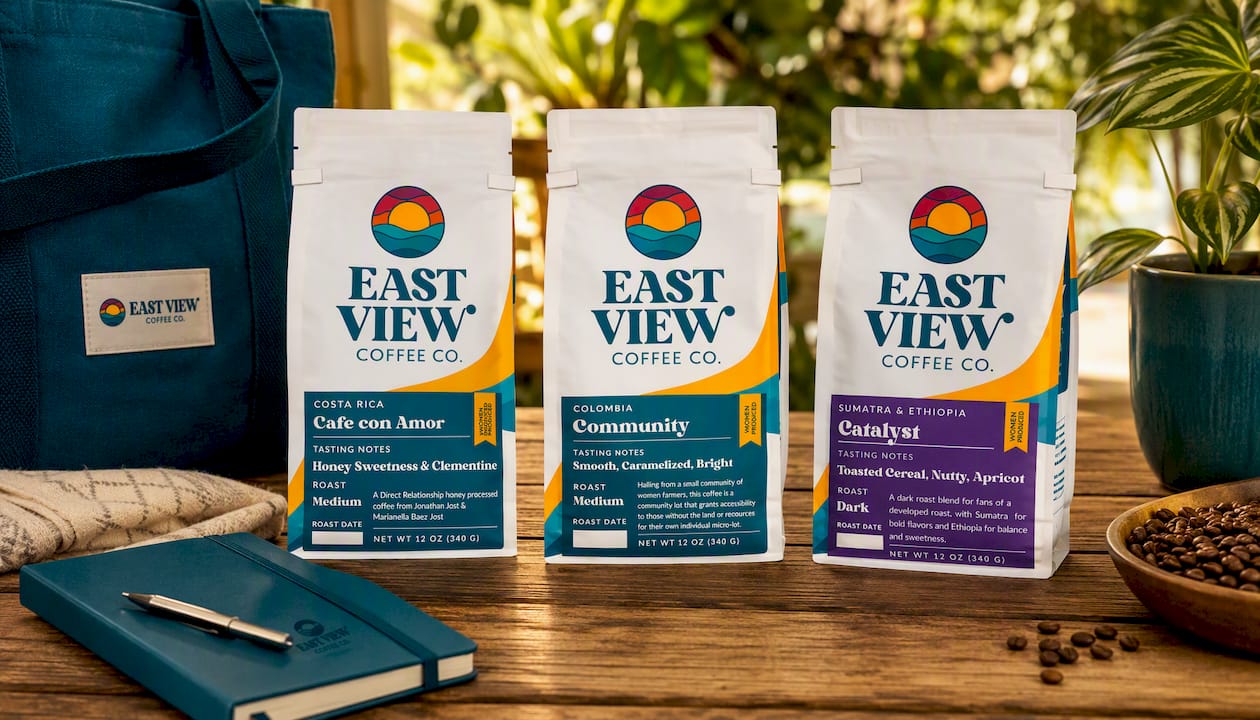
If you want a dark roast with real body, Obsidian Freshly Roasted Coffee and the Bold Ascent Freshly Roasted Coffee both come from named women-owned lots. Want variety without committing to one bag? The Dark Roast Bundle and Sunny’s Choice Bundle cover a range of roast profiles in one order. The Community Freshly Roasted Coffee supports a cooperative model directly, while Café con Amor is a named direct-relationship coffee from Costa Rica, exactly the kind of traceable, farm-named sourcing this article recommends looking for. Easing off caffeine? Cat’s Pajamas Half-Caff and the brighter, higher-acid Catalyst Freshly Roasted Coffee round out the lineup.
Pick a bag, check the roast date when it arrives, and see the difference for yourself.
Sources
For deeper background on verification limits and sourcing practices, see the systematic review on blockchain in coffee supply chains, industry reporting on traceability challenges, and context on local sourcing benefits and challenges.
- Blockchain and Coffee Supply Chain: Implications for Traceability, Efficiency, and Sustainability (systematic review)
- The promised potential of blockchain technology for transparency and fairness in agri-food chains: insights from the coffee sector
- Coffee: key traceability challenges amid EUDR
- Trace
FAQ
Why is farm to cup coffee better?
It’s typically fresher, since farm-to-cup roasters ship closer to the roast date, and it often pays farmers more directly when the roaster states clear payment terms rather than relying on anonymous commodity pricing.
What exactly does “farm to cup” mean?
It means the coffee can be traced to a specific farm or cooperative, with information on payment and processing, from harvest through roasting to your cup.
What is the only US state where coffee is grown?
Hawaii is the only US state with a commercial coffee industry, growing coffee primarily in the Kona region on the Big Island.
What makes Eastviewcoffee’s approach unique?
Eastviewcoffee sources from women-owned farms and roasts every batch in small runs in Kenosha, Wisconsin, pairing traceable sourcing with published impact reporting on premium compensation.