
Coffee Buyers: Verify Direct Trade Coffee with Two Named Farms
Direct trade coffee means a roaster buys beans straight from a farm or cooperative, skipping most middlemen, and pays a premium tied to cup quality rather than commodity price alone. The promise is real relationships and better pay for growers. The catch: no government body or nonprofit certifies “direct trade,” so the label means whatever each roaster decides it means.
TL;DR:
- Verified direct trade coffee claims should include a named farm or cooperative rather than just a country or region.
- Credible sourcing reports or trip notes that specify premiums and actual prices help verify transparency and authenticity.
- Multi-year contracts and farm visits are common indicators of genuine direct relationships focused on quality rather than marketing language.
- Direct trade often rewards quality with premiums, but outcomes depend heavily on roaster transparency and how much farmers actually benefit.
- Combining fair trade certification with direct trade practices can provide a safety net while supporting high-quality, traceable coffee sourcing.
Table of Contents
- What Is Direct Trade Coffee, and Where Did It Come From?
- How Direct Trade Sourcing Actually Works
- What Farmers and Consumers Actually Gain, and Where the Model Falls Short
- Direct Trade vs. Fair Trade: What’s the Real Difference?
- The Criticisms Nobody Puts on the Bag
- How to Evaluate a Roaster’s Direct Trade Claims Before You Buy
- A Direct-Relationship Example Worth Inspecting
- The Gap Between What Direct Trade Promises and What Consumers Verify
- Where to Find Direct Relationship Coffee Worth Trusting
- Sources
- FAQ
What Is Direct Trade Coffee, and Where Did It Come From?
The term traces back to the late 1990s and early 2000s, when a handful of specialty roasters got frustrated with commodity-market pricing and started flying to origin countries themselves. They wanted beans good enough to score high on a cupping table, and they were willing to pay more to get them. That origin story still shapes how the model works today: it grew out of a quality obsession, not a social-justice mandate, even though social benefits followed.
Roasters including Counter Culture, Intelligentsia, and Stumptown were among the first to formalize the practice and begin publishing sourcing reports to support their claims. That history is part of why buyers now expect transparency from any roaster using the term, according to trade coverage of the movement.
Common principles often appear in most versions of direct trade, although definitions vary:
- Direct relationships where buyers negotiate directly with farms or cooperatives, often including personal visits.
- Quality-linked premiums where farmers are paid more for higher-scoring beans rather than a flat rate.
- Long-term collaboration characterized by contracts extending across multiple harvests rather than single purchases.
Here’s the part that trips people up: because there’s no standard, one roaster’s “direct trade” might mean an annual farm visit and a five-year contract, while another’s might mean a single purchase brokered through an importer who happens to know the farmer’s name. Both get the same label on the bag.
How Direct Trade Sourcing Actually Works
Direct trade sourcing typically begins with identifying a farm or cooperative producing beans suitable for a direct relationship, often small, distinct batches traceable to specific plots rather than blended regional harvests. From there, the mechanics tend to follow a similar rhythm, even when the details differ by roaster.
- Sourcing and sample cupping. A roaster or their sourcing partner cups samples from specific farms or lots, scoring for flavor, body, and defects before committing to a purchase.
- Price and premium negotiation. Instead of paying the commodity “C price” set by futures markets, the roaster and farmer agree on a price that reflects the cup score, often well above commodity levels.
- Contract terms. Some deals lock in multi-year purchase commitments so the farmer can plan investments, like new processing equipment, around guaranteed demand.
- Farm visits and cupping feedback. Buyers who take direct trade seriously visit during harvest, taste lots on-site, and give feedback that helps farmers adjust processing for the next cycle.
- Recordkeeping and reporting. The more credible operations track what they paid, to whom, and log it somewhere a customer could theoretically check.
Even in a genuinely direct relationship, importers or export cooperatives frequently still handle logistics: shipping, customs, currency exchange, and quality control at the port. “Direct” describes the sourcing relationship and the price negotiation, not necessarily the entire physical supply chain.
Pro Tip: If a roaster’s website only says “we work directly with farmers” without naming a single farm, region, or price paid, treat that as marketing language until proven otherwise.
What Farmers and Consumers Actually Gain, and Where the Model Falls Short
The strongest, most consistent benefit of direct trade is that it rewards quality instead of volume. A farmer producing a high-quality micro-lot can often earn premiums above the commodity price, which creates a real incentive to invest in better processing, drying, and picking practices.
Where the evidence supports real gains:
- Quality-linked premiums give farmers a financial reason to improve processing consistency, not just grow more coffee.
- Multi-year contracts can fund infrastructure investments that a single harvest’s income wouldn’t cover.
- Consumers get traceability. Knowing which farm, and often which lot, produced the beans in their bag is something commodity coffee can’t offer.
Where the picture gets murkier: Academic research on why roasters adopt direct sourcing finds the primary driver is securing high-quality lots for the roaster’s own business, with social benefit as a secondary outcome rather than the stated goal. That doesn’t make the farmer benefit fake, but it does mean outcomes vary enormously depending on how much leverage the farmer has and how committed the buyer actually is.
Consumers generally pay more for direct trade coffee, with the additional cost ideally supporting farmer payments and the added logistics of small-batch, traceable sourcing. Sourcing strategies that combine published commitments with coordinated standards tend to move producers closer to a living income, but a single roaster’s individual purchase, however well-intentioned, isn’t a substitute for that kind of systemic commitment.
Direct Trade vs. Fair Trade: What’s the Real Difference?
Fair trade and direct trade solve different problems, and confusing them leads to disappointment on both sides. Fair Trade Certified is a third-party certification where farms comply with standards on labor and pricing and are audited externally. It sets a minimum price to protect farmers during commodity price drops and applies consistently across certified farms.
Direct trade lacks a formal certifying body. It is defined by roaster-driven direct negotiation focused on quality and may offer higher prices than Fair Trade minimums for exceptional coffee, but no external auditor verifies roaster claims.
- Fair Trade: standardized, audited, fee-based certification with a guaranteed minimum price and broader labor and environmental criteria.
- Direct trade: roaster-defined, quality-focused, unregulated, with premiums that can exceed Fair Trade minimums but no independent verification requirement.
- In practice: many roasters use both, treating fair trade as a baseline safety net for smaller lots while pursuing direct relationships for their highest-quality micro-lots.
Neither model is strictly better across every metric. Fair trade offers a wage floor and consistency across many farms. Direct trade offers higher potential upside for farmers producing standout coffee, paired with the risk that quality gets rewarded while broader labor and environmental standards go unchecked unless the roaster chooses to address them.
The Criticisms Nobody Puts on the Bag
A major weakness of direct trade coffee is the absence of a legal or industry-wide definition, which allows the label to be used inconsistently or loosely. A Wikipedia summary of the practice notes that practitioners emphasize mutually beneficial relationships, but actual practices vary enormously from one company to the next.
That gap has created real problems in the trade:
- Some companies use “direct trade” labeling despite engaging primarily in brokered relationships that bypass only some layers of the supply chain.
- Trade commentary has documented ongoing tension over “free riders,” meaning brands that adopt the terminology without the transparency practices early pioneers established.
- Because there’s no penalty for misuse, the reporting standards that made early direct trade credible (published prices, named farms, trip reports) remain voluntary rather than required.
The fix isn’t a new certification, at least not yet. It’s transparency. Roasters who publish annual sourcing reports, name specific farms, and disclose what premium they actually paid give buyers something to check. Roasters who don’t are asking for trust with no way to verify it.
Pro Tip: A roaster’s own claim that a farmer is “happy with the price” means nothing without a number attached. Ask what the number is.
How to Evaluate a Roaster’s Direct Trade Claims Before You Buy
You don’t need an import license to check whether a roaster’s direct trade claim holds up. You need about five minutes and a short list of questions.
- Look for a named farm or cooperative, not just a country or region. “Ethiopia” is not a direct trade relationship. “Yirgacheffe cooperative, farmer Bekele” is closer to one.
- Search for a published premium or price. Credible roasters will state, in dollars per pound or as a percentage above commodity price, what they actually paid.
- Check for a transparency report. Annual sourcing reports, even short ones, signal a company willing to be checked.
- Ask directly. Email the roaster and ask how much of the premium reaches the farmer, and whether there’s a written contract term beyond a single purchase.
- Look for third-party mentions, like farm visit write-ups from journalists or independent cuppers, not just the roaster’s own marketing copy.
Red flags worth taking seriously:
- Vague phrases like “we care deeply about our farmers” with zero specifics attached.
- No named farm, region limited to a country level, or a sourcing story that changes between the website and the product bag.
- Photos of farm visits with no corresponding price or premium data anywhere on the site.
Pro Tip: If a company can’t or won’t tell you what premium a specific farm received, assume the relationship is closer to a marketing story than a documented sourcing commitment.
A Direct-Relationship Example Worth Inspecting
A small-batch coffee roaster sourcing from women-owned farms offers an angle worth checking against the evaluation checklist above rather than taking on faith. Its Café con Amor direct relationship coffee from Costa Rica and Don Clodoveo direct relationship coffee from Costa Rica are both named-farm products rather than blends sourced under a country label.
What’s worth looking for on any product page claiming direct trade, including these two:
- A named farm or farmer, not just “Costa Rica” as a region.
- Documented premium amounts and how they connect to women producers specifically, since gender equity in coffee income is a distinct issue from quality premiums alone.
- Trip reports or sourcing notes describing an actual visit, not stock photography of a coffee farm.
- Metrics or testimonials tied to a specific harvest or farm, rather than generalized claims about “supporting farmers.”
East View’s broader ethically sourced coffee approach and its work through the Women’s Coffee Project give readers a second layer to check: does the sourcing story extend beyond one product page into a documented pattern across the business?
The Gap Between What Direct Trade Promises and What Consumers Verify
Direct trade coffee has real potential to move money and dignity toward farmers who grow exceptional coffee, but potential isn’t the same as guaranteed outcome. The model works best when consumers stop accepting the phrase itself as proof of anything and start asking for the number behind it. Buy from roasters who publish what they paid. Reward the ones willing to be checked, and the industry will keep giving you more to check.
— Jenny
Where to Find Direct Relationship Coffee Worth Trusting
Most direct trade claims ask you to take a roaster’s word for it. East View Coffee’s Café con Amor and Don Clodoveo coffees from Costa Rica are named-farm, small-batch roasted, and sourced through relationships tied to women-owned farms, which gives you a specific story to check rather than a vague one to trust.
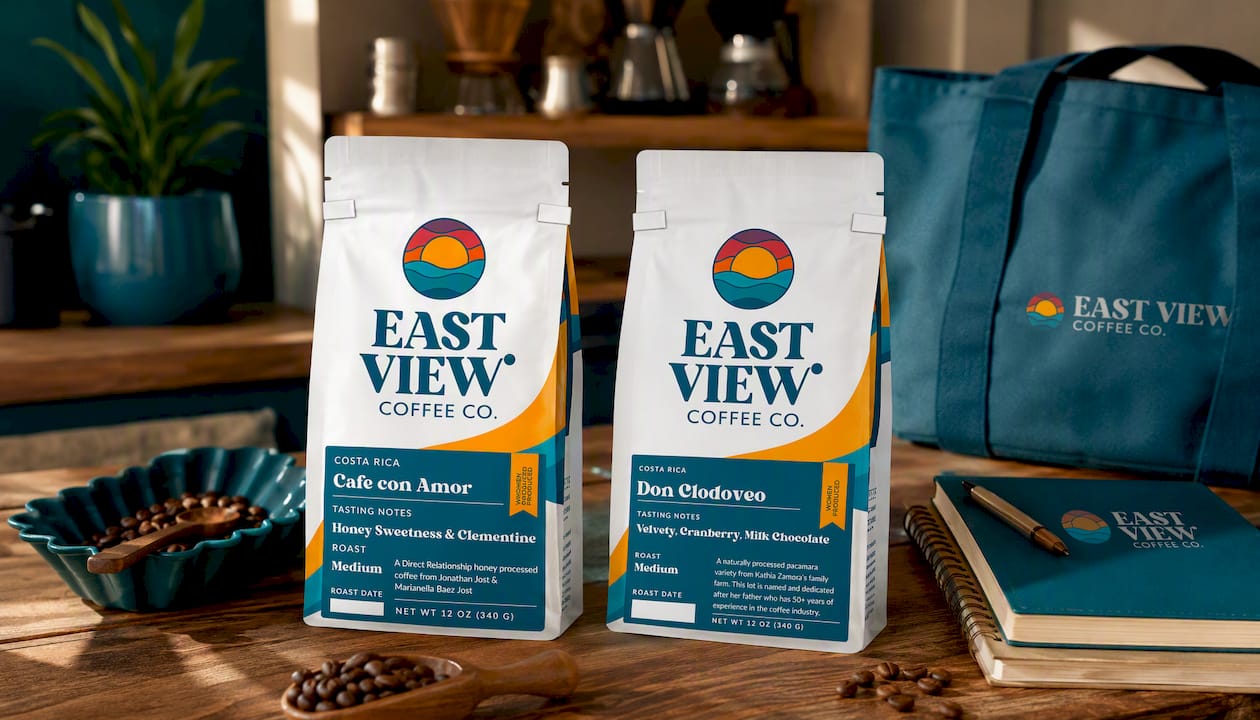
Both are available as single bags or through a subscription, so you can keep a rotation of traceable, direct-relationship coffee coming without reordering every few weeks. If you’re shopping for someone who cares where their coffee comes from, the gift and subscription options work the same way. Before you order, take two minutes to read the sourcing details on each product page. That habit, more than any label, is what actually holds a roaster accountable.
Sources
- Coffee Roasters’ Sustainable Sourcing Decisions and Use of the Direct Trade Label
- The Opportunities and Challenges of Direct Trade Coffee - Imbibe Magazine
- Responsible Coffee Sourcing: Towards a Living Income for Producers
FAQ
What Does Direct Trade Coffee Mean?
It means a roaster buys beans directly from a farm or cooperative and pays a premium tied to quality, rather than sourcing anonymously through commodity markets. There’s no official certification behind the term, so practices vary by roaster.
Is Direct Trade Coffee Legit as a Sourcing Model?
Direct trade is a legitimate and widely practiced sourcing approach among specialty roasters, but the term itself isn’t regulated. Legitimacy depends on the individual roaster’s transparency, not the label alone, so look for published farm names and premium amounts before trusting a claim.
How Is Direct Trade Different from Fair Trade Certification?
Fair Trade is a standardized, audited, fee-based certification with a guaranteed minimum price across all certified farms. Direct trade is a roaster-driven relationship focused on quality premiums, with no external audit requirement.
What Should I Look for When Buying Direct Trade Coffee?
Look for a named farm or farmer, a published premium amount, and ideally a transparency report or trip write-up. Roasters like East View Coffee that name specific farms, such as those behind Café con Amor, give you something concrete to verify.
Can Direct Trade and Fair Trade Coffee Work Together?
Yes. Many roasters use Fair Trade certification as a baseline for some purchases while pursuing direct relationships for their highest-quality micro-lots, treating the two models as complementary rather than competing.