
Coffee Blend Meaning: Why Roasters Rework Recipes 2–4 Times a Year
A coffee blend is a deliberate mix of beans from two or more origins, combined to hit a specific flavor or consistency target that no single crop can deliver alone. Roasters build blends for balance, repeatability, and a signature house taste. A blend is not automatically lower quality than single origin coffee. It is a different craft with a different goal.
TL;DR:
- Blends are built to ensure consistency despite seasonal shifts in raw coffee quality and often combine specialty-grade beans rather than filler.
- The main purposes of blending include achieving balance, creating a signature flavor profile, and optimizing format-specific traits like for espresso or milk-based drinks.
- Common blending categories involve multi-country, multi-region, multi-farm, multi-varietal, and melange or mixed-roast techniques, each offering different flavor combinations.
- Blends designed for espresso or milk drinks generally have fuller body and are more suitable for daily consumption, while single origin coffees highlight terroir and seasonal variability.
- Reading component disclosure, roast level, and recommended use are key to selecting a blend that matches your brewing method and taste preferences.
Table of Contents
- What Coffee Blend Meaning Actually Covers
- Why Roasters Blend Coffee in the First Place
- Types of Coffee Blends and What Each Component Adds
- Blends Versus Single Origin: What Actually Differs
- How to Choose a Coffee Blend and Brew It Right
- How Blending Affects Freshness and Shelf Life
- Tasting a Coffee Blend Like a Professional
- Common Misconceptions About Coffee Blends
- Why We Treat Blending as Craft, Not Compromise
- Blends Worth Trying From Our Roastery
- Sources
- FAQ
What Coffee Blend Meaning Actually Covers
The term describes both an ingredient list and a design process. An “origin” can mean a country, a specific region within that country, a single farm, even one lot from one varietal. A blend combines two or more of those, and the mixing can happen before roasting (green blending) or after each component is roasted separately (post-roast blending, which gives more control over how each bean’s roast curve turns out).
Roasters build blends around four goals: balance (smoothing out sharp acidity or thin body), consistency (tasting the same in March as it did in October), a signature profile (a house identity customers recognize bag after bag), and format fit (blends built specifically for espresso or milk drinks behave differently than ones meant for drip). According to Coffee Studies, a coffee blend is fundamentally about achieving balance, consistency, and specific flavor goals, not cutting corners.
The persistent myth is that blending exists to mask cheap or defective beans. High-quality blends do the opposite: they’re composed of specialty-grade lots chosen and roasted with intent, the same way a chef pairs specific ingredients on purpose rather than dumping leftovers into one pot.
- Origin can mean country, region, farm, lot, or varietal
- Blending can happen pre-roast or post-roast
- Core goals: balance, consistency, signature profile, format fit
- Quality blends use specialty-grade components, not filler
Pro Tip: Check the bag for a roast date and component breakdown. A roaster confident in their blend will tell you what’s in it and why.
Why Roasters Blend Coffee in the First Place
Consistency drives most blending decisions. A single farm’s harvest changes year to year, sometimes month to month, based on weather, altitude conditions, and processing shifts. Blending lets a roaster combine components so one origin’s weakness gets covered by another’s strength, according to Sweet Maria’s blending library.
Balance is the second driver. A washed Central American lot might bring clean acidity but thin body. A natural-processed Brazilian lot adds weight and sweetness. Combined, you get a cup neither could produce solo. Branding plays a role too. A recognizable house blend gives a roaster an identity customers can order by name for years, regardless of which farms are currently in season.
Not every motive is noble. Some blends exist purely to hit a low price point, leaning on cheap filler origins with little flavor contribution. Spotting that requires reading past marketing language.
- Consistency across shifting harvests and crop years
- Balancing body, acidity, sweetness, and crema through complementary components
- Building a recognizable house or signature profile
- Watching for vague, filler-driven blends with no real origin transparency
Types of Coffee Blends and What Each Component Adds
Blends fall into a handful of recognizable categories, and knowing them helps you read a bag label with actual understanding instead of guessing.
- Multi-country blends combine beans from entirely different nations, often one continent’s boldness against another’s brightness.
- Multi-region blends stay within one country but pull from different growing zones for varied character.
- Multi-farm blends mix lots from several farms in the same area, useful when one farm’s volume alone can’t meet demand.
- Multi-varietal blends combine different coffee plant varieties grown side by side, sometimes even from the same farm.
- Melange or mixed-roast blends roast each component to a different level before combining them, a technique that demands tight roast control, per Sweet Maria’s.
A few real-world combos show how this plays out. Brazil paired with Ethiopia gives you body from the Brazilian base and bright fruit from the Ethiopian lot, a common espresso foundation. Sumatra blended with a Central American washed coffee adds earthy depth against clean sweetness, often built for pour-over. Colombia and a natural-process African lot together lean toward balanced sweetness with a fruit-forward finish, workable across espresso or drip.
Blends Versus Single Origin: What Actually Differs
Traceability is the clearest split. Single origin coffee tells you exactly which farm, region, or cooperative grew your beans, and that transparency lets you track a specific harvest’s character season to season. Blends trade some of that clarity for repeatability, since the recipe often shifts as components rotate through crop cycles.
Single origin coffee highlights terroir and embraces seasonal variability. Coffee’s comparison guide](https://www.mrcoffee.com/blog/What’s-the-Difference-Between-Single-Origin-and-Coffee-Blends%3F.html). Roasters may reformulate a blend two to four times a year to keep the house taste stable as harvests change, per CoffeeBot’s analysis, which also notes blends tend to suit milk-based drinks and espresso better than delicate single origins do.
- Single origin: best for black tasting, exploring terroir, seasonal variety
- Blends: best for daily espresso, lattes, cappuccinos, consistent everyday drinking
- Blends often use a slightly higher dose or ratio for fuller body, per Blue Bottle’s coffee lab
How to Choose a Coffee Blend and Brew It Right
Start with your brew method and what you’re drinking it with. If milk is involved daily, a blend built for espresso will hold up better than most single origins. If you drink black and want to taste one farm’s fingerprint, single origin wins.
- Identify your brew method first: espresso machine, pour-over, drip, or cold brew.
- Check for component disclosure on the bag or product page. Vague marketing with no origin names is a red flag.
- Look for roast level and recommended ratio. A blend built for espresso should state as much.
- Adjust your dose. Blends aimed at espresso or milk drinks often run a slightly higher dose than single origins for fuller body, Blue Bottle notes.
- For pour-over, a ratio around 1:15 to 1:17 (coffee to water) is a reasonable starting range to adjust from.
Pro Tip: If a bag lists no origins, no roast date, and only generic tasting notes like “smooth and rich,” treat that as a sign of a commodity-grade blend rather than a specialty one.
How Blending Affects Freshness and Shelf Life
Blending itself doesn’t change how quickly coffee stales, but it does complicate how evenly a bag ages. Whole beans generally hold peak flavor for two to four weeks past the roast date, and that window narrows once ground. In a blend with multiple origins, components can lose their aromatic edge at slightly different rates depending on density and processing method.
Post-roast blending, where each origin is roasted separately then combined, tends to preserve freshness better than pre-roast mixing. Each component gets a roast curve suited to its own bean size and moisture content, rather than one compromise curve applied to a mixed batch. That precision matters more the more origins you’re combining.
Storage habits matter more than blend structure. Keep beans in an airtight container away from light and heat, and buy in quantities you’ll use within a few weeks. A recognizable roast date on the bag is one of the simplest ways to judge whether a blend, or any coffee, is likely to taste fresh.
Tasting a Coffee Blend Like a Professional
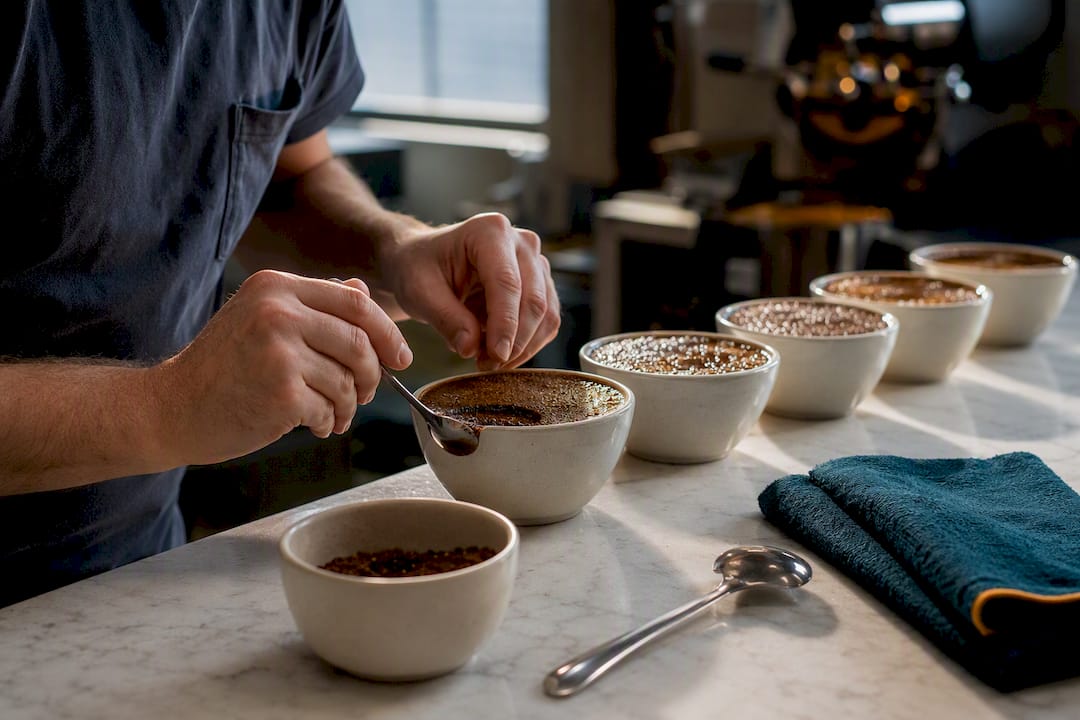
Cupping is the standard method roasters use to evaluate coffee, and you can apply a simplified version at home. Grind a small batch coarsely, pour hot water directly over the grounds without a filter, wait about four minutes, then break the crust that forms on top and inhale deeply before tasting.
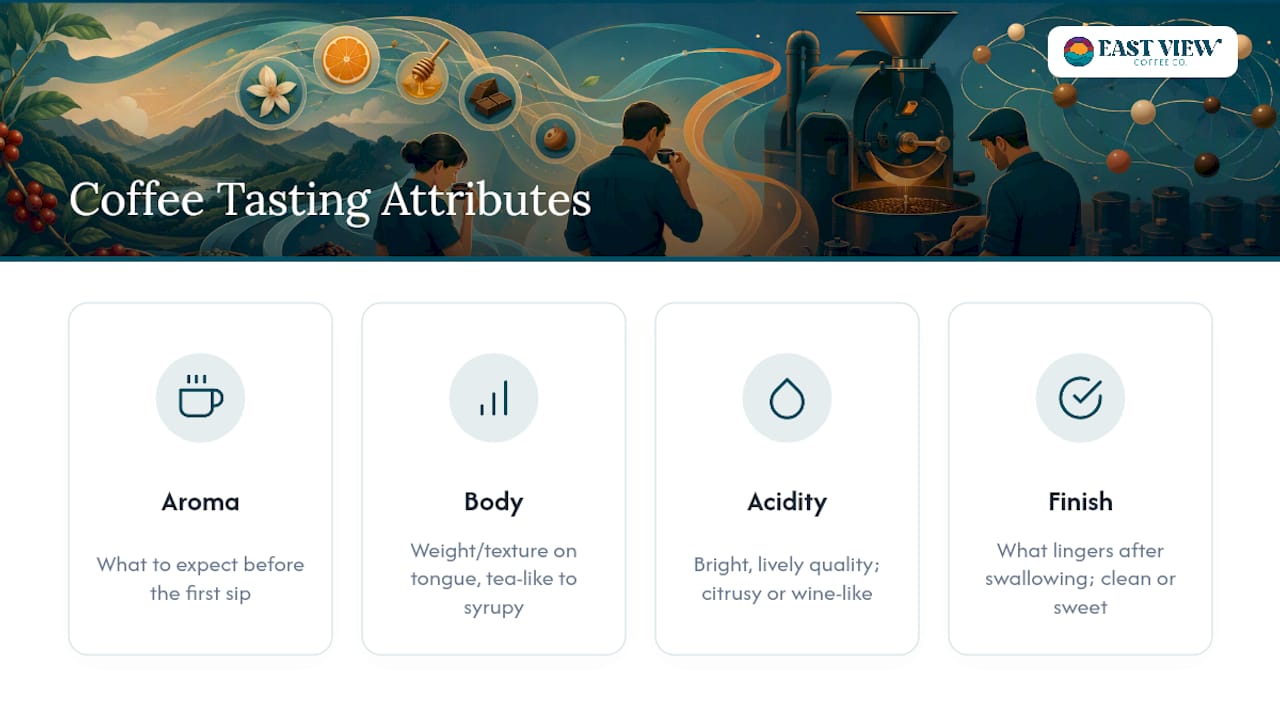
Focus on four things: aroma, body, acidity, and finish. Aroma tells you what to expect before the first sip. Body is the weight and texture on your tongue, ranging from tea-like thinness to syrupy heaviness. Acidity isn’t sourness. It’s the bright, lively quality that makes a coffee feel alive, often described as citrusy or wine-like in lighter roasts. Finish is what lingers after you swallow, whether that’s a clean cutoff or a lasting sweetness.
With blends specifically, try to identify whether one component is dominating or whether the mix feels genuinely integrated. A well-built blend shouldn’t taste like two coffees fighting each other. It should taste like one cohesive cup where you can still sense complexity if you look for it. Comparing a blend side by side with one of its component origins, when a roaster sells both, is one of the fastest ways to train your palate on what blending actually contributes.
Common Misconceptions About Coffee Blends
The biggest misconception is that blends are a lesser product than single origin coffee. That idea gets it backward. Blending is its own skill, requiring a roaster to understand how components interact rather than just how one farm’s beans taste alone.
A second myth: blends are always cheaper. Some are built to hit a low price point using bulk commodity origins, but plenty of specialty blends cost as much or more than single origin offerings because they combine multiple limited, high-quality lots.
A third misconception: blend recipes never change. In reality, many roasters adjust their blend recipe several times a year as specific harvests come in and out of season, which is why the “same” bag can taste slightly different depending on when you buy it. That’s not inconsistency. It’s the roaster working to keep the overall profile stable even as raw materials shift underneath it.
Why We Treat Blending as Craft, Not Compromise
Eastviewcoffee sources exceptional specialty coffee from women-owned farms and roasts it in small batches in Kenosha, Wisconsin. That sourcing model ensures the women farmers behind each lot receive premium compensation, which supports agricultural equity and stronger farming communities. Blending, done with components like these, is a way to combine already excellent coffee into something more than the sum of its parts, not a way to stretch weaker beans further.
— Jenny
Blends Worth Trying From Our Roastery
Reading about blend theory is useful, but tasting the difference is what actually teaches your palate. If you want to test what “designed for cold brew” or “built for espresso” really means in the cup, the fastest way is to brew it yourself.
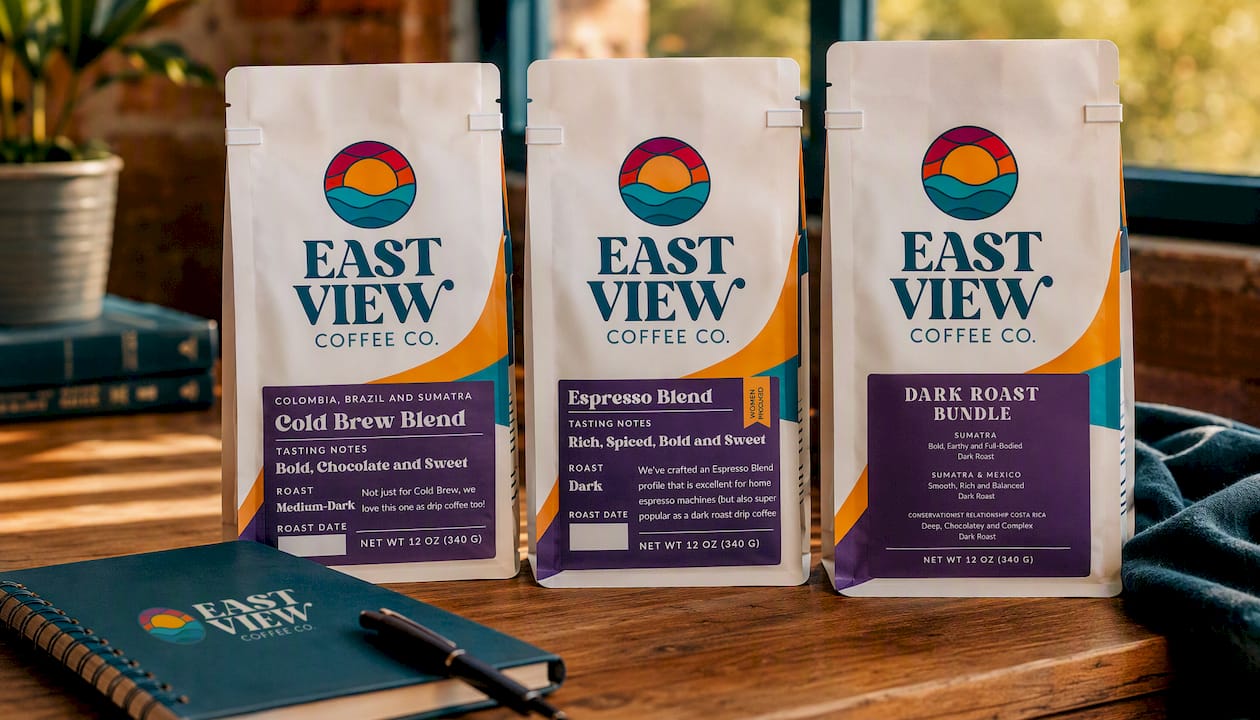
Our Cold Brew Blend Coffee is built specifically for long, cold steeps. It leans into body and sweetness rather than bright acidity, since cold extraction naturally mutes sharper notes and rewards a coffee with weight behind it. For espresso and milk drinks, the Espresso Blend Freshly Roasted Coffee is composed to hold up under pressure extraction, producing the crema and balance that cut through milk without disappearing. If you prefer your coffee black and bold, the Dark Roast Bundle delivers a chocolatey, full-bodied cup that works as a straightforward daily drinker.
All three are roasted in small batches from women-owned farms, and if you’d rather not choose just one, our coffee subscription rotates blends and single origins so you can compare them side by side. Pick a blend that matches your brew method and order it directly from our full coffee collection.
Sources
For deeper technical grounding, Coffee Studies covers blend construction in detail, while Sweet Maria’s blending library explains component roles and melange techniques. Blue Bottle’s coffee lab offers practical brewing comparisons between blends and single origins.
- What Is a Coffee Blend? How Roasters Mix Beans — Coffee Studies
- Blending basics — Sweet Maria’s library
- Single Origin vs Blend: Which Coffee to Choose? 2026 | CoffeeBot
- Coffee Blends vs. Single Origins: All About Blends — Blue Bottle Coffee Lab
FAQ
What Is a Coffee Blend?
A coffee blend is a mix of beans from two or more distinct origins, combined to achieve a specific balance, flavor, or level of consistency that a single origin can’t reliably deliver on its own. Roasters build blends to hit both taste goals and format goals, like espresso or milk drinks, according to Coffee Studies.
Which Coffee Blend Is Good for Daily Drinking?
A blend built for espresso or milk drinks, usually anchored by a full-bodied base like Brazil, tends to work best for daily use since it’s engineered for consistency across brew methods. Our Espresso Blend Freshly Roasted Coffee is designed around that kind of everyday reliability.
Can You Give an Example of a Coffee Blend?
A common example pairs a Brazilian origin, which contributes body and low acidity, with an Ethiopian origin, which adds bright, fruity notes. This combination is a frequent base for espresso blends because it balances weight with liveliness.
What Is Better, Single Origin or Blend Coffee?
Neither is objectively better. Single origin coffee highlights terroir and seasonal character, making it ideal for exploring one farm’s specific flavor, while blends prioritize a repeatable, engineered profile that suits daily drinking and milk-based drinks, per Mr. Coffee’s comparison. The right choice depends on whether you value consistency or exploration more.
How Much Does Eastviewcoffee’s Coffee Cost?
Current prices for Eastviewcoffee’s blends, single origins, and subscriptions are listed directly on the Eastviewcoffee website, since pricing varies by product and format.