
Fair Trade Coffee for U.S. Buyers: Price Floor vs Direct Sourcing
Fair Trade coffee is a certified sourcing system that guarantees farmer cooperatives a minimum price plus a community premium, backed by audited labor and environmental standards. It does not guarantee cup quality, and it does not promise that every farmer sees an equal payout. The label is a floor, not a ceiling, and understanding that distinction is the whole game when you’re standing at the shelf trying to decide what your money actually does.
TL;DR:
- Fair Trade certification guarantees a minimum price floor and a community premium, primarily protecting farmers from volatile market fluctuations.
- Certification is verified through audits by two main organizations, Fairtrade International and Fair Trade USA, with differences in farm and plantation eligibility.
- The premium funds support community projects and ensure baseline labor and environmental standards but do not guarantee farm quality or equal payouts.
- Certification alone does not reveal how much farmers receive or detail specific farm relationships, making transparency from roasters essential.
- Combining certification with direct trade relationships provides greater assurance of fair pay and clear sourcing stories for ethically minded consumers.
Table of Contents
- What Does Fair Trade Certification Actually Guarantee?
- Who Certifies Fair Trade Coffee, and How Does the Audit Work?
- What Are the Real Benefits of Fair Trade Coffee for Farmers?
- What Are the Common Criticisms of Fair Trade Coffee?
- Fair Trade vs Direct Trade: Which One Actually Helps Farmers More?
- How Should You Read a Fair Trade Label at the Shelf?
- What Environmental Standards Does Fair Trade Require?
- How Does East View Coffee Approach Sourcing Beyond Certification?
- When Should You Choose Certified Fair Trade Coffee?
- Why Certification Alone Isn’t the Whole Answer
- Ready to Put This Into Practice?
- Sources
- FAQ
What Does Fair Trade Certification Actually Guarantee?
Fair Trade certification works on a simple mechanical principle: a price floor kicks in when the world commodity market drops below it. If arabica trades above that floor, cooperatives get paid the market rate. If it crashes, as coffee prices periodically do, certified cooperatives get the guaranteed minimum instead, which protects farmers from the worst swings in a notoriously volatile market.
On top of that floor sits the Fairtrade Premium, an extra payment sent directly to the cooperative, not to individual farmers. Members vote democratically on how to spend it. Some pool it into Community Development Funds for schools, clinics, or clean water systems. Others put it straight back into farm infrastructure like drying patios or wet mills.
The certification also carries hard labor and environmental rules. According to Fairtrade International, standards prohibit forced and child labor, mandate safe working conditions, and push toward environmentally sustainable farming. Notably, none of that automatically means organic. Organic is a separate certification with its own audit trail, and a bag can carry one label without the other.
A few things worth remembering about how the money moves:
- The price floor only activates below a set market threshold; above it, farmers get the market price.
- The Fairtrade Premium goes to the cooperative as an organization, not as a check to each farmer.
- Spending decisions on premium funds require a democratic vote among co-op members.
- Labor and environmental standards are baseline requirements, checked through audits, not marketing claims.
That cooperative channel matters enormously for how you should read the label. A “Fair Trade” stamp tells you the group got protections and extra money. It does not tell you how that money was divided once it landed.
Who Certifies Fair Trade Coffee, and How Does the Audit Work?
Two organizations dominate the American market, and they are not interchangeable. Fairtrade International, often called FLO, certifies cooperatives around the world and licenses its mark globally. Fair Trade USA split from FLO years ago and built its own system, one that also certifies some plantations in addition to smallholder cooperatives. That plantation eligibility is the biggest practical difference between the two, and it’s a distinction most shoppers never learn.
Certification itself follows a fairly standard audit cycle:
- An independent auditor visits the cooperative or farm and checks records against the standard’s requirements.
- Auditors verify labor conditions, wage payments, pesticide handling, and environmental practices on site.
- The cooperative or exporter must maintain traceable records showing certified coffee moved through a licensed supply chain.
- Certification is renewed periodically, not granted once and forgotten.
What actually shows up on your bag is one of two marks, either the Fairtrade International seal or the Fair Trade Certified mark from Fair Trade USA, sometimes alongside origin details and a cooperative name. If you want to compare that against other sustainability seals you’ll see on shelves, Eastviewcoffee has broken down how Rainforest Alliance and Fair Trade differ, since the two get confused constantly. The mark itself is the only part of the claim that’s independently checked. Everything else printed on the bag, like “ethically sourced” or “farmer friendly,” is marketing language with no auditor behind it.
What Are the Real Benefits of Fair Trade Coffee for Farmers?
The certification’s value shows up in a few concrete, documented ways rather than one abstract promise.
- Income stability. The minimum price floor functions as insurance against price crashes, which matters most in years when global arabica prices sink below production cost.
- Community investment. Premium funds flow into projects cooperatives choose themselves, from school scholarships to farm equipment upgrades, funded through the Fairtrade Premium mechanism.
- Worker protections. Audited standards on forced labor, child labor, and safe working conditions give hired farm labor a baseline of protection that unregulated markets don’t require.
- Reduced business risk for roasters. Buyers get a documented, traceable claim they can put on a label without inventing their own verification process, which lowers reputational exposure if a supply chain gets questioned later.
The premium’s size matters here, and it’s worth being honest about scale. On a farm producing roughly 880 pounds of certified coffee, the premium payout can amount to a few hundred dollars before the cooperative even covers its own administrative costs. That’s a meaningful cushion for a smallholder household, but it’s not a windfall, and it’s nowhere near enough on its own to lift a farming family out of poverty. The floor and the premium work best as a stabilizer, not a total income solution.
What Are the Common Criticisms of Fair Trade Coffee?
The critiques aren’t fringe complaints. They come largely from development researchers and industry analysts who support the goals of certification but question how consistently it delivers.
- Governance varies wildly between cooperatives. Some co-ops run transparent votes on premium spending; others are dominated by a handful of leaders, and members outside that circle see little benefit.
- Not all certified coffee sells as certified. A cooperative can grow more Fair Trade coffee than the market actually wants to buy at the certified price, leaving surplus to sell at regular commodity rates despite meeting all the standards.
- The quality-incentive gap. Certification pays for meeting labor and environmental rules, not for producing exceptional coffee, so it does little to reward farmers who invest in better processing or rarer varietals.
- Mixed evidence on household income. Research summarized by Stanford Social Innovation Review finds the premium’s effect on individual household welfare depends heavily on how a cooperative distributes it, and the data doesn’t support a blanket claim that certification reliably raises farmer income.
None of this means certification is worthless. It means the label is a floor with real limitations, not a complete guarantee of farmer prosperity, and shoppers who understand that nuance make better decisions than those who treat the seal as a finish line.
Fair Trade vs Direct Trade: Which One Actually Helps Farmers More?
Direct trade skips third-party certification entirely. A roaster builds a relationship straight with a farm or cooperative, negotiates a price tied to cup quality, and skips the audit fees and paperwork that come with Fairtrade or Fair Trade USA licensing. According to Cocondo’s breakdown of direct trade, this model often pays well above Fair Trade minimums for exceptional lots, sometimes north of $2.00 per pound, because quality commands a premium that a flat certification floor doesn’t capture.
The tradeoff is verification. Fair Trade gives you an auditor’s signature, while direct trade gives you a roaster’s word, which is only as good as that roaster’s transparency about actual farm-gate prices.
- Fair Trade: independently audited, price floor guaranteed, premium mandatory, quality not directly incentivized.
- Direct trade: no third-party audit, price often quality-linked and potentially higher, but transparency depends entirely on the buyer.
- Some roasters run both, certifying baseline lots while negotiating direct relationships on standout micro-lots.
Pro Tip: Ask a roaster one specific question: “What did you pay the farm per pound, and can you show me?” A roaster confident in its sourcing will answer with a number. One that’s vague is probably relying on the word “direct” as decoration.
Eastviewcoffee has covered this in detail, including how to verify direct trade claims with named farms instead of taking a roaster’s label copy at face value.
How Should You Read a Fair Trade Label at the Shelf?
A Fair Trade seal on a bag tells you the coffee inside cleared an audit for pricing, labor, and environmental baseline standards. It does not tell you how the coffee tastes, and it does not tell you exactly how much of the money reached the farmer who grew it.
Here’s a short checklist worth running through before you buy:
- Check which certifier issued the mark, Fairtrade International or Fair Trade USA, since eligibility rules differ between them.
- Look for a named cooperative or region rather than a vague “imported coffee” label.
- See if the roaster discloses its own sourcing practices beyond the certification, which signals extra transparency.
- Check whether the roaster publishes actual farm-gate pricing, a stronger transparency signal than certification alone.
Fair Trade coffee often costs more on the shelf, and that price difference is the mechanism doing its job: the minimum price floor and mandatory premium get baked into the wholesale cost before the coffee ever reaches a roaster. Eastviewcoffee’s explainer on what ethically sourced coffee actually means goes deeper into separating real sourcing claims from marketing language.
Pro Tip: If a bag says “Fair Trade” but lists no cooperative, no region, and no importer, that’s a red flag. Real certification comes with a paper trail, and legitimate roasters usually share at least a piece of it.
What Environmental Standards Does Fair Trade Require?
Fair Trade’s environmental rules go beyond a general nod toward sustainability. Certified farms face prohibitions on deforestation and are pushed toward practices like agroforestry and intercropping, which keep native trees in the canopy above coffee plants rather than clearing land for open-sun rows. Pesticide use is restricted and monitored during audits.
Premium funds sometimes go toward training programs that help farmers adapt to shifting rainfall patterns and rising temperatures, both of which are already reshaping where arabica can grow reliably. That’s a real, if modest, climate resilience investment funded by the same premium mechanism covered earlier.
It’s worth repeating: none of this makes Fair Trade the same as organic certification. Organic requires its own separate audit process focused specifically on synthetic input restrictions. A bag can be both, either, or neither. For a deeper look at how sustainable farming practices actually work on the ground, Eastviewcoffee’s guide for farmers and buyers walks through the mechanics.
How Does East View Coffee Approach Sourcing Beyond Certification?
Certification sets a floor. Direct relationships can raise it. This roaster sources specialty coffee exclusively from women-owned farms and pays premium compensation directly, roasting in small batches rather than relying on a single seal to carry the entire ethical claim.
- Direct relationships with women-owned farms allow pricing conversations that go beyond a certification’s mandated minimum.
- Small-batch roasting keeps sourcing traceable back to specific farms rather than blended anonymous lots.
- Educational resources, including the women producers collection, let shoppers see exactly whose farms they’re supporting.
Combining certification with direct relationships gives shoppers both halves of the trust equation: an audited baseline and a transparent story behind it. Neither approach alone tells the whole picture.
When Should You Choose Certified Fair Trade Coffee?
Choose Fair Trade when you want an independently verified safety net and don’t have time to research individual roasters’ sourcing claims. The certification does real work: it stabilizes farmer income during price crashes and funds cooperative projects that a market transaction alone never would.
If your priority is maximum farmer benefit or exceptional quality, look past the seal itself. Ask whether a roaster publishes actual farm pricing, names specific cooperatives or farms, and can explain its relationship with the farm in more than one sentence. Fair Trade certification and roaster transparency aren’t competitors. Combined, they cover more ground than either does alone.
Why Certification Alone Isn’t the Whole Answer
Certification does what audits are good at: catching baseline violations and enforcing a price floor. It’s not built to reward the farmer who processes coffee more carefully than her neighbor, or the cooperative leader who fights for a fairer premium split against internal resistance. Those things happen at a level no audit checklist reaches.
That’s the gap I’d push readers to think harder about. A seal tells you a system was followed. It doesn’t tell you whether the people inside that system got a fair shake relative to each other, and the research on premium distribution backs that up. If you actually care about impact, treat the certification as your starting filter, then spend thirty extra seconds asking who grew your coffee and how the roaster knows. That question costs you nothing and tells you more than any logo on the bag.
— Jenny
Ready to Put This Into Practice?
Certification tells you a farm cleared an audit. It doesn’t tell you the farmer’s name, her cooperative, or whether she got paid fairly for this specific harvest, and that’s the gap Eastviewcoffee built its sourcing around. Their bags come from women-owned farms paid premium compensation directly and roasted in small batches, so the story behind the coffee isn’t limited to a seal.
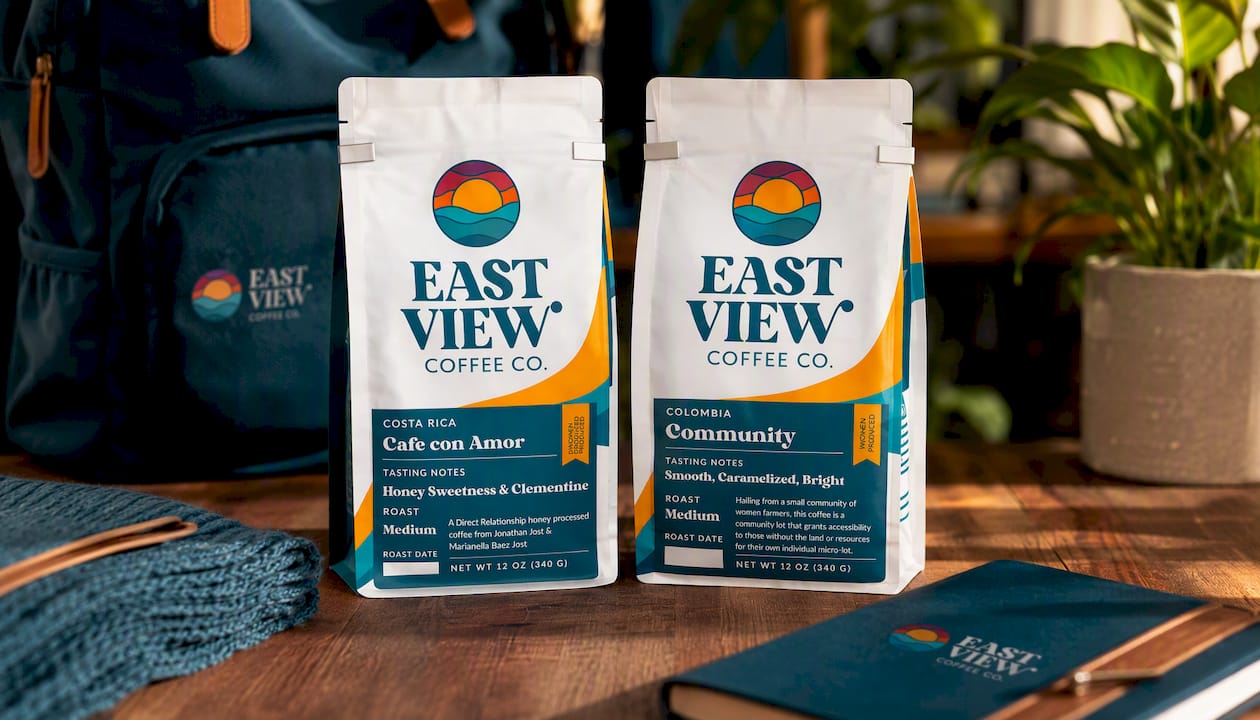
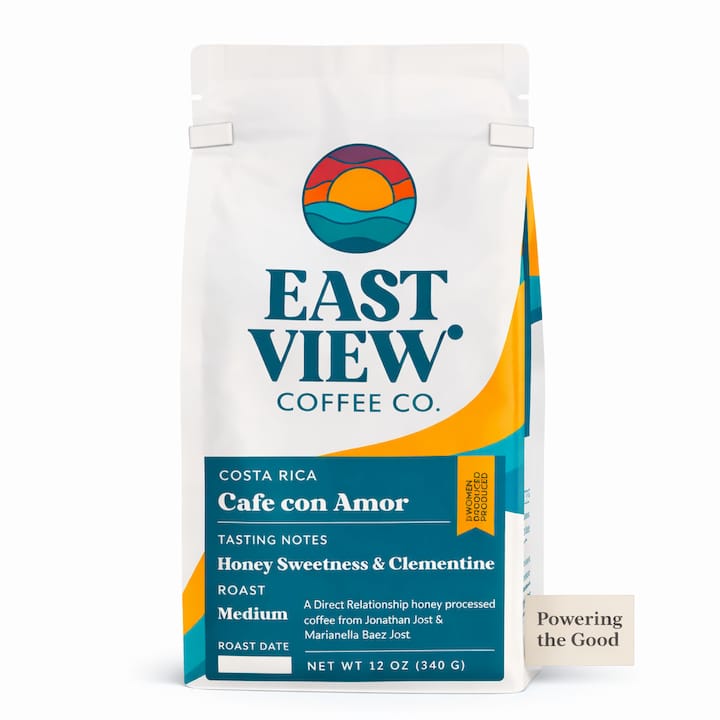
If you want the direct-relationship model discussed above in your own cup, the Café con Amor coffee from Costa Rica is sourced through exactly that kind of named farm relationship. For a small-batch, community-focused option, the Community Freshly Roasted Coffee reflects the same sourcing values. Prefer something that shows up automatically? A coffee subscription keeps ethically sourced coffee arriving on your schedule without repeating the decision every few weeks. Browse the full lineup of freshly roasted specialty coffee, including Dark & Bold, Smooth + Balanced, Light & Bright, and decaffeinated options, and pick the roast that matches your morning.
Sources
- Fair Trade Certified — Coffee (Fair Trade USA)
- What Is Fair Trade Coffee? Certification Explained — Coffee Studies
- The Problem With Fair Trade Coffee — Stanford Social Innovation Review (SSIR)
FAQ
Is Fair Trade Coffee Healthier?
No. Fair Trade certification governs pricing, labor conditions, and environmental practices, not nutritional content. Coffee’s health effects come down to roast, brewing method, and how much you drink, not whether it’s certified.
Why Is Fair Trade Coffee More Expensive?
The price floor and mandatory Fairtrade Premium get built into wholesale costs before roasters ever buy the beans, which is the mechanism behind Fair Trade’s minimum pricing structure. That added cost funds the farmer protections the certification exists to guarantee.
Is Starbucks Fair Trade Coffee?
Starbucks primarily sources through its own C.A.F.E. Practices verification program rather than relying solely on Fairtrade International or Fair Trade USA certification. Some limited Starbucks products have carried Fair Trade certification over the years, but it isn’t the company’s primary sourcing model.
Which Coffee Brands Are Fairtrade Certified?
Certified brands carry either the Fairtrade International seal or the Fair Trade Certified mark from Fair Trade USA, and you can confirm a specific product by checking the certifier’s own listings. Eastviewcoffee combines direct relationships with women-owned farms alongside transparent sourcing rather than relying on Fair Trade certification alone, giving shoppers a documented alternative path to ethical sourcing.