
Hotel Coffee Supplier Blueprint: 4 Guest Moments, RFP Ready Checklist
For most hotels, the right call is a managed coffee service or a specialty roaster that supplies equipment, training, and support alongside the beans. Chasing the lowest per-pound price backfires when a machine breaks during a sellout weekend. Judge suppliers on three things: freshness (a clear roast-to-delivery window), equipment and service coverage, and dependable logistics with a written service level agreement.
TL;DR:
- Hotels should prioritize suppliers offering clear roast-to-delivery windows, reliable logistics, and comprehensive equipment and service coverage to reduce downtime risks.
- In-room coffee options should match guest demands: capsule systems for simplicity and convenience, or bean-to-cup units for better taste and lower per-cup costs with proper cleaning.
- RFPs must focus on operational reliability, roast freshness, technician response times, and staff training support, rather than price alone, to prevent hidden costs.
- A phased implementation, including site audits and pilot programs, helps ensure equipment compatibility, staff proficiency, and guest satisfaction before full rollout.
- Chains must verify suppliers’ capacity across multiple locations, with regional distribution and flexible volume agreements to maintain freshness and consistent service.
Table of Contents
- Hotel Coffee Supplier Guide: Matching Programs To Guest Moments
- What Should You Look For In A Hotel Coffee Supplier?
- Designing Coffee Service By Venue
- Building The RFP: Questions, Scoring, and Red Flags
- From Assessment to Launch: A Realistic Timeline
- How East View Coffee Fits A Procurement Evaluation
- Types Of Coffee Beans And Blends For Different Hotel Settings
- Assessing Supplier Scalability For Chain Expansion
- Fitting Coffee Service Into Existing Kitchen And Barista Workflows
- How Coffee Quality Shapes Guest Satisfaction Scores
- What’s Changing In Hotel Coffee Right Now
- Food Safety And Hygiene Rules Coffee Suppliers Must Meet
- A Procurement Editor’s Take On Getting This Right
- Request Samples And Evaluate East View Coffee For Your Property
- Sources
- FAQ
Hotel Coffee Supplier Guide: Matching Programs To Guest Moments
A hotel coffee supplier guide only earns its name if it separates guest touchpoints instead of treating coffee as one line item. Each moment carries different equipment needs, staffing demands, and supplier obligations.
- In-room: single-serve capsule systems or compact bean-to-cup units. The supplier should handle replenishment scheduling and clear guest instructions printed at the machine.
- Lobby and breakfast: higher-volume bean-to-cup or supervised espresso setups. This is where throughput planning and water quality matter most.
- Banquets and meetings: commercial batch brewers with backup units on standby, since a stalled brewer during a 200-cover breakfast is a service failure, not an inconvenience.
- Retail: packaged bags for the gift shop or pantry, merchandised for impulse purchase and margin.
For property-size guidance, economy hotels usually need only in-room and simple lobby service. Midscale properties add supervised breakfast bars. Upscale and full-service hotels need all four moments covered, with the supplier contractually on the hook for beans, preventative maintenance, staff training, and spare parts. Guest expectations around freshness and equipment support increasingly extend across all these touchpoints, not just the lobby.
What Should You Look For In A Hotel Coffee Supplier?
Score every proposal against five criteria, in this order of weight.
- Quality controls. Ask for roast dates on every delivery, not just a general “fresh roasted” claim, plus a standing offer for sample cupping before you sign.
- Operational reliability. A written SLA with delivery cadence, an emergency response window, and clarity on whether coverage is regional or national.
- Equipment and maintenance. Warranty terms, a preventative maintenance schedule, and loaner units while repairs happen.
- Training and onboarding. Structured modules for new hires plus a refresh plan for the seasonal turnover hospitality staffing sees every year.
- Commercial terms. Volume pricing tiers, billing frequency, minimum order quantities, and what happens if you need to exit the contract early.
SHFM’s procurement guidance makes a point worth repeating: RFPs built around operations and service level expectations outperform RFPs built around price alone. A cheap per-pound rate tied to a supplier with no regional technician coverage costs more in downtime than it ever saves in the invoice.
Pro Tip: Ask for two references from properties similar in size and star rating to yours, and actually call them. A supplier confident in its service record will hand these over without hesitation.
Designing Coffee Service By Venue
Equipment specs belong in the RFP, not left to a supplier’s default recommendation.
In-room service splits into two camps. Capsule systems are simple for guests and easy to standardize across a property, but they cost more per cup and generate more packaging waste. Compact bean-to-cup units taste better and cost less per serving, but they need more frequent cleaning and a housekeeping team trained to spot low-bean or low-water alerts.
Lobby and breakfast areas need throughput math before equipment gets chosen. A property serving 150 breakfast covers in a two-hour window needs a bean-to-cup unit rated for that volume, adequate water pressure, and a dedicated 20-amp circuit, not a countertop machine borrowed from a break room.
- Banquet and meeting space calls for commercial batch brewers sized to the largest booked event, with a second unit as backup.
- Back-of-house retail works best with a curated set of packaged SKUs, merchandised near checkout or the concierge desk, where breakfast-oriented roast profiles tend to move fastest.
- Bulk-brew workflows for banquets should include a written redundancy plan: what happens if the primary brewer fails 30 minutes before doors open.
Building The RFP: Questions, Scoring, and Red Flags
Ask every finalist supplier these questions directly, in writing.
- What is the maximum time between roast date and delivery to our property?
- Can we run a paid or complimentary cupping session before committing to a contract?
- What is your average technician response time for equipment failures, by region?
- Do you provide loaner equipment during repairs, and at what cost?
- What training materials and refresher schedules do you provide for staff turnover?
- What certifications do your beans carry, and can you provide documentation?
- What are your minimum order quantities and billing terms?
- What does an early contract exit look like, financially?
Weighting cost last feels counterintuitive to a finance team, but SHFM’s own procurement research argues operations and service commitments deserve more weight than raw price, since the hidden cost of downtime or stale coffee dwarfs a few cents per cup.
Reject any proposal missing a stated roast window, offering no sample program, using vague SLA language like “reasonable response time,” or lacking a documented preventative maintenance plan.
From Assessment to Launch: A Realistic Timeline
A phased rollout protects you from committing chain-wide to an unproven supplier.
- Weeks 1 to 2: site audit covering water quality, electrical capacity, and current equipment condition across each venue.
- Weeks 3 to 6: run a two-property pilot with clear acceptance criteria set in advance, not decided after the fact.
- Weeks 7 to 10: full installation and staff training, followed by a 90-day performance review tracking guest satisfaction scores, equipment uptime, and waste against cost of goods sold.
Budget planning splits into two levers: a managed fee that bundles equipment and service into one predictable line, or a capital purchase where you own the machines and negotiate beans separately. Managed programs generally lower upfront cost and shift maintenance risk to the supplier, which is why they suit most properties outside large chains with in-house facilities teams. A structured KPI-driven rollout with guest satisfaction, uptime, and waste tracked from day one gives you leverage to renegotiate or exit if the supplier underperforms.
How East View Coffee Fits A Procurement Evaluation
This supplier sources exclusively from women-owned farms and roasts in small batches, providing a traceable supply chain for verification.
- Sample cupping is typically offered before committing to volume.
- Wholesale pricing can be compared against your current supplier’s invoice.
- Training materials may be provided for front-of-house and banquet staff.
- Direct, local support is often provided as opposed to a national call center queue.
Properties weighing certification claims should also review the differences between Rainforest Alliance and Fair Trade labeling before writing certification language into an RFP.
Types Of Coffee Beans And Blends For Different Hotel Settings
Guest-room coffee should skew forgiving. A Smooth + Balanced medium roast performs well in capsules and drip units because it tolerates inconsistent water temperature and brew time better than a light roast does. Light and fruity origin coffees taste brighter but punish sloppy brewing, so they work best in supervised lobby bars staffed by someone who actually dials in the grind.
Breakfast service benefits from a Dark & Bold profile with chocolate or caramel notes, since bold flavors cut through cream and sugar and survive sitting in a batch brewer for twenty minutes without turning bitter. Banquet coffee should follow the same logic. Bold, consistent flavor matters more than origin story when you’re serving 300 people from an urn.
Decaffeinated coffee deserves real shelf space, not an afterthought pot warming next to the regular brew. Evening conference attendees and health-conscious leisure travelers ask for it constantly, and a stale decaf option reflects as poorly on the property as a stale regular one.
Single-origin and direct-relationship coffees, like a Costa Rican lot sourced through a direct relationship with the farm, work best as a rotating retail or specialty feature rather than the default pour. They cost more, taste distinct, and give upscale and lifestyle properties a story to tell guests who ask where the coffee comes from.
Assessing Supplier Scalability For Chain Expansion
A supplier that handles one boutique property well can still fail when asked to service fifteen locations across three states. Before signing a chain-wide agreement, verify the supplier’s actual roasting capacity against your projected volume across every property, not just the flagship.
Ask directly whether the supplier operates regional distribution or ships everything from a single facility. A single-facility model creates a freshness problem the farther a property sits from the roastery, since roast-to-delivery windows stretch as shipping distance grows.
Check technician and account management coverage by region, not company-wide. A supplier with excellent East Coast service and no presence in the Mountain West is not scalable for a chain with properties in both regions. Also ask for references from other multi-property clients who scaled with that same supplier, and ask those references specifically about consistency between locations, not just service at headquarters.
Finally, review contract flexibility. Chains grow and shrink footprints. A rigid volume commitment written for ten properties becomes a liability if you close two or add five, so negotiate tiered volume terms with room to adjust annually.
Fitting Coffee Service Into Existing Kitchen And Barista Workflows
Coffee service rarely stands alone. It has to work inside a kitchen already running breakfast service, room service, and banquet prep on tight staffing. The supplier’s equipment footprint needs to fit existing counter space and electrical capacity, not force a kitchen redesign.
Barista-staffed properties need a different conversation than properties running unattended bean-to-cup machines. If you employ trained baristas, the supplier should provide beans suited to manual espresso extraction and offer periodic skills refreshers, since palates and techniques drift over months without practice. If your model is unattended self-service, the supplier’s equipment needs to be closer to foolproof, with clear guest-facing instructions and remote monitoring for low supply alerts where the technology supports it.
Cross-train kitchen staff on basic machine troubleshooting so a jammed grinder doesn’t require an emergency service call every time. A supplier that provides simple, laminated troubleshooting guides at each machine reduces service calls significantly. Coordinate delivery schedules with existing food deliveries where possible. Consolidating trucks at the loading dock reduces disruption for a property already juggling multiple vendors.
How Coffee Quality Shapes Guest Satisfaction Scores
Coffee shows up in guest reviews far more often than hotel operators expect, and rarely in a neutral way. A weak cup gets called out by name in a one-star review; a genuinely good cup gets mentioned as a highlight even when nothing else stood out. Guest expectations around freshness and quality have risen alongside the specialty coffee shops guests visit at home, which means a stale hotel pot now reads as a bigger letdown than it did a decade ago.
Business travelers and leisure guests weigh coffee differently. A business traveler judges coffee on speed and consistency at 6:30 AM before a flight. A leisure guest lingering over breakfast judges it on flavor and presentation. Programs built to satisfy only one group leave the other underserved.
Consistency across visits matters as much as quality on any single morning. A guest who loved the coffee in March and gets a watery cup in September notices the drop, and that inconsistency often traces back to inconsistent roast dates or an untrained new hire rather than a supplier problem. This is exactly why roast-window guarantees and refresher training belong in the contract, not just the sales pitch.
What’s Changing In Hotel Coffee Right Now
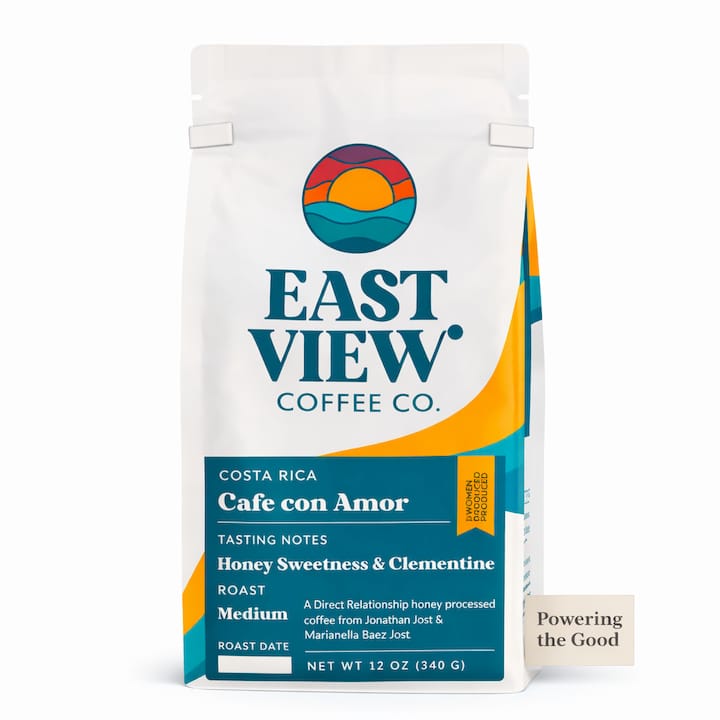
Guests increasingly expect the same specialty-grade experience in a hotel lobby that they get from an independent coffee shop, and that shift is pushing more properties toward direct-relationship and traceable-origin coffees as a point of differentiation. A Costa Rican direct-relationship coffee featured on a breakfast menu gives a property a story that a generic house blend never will.
Sustainability certification is moving from a nice-to-have to a screening criterion. Corporate travel buyers and meeting planners increasingly ask about sourcing practices when selecting host properties, which puts pressure on procurement to document certifications like Fair Trade rather than rely on a supplier’s word.
Decaf and low-caffeine demand keeps climbing as guest demographics shift, and equipment innovation is following. Smaller-footprint bean-to-cup machines now fit spaces that used to accommodate only drip units, letting midscale properties offer espresso-based drinks without a full barista bar. Custom or private-label bagged coffee for retail and gifting is also gaining traction. Properties that once bought generic house-brand bags are increasingly asking suppliers for branded custom blends instead.
Food Safety And Hygiene Rules Coffee Suppliers Must Meet
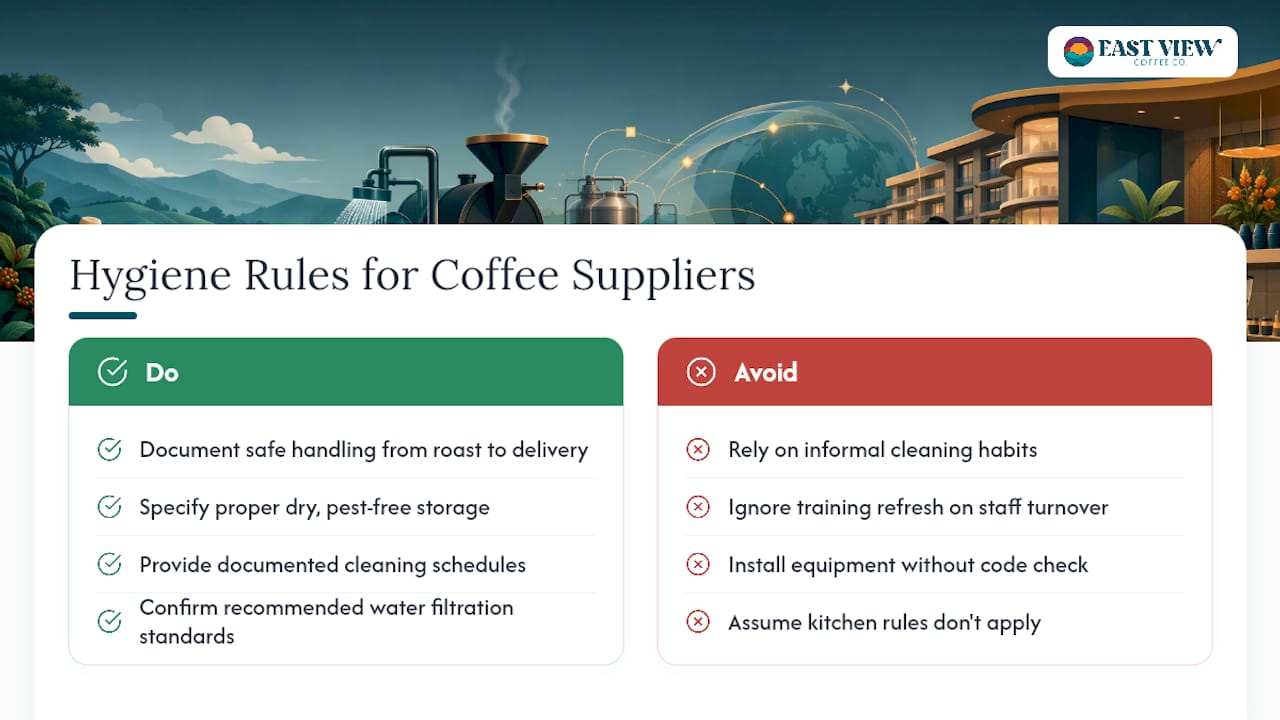
Coffee service falls under the same food safety expectations as any other beverage program in a hotel, even though it feels less regulated than the kitchen. Suppliers should be able to document safe handling practices from roasting through delivery, including proper storage conditions that keep beans away from moisture and pest exposure.
Equipment hygiene is where most lapses actually happen. Bean-to-cup and espresso machines need documented cleaning schedules, not informal habits, since milk residue and coffee oils build up quickly and create bacterial risk in a high-traffic lobby setting. Ask suppliers whether their training program includes specific hygiene protocols for daily and deep cleaning, and whether that training gets refreshed when staff turns over.
Water quality matters more than most procurement teams realize. Poor water filtration doesn’t just affect taste. It can allow scale buildup that harbors bacteria inside internal machine components that are hard to inspect visually. Any RFP should ask suppliers to confirm recommended filtration standards for their specific equipment.
Local health department requirements still apply to any beverage station serving the public, including hotel lobbies and breakfast bars, so procurement should confirm the supplier’s equipment and setup recommendations align with the jurisdiction’s food service code before installation, not after an inspection flags a problem.
A Procurement Editor’s Take On Getting This Right
The biggest mistake hotels make isn’t picking the wrong roaster. It’s picking a supplier based on a tasting sample and skipping the operational stress test entirely. Run a real pilot, put SLA and roast-window guarantees in writing, and track guest satisfaction and uptime like you would any other capital investment. Total cost of ownership beats price-per-pound every time you actually run the numbers.
— Jenny
Request Samples And Evaluate East View Coffee For Your Property
Eastviewcoffee gives procurement teams something a national distributor can’t: direct access to the roaster, not a call center ticket queue. Sourced exclusively from women-owned farms and roasted in small batches in Kenosha, Wisconsin, every bag ships with a traceable origin story your guests can actually ask about at the breakfast bar.
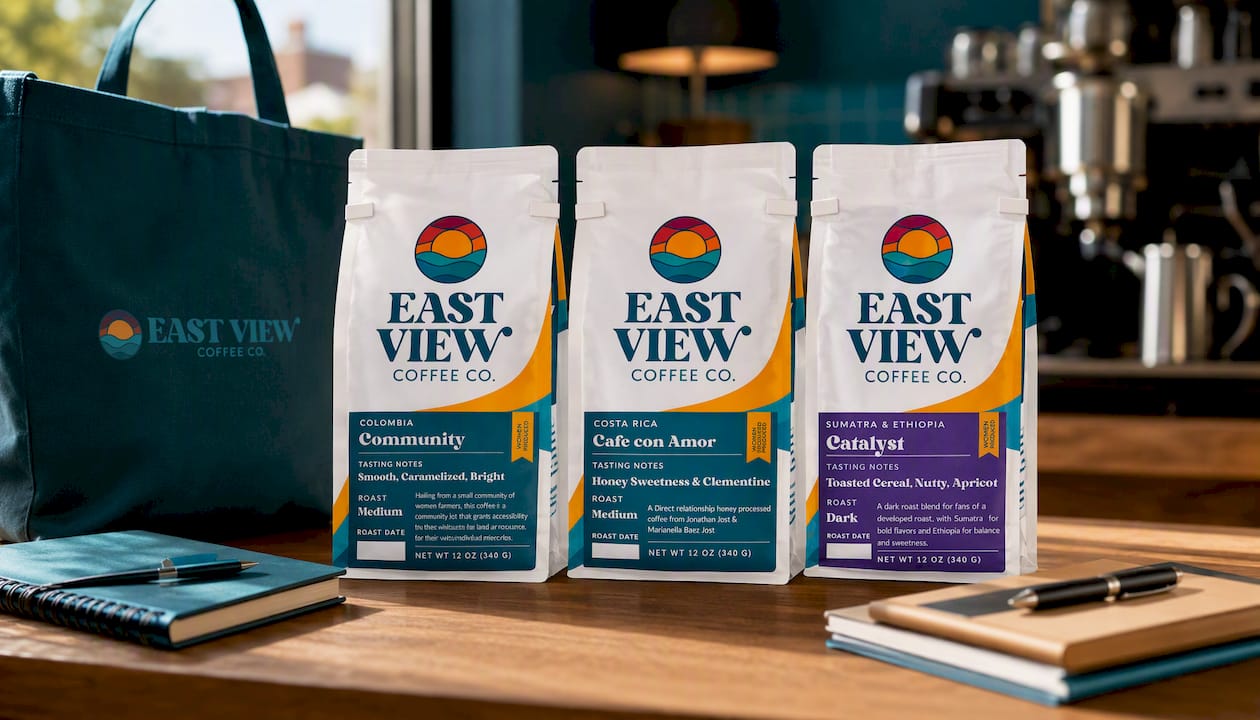
Start by reviewing the Community Freshly Roasted Coffee and Catalyst Freshly Roasted Coffee product pages to see roast profiles suited to lobby and breakfast service, or check the equipment and merchandise collection if your RFP still needs machine specs. Properties wanting a traceable single-origin option for retail or a featured breakfast pour should look at the Costa Rican direct-relationship coffee.
For smaller properties or a low-commitment pilot, the coffee subscription offers a simple way to test cadence and quality before scaling to a wholesale account. Request wholesale pricing, order sample bags across the Dark & Bold, Light & Bright, and decaffeinated lines, and propose a 30 to 60 day pilot at one property before committing chain-wide.
Sources
Verify certification claims through Fairtrade’s coffee standards, study RFP structure through SHFM’s procurement guidance, and review supplier sourcing channels through Toast’s vendor selection guide.
- What we certify: coffee | Fairtrade
- Hotel managed coffee services: Elevate guest experience | Busy Bean Coffee
FAQ
What brand of coffee do hotels use?
There’s no single brand hotels rely on. Properties split between national distributors, managed coffee services, and local specialty roasters, with Smooth + Balanced or bold breakfast blends chosen based on venue and guest profile rather than one dominant brand name.
What is the 15-15-15 coffee rule?
Definitions of this rule vary across coffee sources, and it isn’t consistently documented as an industry-wide standard for hotel procurement. Rather than rely on an informal ratio, ask suppliers directly for their documented brew ratios and water temperature specs for each equipment type you’re installing.
How do you find coffee suppliers for a hotel?
Search online marketplaces, trade shows, and hospitality industry associations, and request proposals from multiple supplier types before narrowing your list, as Toast’s supplier guidance recommends. Local specialty roasters like Eastviewcoffee are also worth contacting directly for sample cuppings and wholesale pricing.
What is the 80/20 rule for coffee?
This ratio isn’t a standardized industry benchmark for hotel coffee procurement, and definitions differ depending on the source. Focus procurement decisions on documented roast windows, SLAs, and training support instead of an unverified rule of thumb.
Should hotels choose a managed coffee service or buy equipment outright?
Managed services bundle equipment, maintenance, beans, and training into one predictable fee, which lowers upfront cost and shifts repair risk to the supplier. Buying equipment outright gives more control but requires an in-house maintenance plan, so most properties without a dedicated facilities team do better with a managed arrangement.