
Wholesale Coffee Pricing: A Business Buyer's Benchmarking Guide
U.S. wholesale coffee pricing in 2026 breaks down roughly like this: green Arabica commodity lots trade near $2.50–$4.50/lb FOB depending on origin and grade, specialty green runs $5–$12+/lb for traceable, high-scoring lots, and roasted specialty wholesale typically lands between $12–$22/lb for café and foodservice buyers. ICE Arabica futures sat at 315.22 USd/lb on August 10, 2026, giving you the live commodity floor. The ICO composite indicator (I-CIP) averaged 287.71 US¢/lb for July 2026. The SCRPI tracks specialty retail at $35.98/lb as of June 2026. Those three numbers are your benchmarking anchors.
If you want to skip straight to the math, jump to the landed-cost example below. If you’re evaluating a supplier quote right now, the quick reference table near the end gives you a dated snapshot to compare against.
Key Takeaways
Wholesale coffee pricing in the U.S. requires benchmarking against ICE futures, the ICO I-CIP, and the SCRPI before accepting any supplier quote, then running a full landed-cost calculation to find the true per-pound roasted cost.
| Point | Details |
|---|---|
| Current price benchmarks | Green Arabica commodity: $2.50–$4.50/lb FOB; specialty green: $5–$12+/lb; roasted specialty wholesale: $12–$22/lb. |
| Primary cost drivers | Origin, cupping score, processing method, certifications, lot size, and roasting yield loss all shift the final per-pound cost. |
| Landed-cost method | Add freight, insurance, duty, handling, inland transport, and roasting yield loss to FOB price before comparing supplier quotes. |
| Contract essentials | Require product spec, cupping acceptance clause, price formula (ICE + differential), and a quality-credit or hold clause in writing. |
| Eastviewcoffee wholesale | Ethically sourced specialty lots from women producers, roasted in Kenosha, WI; transparent pricing and flexible MOQs for cafés and offices. |
Table of Contents
- How do market benchmarks like ICE, ICO, and SCRPI translate into real wholesale quotes?
- What actually drives wholesale coffee pricing differences between suppliers?
- What pricing models and trade terms should you understand before comparing quotes?
- How do you calculate the true landed cost of a green coffee purchase?
- Where can you buy wholesale coffee in the U.S.?
- How do you negotiate price, terms, and quality guarantees as a wholesale buyer?
- What minimums and lead times should you expect for wholesale coffee orders?
- Quick reference: typical U.S. wholesale price ranges
- What does Eastviewcoffee’s wholesale program offer buyers?
- How do U.S. tariffs and taxes affect your wholesale coffee landed cost?
- What the landed-cost math actually taught me about choosing a supplier
- Eastviewcoffee brings specialty wholesale pricing within reach for cafés and offices
- Sources
- FAQ
How do market benchmarks like ICE, ICO, and SCRPI translate into real wholesale quotes?
Three indexes do most of the heavy lifting when buyers try to make sense of a supplier’s price sheet.
ICE Arabica Futures (traded on the Intercontinental Exchange) set the global commodity reference for green Arabica. Quotes are in US cents per pound. Physical green coffee is then priced as the ICE price plus or minus a differential that reflects origin, grade, and supply-demand at the farm or mill level. When ICE futures hit 315.22 USd/lb in August 2026, a commodity-grade Colombian lot might quote at ICE +15¢ to +40¢/lb FOB, while a washed Ethiopian specialty lot could carry a differential of $1.50–$3.00/lb above that same ICE reference.
ICO Indicator Prices (I-CIP) are published monthly by the International Coffee Organization and cover four groups: Colombian milds, other milds, Brazilian naturals, and robustas. The July 2026 composite I-CIP averaged 287.71 US¢/lb. For U.S. buyers, the I-CIP is most useful as a cross-check: if a green broker quotes you a price that diverges sharply from the relevant I-CIP group average without a clear explanation, that’s worth questioning.
The Specialty Coffee Retail Price Index (SCRPI), published quarterly by the Specialty Coffee Transaction Guide, tracks retail roasted specialty prices. The Q2 2026 SCRPI rose 9.8% quarter over quarter, with the average retail roasted specialty price reaching $35.98/lb at the end of June 2026. That retail figure is not your wholesale cost, but it tells you how much margin the retail channel is absorbing and whether specialty prices are trending up or down. The Transaction Guide itself also publishes actual transaction data for green specialty lots, which is increasingly the preferred reference for buyers negotiating premiums above the C-market.
Statistic callout: The SCRPI’s 9.8% quarterly rise in Q2 2026 signals that specialty retail prices are moving faster than commodity futures, a divergence that typically widens wholesale premiums for high-scoring lots.
Always date-stamp any benchmark you use. Futures move daily; the I-CIP updates monthly; the SCRPI is quarterly. A price sheet from three months ago may already be off by 20¢/lb or more.
What actually drives wholesale coffee pricing differences between suppliers?
Specialty coffee pricing is not arbitrary, even when two quotes for “Colombian washed” differ by $3/lb. Here are the real levers:
Origin and growing region. Ethiopia, Colombia, and Kenya command premiums over Vietnam or standard Brazilian naturals because of cup profile, altitude, and market demand. Robusta FOB prices run significantly below Arabica, reflecting both quality perception and commodity supply.
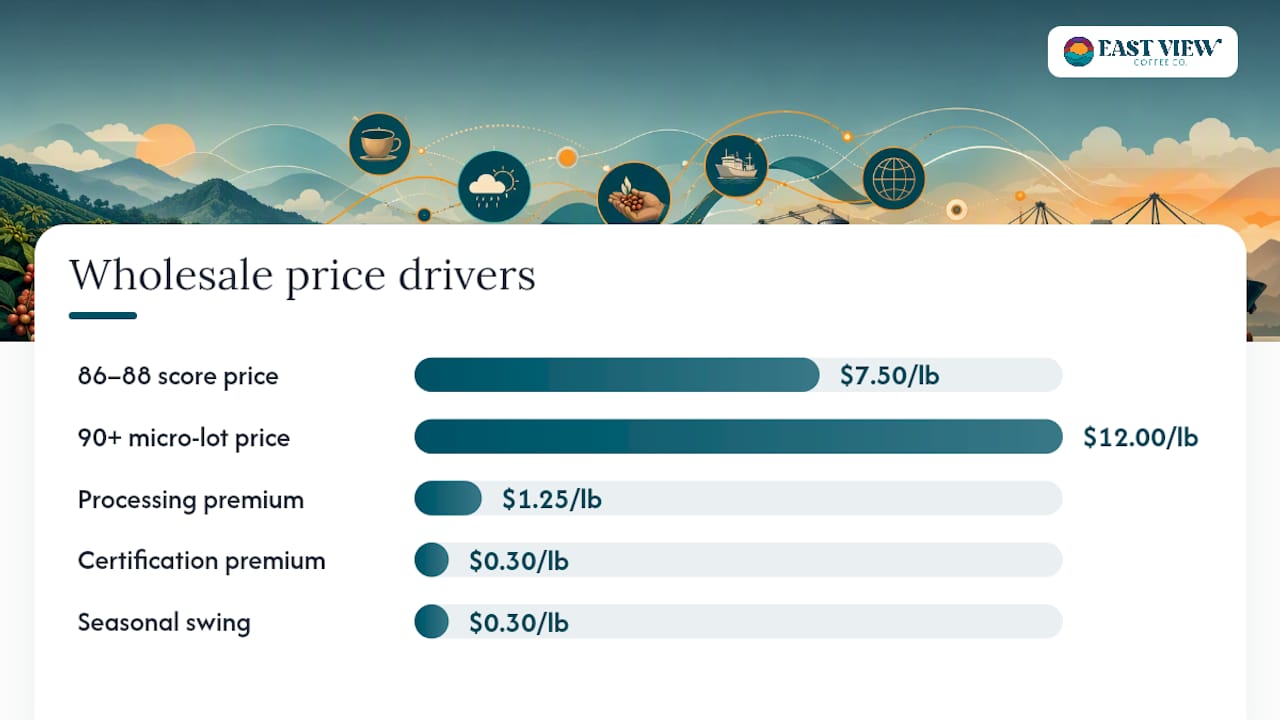
Grade and cupping score. Specialty-grade coffee (typically 80+ on the SCA scale) carries a premium above commodity grade. A lot scoring 86–88 points might price at $6–$9/lb green FOB; a 90+ micro-lot can reach $12/lb or beyond. Cupping is how buyers verify that a score is real before committing to a purchase.
Processing method. Natural-processed and anaerobic lots cost more to produce and command higher prices than standard washed coffees. Expect a $0.50–$2.00/lb premium for well-executed naturals or anaerobics from reputable origins.
Certifications. Organic and Fair Trade certifications add cost at the farm and certification-body level. Organic premiums typically add $0.20–$0.40/lb to green FOB; Fair Trade minimums set a floor price that may or may not exceed the C-market depending on current futures.
Lot size and MOQ. This is where buyers leave money on the table most often. FOB price lists from origin exporters show steep per-kg discounts as orders scale from samples to microlots to container loads. A 350 kg order of Java Grade 1 might quote at $9.50–$15.50/kg FOB Belawan; a full container load negotiates lower per-unit.
Packaging and bagging. GrainPro or vacuum-sealed bags add cost but protect quality during transit. Jute sacks are cheaper but expose the coffee to moisture. For specialty lots, the packaging premium is usually worth it.
If you’re buying green and roasting yourself, that loss must be factored into your per-pound roasted cost. Buying pre-roasted eliminates the yield calculation but shifts the margin to the roaster.
Seasonal and weather-related supply. El Niño conditions in Brazil and Central America have tightened supply in recent seasons, contributing to the volatility visible in ICE futures. A late harvest or frost event can move the C-market 20–40¢/lb in a week, dragging physical quotes with it.
Pro Tip: The single best indicator that a price reflects real value rather than markup is lot-level traceability. Ask for the mill name, harvest date, and cupping score. A supplier who can’t provide all three for a “specialty” lot is probably pricing commodity coffee at specialty margins.
What pricing models and trade terms should you understand before comparing quotes?
Getting quotes from three suppliers and comparing the per-pound number is a mistake if those quotes use different trade terms. Here’s how to read them:
-
FOB (Free on Board): The seller covers costs to load the coffee onto the vessel at the origin port. You pay ocean freight, marine insurance, import duty, and all costs from that point forward. Most green coffee wholesale quotes are FOB.
-
CIF (Cost, Insurance, Freight): The seller covers ocean freight and marine insurance to the destination port. You still pay import duty, customs clearance, inland transport, and storage. CIF quotes look higher than FOB but include costs you’d pay anyway, so compare them on a landed basis.
-
Per-pound roasted vs. per-bag vs. per-container: Roaster wholesale programs typically quote per pound of roasted coffee. Importers and brokers quote green per pound or per kilogram. Container pricing (per metric ton) is common for large commodity orders. Always convert to a common unit before comparing.
-
Spot purchases: You buy at today’s price for near-term delivery. Simple, but you carry full price risk if the market moves before your next order.
-
Forward contracts: You lock a price today for delivery weeks or months out. Useful when futures are trending up or when you need supply certainty for a busy season. The tradeoff is that you lose upside if prices fall.
-
Multi-year supply agreements: Common between roasters and direct-trade importers. These typically include a price formula (ICE + fixed differential) rather than a fixed price, so both parties share market risk. They also usually include quality guarantees and cupping acceptance rights.
-
Payment terms: Net 30/45/60 is standard for established wholesale relationships. New buyers often start with prepayment or letters of credit, which can add 1–3% to effective cost. Negotiating net-30 terms after a few successful orders is worth the ask.
Pro Tip: When a supplier quotes a fixed per-pound price rather than ICE + differential, ask what ICE level that price assumes. If futures drop 30¢/lb before delivery, you want to know whether your contract adjusts or locks you into an above-market rate.
How do you calculate the true landed cost of a green coffee purchase?
The FOB price is just the starting point. Here’s a reproducible method to convert it into a true per-pound roasted cost you can budget from.
Step-by-step method:
- Start with the FOB price per pound (green).
- Add ocean freight (typically $0.10–$0.20/lb for a full container; higher for LCL/partial loads).
- Add marine insurance (roughly 0.5–1% of cargo value, often $0.02–$0.05/lb).
- Add U.S. import duty (currently 0% for most green coffee under HTS 0901.11 and 0901.12; roasted coffee carries a 1.5¢/kg duty under 0901.21).
- Add customs clearance and handling ($0.02–$0.05/lb, depending on broker fees).
- Add inland transport from port to roastery ($0.05–$0.15/lb depending on distance).
- Add storage if applicable ($0.01–$0.03/lb per month).
- Divide by the roasting yield (green weight × yield factor, typically 0.82–0.85 for a medium roast).
- Add packaging and labeling cost per roasted pound.
- Add any local taxes or fees.
Worked example (using sourced benchmarks):
Statistic callout: A ±10% change in roasting yield (from 82% to 80% yield) on this example adds roughly $0.18/lb to the roasted cost. A ±10% freight swing adds about $0.02/lb. Roasting yield is the bigger sensitivity variable by far.
This example uses a $5.50/lb FOB specialty green price, consistent with mid-range specialty lots above the C-market commodity floor. Adjust the FOB line using current ICE futures and your supplier’s differential to get a number specific to your quote.
Where can you buy wholesale coffee in the U.S.?
The supplier type you choose shapes your price, traceability, and minimum order as much as the coffee itself does.
-
Origin importers and green coffee brokers (such as Olam, Sucafina, or regional specialty importers) offer the widest catalog, competitive per-pound pricing at scale, and established logistics. MOQs typically start at one bag (60–70 kg) for specialty lots and scale to full containers (17–20 MT) for commodity. Lead times from origin run 6–12 weeks for ocean freight.
-
Specialty direct-trade exporters at origin (like the Indonesia Specialty Coffee example above, with Java Grade 1 FOB benchmarks of $9.50–$15.50/kg for 350 kg+ orders) offer lot-level traceability and direct producer relationships. Per-unit cost can be competitive for mid-size buyers, but you carry more logistics responsibility.
-
Local roaster wholesale programs offer roasted coffee ready to serve, with lower MOQs (often 5–25 lbs per SKU), faster fulfillment (1–5 business days), and built-in quality control. You pay a roasting and margin premium over green, but you eliminate yield loss, roasting equipment, and logistics complexity. For cafés and offices, this is often the most practical channel.
-
National distributors (broadline foodservice distributors) carry commodity and mid-tier roasted coffee at competitive prices for high-volume buyers. Traceability and specialty selection are limited, but fulfillment is fast and credit terms are standard.
-
Women-produced coffee programs like Eastviewcoffee’s wholesale offering combine specialty quality with ethical sourcing from women farmers, small-batch roasting, and direct relationships. These programs suit buyers who need both quality and a sourcing story their customers care about.
The right channel depends on your volume, your kitchen or bar setup, and how much of the supply chain you want to manage yourself. A café buying 50 lbs/week is almost always better served by a roaster wholesale program than by importing green coffee directly.
How do you negotiate price, terms, and quality guarantees as a wholesale buyer?
Most wholesale coffee prices have more flexibility than the initial quote suggests. The levers that actually move the number:
- Volume commitment. Offering a 6-month or annual volume guarantee, even without a fixed price, gives suppliers planning certainty they’ll price for.
- Payment terms. Prepayment or shorter net terms (net 15 vs. net 45) can unlock 1–3% discounts with smaller roasters and importers.
- Price formula tied to ICE + differential. For green coffee, asking to price at ICE + a fixed differential rather than a fixed per-pound price protects both parties when futures move sharply.
- Quality guarantees and cupping rights. Insist on a pre-shipment sample and cupping acceptance clause. If the lot doesn’t cup to spec, you need a credit or replacement mechanism in writing.
- Inspection and hold clauses. A quality-hold clause lets you reject a shipment that fails agreed moisture or defect standards without penalty.
- Freight and insurance responsibility. On large orders, negotiating CIF instead of FOB shifts logistics risk to the seller and simplifies your landed-cost calculation.
A short contract checklist for any wholesale agreement: product specification (origin, grade, processing, certifications), sample acceptance protocol, MOQ and delivery schedule, price formula or fixed price with ICE assumption stated, payment terms, lead time and force majeure, dispute resolution, and quality-credit or hold clauses.
For buyers concerned about price volatility, forward contracting and hedging with ICE futures or options are practical tools, particularly when weather uncertainty or tariff changes are expected. Locking a differential while leaving the ICE component floating is a common middle-ground approach.
What minimums and lead times should you expect for wholesale coffee orders?
Order size determines almost everything about price, lead time, and supplier options.
| Tier | Typical MOQ | Lead Time | Price Shape |
|---|---|---|---|
| Sample / cupping | 5–25 lbs per SKU | 1–2 weeks (air) | Premium per-gram; not a buying price |
| Microlot / small wholesale | 5–60 kg (1 bag) | 2–6 weeks | Higher per-kg; specialty importers common |
| Standard wholesale | 60–350 kg (1–5 bags) | 6–10 weeks (ocean) | Mid-range; most roaster programs start here |
| Container load | 9–20 MT | 6–12 weeks (origin + transit) | Lowest per-kg; importer or direct-origin channel |
Seasonal harvest windows matter. Ethiopian coffee harvested October–January typically arrives at U.S. ports March–May. Colombian mid-crop (April–June) and main crop (October–December) create two annual supply windows. Buying outside those windows means older crop, which can affect cup quality and sometimes price.
Container availability has been a recurring friction point since 2021, and while conditions have improved, booking 8–12 weeks ahead for origin shipments remains prudent. For roasted wholesale from a domestic roaster, fulfillment is typically 2–5 business days for in-stock SKUs, with custom roast orders taking 1–2 weeks.
Quick reference: typical U.S. wholesale price ranges
The figures below reflect mid-2026 market conditions. Always verify against current ICE futures and the latest I-CIP before using these in a budget.
| Coffee Type | Typical U.S. Wholesale Range | Basis / Notes |
|---|---|---|
| Green Arabica, commodity grade | $2.50–$4.50/lb | FOB origin; ICE-referenced; C-market historically $1.50–$3.50/lb per Coffee Tower |
| Green Arabica, specialty grade | $5–$12+/lb | FOB; lot-dependent; 80+ SCA score; premium above C-market |
| Green Robusta | $0.50–$2.00/lb | FOB; commodity grade; lower demand in U.S. specialty channel |
| Roasted specialty wholesale | $12–$22/lb | Ex-roastery; café/foodservice; SCRPI retail avg $35.98/lb (June 2026) |
| Roasted commodity/commercial | $6–$9/lb | Foodservice distributor pricing; lower traceability |
Snapshot date: August 2026. ICE Arabica futures: 315.22 USd/lb (August 10, 2026). ICO I-CIP composite: 287.71 US¢/lb (July 2026 average).
To update these benchmarks: check ICE futures daily, the ICO I-CIP monthly report, and the SCRPI quarterly. A 20¢/lb move in ICE typically shifts physical green quotes by a similar amount within 2–4 weeks.
What does Eastviewcoffee’s wholesale program offer buyers?
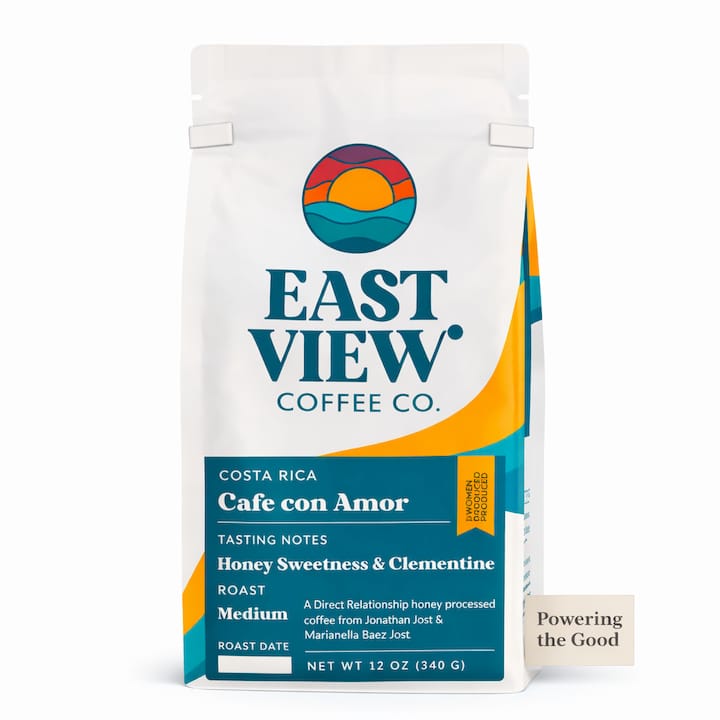
Eastviewcoffee sources exclusively from women-owned farms, roasts in small batches in Kenosha, Wisconsin, and prices wholesale transparently: origin cost, roasting, packaging, and a fair margin are all factored in, with no hidden fees. The program suits cafés, offices, and organizations that want specialty quality with a sourcing story that holds up to scrutiny.
Wholesale program highlights:
- Ethical sourcing: Every lot comes from women producers who receive premium compensation above commodity market rates.
- Small-batch specialty roasts: Single-origin, blends, decaf, and half-caff options roasted to order for freshness.
- Flexible MOQs: Designed for local businesses and offices, not just container-load buyers.
- Typical turnaround: 2–5 business days for standard wholesale orders from Kenosha.
- Pricing transparency: Eastviewcoffee builds wholesale pricing from origin cost up, so buyers understand what they’re paying for.
For buyers evaluating ongoing supply, the office coffee program covers recurring wholesale needs with consistent quality and scheduling. To explore seasonal lots or request a custom quote, the custom coffee recommendation page is the right starting point.
How do U.S. tariffs and taxes affect your wholesale coffee landed cost?
Green coffee (unroasted) is imported into the U.S., where roasters import green and roast domestically. Roasted coffee (HTS 0901.21) carries a 1.5¢/kg duty, small enough that it rarely changes sourcing decisions on its own.
The more significant tariff risk in 2026 is the broader U.S. trade policy environment. Section 301 tariffs and the ongoing review of Most Favored Nation (MFN) rates have created uncertainty for importers sourcing from certain origins. Buyers sourcing from Vietnam (a major Robusta origin) should monitor trade policy developments closely, as tariff changes there have a direct pass-through to U.S. roasted coffee costs.
State and local sales taxes generally do not apply to wholesale coffee transactions between registered businesses, but buyers should confirm their state’s resale exemption requirements and maintain valid resale certificates on file with suppliers.
For buyers using local sourcing strategies to reduce import exposure, domestic roaster wholesale programs eliminate import duty and tariff risk entirely, since the green coffee has already cleared customs before you purchase roasted product.
This section covers general information on tariff and tax structures. Confirm current HTS classifications and applicable rates with a licensed customs broker or trade attorney before finalizing import plans.
What the landed-cost math actually taught me about choosing a supplier
The first time I ran a full landed-cost calculation on a green coffee purchase versus buying roasted wholesale from a local roaster, the result was not what I expected. The green FOB price looked dramatically cheaper per pound until I added ocean freight, customs clearance, inland transport, and then divided by the roasting yield. The gap between “cheap green” and “expensive roasted wholesale” narrowed to about $1.20/lb roasted, and that $1.20 had to cover my roasting labor, equipment depreciation, and the time I spent managing the import logistics.
The lesson: the landed-cost method is not just an accounting exercise. It forces you to price your own time and risk honestly. For most small cafés and offices buying under 200 lbs/week, a roaster wholesale program will beat a direct green import on total cost once you account for everything. The math changes at scale, but you have to run the numbers for your specific volume and setup before assuming green is cheaper.
Eastviewcoffee brings specialty wholesale pricing within reach for cafés and offices
Sourcing specialty coffee wholesale doesn’t have to mean navigating container minimums, import logistics, and opaque pricing. Eastviewcoffee’s wholesale program gives cafés, offices, and organizations direct access to small-batch specialty coffee from women-owned farms, with pricing built transparently from origin cost through roasting and packaging.
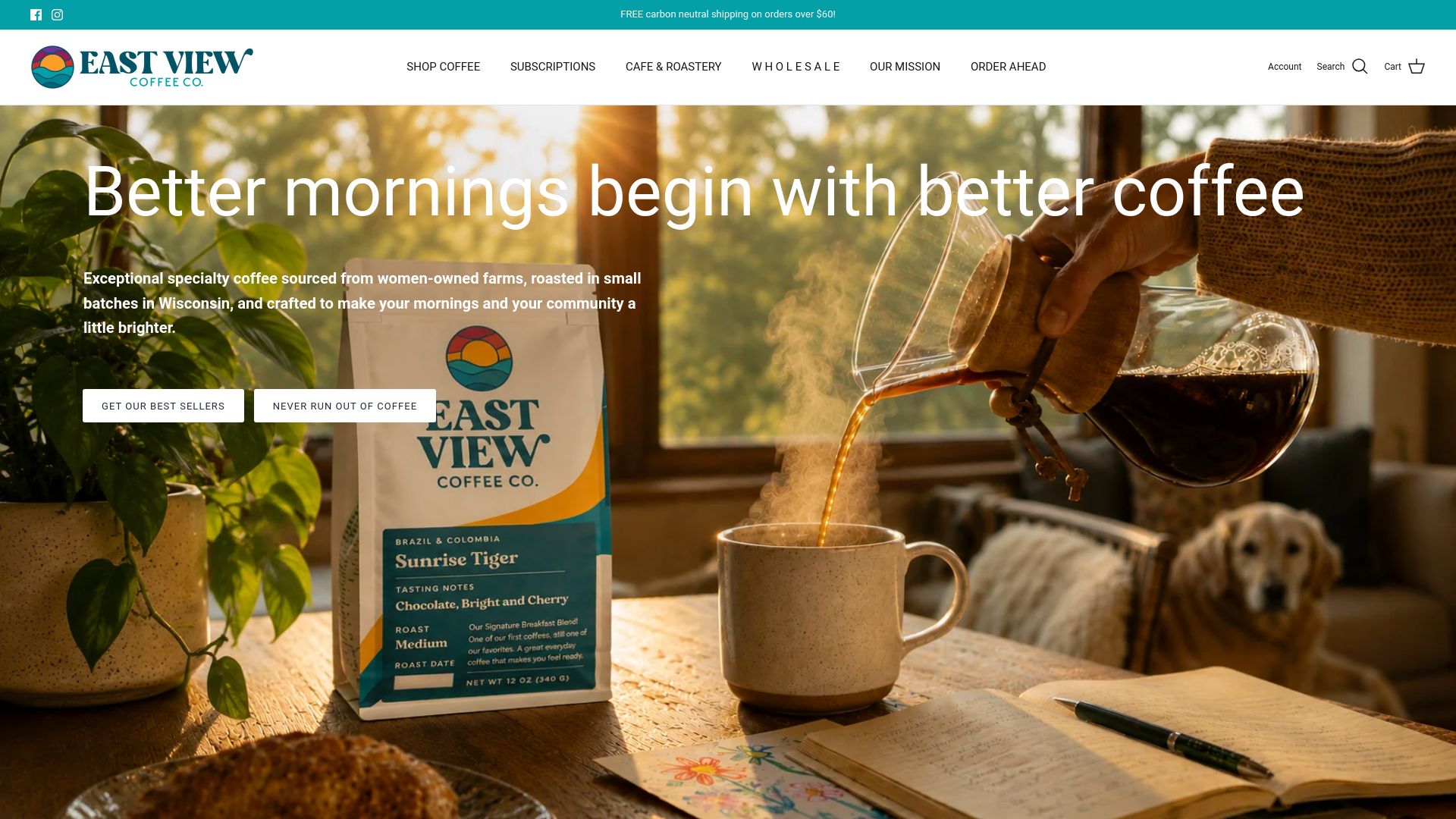
The practical advantage over importing green yourself: no import duty management, no roasting yield calculations, no logistics coordination. You get roasted-to-order specialty coffee with a clear per-pound wholesale price, flexible order quantities, and a sourcing story rooted in equity and quality. Eastviewcoffee’s seasonal specialty lots rotate with harvest windows, so you’re always working with fresh-crop coffee rather than aged inventory.
Ready to see what wholesale pricing looks like for your volume? Request a custom quote and get a tailored recommendation based on your weekly volume, roast preferences, and delivery schedule.
Sources
- ICO Indicator Prices - July 2026 (I-CIP)
Check ICE futures daily if you’re actively sourcing. Review the I-CIP monthly when updating budget assumptions. Pull the SCRPI quarterly to track specialty retail trends and their upstream implications for green pricing.
FAQ
How much does wholesale coffee cost per pound in the U.S.?
Green Arabica commodity lots typically run $2.50–$4.50/lb FOB; specialty green ranges from $5–$12+/lb depending on origin and score; roasted specialty wholesale generally falls between $12–$22/lb for cafés and foodservice buyers.
What is the 15-15-15 coffee rule?
The 15-15-15 rule is a retail pricing guideline suggesting that green coffee cost, roasting and overhead, and retail margin each represent roughly one-third of the final cup price. Definitions vary by source, and actual cost structures differ significantly by volume and channel.
What is the current market price of coffee?
ICE Arabica futures were at 315.22 USd/lb on August 10, 2026, and the ICO composite indicator averaged 287.71 US¢/lb for July 2026. Both figures move frequently, so check current ICE data before making any purchasing decision.
Are coffee prices rising or falling in 2026?
Commodity futures remain volatile, driven by weather risk in Brazil and inventory tightness.
How do I verify a wholesale supplier’s quality and reliability?
Request a pre-shipment sample, a cupping score from a certified Q-grader, and lot-level traceability documentation (mill name, harvest date, processing method). Include a cupping acceptance clause in any contract so you have recourse if the delivered lot doesn’t match the sample.