
What "Ethically Sourced Coffee" Actually Means
Ethically sourced coffee is coffee grown, harvested, and traded in a way that pays farmers fairly, protects workers’ rights, and avoids practices like deforestation that damage the land coffee depends on. The simplest buying rule: choose roasters that back their claims with third-party certification, lot-level traceability, or a documented premium paid to the farm, rather than a label that just says “ethical” on the bag. Before you buy, check for three things:
- A recognizable certification logo (Fair Trade, Rainforest Alliance, Bird Friendly, or similar)
- Origin and lot information (farm name, region, harvest year)
- A stated price premium or direct payment arrangement, not just a slogan
Key Takeaways
Ethically sourced coffee is verified through documented premiums and traceable origins, not through marketing language alone, and buyers should demand both.
| Point | Details |
|---|---|
| Definition matters | Ethically sourced coffee means verified benefits for farmers, workers, and ecosystems, not just a label. |
| Stack your signals | Combine certification, lot traceability, and a stated premium instead of trusting one claim. |
| Know your certifications | Fair Trade and Rainforest Alliance require third-party audits; Direct Trade has no standard definition. |
| Watch for vague claims | No origin info, no baseline percentages, and no audit trail are all greenwashing red flags. |
| Shop East View Coffee | Eastviewcoffee sources from women-owned farms and roasts small batches with traceable origin stories. |
Where to Verify Certification Claims
- Fairtrade America’s campaign resources for consumer engagement and farmer empowerment programs
- The Smithsonian’s Bird Friendly program registry for shade-grown verification
- Brand comparison guides like The Good Trade’s fair trade roundup for percent-certified benchmarks
Table of Contents
- Why Ethically Sourced Coffee Beans Matter
- What Do Coffee Certifications and Labels Actually Guarantee?
- What Should You Look for on a Bag of Ethically Sourced Coffee?
- How Do You Spot Greenwashing in Coffee Marketing?
- How Does East View Coffee Source Ethically?
- Where to Buy Ethically Sourced Coffee Right Now
- Sources
- FAQ
Why Ethically Sourced Coffee Beans Matter
Coffee farming has a labor problem and an environmental one, and they’re connected. Low farm-gate prices push growers toward the crops or land-clearing methods that pay fastest, which often means cutting shade trees for higher-yield sun-grown coffee, a challenge addressed by local sourcing benefits and challenges. The International Labour Organization has documented ongoing labor and human-rights gaps across agricultural supply chains, coffee among them, which is exactly the kind of risk certification and traceability programs try to close.
The scale here is bigger than most people realize. Coffee consumption in the United States recently hit a 20-year high, meaning a large share of American adults drink it daily. Every one of those cups traces back to a farm, and most of those farms are smallholdings where a few cents per pound is the difference between reinvesting in the land and abandoning it.
Ethical sourcing addresses this directly:
- Price floors and premiums that keep farming families above subsistence even when commodity prices crash
- Shade-grown and agroforestry methods that preserve topsoil and forest cover instead of clearing it
- Community development funds tied to certification programs like Fair Trade, which return additional money to producer cooperatives beyond the base price
- **Climate resilience, since diversified, shaded farms tend to handle drought and pests better than monoculture plots
What Do Coffee Certifications and Labels Actually Guarantee?
Not every label on a coffee bag means the same thing, and that’s the part most shoppers get wrong. Some certifications require independent audits. Others are self-reported programs run by the buyer, not a neutral third party. Knowing the difference is the fastest way to judge an ethical coffee brand’s claims.
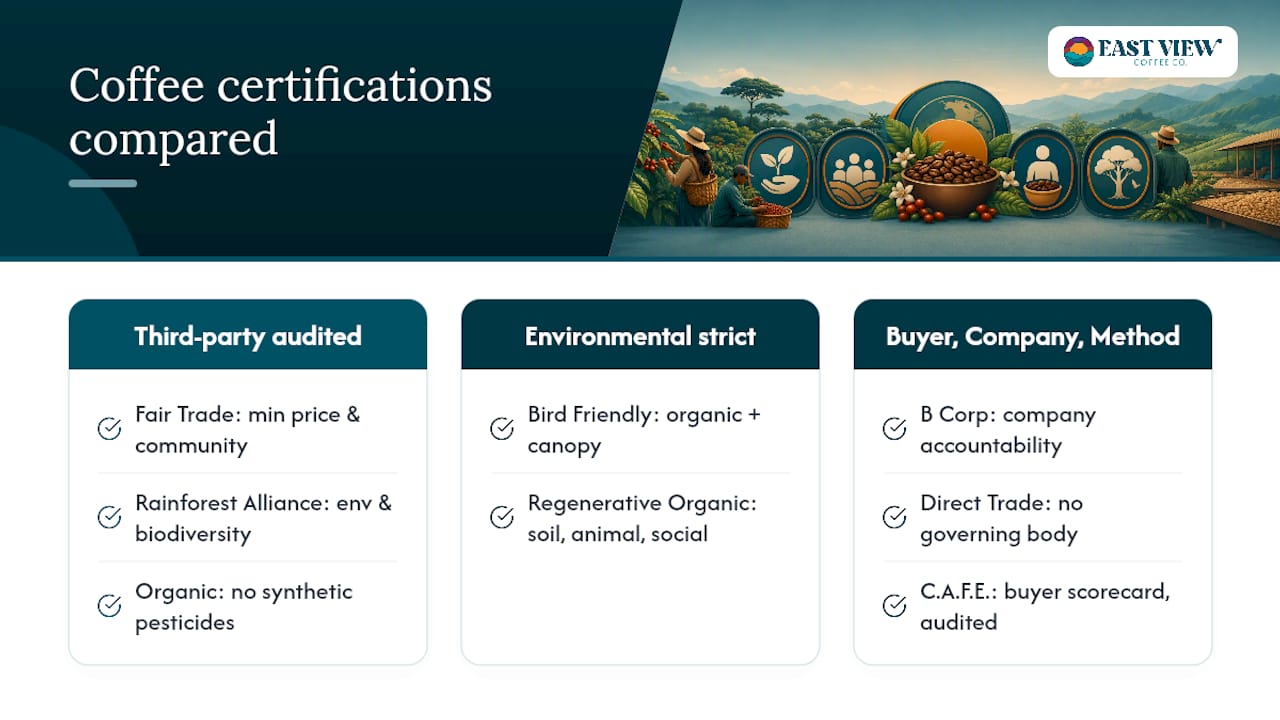
Fair Trade (Fairtrade International or Fair Trade Certified) sets a minimum price paid to farmer cooperatives and channels extra funds into community projects like schools, clean water, or farm equipment. It’s third-party audited and one of the more rigorous marks on shelves.
Rainforest Alliance certification focuses on environmental standards, biodiversity protection, and improved farm management, verified through independent audits of the farm itself.
Organic certification restricts synthetic pesticides and fertilizers, verified by accredited certifying agents, though it says nothing about wages or labor conditions on its own.
Bird Friendly, run by the Smithsonian, is arguably the strictest environmental standard in coffee. It requires organic certification plus a minimum canopy cover and plant diversity, and the program is widely treated as the environmental gold standard for shade-grown systems.
Shade-grown on its own is a growing method, not a certification, so it carries no third-party verification unless paired with a program like Bird Friendly.
Regenerative Organic Certified goes further than standard organic, adding soil health, animal welfare, and social fairness criteria under one audited standard.
B Corp certifies the company’s overall social and environmental accountability, not the coffee itself. It’s a useful signal for judging the roaster as a business.
Direct Trade describes a roaster buying straight from a farm or cooperative, skipping traditional middlemen. There’s no single governing body behind the term, so the concrete numbers (price paid, contract length, prefinancing) matter more than the phrase itself.
C.A.F.E. Practices, developed with Conservation International, is a proprietary program that scores suppliers against more than 200 indicators covering economic, social, and environmental performance, verified by outside auditors even though the buyer designed the scorecard.
Pro Tip: Never lean on one signal alone. Pair a certification with lot-level traceability and a stated premium, since independent reviewers consistently find that direct-trade relationships often deliver higher compensation and more transparency than a certification badge by itself.
What Should You Look for on a Bag of Ethically Sourced Coffee?
Here’s the checklist that separates a genuinely accountable roaster from one borrowing the vocabulary:
- Certification logo and percent certified. A roaster stating what share of its total output carries certification is more credible than one flashing a single certified product among dozens of uncertified ones.
- Origin and lot number. Farm name, cooperative, or region, plus harvest year. Vague country-only labeling is a weak signal.
- Roast date, not just a “best by” date. Freshness claims and ethical claims often travel together on well-run roaster sites.
- Stated premium or pre-harvest financing. Look for actual numbers (cents per pound above Fairtrade minimum, or advance payments before harvest) rather than “we pay farmers fairly.”
- A transparency or sourcing page that names partners, not just a mission statement.
On price: expect to pay more, and expect single-origin, small-lot coffee to be seasonal rather than always in stock. A premium is worth trusting when the roaster shows its math, either through certification numbers or a specific dollar figure paid above market. If a roaster just claims “fair” pricing with nothing to check, treat it as unverified.
For where to buy, direct-relationship roasters and co-ops tend to offer the clearest traceability since they publish farm names and terms. Specialty grocery shops carry curated selections but rarely show lot detail. Understanding why specialty coffee costs more than commodity coffee helps explain why a $9 bag and an $18 bag can both claim to be “ethical.”
How Do You Spot Greenwashing in Coffee Marketing?
Vague phrasing is the biggest tell. “Sustainably sourced,” “ethically grown,” or “supporting farmers” with no certification, no origin name, and no numbers attached is marketing language, not evidence. Watch for these specific red flags:
- A single unverified claim with no third-party audit behind it
- No origin, farm, or lot information anywhere on the packaging or website
- Percentage claims (“30% more sustainable”) with no stated baseline or comparison
- Certification logos used loosely, without a link to a registry entry or audit report
Pro Tip: When a claim looks thin, run three quick checks: search the certifying body’s public registry for the brand’s name, ask the roaster directly for the lot or producer name, and look for a downloadable audit or impact report. A roaster with nothing to hide usually has all three ready.
How Does East View Coffee Source Ethically?
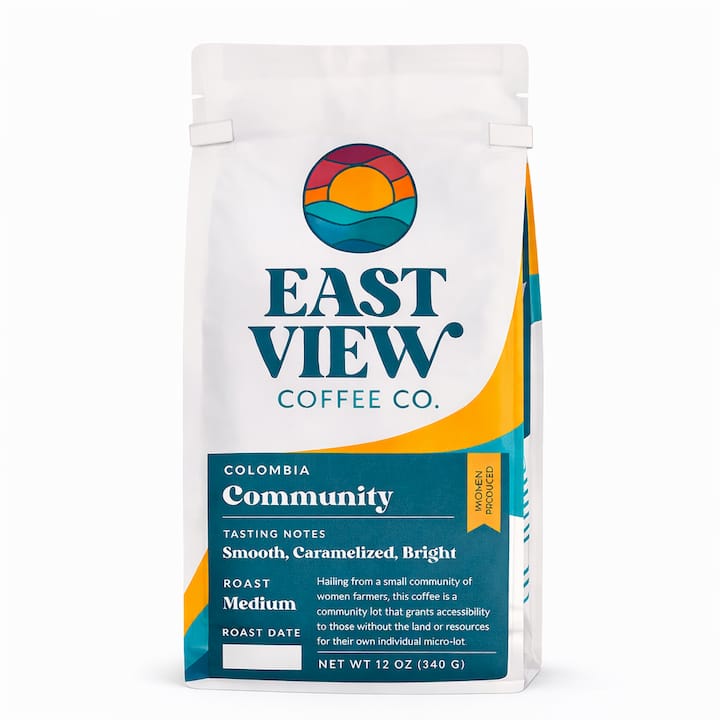
Eastviewcoffee built its sourcing model around one specific gap in the market: most certification programs verify a farm, but few roasters build direct, ongoing relationships with women-owned farms specifically. Eastviewcoffee sources coffee from women producers, roasts it in small batches in Kenosha, Wisconsin, and pays premium compensation directly tied to that relationship rather than a blanket certification fee.
Three current offerings map directly onto the buying checklist above:
- **Community Freshly Roasted Coffee is the everyday blend for shoppers who want a consistent, ethically sourced option without hunting for a single-origin bag.
- Dehab’s Diamonds Ethiopian Freshly Roasted Coffee is a single-origin coffee from women producers in Ethiopia, with the kind of origin story that satisfies the traceability line on the checklist.
- Catalyst Freshly Roasted Coffee is built specifically around women-owned farms and the social-impact premiums paid to them.
Roasting in small batches lets a company track a bag back to a specific farm relationship instead of a blended, anonymous supply chain. That’s the difference between a marketing claim and a sourcing model you can actually verify.
Customers who’ve tried the gift subscriptions often point to the flavor first, then find out the sourcing model behind it, which is arguably how ethical coffee should sell itself.
Why traceability beats slogans
Certifications matter, and I’d never tell a reader to ignore them. But if I had to rank the signals in this article by how much they actually protect a farmer, third-party audits and documented direct payments beat a feel-good phrase every time. A “fair trade” sticker with no lot number tells you less than a roaster who names the farm and states the premium in dollars.
Paying more is worth it when a roaster shows its receipts. When it doesn’t, the better move is pushing for transparency, not just handing over money and hoping.
Where to Buy Ethically Sourced Coffee Right Now
Eastviewcoffee’s sourcing model gives you an answer to nearly every item on the checklist in one place: women-owned farm relationships, small-batch roasting in Kenosha, Wisconsin, and origin stories you can actually check rather than take on faith.
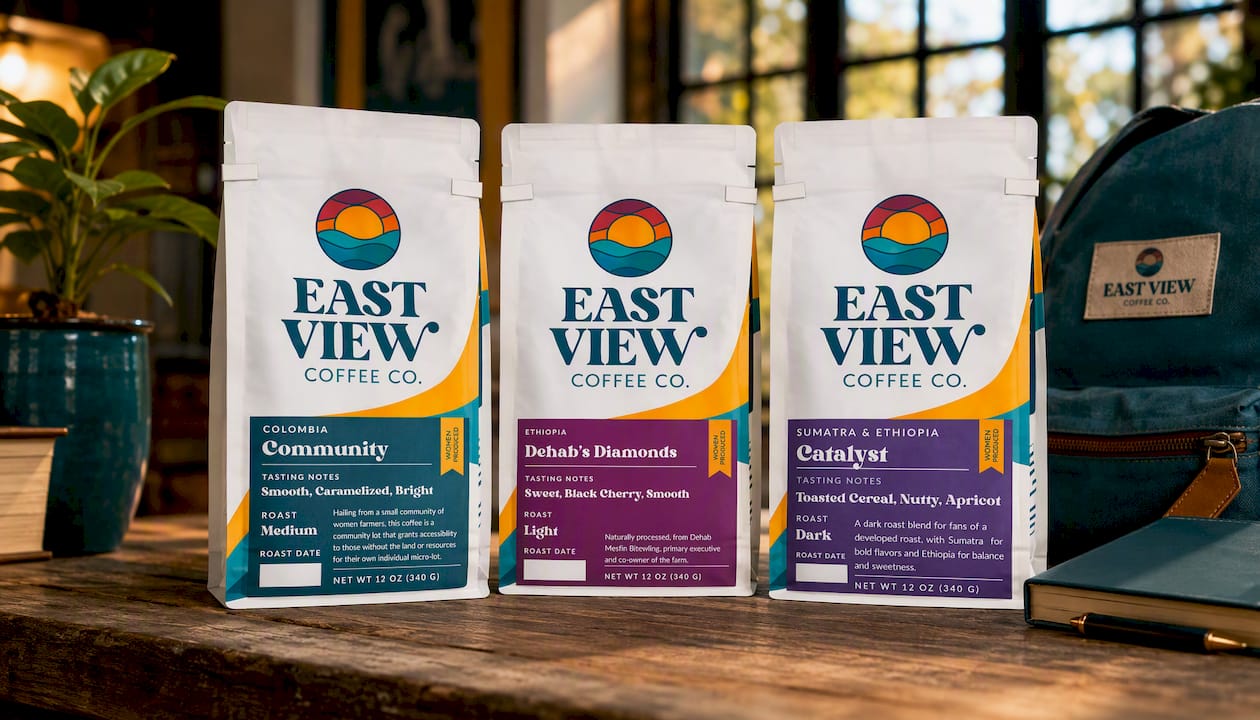
If you want an everyday, reliably ethical bag, Community Freshly Roasted Coffee covers that. If provenance matters most to you, Dehab’s Diamonds Ethiopian Freshly Roasted Coffee gives you a single-origin story from women producers you can trace. If the women-owned-farm angle is the whole point of your purchase, Catalyst Freshly Roasted Coffee is built around exactly that. Frequent drinkers and offices can set up a recurring order or a wholesale account instead of reordering manually every few weeks. Pick a bag, check the origin story on the product page, and place your first order today.
Sources
- Ethically Sourced Coffee Guide: How to Buy Ethical Coffee & Sustainable Coffee Brands
- Bird Friendly® coffee program
- Ethical Coffee & Coffee Beans | Ethical Consumer
- Daily coffee consumption at 20-year high — National Coffee Association USA
FAQ
Is Starbucks Coffee 100% Ethically Sourced?
Starbucks sources much of its coffee through its own C.A.F.E. Practices program, a proprietary, third-party-verified standard rather than fully independent certification like Fair Trade.
Is Café Bustelo Coffee Ethically Sourced?
Café Bustelo does not publish the kind of certification data, lot traceability, or stated farmer premiums that ethical sourcing guides look for, so its claims can’t be independently verified.
Is Dunkin’ Coffee Ethically Sourced?
Dunkin’ has stated commitments to Rainforest Alliance certified sourcing for a portion of its coffee, but public detail on percent certified and lot-level traceability is limited compared to specialty roasters.
Is Peet’s Coffee Ethically Sourced?
Peet’s sources a portion of its coffee through Fair Trade and organic certifications, though like most large roasters, it blends certified and non-certified lots rather than certifying its entire supply chain.
What’s the Easiest Way to Start Buying Ethically Sourced Coffee?
Start with one bag from a roaster that names its farm, states a premium, and shows a certification or direct-trade relationship, such as Eastviewcoffee’s women-producer sourced coffee.