
Choose Coffee Beans: Start With Traceable Small Batch Bags for Home Brewers
Start with a medium-roast, single-origin whole bean from Colombia or Guatemala, and check for a printed roast date before you buy. That combination gives you a forgiving extraction window across almost any brewer, plus real traceability back to the farm. Grab a small bag, grind it right before you brew, and you’ve solved most common issues new buyers face.
TL;DR:
- Choosing a medium roast from Colombia or Guatemala with a recent roast date ensures forgiving extraction and reliable flavor across brewing methods.
- Arabica beans generally provide a sweeter, more complex flavor, while origin details like Ethiopia or Brazil significantly influence taste profiles.
- The brewing method determines the ideal roast and grind, with light roasts suited for pour-over, and dark roasts better for espresso and milk-based drinks.
- Always verify the roast date before buying; fresh beans roasted within the past few weeks are essential for optimal aroma and flavor.
- Buying small batches directly from roasters or local stores with visible roast dates helps maintain freshness and traceability, supporting better coffee quality.
Table of Contents
- How Roast Level Changes the Flavor in Your Cup
- Arabica, Robusta, and Origin: Your Flavor Shortcuts
- Which Beans Work Best With Your Brewer?
- What Should You Check on the Bag Before Buying?
- Why Freshness Fades and How to Store Beans Right
- How East View Coffee’s Sourcing Matches These Buying Signals
- Where to Buy Quality Coffee Beans
- Perspective: What I Learned Buying Coffee the Slow Way
- Two Easy Ways to Start Exploring
- Sources
- FAQ
How Roast Level Changes the Flavor in Your Cup
Roast level is a flavor dial, not a strength dial. That’s the single biggest misconception buyers walk into a coffee shop with. A dark roast doesn’t have more caffeine than a light one. It just tastes different, because more time in the roaster means more sugars caramelized and more of the bean’s original character burned away.
Here’s what each roast level actually does to flavor:
- Light roast: bright, acidic, floral or fruity, with the origin’s natural character front and center
- Medium roast: balanced sweetness, notes of chocolate or caramel, softer acidity
- Dark roast: bold, smoky, heavier body, with roast flavor overtaking origin flavor
If you’re not sure where to start, medium is the safe bet. Industry roast guidance points to medium roast as the most versatile option across brewing methods, which is exactly why so many everyday blends default to it. Light roast rewards a careful pour-over setup. Dark roast plays well with milk and espresso. Medium roast just works, almost regardless of what equipment you own.
Pro Tip: If two bags taste wildly different but claim the same roast level, the difference is probably origin or processing, not the roast. Read past the roast label.
Arabica, Robusta, and Origin: Your Flavor Shortcuts
Species and origin are the fastest way to predict flavor before you ever open the bag. Specialty buyers overwhelmingly choose Arabica because it delivers a sweeter, more complex cup with far less bitterness than Robusta, which tends to run harsher and more bitter but packs more caffeine. Almost every bag you’ll find at a specialty roaster is Arabica, so this isn’t usually a decision you’ll have to make consciously. It’s more useful as a filter when a bag doesn’t specify.
Origin tells you almost as much as roast level does:
- Ethiopia: floral, fruity, sometimes winey or berry-like
- Colombia: balanced, sweet, medium body, reliable across brew styles
- Brazil: chocolatey, nutty, low acidity
- Indonesia (Sumatra, for example): earthy, full-bodied, low brightness
Processing method matters just as much. Washed coffees taste clean and crisp because the fruit is removed before drying. Natural-processed coffees ferment with the fruit still on, producing jammy, boozy, intensely fruity flavors. Honey-processed beans sit in between. If you want a coffee that tastes like nothing else, try a natural-processed Ethiopian. If you want something dependable every morning, a washed Colombian single origin, or check out East View’s single-origin lineup, is the safer call. Blends smooth out inconsistency and cost less; single origins let you taste a specific place.
Which Beans Work Best With Your Brewer?
Your brew method decides which roast and grind will actually perform, not just which one you like the sound of. Brewing method dictates roast choice more than most beginners realize, since the same bean can taste completely different in a French press versus a pour-over cone.
- Filter and pour-over: light to medium roast, finer grind, hotter water. Origin character shines here, so this is the method for tasting Ethiopian florals or Kenyan brightness. Our pour-over guide walks through timing and technique.
- Espresso and moka pot: medium to dark roast, fine grind, built for body and sweetness rather than delicate acidity. If you’re brewing on a stovetop, our moka pot grind size guide covers the 300 to 500 micron target.
- French press or immersion: medium to dark roast, coarser grind, letting the natural oils and texture come through since there’s no paper filter catching them.
- Cold brew: medium to dark roast for lower perceived acidity, coarse grind, long steep (12 to 18 hours), roughly a 1:8 coffee-to-water ratio as a starting point.
If you don’t own a grinder that dials in precisely, or you’re not measuring water temperature, default to medium roast. It’s the most forgiving across all four methods, and our brew method breakdown covers pairings in more depth.
What Should You Check on the Bag Before Buying?
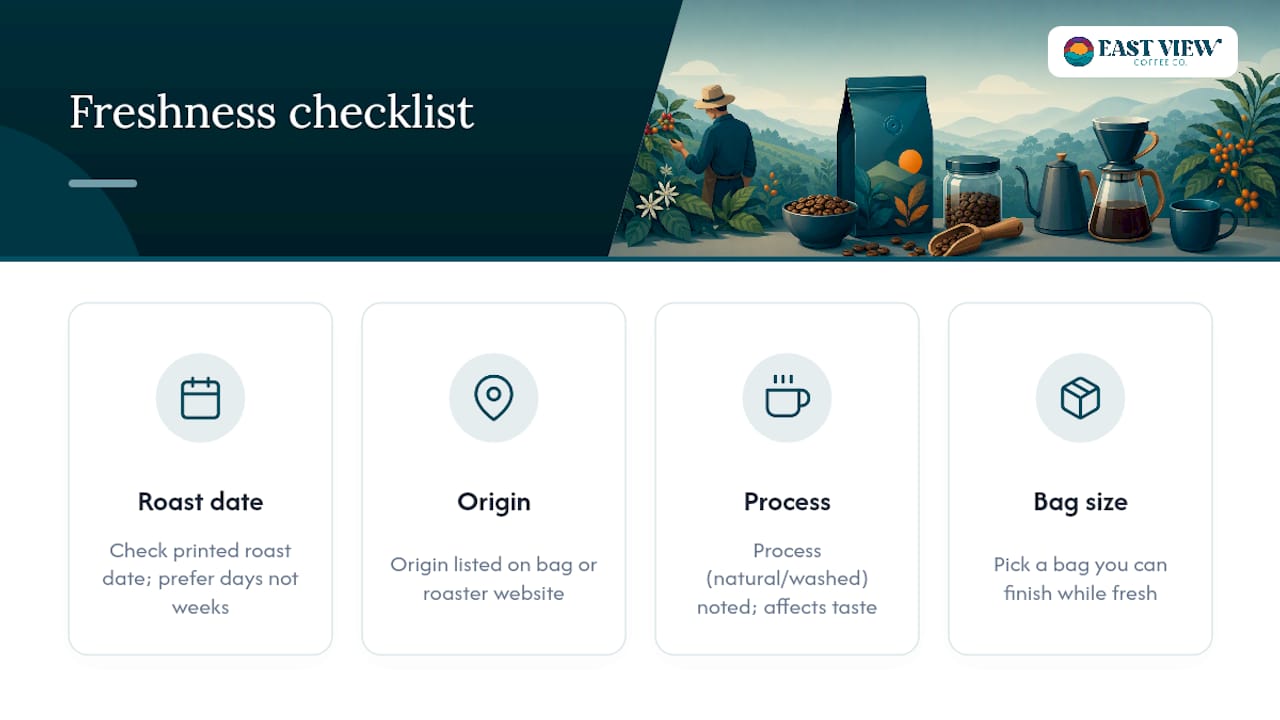
The roast date is the single most important thing printed on any coffee bag, and it’s the detail most shoppers skip entirely. Traceable, specialty-grade coffee with a visible roast date is the standard to look for, and a missing roast date is a red flag that the bag has been sitting in a warehouse.
Run through this before you buy:
- Roast date: aim for beans roasted a few weeks ago for filter brewing, and a slightly longer rest for espresso
- Origin and process: look for a named country or region, plus washed, natural, or honey processing
- Tasting notes: even a vague description tells you what the roaster was aiming for
- Whole bean vs. pre-ground: buy whole bean if you have any grinder at all
- Bag size: match it to how much you actually drink in a couple weeks
Pro Tip: If a bag lists no roast date and no origin, treat it as a mystery bag. It might be fine, but you’re buying blind.
Why Freshness Fades and How to Store Beans Right
Coffee starts losing its most delicate aromatics within days of roasting, which is why the roast date matters more than almost anything else on the label. The recommended windows are 2 to 4 weeks for filter coffee and 4 to 6 weeks for espresso, since espresso extraction actually benefits from a little extra rest time to let carbon dioxide escape.
Keep beans fresh with a few simple habits:
- Store in an airtight container, away from light and heat
- Skip the fridge, where moisture and food odors do more harm than good
- Buy smaller bags more often instead of one giant bag that goes stale by week three
- Freeze only for long-term storage beyond a month, and thaw the whole portion at once
If your coffee suddenly tastes flat, check your grind size and water temperature first. If both check out, suspect the beans are simply past their prime.
How East View Coffee’s Sourcing Matches These Buying Signals
Everything above points toward the same buying signals: traceable origin, a real roast date, and small-batch freshness. That’s the standard Eastviewcoffee builds around, sourcing exclusively from women-owned farms and roasting in small batches in Kenosha, Wisconsin.
- Sourcing transparency: coffee traced back to women-owned farms, supporting the kind of origin detail this guide recommends checking for
- Small-batch roasting: batches roasted in Kenosha mean fresher stock and clearer roast dates than mass-produced bags
- Eco-friendly practices: sourcing decisions that account for environmental impact alongside flavor and farmer pay
- Product range: single-origin, blends, and half-caff options that map directly to the roast and origin choices covered here
Jenny, who put this guide together, points to that traceability as the difference between guessing and actually knowing what’s in your cup.
Where to Buy Quality Coffee Beans
Local roasters give you the freshest possible bag, often roasted within days rather than weeks, and you can usually ask the person behind the counter exactly when it came out of the roaster. That direct conversation is hard to replicate anywhere else, and it’s the fastest way to learn what a “clean” cup or a “jammy” natural actually tastes like.
Specialty grocery stores are a step down in freshness but still reliable if you check the roast date printed on the bag. Big-box grocery store coffee, by contrast, rarely lists a roast date at all and often sits on shelves for months, which is exactly the scenario the freshness windows above warn against.
Buying direct from a roaster’s website tends to split the difference. You get roast dates printed clearly, origin and process details spelled out, and beans shipped soon after roasting rather than sitting in a distribution warehouse. It also lets you order smaller, more frequent bags instead of committing to a big tin that goes stale before you finish it. Whichever route you choose, the checklist stays the same: roast date, origin, process, and a bag size you’ll actually finish while it’s fresh.
Perspective: What I Learned Buying Coffee the Slow Way
Start with a medium roast, then branch out one origin at a time, keeping notes on what you actually liked. Farmer pay and traceability aren’t separate from flavor. They’re often the reason a bean tastes the way it does. Don’t be afraid to try something unfamiliar next time.
— Jenny
Two Easy Ways to Start Exploring
Some roasters make that first purchase simple instead of overwhelming, by ensuring every bag ships with a roast date printed on it and traceability back to the farm.
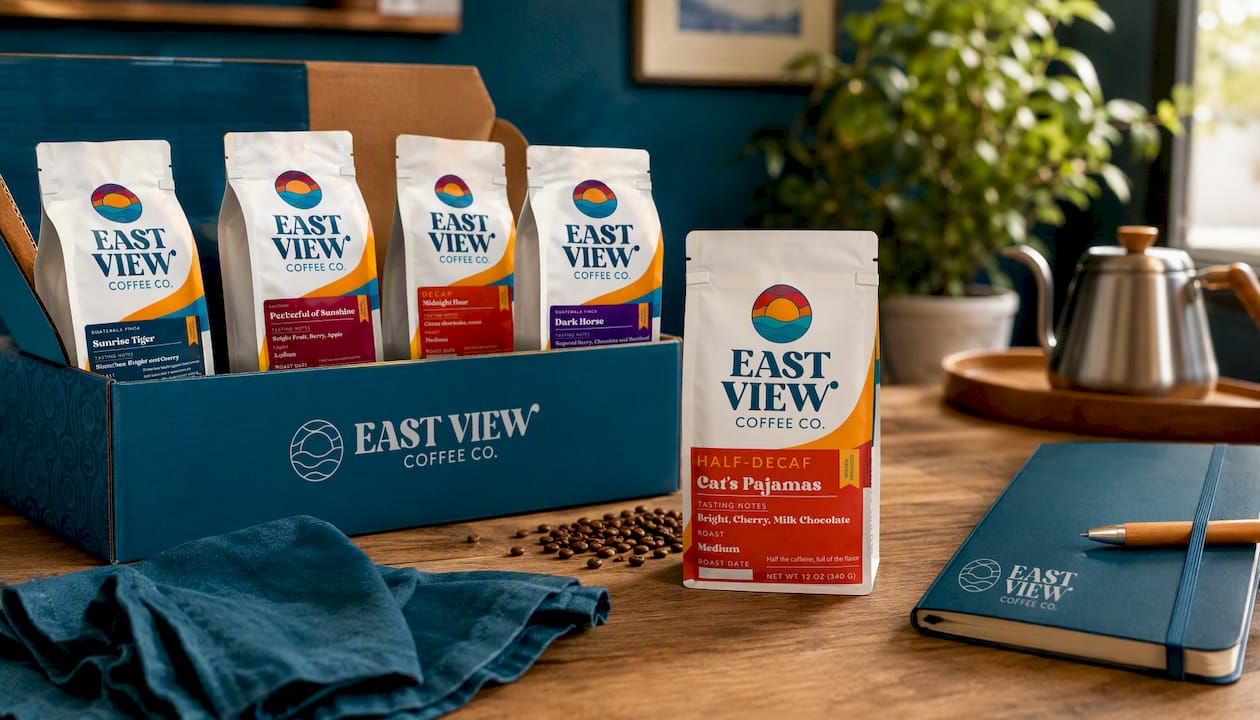
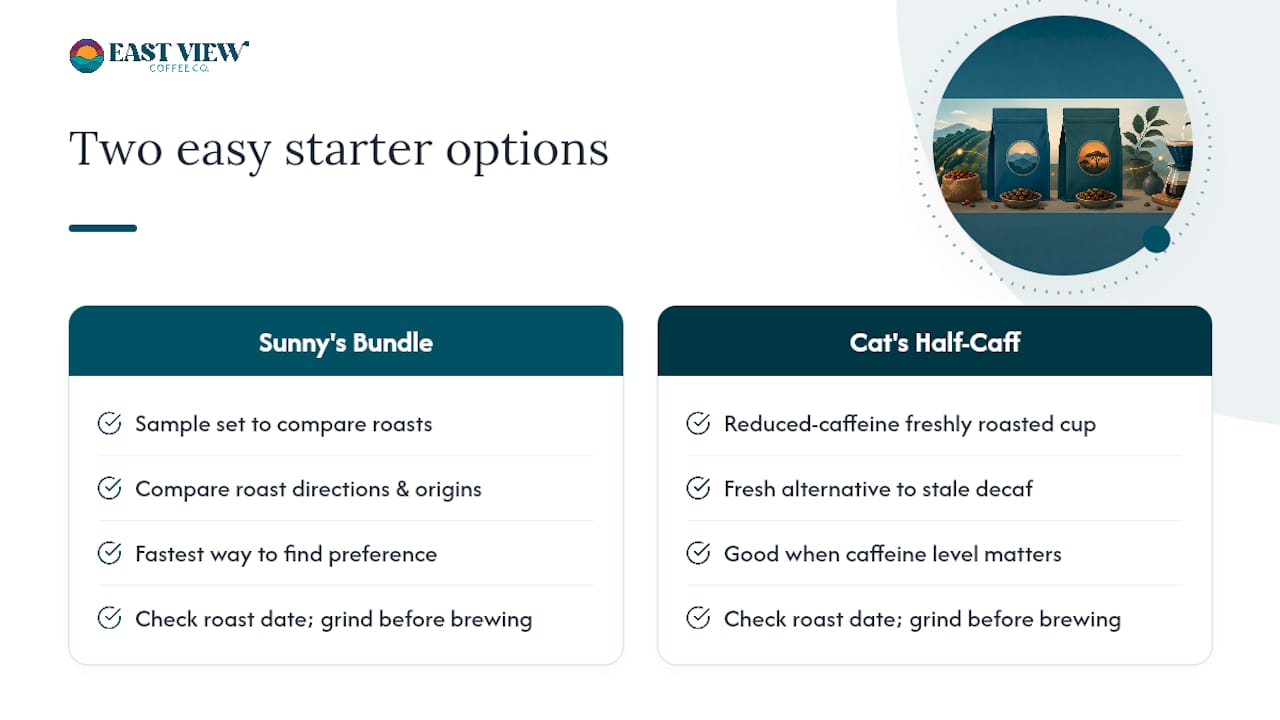
If you want to taste the roast-level and origin differences covered in this guide without committing to five separate bags, Sunny’s Choice Bundle is built exactly for that. It’s a sample set that lets you compare roast directions and origins side by side, which is the fastest way to figure out your own preference instead of guessing from a shelf label.
If caffeine level is part of your decision, Cat’s Pajamas Half-Caff gives you a freshly roasted cup with reduced caffeine, without falling back on stale decaf. Whichever you pick, check the roast date on the bag when it arrives, and grind it just before you brew. Order a bag today and taste the difference traceable sourcing makes.
Sources
For deeper detail, see the Specialty Coffee Association’s traceability standards, AboutCoffee.org’s roast guidance, and Consumer Reports’ coffee buying guide.
FAQ
What Coffee Beans Should I Choose as a Beginner?
Start with a medium-roast single-origin from Colombia or Guatemala with a visible roast date. It offers a balanced, forgiving profile across pour-over, French press, and drip machines alike.
What Is the 15-15-15 Rule for Coffee?
This isn’t a standard industry term, and definitions vary widely depending on the source. Rather than repeat an unverified rule, focus on the windows that matter: 2 to 4 weeks of rest for filter coffee and 4 to 6 weeks for espresso.
What Are the Best-Tasting Coffee Beans to Buy?
“Best-tasting” depends entirely on your palate, but naturally processed Ethiopian beans deliver the most distinctive fruity, floral cup, while washed Colombian or Guatemalan beans offer a more balanced, crowd-pleasing flavor.
Which Brand of Coffee Beans Is Best?
Look past the brand name and check the roast date, origin, and processing method first. Some specialty coffee roasters source from women-owned farms and roast in small batches, offering traceability and freshness that align with the recommendations in this guide.