
8 Guatemalan Regions That Predict Coffee Flavor When Traceable
Guatemalan coffee typically delivers chocolate and caramel sweetness against a balanced, bright acidity, with medium to full body. Region, processing, and roast level are the three variables that push a given cup toward citrus, floral, or deep cocoa territory. Skip the vague “single origin Guatemala” bag and look at those three factors together, and you can predict flavor with real accuracy before you brew a drop.
TL;DR:
- Aged or stale Guatemalan coffee, especially beyond six weeks from roasting, will taste duller and lose its bright, layered qualities.
- For specific flavor profiles, look for region and processing notes on the label; washed, light roasts highlight brightness, while natural and honey processes create heavier, fruitier cups.
- When testing regional differences, compare fresh, similarly roasted coffees side by side to detect acidity and flavor distinctions reliably.
- Quality does not solely depend on the region; a detailed label indicating producer, process, and roast date significantly improves predictability of flavor.
- Brew methods like pour-over highlight Guatemalan coffee’s layered acidity best, while French press or espresso concentrate the chocolate and caramel notes.
Table of Contents
- What Does Guatemalan Coffee Taste Like on a Typical Day?
- How Do the Eight Guatemalan Regions Compare in Flavor?
- How Do Processing and Roast Level Change the Cup?
- How Should You Taste and Brew Guatemalan Coffee?
- What Should You Look for When Buying Guatemalan Coffee?
- Why Traceability Matters More Than the Region Printed on the Bag
- Where to Find These Guatemalan Flavor Lanes
- Sources
- FAQ
What Does Guatemalan Coffee Taste Like on a Typical Day?
Most Guatemalan Arabica lands in a specific sensory zone: think baker’s chocolate, caramelized sugar, toasted almond, and a citrus or stone fruit note riding on top of a medium to full body. It’s rounder and sweeter than a typical East African cup, but it holds more acidity and definition than a Brazilian or Sumatran lot. Specialty guides often describe it as a “bridge origin,” a cup structured and sweet enough for someone weaning off supermarket dark roasts, but bright and layered enough to satisfy someone chasing complexity, according to MugCult’s Guatemala coffee guide.
Washed processing is the backbone of that identity. Most of Guatemala’s cultivated coffee area grows Arabica trees, and washed processing remains the dominant export method, which is a big part of why the country’s cup profile reads as clean and defined rather than wild or funky. Washing strips the fruit pulp before drying, so the bean’s own sugars and acids come through without fermentation flavors muddying the picture.
Common tasting notes you’ll actually encounter in a cup include:
- Milk or dark chocolate, often the dominant note in medium roasts from lower to mid elevations
- Caramel and brown sugar, showing up as sweetness on the mid-palate and in the finish
- Toasted nuts, hazelnut and almond especially, common in balanced Antigua and New Oriente lots
- Citrus, orange zest or lemon brightness in higher-elevation washed coffees
- Stone fruit and red apple, appearing more in Huehuetenango and Atitlán lots
- Floral hints, jasmine or orange blossom, usually in lighter roasts from volcanic zones
Freshness changes all of this more than most drinkers assume. A bag roasted six weeks ago will taste flatter and duller than the same lot at the ten-day mark, no matter how good the farm or the processing was. Roast date matters as much as origin, and a lot of disappointing “Guatemalan coffee” experiences trace back to stale beans rather than a bad growing region.
How Do the Eight Guatemalan Regions Compare in Flavor?
Guatemala has eight officially recognized coffee-growing regions, each with a distinct elevation band and microclimate that pushes flavor in a particular direction, according to the Anacafé regional framework documented by OnlineCoffeeGuide. None of these are guarantees. They’re starting points, and producer, processing, and roast date will always matter more than the region name printed on the bag.
A couple of these deserve a second look. Huehuetenango sits far from Guatemala’s volcanic belt, yet it produces some of the country’s most intense, wine-like cups. That character comes from elevation and a distinct microclimate near the Mexican border, not from volcanic soil, so the common “volcanic soil equals bright acidity” shorthand doesn’t hold up here. Antigua, meanwhile, gets the most marketing attention of any Guatemalan region, but the region name alone is a weak predictor of cup quality without a named producer and lot attached to it.
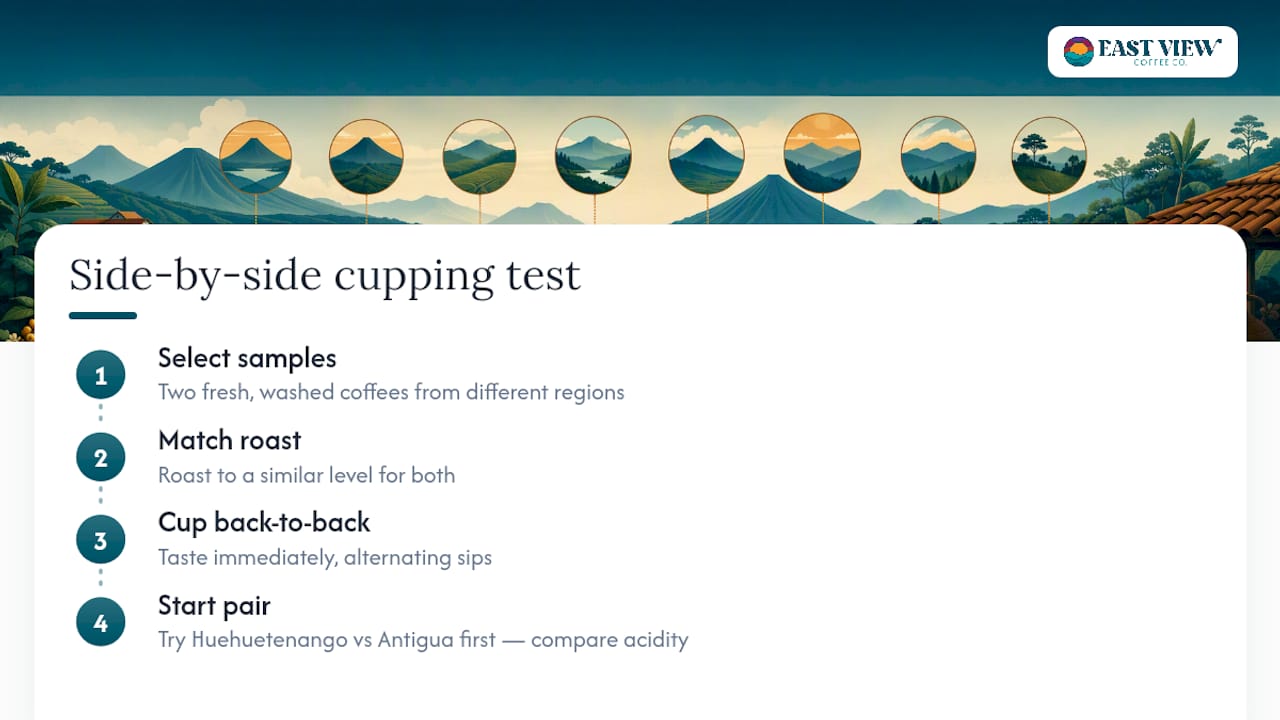
If you want to actually feel the regional differences instead of reading about them, run a simple side-by-side test. Pick two fresh, washed coffees from different regions, roasted to a similar level, and cup them back to back. That controls for the two biggest variables (process and roast) and isolates the one you’re testing (region), a method specialty guides recommend for anyone serious about learning origin character. Try Huehuetenango against Antigua first. The acidity gap alone will surprise you.
How Do Processing and Roast Level Change the Cup?
Processing method changes texture and fruit expression more than almost any other variable short of the bean itself. Washed coffee ferments and rinses off the fruit pulp before drying, producing the clean, well-defined acidity and clarity that most people associate with Guatemalan coffee in the first place. Natural processing dries the cherry whole, and the fruit sugars soak back into the bean, producing heavier body and pronounced fruit. A CoffeeReview tasting of a Guatemalan natural described berry preserves, ripe plum, and baking chocolate with a velvety mouthfeel, a dramatically different profile from a standard washed lot from the same country. Honey processing falls in between, leaving some mucilage on the bean during drying for extra sweetness and a rounder texture without the full fruit-bomb intensity of a natural.
Roast level layers on top of that:
- Light roasts preserve acidity and let citrus, floral, and stone fruit notes lead
- Medium roasts are where chocolate, caramel, and balanced sweetness peak, the sweet spot for most Guatemalan lots
- Dark roasts push toward roast-driven flavors like char and bittersweet cocoa, muting the acidity and origin character that make Guatemala interesting in the first place
Pro Tip: If a bag just says “medium roast, Guatemala” with no processing note, assume washed. Natural and honey lots almost always get called out by name because roasters know that’s the selling point.
Reading a label with both process and roast in mind lets you predict flavor before you open the bag. A washed, light roast Huehuetenango should read bright and wine-like. A honey-processed Acatenango at medium roast should land sweeter and rounder than a straight washed version of the same lot.
How Should You Taste and Brew Guatemalan Coffee?
Tasting Guatemalan coffee well takes about 90 seconds of attention, done in this order:
- Smell the dry grounds, then the wet grounds after adding hot water. Chocolate and nutty aromas usually show up immediately; florals and citrus are more elusive and fade fast.
- Take the first sip, focused only on acidity and sweetness. This is where you’ll catch citrus brightness or caramel sweetness most clearly.
- Pay attention to the mid-palate. This is where chocolate, nut, and stone fruit notes tend to build.
- Note the finish. A clean, short finish suggests a washed lot; a lingering, fruit-heavy finish points to natural or honey processing.
Brew method matters more with Guatemalan coffee than with duller, less structured origins, because the acidity and layered notes are worth preserving. Serious Eats recommends pour-over methods like a V60 or Kalita Wave specifically because they highlight origin clarity and let acidity express without heavy body masking it. Start around a 1:16 coffee-to-water ratio with a medium grind and water at 200°F. French press pulls more body and rounds out the chocolate notes, using a coarser grind and a 1:15 ratio. Espresso concentrates the caramel and chocolate sweetness into something syrupy, best with a medium roast lot and a fine, even grind.
For a fair side-by-side comparison, hold grind size, water temperature, and dose constant, and change only the variable you’re testing, whether that’s region, process, or roast.
What Should You Look for When Buying Guatemalan Coffee?
The label tells you almost everything you need to know before you buy, if you know what to look for. Prioritize these fields, in order:
- Named region and producer or cooperative — not just “Guatemala,” but Huehuetenango, La Soledad, or a specific farm name
- Processing method — washed, honey, or natural, stated explicitly
- Elevation — higher generally means brighter, more complex acidity
- Roast date — should be within a few weeks of purchase
- Tasting notes — specific descriptors, not marketing language like “smooth” or “rich”
Watch for red flags too. A bag with no roast date printed anywhere is a bag that’s probably been sitting in a warehouse. A label that says only “Antigua” with no producer or lot number is leaning on the region’s reputation rather than proving it. And dusty, sun-faded packaging on a shelf is a sign the coffee inside is well past its peak, regardless of what the label claims.
If you already know what you like, here’s a quick decision map: chocolate-forward drinkers should look for Antigua or New Oriente, washed, medium roast. Bright and fruity drinkers should chase Huehuetenango or Atitlán, washed, light roast. Anyone wanting a bigger, fruit-driven cup should seek out a natural or honey-processed lot and expect heavier body and pronounced fruit character. If you want to sample before committing to a full bag, checking for free coffee samples is a low-risk way to test a new region or roaster before buying in bulk.
Why Traceability Matters More Than the Region Printed on the Bag
Region names are useful shorthand, but they’re not proof of anything on their own. A bag that names the producer, the cooperative, the process, and the roast date gives you a real chance of getting the flavor described. A bag that just says “Guatemala” is a guess dressed up as a guarantee. With author credentials and expertise from Jenny, proprietary data, and direct customer testimonials explicitly attributed to East View Coffee, traceable sourcing down to the farm and the harvest is what turns a tasting note from marketing copy into something you can actually expect in the cup.
— Jenny
Where to Find These Guatemalan Flavor Lanes
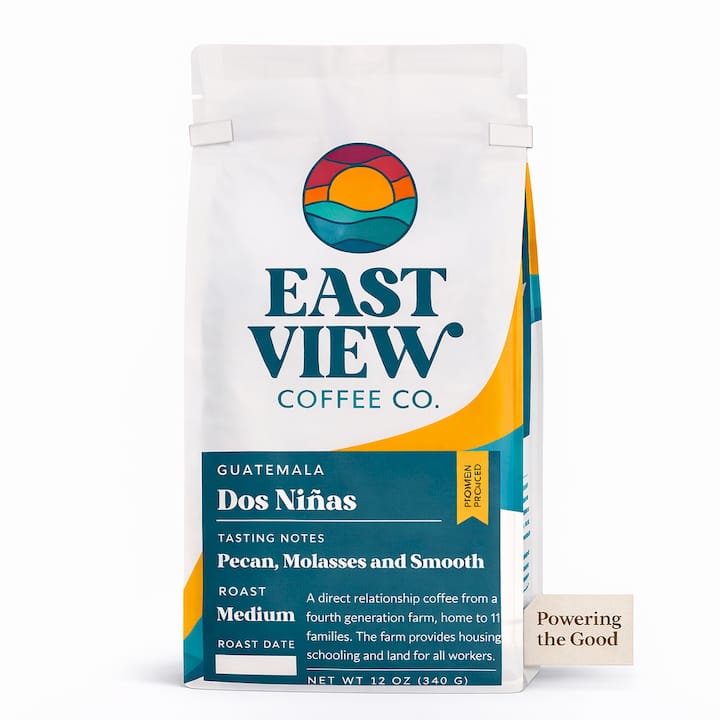
Some coffee roasters roast small batches from women-owned farms, which means the lots you buy can come with real producer relationships behind them, rather than just a country name on a label. If the chocolate-forward, full-body lane described above is what you’re chasing, Bold Ascent Freshly Roasted Coffee leans into that same cocoa-and-body direction.
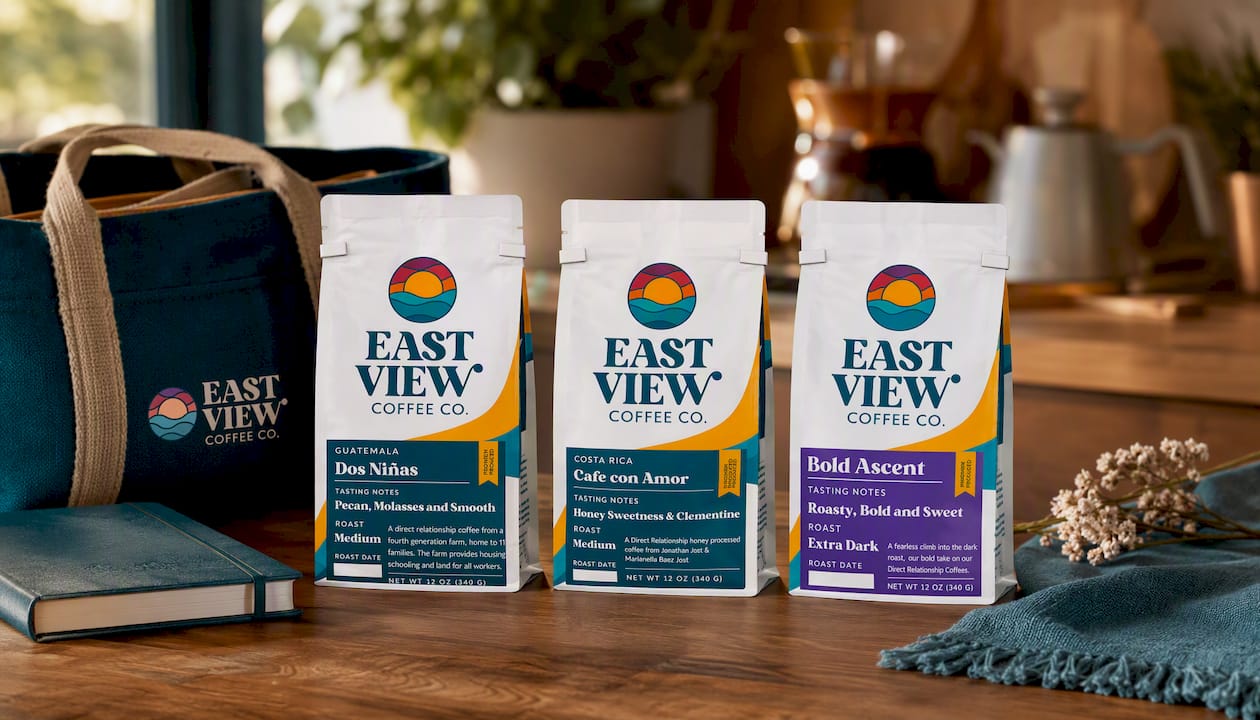
For readers who want to compare traceable direct-relationship sourcing across origins, Dos Niñas Direct Relationship Freshly Roasted Coffee is a strong place to start, and Café con Amor Direct Relationship coffee from Costa Rica offers a useful side-by-side against a different growing region entirely. You can buy any of these as a single bag, and roast level is listed clearly on each product page so you can match it to the flavor lane you’re after. Head to the medium roast bundle if you’d rather sample a few roast levels at once before settling on a favorite.
Sources
- Guatemala: Eight Regions and Buying Guide — OnlineCoffeeGuide
- Coffee Review - Guatemala Natural by La Familia del Café (Guatemala)
- Guatemala coffee guide — MugCult
- What coffees from major growing regions taste like — Serious Eats
FAQ
What Is Special About Guatemalan Coffee?
Its combination of chocolate and caramel sweetness with balanced, bright acidity sets it apart, along with eight distinct growing regions that each push flavor in a different direction depending on elevation and microclimate.
Is Guatemalan Coffee Better Than Colombian Coffee?
Neither is objectively better. Guatemalan coffee tends toward chocolate, caramel, and regional variety from citrus to wine-like acidity, while Colombian coffee often leans toward a more uniformly balanced, mild profile; the right pick depends on whether you want structured sweetness or gentler consistency.
What Is the Tastiest Coffee in the World?
There’s no single answer, since taste is subjective and top-scoring lots come from many origins. Guatemala, particularly high-elevation Huehuetenango and Antigua lots, consistently earns strong reviews for its balance of sweetness and complexity.
Is Guatemalan Coffee Strong?
In caffeine content, it’s roughly comparable to other Arabica coffees. In flavor intensity, medium roasts feel rich and full-bodied rather than harsh, while darker roasts and natural-processed lots deliver a heavier, more intense cup.