
Memorable Home Coffee Tasting for 4–8 Guests Using Small Batch Beans
A good coffee tasting is just a small group, three to five contrasting coffees, and a simple way to talk about what’s in the cup. Pick your beans, grab a burr grinder, a scale, and a kettle, and invite four to eight people so nobody’s rushing. Give it 45 to 90 minutes and keep the tone loose. That’s the whole plan.
TL;DR:
- Using three to five contrasting coffees highlights differences in roast level, origin, processing method, and variety without overwhelming guests.
- Freshly roasted beans from small-batch sources with clearly printed roast dates ensure maximum flavor clarity during tasting.
- Consistent cupping protocols, including accurate ratios, water temperature, and cooling time, are essential for reliable flavor comparison.
- Smelling the coffee before tasting and using a scorecard focused on aroma, acidity, body, and flavor enhance the quality of evaluations.
- Limiting the guest list to four to eight people and following a structured timeline keeps the tasting engaging and well-paced.
Table of Contents
- What Do You Need to Host a Coffee Tasting?
- How Many Coffees Should You Pick for a Tasting?
- How Do You Brew Coffee for a Tasting?
- How Do You Actually Taste Coffee at a Tasting?
- How Do You Plan the Guest List and Timing?
- What Snacks and Games Pair Well With a Coffee Tasting?
- Why Roast Date and Sourcing Change What’s in the Cup
- A Host’s Quick Checklist Before Guests Arrive
- Ready to Buy Your Tasting Lineup?
- Where to Learn More About Coffee Tasting
- Sources
- FAQ
What Do You Need to Host a Coffee Tasting?
You don’t need a lab. You need a few pieces of gear that make the samples consistent, and a table set up so guests can move through them without bumping elbows.
The essentials: a burr grinder (blade grinders make an inconsistent grind that muddies flavor comparisons), a kitchen scale, an electric kettle, small cups or cupping bowls, spoons, water glasses for palate cleansing, labels, a timer, and note cards for jotting impressions.
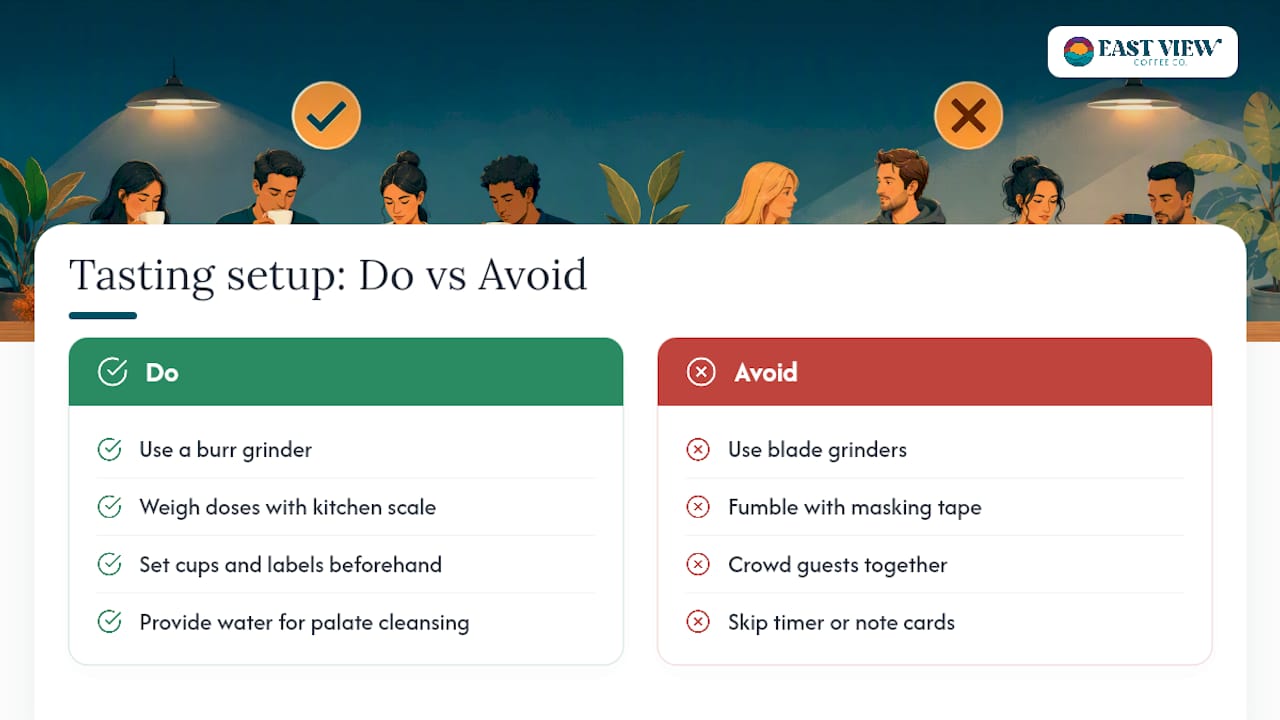
Pro Tip: Set out the empty cups and labels the night before. Fumbling with masking tape while guests are arriving kills the mood fast.
How Many Coffees Should You Pick for a Tasting?
Three to five coffees is the sweet spot. Fewer than three feels thin, and more than five starts to blur together on the palate, which works against the whole point of the event. Simplicity, not variety for its own sake, tends to produce the better night.
Build your lineup around contrast rather than just picking coffees you like:
- Roast level: light, medium, and dark side by side show how roasting changes sweetness and body
- Origin: a coffee from Kenya next to one from Guatemala highlights acidity and fruit differences
- Processing method: washed versus natural versus honey processed coffees taste noticeably different even from the same region
- Variety: some hosts like to compare two single-origin lots against one blend
Include at least one decaf or half-caff option so guests who skip caffeine after 2 p.m. aren’t left out. It also works as a useful control coffee, since decaf processing changes body and sweetness in ways worth discussing. Label every bag with roast date and origin, and buy enough for at least two rounds per guest, roughly 15 to 20 grams of whole bean per person per coffee.
How Do You Brew Coffee for a Tasting?
Cupping is the standard method professional tasters use because it strips brewing variables down to almost nothing. Follow this sequence and every sample lands in the same window:
- Weigh 12 grams of coffee per 200 milliliters of water for each cup, and grind each sample right before brewing on a medium-fine setting.
- Heat water to roughly 200°F, staying inside the 195°F to 205°F range that most brewing methods call for.
- Pour the water directly over the grounds and let the coffee steep undisturbed for 4 minutes.
- Break the crust of grounds floating on top with a spoon, then skim off the foam and any floating particles.
- Let the coffee cool before tasting. Rushing this step hides flavor rather than revealing it.
No cupping bowls? A French press or even plain mugs work fine if you keep the ratio and timing consistent across every sample. What actually matters is that every coffee cools to the same window before anyone tastes, since coffee that cools to roughly 150°F to 160°F reveals nuance that scalding hot coffee simply masks. A coffee tasted at 190°F and one tasted at 155°F will not taste like the same drink, even if they came from the same bag.
How Do You Actually Taste Coffee at a Tasting?
Smell comes first, always. Have guests smell the dry grounds, then smell again once the water hits them, and finally smell the brewed cup before tasting. Aroma alone can tell you whether a coffee is going to be floral, nutty, or fruit forward before a single sip happens.
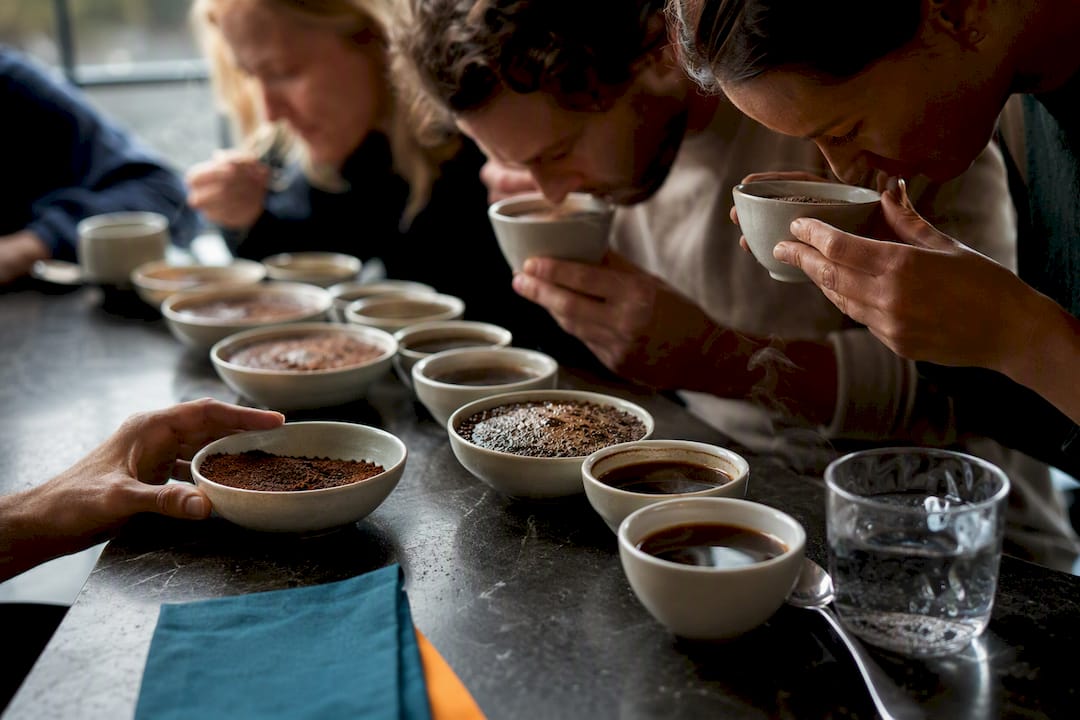
Slurping is not a party trick. Pulling the coffee in fast and loud aerates it across the whole tongue at once, which is exactly how professional tasters evaluate a cup. Encourage guests to notice where the flavor lands, whether it’s bright and citrusy up front or syrupy and chocolatey through the finish.
A simple scorecard keeps the conversation focused instead of vague. Rate each coffee 1 to 5 on:
- Aroma
- Acidity
- Body
- Flavor
- Overall impression
Give guests a short bank of descriptive words to borrow from if they freeze up: bright, syrupy, chocolatey, citrusy, floral, nutty, winey.
Pro Tip: Run the first round blind, then reveal the origins after everyone scores. Guessing which coffee is which turns tasting into a game, and people remember flavors better when they’ve made a wrong guess about them.
How Do You Plan the Guest List and Timing?
Four to eight guests is the range that actually works. Any smaller and the conversation dries up; any larger past five and you need to set up a second, duplicate tasting station so nobody’s standing around waiting for a spoon.
A simple three-part timeline keeps the night moving without feeling rushed:
- Spend the first 15 to 20 minutes on intros and the first tasting round, while you explain how slurping and scoring work.
- Run 20 to 40 minutes of tasting rounds with open discussion between each coffee.
- Close with 10 to 15 minutes for the reveal, final scores, and wrap-up conversation.
One person needs to run the show, whether that’s you or a designated friend, calling out when to smell, when to slurp, and when to move to the next cup. Rinse spoons between coffees or use one per sample. Keep labels visible and rotate who pours if you’re running more than one station.
What Snacks and Games Pair Well With a Coffee Tasting?
Plain water and unsalted crackers reset the palate between coffees; anything flavored competes with what you’re trying to taste. For actual pairings, dark chocolate, fresh berries, mild cheese, and plain nut biscotti all complement coffee without drowning out its notes. A little care with the platter itself pays off, too. Simple, colorful plating tricks make even crackers and berries feel like part of the event.
Taste light roasts before dark ones. Palates fatigue fast, and a bold dark roast tasted first will flatten everything that follows.
- Blind guess the origin or roast level before reveal
- Score competition with a small prize (a bag of the winning coffee works well)
- Tasting journal prompts: “What did this remind you of?” is often more revealing than “rate it 1 to 5”
Why Roast Date and Sourcing Change What’s in the Cup
Freshness is not a marketing detail. Coffee loses aromatic compounds within weeks of roasting, so a bag roasted three days ago will show clearer, more distinct flavor notes than one that’s been sitting on a shelf for two months. That difference is exactly what a tasting is designed to surface.
Traceability matters just as much. Coffee sourced directly from a specific farm carries a flavor profile tied to that farm’s soil, altitude, and processing choices, rather than the flattened taste of a mixed commodity lot. East View Coffee roasts in small batches in Kenosha, Wisconsin, and sources directly from women-owned farms, which gives each lot a traceable story worth sharing at the table.
- Small-batch roasting keeps quality control tight across every bag
- Roast dates printed on the bag let you buy at peak freshness
- Direct farm sourcing preserves distinct regional character instead of blending it away
A Host’s Quick Checklist Before Guests Arrive
Confirm roast dates, prep the grinder and scale, print scorecards, and set up the palate-cleanser station before anyone knocks. The three mistakes that sink a tasting: inviting too many people, rushing the cooling window, and brewing samples with inconsistent ratios. Fix all three by keeping the guest list small, the timer honest, and the scale out.
— Jenny
Ready to Buy Your Tasting Lineup?
Building a tasting lineup gets a lot easier when you skip the guesswork on where to buy contrasting, freshly roasted beans. Small-batch roasting allows ordering a lineup with real contrast built in, and bags ship with a roast date so freshness is clear when they arrive.
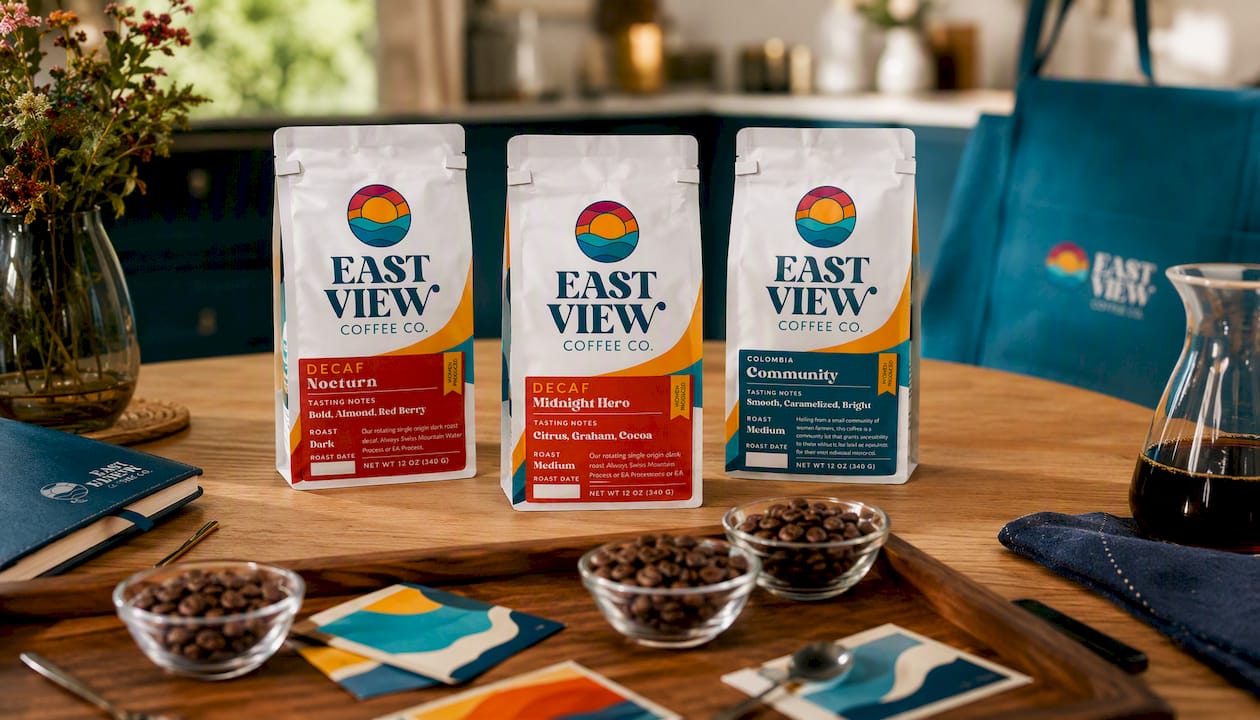
For the decaf slot, Nocturne Decaf Freshly Roasted Coffee brings depth without caffeine, while Midnight Hero Decaf Freshly Roasted Coffee works as a second decaf option if you want to compare two decaf styles side by side. For your centerpiece, medium-bodied sample, Community Freshly Roasted Coffee gives guests an approachable coffee to anchor the lineup around. Buy whole bean whenever possible and grind right before your tasting starts. Check out the equipment collection if you still need a scale or spoons, and browse brewing guidance for ratio specifics by method. Place your order this week so your beans arrive with plenty of roast-date freshness left before your tasting date.
Where to Learn More About Coffee Tasting
- Cup of Excellence covers provenance and competition-grade processing standards for hosts curious about sourcing.
- The coffee cupping versus tasting breakdown clarifies terms guests often mix up.
- The tasting room guide shows what a hosted, in-person tasting looks like in practice.
Sources
- How to Host a Coffee Tasting (Cupping) Party | Starbucks® Coffee at Home
- How To Host The Ultimate Coffee Tasting
- How to Throw a Coffee Tasting Party | PS Food
- How professionals taste or cup coffee — Coffee Review
FAQ
What Is the 15-15-15 Rule for Coffee?
There’s no single agreed-upon “15-15-15 rule” in specialty coffee; some brewers use it loosely to describe using 15 grams of coffee, water around 15 times that weight, and roughly 15-second pour intervals, but definitions vary by brewer and source.
What Do You Call a Coffee Tasting?
The formal industry term is “cupping,” a structured method professionals use to evaluate aroma, acidity, body, and flavor; a casual home version is often just called a coffee tasting party.
What Is the 80/20 Rule for Coffee?
This isn’t a standardized coffee industry term, and definitions vary depending on the source; it’s sometimes used informally to describe getting most of a coffee’s flavor impression from the first portion of a sip or pour, but there’s no fixed cupping standard behind it.
How Do You Do a Coffee Tasting?
Brew three to five contrasting coffees using a consistent ratio and water temperature, let each sample cool into the 150°F to 160°F tasting window, then smell, slurp, and score each one using simple fields like aroma, acidity, body, and flavor.
How Many Guests Should I Invite to a Coffee Tasting?
Four to eight guests works best for one tasting station; beyond five, set up a second identical station so everyone tastes at the same pace without crowding the table.