
Coffee for Office: Practical Options for Office Managers
The easiest, highest-impact move for most offices is a small-batch subscription from East View Coffee Company paired with a low-friction brewer matched to your team size. Order a sample pack, measure how many cups your team drinks daily, then pick either a thermal batch brewer (six or more daily drinkers) or single-serve portion packs (small teams or mixed preferences). That decision alone removes most of the restocking overhead and inconsistency that plague shared coffee setups.
Two quick steps before you buy anything:
- Count daily drinkers and peak demand windows (morning rush vs. all-day trickle).
- Decide whether convenience or per-cup cost is the bigger priority for your budget.
Ethical, small-batch subscriptions are increasingly treated as a baseline workplace amenity, not a perk. Offices that treat coffee as a structured program rather than an afterthought report better employee satisfaction and less time spent on ad-hoc restocking runs.
Table of Contents
- What types of coffee for office use actually differ from each other?
- How do you choose the right office coffee setup and vendor?
- How to set up the break room so coffee actually gets made right
- How subscription cadence and packaging size keep office coffee fresh
- What does office coffee actually cost per month?
- Why Eastviewcoffee is a strong choice for your office coffee program
- Health and safety guidelines for office coffee stations
- Key Takeaways
- What most office coffee guides get wrong
- Fresh coffee for your office, without the guesswork
- Useful sources for setup, vendor calls, and operations
What types of coffee for office use actually differ from each other?
Not all formats are interchangeable. The right choice depends on your team size, existing equipment, and how much training you want to ask of your staff.
| Format | Best for (office size) | Brew method compatibility | Ease of use | Cost per cup (est.) | Freshness and roast | Packaging and subscription |
|---|---|---|---|---|---|---|
| Single-serve pods | 1–10 people | Pod/capsule machines | Minimal training | — | Pre-portioned; check roast date | Individual pods; no bulk option |
| Portion packs (pre-ground) | 5–25 people | Drip brewers | Minimal training | — | Sealed for freshness | Case packs; subscription-friendly |
| Whole-bean / 5-lb bulk bags | 10–30 people | Batch brewers, grinders | Requires grinder and dose guide | — | Best if rotated and stored properly | 5-lb bags; ideal for subscriptions |
| Thermal batch brewer | 6–30 drinkers | Batch brewer with thermal carafe | Low after initial setup | Included in bean cost | Depends on bean quality | Pairs with any bag format |
| Managed / fully serviced | 30+ people | Any; bundled with equipment | Near-zero training | Varies by contract | Depends on vendor | Monthly billing; equipment included |
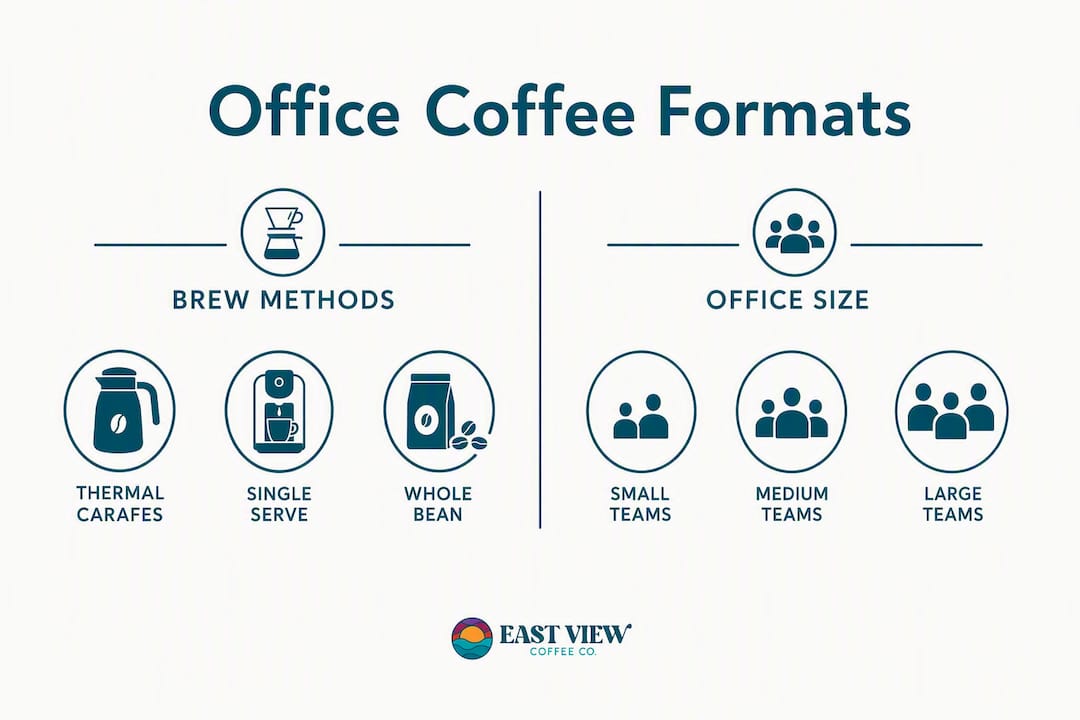
Thermal carafes outperform hot plates for shared setups because they protect flavor when coffee sits between peak service windows. A hot plate keeps cooking the coffee; a thermal carafe just holds it. For an office where the pot sits between pours for an extended time, that difference shows up in every cup.
Whole-bean 5-lb bags give you the lowest per-cup cost and the best freshness, but only if you have a grinder and someone willing to follow a simple dose guide. If neither exists in your office today, start with portion packs and upgrade later.
Managed office coffee services bundle equipment, maintenance, and supply into a predictable monthly fee, which works well for larger teams that want zero operational overhead. The tradeoff is less control over roast quality and sourcing.
How do you choose the right office coffee setup and vendor?
Work through this in order. Skipping the usage measurement step is how offices end up with a machine that’s wrong for their volume.
- Measure daily consumption. Count cups per day across the team, note peak windows (typically 8–10 AM), and identify whether demand is steady or concentrated.
- Match brew method to demand. Fewer than 10 daily drinkers: single-serve or portion packs. Six to 30 drinkers: thermal batch brewer. Thirty or more: multiple brewers or a managed service.
- Ask vendors the right questions. Roast date policy (will they show it?), grind options for your specific brewer, delivery cadence flexibility, trial or sample availability, and maintenance SLA for any equipment they supply.
- Check contract terms. Minimum order quantities, lock-in periods, and cancellation policies vary widely. A vendor who won’t offer a short pilot is a red flag.
Red flags to watch for:
- Vendor-only proprietary pods with high minimums and no exit clause.
- Vague freshness language (“fresh-roasted”) with no roast date on the bag.
- No clear maintenance plan or training for equipment they place in your office.
- A single SKU offered regardless of your team size or brewer type.
A great office coffee program minimizes friction: the default setup should be clean, consistent, and operable by anyone on the team without special knowledge. If the quality depends on one person who knows the “right” way to make it, the program is fragile.
For shared spaces, hot-desk etiquette principles apply directly to coffee station use: clear labeling, shared responsibility for restocking, and a posted routine keep things running without passive-aggressive notes on the machine.

How to set up the break room so coffee actually gets made right
Station placement is both a coffee and a culture decision. A central, high-traffic spot with enough counter space to queue and stage supplies encourages the casual interactions that make a break room worth having. A machine shoved in a corner next to the printer gets ignored.
Keep these supplies visible and within arm’s reach of the brewer: a scoop or scale, filters, labeled canisters for beans and grounds, dairy and non-dairy options, and stir sticks. Labeled canisters matter more than they sound. Unlabeled containers lead to stale beans sitting next to fresh ones, and nobody knows which is which.
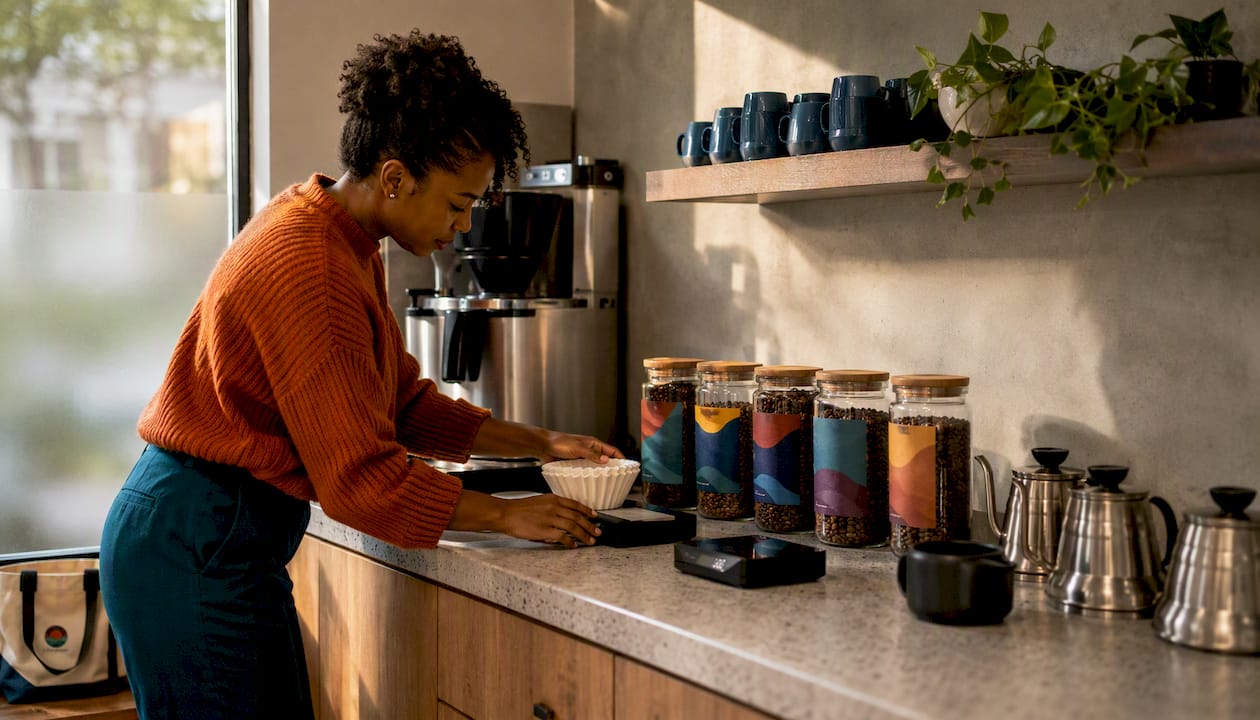
Cleaning is where most office coffee setups fail. Daily tasks take under two minutes: rinse the carafe, wipe the drip tray, discard grounds. Schedule a deeper clean weekly (descale, wash all removable parts) and put it on a shared calendar with a named owner. Oil buildup and stale grounds are the two most common reasons office coffee tastes bad, and both are entirely preventable.
Pro Tip: Post a laminated card at the station with the exact dose (grams or scoops), grind setting if applicable, and water fill line. Standardizing the recipe removes dependence on one person’s memory and makes quality repeatable across the whole team.
How subscription cadence and packaging size keep office coffee fresh
Freshness is a function of how quickly you go through a bag relative to when it was roasted. A 5-lb bag is ideal for a medium-to-large team that will finish it within two to three weeks. For a small team of five or fewer, a 12-oz bag ordered more frequently is a better call than a bulk bag that sits open for a month.
Subscription cadence options to consider:
- Weekly: best for high-volume offices (25+ drinkers) using 5-lb bags.
- Biweekly: works well for 10–25 drinkers; balances freshness with storage simplicity.
- Monthly: appropriate for small teams using 12–16 oz bags or portion packs with long shelf life.
Always prioritize vendors who print the roast date on the bag. “Fresh-roasted” without a date is marketing copy. A roast date lets you calculate whether the coffee will still be at peak flavor when your team finishes it.
Buy amounts that match your actual use and keep one active container open at a time. Sealed storage, away from heat and light, extends usable life significantly. A short two-to-four-week pilot subscription is the lowest-risk way to dial in the right cadence and grind before committing to a larger order.
What does office coffee actually cost per month?
Per-cup cost ranges by format (conservative estimates based on typical U.S. wholesale pricing):
| Format | Est. cost per cup | Monthly cost: 10-person office* | Monthly cost: 25-person office* | Monthly cost: 25-person office* |
|---|---|---|---|---|
| Single-serve pods | — | $150–$400 | $300–$500 | — |
| Portion packs (pre-ground) | — | — | $150–$400 | $300–$500 |
| Whole-bean bulk bags | — | — | $50–$150 | — |
| Managed service | Varies by contract | $150–$400+ | $300–$500+ | — |
*Assumes two cups per person per workday, 22 workdays per month.
Upfront equipment cost is the other variable. A quality thermal batch brewer runs $150–$400 purchased outright. Managed services typically include equipment at no upfront cost, folded into the monthly fee. Offices that switch from ad-hoc purchasing to a structured program often reduce total coffee spend while improving quality, because bulk pricing and subscription discounts offset the per-unit cost of better beans.
The ROI case is straightforward: if a 25-person team each buys premium coffee outside the office multiple times per week, significant money leaves the building monthly. A well-run in-office program at $300–$500 per month pays for itself in reduced out-of-office spend and time saved.
Why Eastviewcoffee is a strong choice for your office coffee program
Eastviewcoffee roasts in small batches in Kenosha, Wisconsin, sourcing exclusively from women-owned farms. Every bag carries a roast date, which is the single most useful piece of information for an office buyer trying to manage freshness across a subscription cycle.
Key reasons Eastviewcoffee fits office buying criteria:
- Roast-date transparency: you know exactly how fresh the coffee is before it arrives.
- 5-lb bag options: sized for medium-to-large teams on a biweekly or weekly cadence.
- Flexible subscription formats: from small-batch freshly roasted bags to custom office configurations, the program adapts to your team size.
- Ethical sourcing: beans sourced from women producers with premium compensation, which matters to procurement teams with ESG commitments.
- Local wholesale and office programs: direct relationships with Kenosha-area businesses and a dedicated office coffee program for ongoing supply.
Coffee gifts that do good are one way Eastviewcoffee extends that sourcing story into team gifting and onboarding, which some office managers use alongside their regular supply program.
Health and safety guidelines for office coffee stations
A shared coffee station is a food-contact surface and should be treated accordingly. The FDA’s food safety framework applies to shared workplace food prep areas, which means regular cleaning, proper storage temperatures for dairy, and clear labeling for allergens.
Practical guidelines:
- Dairy storage: keep milk and creamers refrigerated at or below 40°F. Discard open liquid creamer after the manufacturer’s recommended period, typically seven to ten days.
- Non-dairy alternatives: label clearly and store per package instructions. Cross-contamination between dairy and non-dairy is a real concern for employees with allergies or dietary restrictions.
- Equipment hygiene: coffee oils accumulate in brewers and carafes and can harbor bacteria if not cleaned regularly. Daily rinse plus weekly deep clean is the minimum standard.
- Water quality: if your office uses a water line connection, schedule filter replacements per the manufacturer’s spec. Poor water quality affects both taste and machine longevity.
- Allergen awareness: if flavored syrups or specialty creamers are available, label them clearly. Some flavored products contain tree nuts or dairy derivatives that are not obvious from the packaging.
Post a simple cleaning log at the station. It takes 30 seconds to initial and date, and it creates accountability without requiring a dedicated coffee manager.
Key Takeaways
A small-batch subscription matched to your team’s daily consumption, paired with a thermal batch brewer and a posted recipe, is the most reliable way to run a consistent office coffee program without ongoing admin overhead.
| Point | Details |
|---|---|
| Match format to team size | Fewer than 10 drinkers: portion packs or single-serve. Six to 30: thermal batch brewer. Thirty-plus: multiple brewers or managed service. |
| Subscription cadence matters | Weekly for large teams on 5-lb bags; biweekly for mid-size; monthly for small teams on 12–16 oz bags. |
| Post a visible recipe | Dose, grind setting, and water fill line posted at the station make quality repeatable for anyone on the team. |
| Budget realistically | Whole-bean bulk runs — per cup; pods run —. A 25-person office on bulk beans spends roughly $50–$150 per month on coffee alone. |
| Eastviewcoffee office program | Roast-date transparency, 5-lb bag options, women-producer sourcing, and a dedicated office coffee program make it a strong default choice. |
What most office coffee guides get wrong
Most guides treat the coffee choice as the hard part and the operations as an afterthought. The reality is the opposite. You can buy excellent beans and still serve terrible coffee if the station is poorly placed, the grinder isn’t calibrated, or the carafe sits on a hot plate for two hours.
The offices that get this right share one habit: they make the default cup good enough for most people and stop there. Trying to satisfy the espresso enthusiast, the light-roast devotee, and the person who just wants something hot in the same shared system leads to a cluttered station, inconsistent results, and a machine nobody fully understands. Pick one solid default, post the recipe, and offer a separate personal setup for the outliers.
Small-batch sourcing from women-owned farms is not just an ethical talking point. It tends to produce more traceable, more carefully processed coffee, which means fewer defects and more consistent flavor in the cup. That traceability also makes it easier to troubleshoot when something tastes off: you know the roast date, the origin, and the processing method. Generic office coffee gives you none of that.
The pilot subscription model exists for exactly this reason. Two to four weeks is enough to validate grind setting, cadence, and team preference before committing to a larger order. Any vendor worth working with will offer it.
Fresh coffee for your office, without the guesswork
Eastviewcoffee’s office coffee program is built for exactly this situation: a team that wants consistently good, ethically sourced coffee without managing a complex supply chain or signing a long-term contract.
Every order ships with a roast date and a recommended grind for your brewer type. The custom coffee recommendation quiz matches your team size, existing equipment, and roast preference to the right product and cadence in under two minutes. From there, you can start with a sample pack or move directly to a subscription sized for your office. No equipment lock-in, no opaque pricing, and sourcing you can actually explain to your team or your procurement department.
Useful sources for setup, vendor calls, and operations
These sources back the guidance in this article and are worth bookmarking for vendor conversations and station setup.
- How to Set Up Office Coffee Solutions on a Budget — cost-focused; helpful for building a budget case or comparing buy vs. managed service.
- Small office design ideas for the break area — practical design guidance for making the coffee station area inviting and functional within a compact footprint.
- East View Coffee Office Program — the primary resource for piloting or subscribing through Eastviewcoffee, including wholesale and custom order options.