
Start Office Coffee Today: Ideas for Teams Under 15, 15 to 50, and 50+
The fastest fix is a tiered plan: a basic pod or drip setup for small teams, a 10 to 12 cup thermal drip brewer for mid-size offices, and cold-brew or bean-to-cup for larger groups with varied tastes. Stock one solid whole-bean blend, add a milk alternative, and post the brew ratio near the machine. Anchor choices to the SCA Golden Cup guidance, look for ENERGY STAR rated equipment, and consider a supplier specializing in ethically sourced specialty coffee for the beans themselves.
TL;DR:
- Under 15-person offices should prioritize simple equipment like single-serve pod machines and small drip brewers, avoiding complex setups that can cause confusion.
- For teams of 50 or more, bean-to-cup machines and cold-brew systems deliver convenience at higher costs, but require regular maintenance and proper cleaning.
- Using ENERGY STAR rated equipment and following the SCA Golden Cup brewing standards ensures energy efficiency and consistent quality across various office sizes.
- Proper layout with clear labeling, fixed ratios, and designated clean-up areas improves coffee quality and reduces waste or mistakes in the breakroom.
- Stocking a small selection of ethically sourced beans, flavored syrups, and dairy-free options helps accommodate diverse tastes and maintains freshness.
Table of Contents
- Office Coffee Bar Ideas by Team Size
- Choosing Office Coffee Equipment That Matches Your Headcount
- Designing a Coffee Station Layout That Actually Works
- Stocking the Station: Beans, Milk, and Meeting Coffee Ideas
- Brew Ratios That Keep Office Coffee Consistent
- Maintenance, Common Mistakes, and Budgeting for Office Coffee
- How Eastviewcoffee Fits Into Your Office Setup
- Why Simplicity Beats Gadgetry in the Breakroom
- Get Your Office Coffee Program Started
- Sources
- FAQ
Office Coffee Bar Ideas by Team Size
The right coffee setup for office use depends entirely on headcount, not ambition. A ten-person startup and a two-hundred-person floor need completely different equipment, and matching the wrong scale to either wastes money or frustrates people waiting in line.
For small offices (under 15 people), keep it simple:
- A single-serve pod machine paired with a compact hot water dispenser for tea drinkers.
- A 10-cup drip brewer with a thermal carafe instead of a hot plate, so leftover coffee doesn’t scorch.
- A wall-mounted shelf with three or four bagged beans and a hand grinder for anyone who wants freshness on demand.
For medium offices (15 to 50 people):
- A 12-cup thermal batch brewer running two pots a day.
- A small cold-brew keg for warmer months.
- A syrup and creamer station with labeled pumps to cut down on spills and guesswork.
For larger offices (50+ people):
- A bean-to-cup machine that grinds on demand for consistent espresso drinks.
- A dedicated cold-brew tap system for daily volume.
- Printed recipe cards taped near the station so quality doesn’t depend on one enthusiastic coworker.
- A rotating “coffee of the month” bag to keep the menu interesting without adding SKUs.
Pro Tip: A $30 laminated recipe card outperforms a $3,000 machine upgrade when the real problem is inconsistent brewing, not weak equipment.
Choosing Office Coffee Equipment That Matches Your Headcount
Machine choice comes down to three questions: how many cups per day, how much upkeep your team will actually do, and what your energy bill can absorb. Get those right and the rest of the setup for office coffee falls into place.
- Single-serve pods: fast, zero mess, but the highest per-cup cost and the most plastic waste. Good for offices under 15 people or mixed-caffeine teams.
- Commercial drip with a thermal carafe (10 to 12 cups): the workhorse for most breakrooms. No hot plate means no burnt, bitter batches sitting for hours.
- Bean-to-cup machines: best for 50+ employees who want espresso-based drinks without a barista. Higher upfront cost, more maintenance.
- Cold-brew kegs: low daily labor once filled, and pricing can run close to $1 per cup at high volume, making it a strong value pick for larger teams.
Look for models on the ENERGY STAR qualified commercial coffee brewer list, since federal purchasing guidance flags energy-save modes as a real lifecycle-cost factor, not a marketing footnote. If you’re weighing a single-serve system against a batch brewer, it also helps to check resale and market pricing on popular single-serve machines before committing to a fleet purchase. Whatever you choose, factor in cleaning frequency: a bean-to-cup machine needs weekly descaling, while a simple drip brewer just needs a rinse and a filter swap.
Designing a Coffee Station Layout That Actually Works
A good coffee station ideas layout follows a simple left-to-right flow: brew, customize, clean up. Put the machine and beans on one end, milk and syrups in the middle, and a trash bin plus wipe-down station at the far end so nobody backtracks through a crowded counter.
- Post the brew ratio and grind size on a laminated card, not a sticky note that disappears in a week.
- Label every container, including “decaf” and any flavored syrup, so nobody guesses.
- Use portioned frac packs or pre-measured scoops near the machine to keep ratios consistent between shifts.
- Keep an outlet strip rated for the machine’s draw, and check cords annually. Overloaded outlets near a water source are a real hazard, not a hypothetical one.
- Store extra beans and filters in a closed cabinet, away from direct sunlight and heat.
Standardizing the station this way means quality doesn’t depend on whichever coworker happens to be the office coffee snob.
Stocking the Station: Beans, Milk, and Meeting Coffee Ideas
What you stock matters as much as what you brew it on. Whole-bean bags paired with a grinder give the freshest cup, but frac packs (pre-measured, sealed portions) work better for offices that can’t guarantee someone will reseal a bag properly.
- Beans: keep one dark roast, one medium, and a decaf option on hand at minimum. Rotating a single-origin monthly keeps regulars interested.
- Milk alternatives: oat and almond milk now show up in a growing share of office orders, according to Crafty’s client data, so stock at least one dairy-free option and date every carton.
- Syrups and add-ons: vanilla and caramel cover most requests; portion with a numbered pump to keep costs predictable.
- Cold brew and ready-to-drink cans: minimal labor, longer shelf stability, and a strong fit for cold-brew station setups that don’t need daily brewing.
For meetings specifically, a thermal airpot filled fresh beats a stale pot that’s been sitting since 8 a.m., every time.
Brew Ratios That Keep Office Coffee Consistent
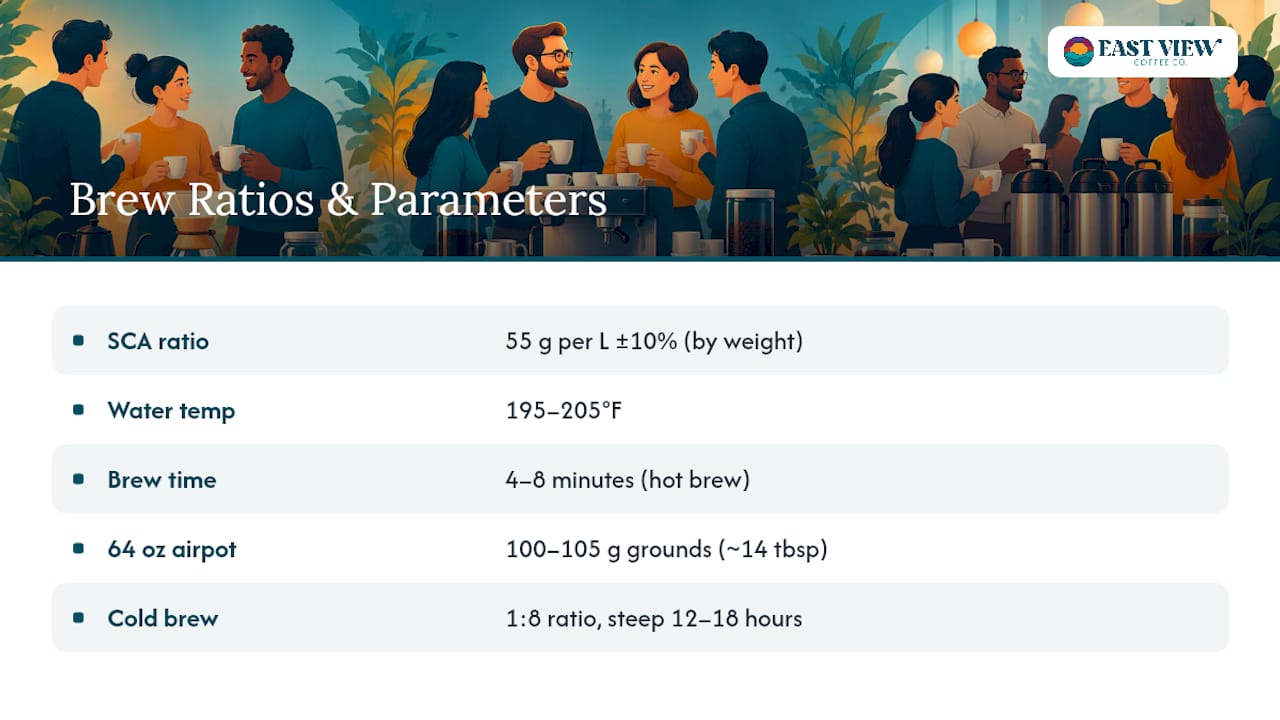
Consistency comes down to math, not talent. The SCA Golden Cup Standard calls for 55 grams of coffee per liter of water, plus or minus 10 percent, at 195 to 205°F, with a 4 to 8 minute brew window. For a standard 64-ounce (about 1.9 liter) airpot, that translates to roughly 100 to 105 grams of ground coffee, or about 14 tablespoons.
For cold brew, a coarse grind at a 1:8 ratio (coffee to water by weight) steeped 12 to 18 hours in the fridge gives a smooth, low-acid base you can dilute to taste.
If coffee tastes weak, add coffee before adding water. If it tastes bitter, coarsen the grind or shorten brew time. If it tastes muddy or flat, check your water temperature first, since 205°F+ water scorches grounds fast.
Maintenance, Common Mistakes, and Budgeting for Office Coffee
Most bad office coffee comes down to three fixable habits: leaving coffee on a hot plate, ignoring grinder buildup, and skipping water filter changes. Fix these and quality jumps without spending a dollar on new equipment.
- Daily: rinse carafes, empty grounds, wipe the counter.
- Weekly: descale single-serve machines, check milk expiration dates.
- Monthly: replace water filters, deep-clean the grinder hopper, inspect cords and outlets.
Budget-wise, per-employee coffee costs vary widely, but workplace surveys consistently show employees rank quality coffee as a top valued perk, which makes the spend easy to justify against turnover and morale costs. If restocking eats too much staff time, an office coffee service that handles delivery on a schedule often costs less in labor hours than DIY runs to the store. ENERGY STAR rated brewers also cut standby power draw, which adds up across a machine running 10+ hours a day.
How Eastviewcoffee Fits Into Your Office Setup
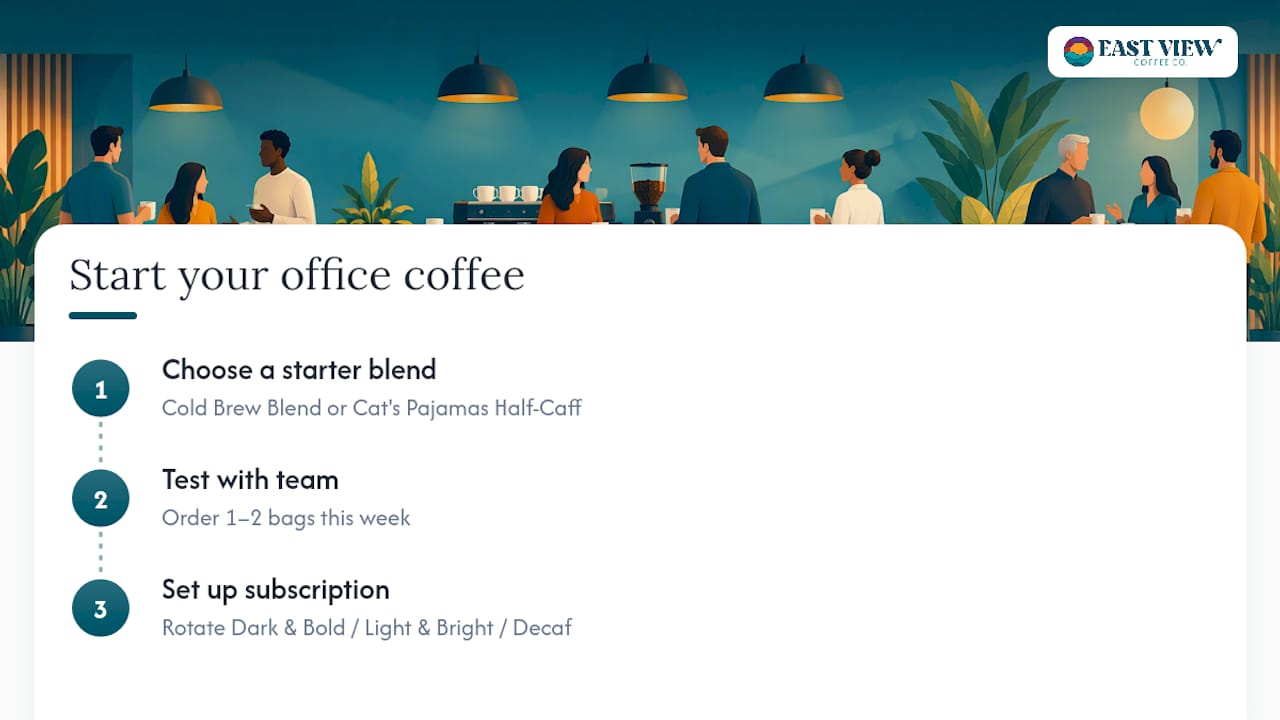
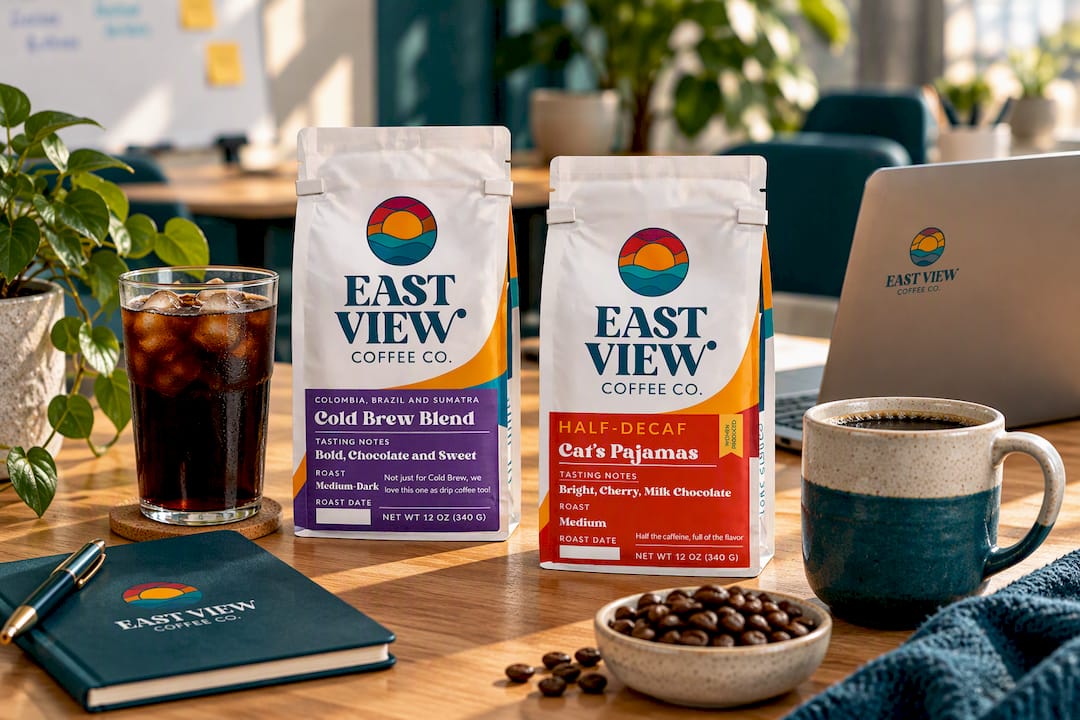
Specialty coffee roasts sourced from women-owned farms can map directly onto the tiers above. Teams building a cold-brew station can start with the Cold Brew Blend, roasted for smooth, low-acid steeping. Offices with mixed caffeine tolerance often land on the Cat’s Pajamas Half-Caff, which splits the difference without forcing a decaf-only choice. For teams ready to standardize, a custom coffee recommendation or a visit to the Kenosha tasting room helps narrow the menu to two or three reliable options instead of ten untested ones.
Why Simplicity Beats Gadgetry in the Breakroom
Office coffee programs fail more often from inconsistency than from cheap equipment. A posted recipe card and a fixed ratio do more for morale than a $4,000 machine nobody knows how to run correctly. Spend on reliability first, features second.
— Jenny
Get Your Office Coffee Program Started
Eastviewcoffee gives office managers a direct path to better breakroom coffee without guessing at bean quality or committing to a case order sight unseen. The Cold Brew Blend Coffee and Cat’s Pajamas Half-Caff both work as low-risk starter picks for the tiers outlined above, and each bag comes from small batches roasted in Kenosha from women-owned farms, so the sourcing story is part of what you’re serving, not an afterthought.
If your team wants variety without reordering every few weeks, the Coffee Subscription handles rotation automatically, and you can browse Dark & Bold, Light & Bright, or fully Decaffeinated roasts to match your office’s taste range. Start by ordering one or two bags to test with your team this week, then set up a subscription once you know what sticks.
Sources
Brew ratios and water temperature guidance in this article follow the SCA Golden Cup Standard. Equipment efficiency recommendations draw on Department of Energy FEMP guidance for ENERGY STAR commercial brewers. Spending and demand trends, including cold-brew and plant-milk growth, come from Crafty’s office coffee trend data, while broader workplace expectations are covered in Coffee Dasher’s office coffee statistics.
- Purchasing Energy-Efficient Commercial Coffee Brewers | Department of Energy
- Office Coffee Station Ideas and Tips with Examples
- 55+ Office Coffee Statistics: Ultimate Numbers in 2026
FAQ
What Are Good Ideas for an Office Coffee Area?
A tiered setup works best: a pod or drip machine for small teams, a thermal batch brewer for mid-size offices, and cold-brew or bean-to-cup for larger groups. Add labeled containers, a posted brew recipe, and at least one milk alternative to cover most preferences.
What Are Some Unique Coffee Ideas for the Office?
A rotating single-origin bean of the month, a self-serve syrup bar with labeled pumps, and a cold-brew tap are popular upgrades that go beyond the standard drip pot. Sampling smaller-batch roasts, like those from Eastviewcoffee, also lets teams try new flavors without committing to a full case.
How Do You Make Good Coffee in the Office?
Consistency matters more than fancy equipment. Follow the SCA Golden Cup ratio of about 55 grams of coffee per liter of water, use a thermal carafe instead of a hot plate, and clean the grinder and filters on a regular schedule.
What Is the 80/20 Rule for Coffee?
In office coffee contexts, this usually refers to prioritizing the most impactful setup decisions, like a consistent ratio and a clean machine, that drive the majority of the taste difference. It’s less a formal standard and more a shorthand for focusing effort where it actually improves the cup.
How Much Should an Office Budget for Coffee Per Employee?
Costs vary by team size, equipment, and coffee quality, so there’s no single fixed number. Workplace surveys show employees consistently rate free, quality coffee as a valued perk, which is worth weighing against the retention and morale it supports.