
The Best Office Coffee Service for U.S. Managers
For U.S. office managers who want a turnkey solution, Eastviewcoffee’s office coffee program delivers ethically sourced, small-batch specialty beans, full equipment setup, and ongoing maintenance without the vendor-management headaches. Here is what you get in one program:
- Specialty coffee sourced from women-owned farms, roasted in small batches in Kenosha, Wisconsin
- Equipment installation and scheduled maintenance with clear SLA terms
- Restocking of beans and breakroom accompaniments managed by the provider
- Free pilot tastings so your team approves the coffee before any commitment
- Customizable brewing options to match your office size and culture
Ready to start? Get your custom coffee recommendation and request a pilot tasting for your team.
Table of Contents
- What does a full office coffee service actually include?
- Which brewing technology fits your office setup?
- What should you expect from equipment installation and maintenance?
- How do you pick the right office coffee provider?
- What does an office coffee program cost, and how long does setup take?
- Why Eastviewcoffee stands out for office coffee programs
- Key Takeaways
- What actually makes an office coffee program worth it
- Start your office coffee pilot with Eastviewcoffee
- Useful sources
What does a full office coffee service actually include?
Most administrators assume a coffee program means a machine and a bag of beans. A genuinely full-service office coffee program covers far more than that: equipment supply (leased or owned), professional installation, scheduled maintenance, restocking of coffee and breakroom essentials, staff training on the equipment, and technical support with defined response times.
Optional add-ons vary by provider but commonly include:
- Cold brew on tap or nitro systems
- Micro-markets and pantry management
- Water filtration and bottled water service
- Branded cups, merchandise, or seasonal rotating menus
The best providers also proactively manage inventory so your team never has to track creamer levels or reorder filters. That operational offload is one of the most underrated parts of a well-run program.
Typical onboarding timeline:
- Schedule a demo or tasting trial to evaluate equipment and beans
- Run a pilot program that typically lasts a few weeks in your actual office
- Finalize equipment selection, service terms, and restocking cadence
- Installation usually happens within a few days on-site
- Full rollout with training and first scheduled service visit occurs within several weeks of signing
Providers commonly offer in-office demos or tasting trials before any multi-year agreement, so there is no reason to commit blind.
Which brewing technology fits your office setup?
The right brewing system depends on daily volume, team preferences, and how much maintenance your staff can realistically handle. Here is a quick comparison:
| Brewing Type | Best For | Estimated Daily Volume | Relative Per-Cup Cost | Maintenance Level |
|---|---|---|---|---|
| Single-serve pods | Small offices, variety seekers | Small to moderate | Higher | Low |
| Bean-to-cup espresso | Mid-size offices, espresso culture | Moderate | Moderate | Medium |
| Traditional drip brewer | High-volume, budget-conscious | Large | Lower | Low |
| Batch brew | Large offices, fast service | Very large | Lowest | Low–Medium |
| Cold brew / nitro on tap | Warm climates, modern perks | Varies | Moderate to high | Medium to high |
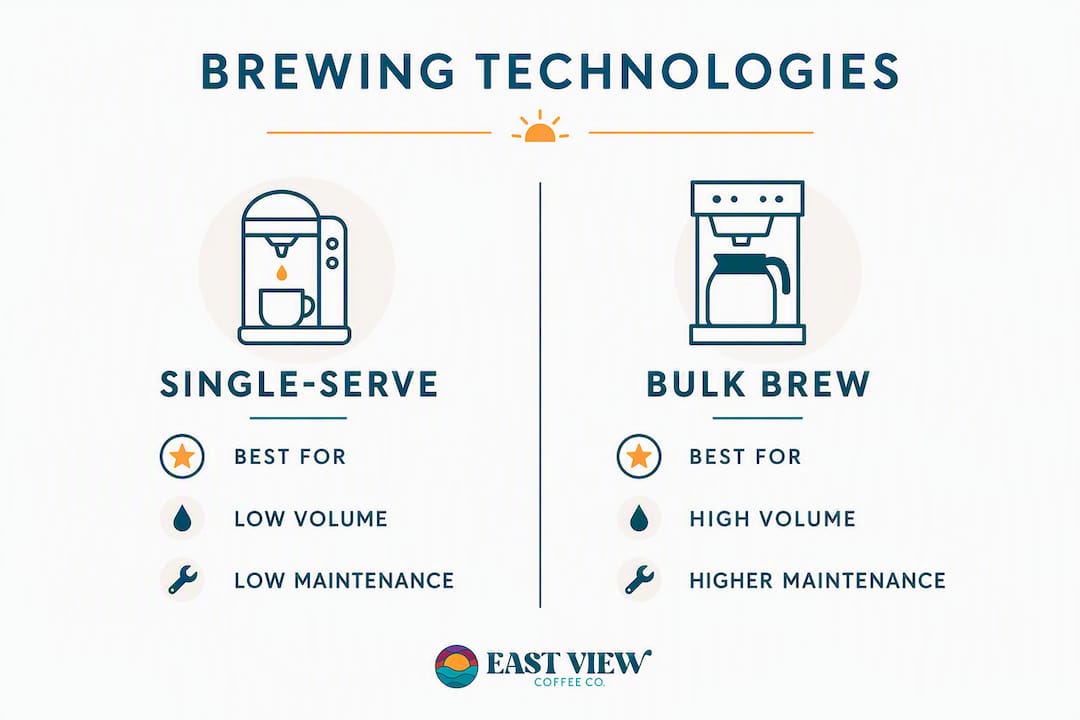
Modern office coffee providers offer all of these technologies, but not every provider stocks all of them locally. Confirm availability in your region before building a shortlist.
A few operational tradeoffs worth knowing:
- Single-serve pods generate significant plastic waste. If sustainability is a priority, look for compostable pod options or switch to bean-to-cup.
- Bean-to-cup machines produce the widest drink variety (espresso, Americano, latte) but require daily cleaning cycles and occasional descaling.
- Cold brew and nitro are genuinely popular perks for return-to-office programs. Setting up a cold brew bar takes more upfront planning but pays off in team enthusiasm.
For offices pairing coffee with catered breakfasts or lunch meetings, coordinating your coffee program with a breakfast meeting setup makes the whole breakroom experience feel intentional rather than assembled from separate vendors.
What should you expect from equipment installation and maintenance?
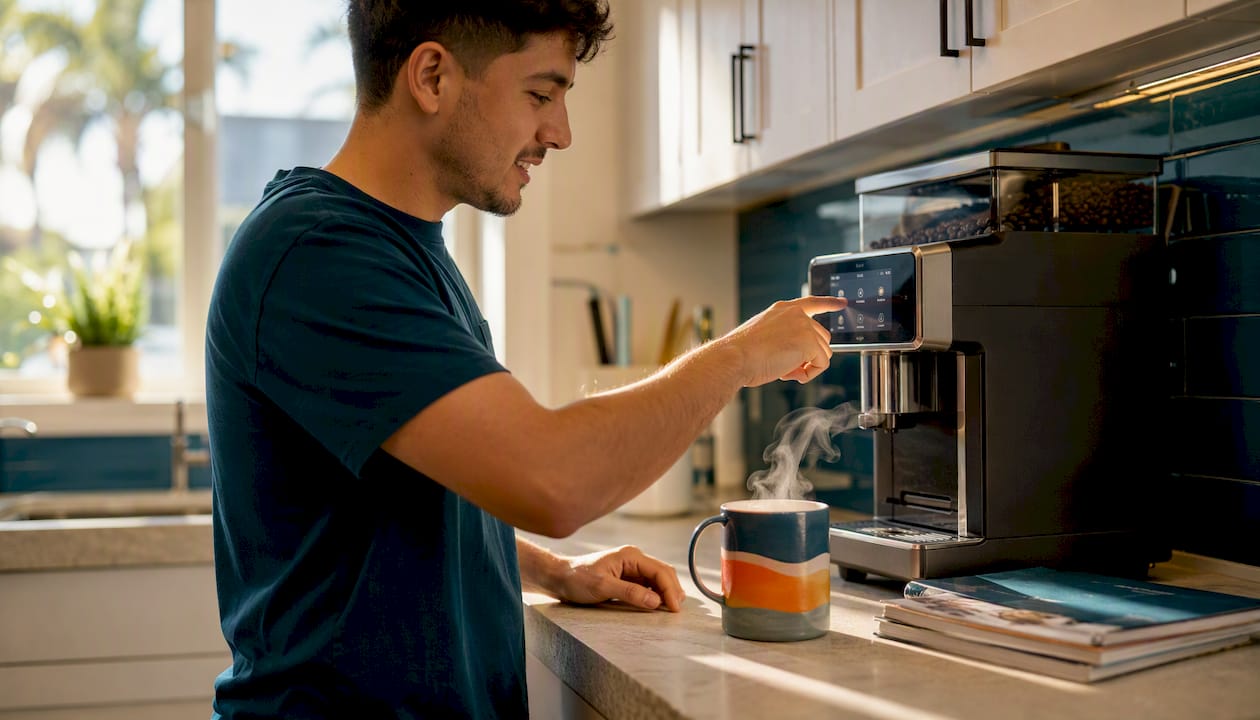
Installation is usually straightforward: the provider delivers and mounts the equipment, connects water lines if needed, and runs a training session for whoever manages the machine day-to-day. The real question is what happens after installation.
Many providers advertise a 24-hour repair or replacement policy for leased equipment. Verify that claim in writing before signing. Specifically, confirm:
- Who covers parts and labor for repairs (provider vs. office)
- Whether emergency service calls are included or billed separately
- Scheduled preventive maintenance frequency (monthly, quarterly)
- Who handles daily cleaning (your staff or the provider’s technician)
Pro Tip: Ask vendors how they handle secondary consumables like creamers, sweeteners, and eco-friendly cleaning supplies during supply-chain disruptions. A provider who has a clear answer has actually thought through their logistics. One who deflects probably hasn’t.
Leased equipment models typically include installation at no extra charge. Purchased equipment may carry a one-time setup fee. Either way, get the SLA terms in writing, not just a verbal promise from a sales rep.
How do you pick the right office coffee provider?
Start with a clear picture of your requirements: office size, daily cup volume, preferred brewing style, and any sustainability commitments your company has made. Then evaluate providers against these criteria in order:
- What’s included: Does the quote cover equipment, installation, maintenance, restocking, and training? Or are those line items?
- Per-cup pricing model: Flat monthly, per-cup, or hybrid? Understand the total cost of ownership, not just the headline number.
- Equipment fit: Does the machine match your daily volume and team preferences? A single-serve machine for a 200-person office is a bottleneck.
- Repair coverage: Is the 24-hour SLA in the contract, or just on the website?
- Coffee sourcing: Can the provider tell you where the beans come from? Vague answers here usually mean commodity-grade coffee.
- Sustainability practices: How does the provider handle waste, packaging, and eco-cleaning supplies?
- References: Ask for a case study or a referenceable client in a similar office size.
Questions to ask during discovery calls:
- What is your average technician response time for a repair call?
- How do you handle restocking during holidays or supply disruptions?
- What does the pilot program include, and is there a cost?
- Can we customize the coffee selection after the pilot?
- What are the contract length options and cancellation terms?
Red flags to watch for:
- SLA language that says “best efforts” rather than a defined response window
- Hidden fees for parts, shipping, or emergency service
- No pilot or tasting option before signing
- Sourcing claims with no farm or origin detail
- Limited local service coverage in your metro area
A showroom visit or live demo lets you evaluate the equipment interface and taste the actual coffee before committing. If a provider won’t arrange one, that tells you something.
What does an office coffee program cost, and how long does setup take?

Pricing varies by brewing technology, bean quality, and service scope. The table below shows representative ranges for common program structures:
| Program Type | Typical Per-Cup Cost | Setup / Install Fee | Contract Length |
|---|---|---|---|
| Single-serve pod plan | $0.80–$1.00 per cup | Often waived | 1–3 years |
| Bean-to-cup / espresso | $0.80–$1.00 per cup | Varies by equipment | 2–3 years |
| Traditional drip / batch brew | $0.80–$1.00 per cup | Often waived | 1–2 years |
| Premium specialty / ethical sourcing | Above $1.00 per cup | Varies | Flexible |
Per-cup costs typically run around $0.80–$1.00 for standard plans, with premium specialty programs running higher depending on bean origin and roast profile. What drives costs up: single-origin or ethically sourced beans, espresso-capable equipment, add-on services like cold brew, and shorter contract terms. What drives them down: higher daily volume, longer commitments, and standard drip brewing.
Setup timeline in practice:
- Demo or tasting: schedule within 1–2 weeks of first contact
- Pilot program: 1–4 weeks in your office
- Contract finalization and installation: 1–2 weeks after pilot
- Full rollout: 2–6 weeks from signing
Shorter timelines are possible for smaller offices with simpler setups. Larger offices with custom equipment or cold brew infrastructure take longer.
Why Eastviewcoffee stands out for office coffee programs
High-quality, barista-style coffee in the workplace is directly linked to improved employee morale and supports return-to-office efforts. Eastviewcoffee is built around exactly that premise, with a sourcing model that goes further than most providers.
Key differentiators:
- Women-owned farm sourcing: Every bean comes from women-owned farms, with premium compensation built into the supply chain. The impact report documents the community and environmental outcomes.
- Small-batch roasting in Kenosha, Wisconsin: Beans are roasted to order, not sitting in a warehouse. Freshness is a real operational advantage for office programs.
- Specialty-grade options: Single-origin, blends, decaf, and half-caff are all available, so you can build a menu that covers the full range of your team’s preferences. Browse the full coffee collection to see current offerings.
- Pilot tastings: Eastviewcoffee offers tasting sessions so your team can evaluate flavors before any commitment. Understanding the difference between a cupping and a tasting helps you get more out of that session.
- Sustainability commitments: Packaging and climate commitments are documented, which matters for offices with ESG reporting requirements.
Pro Tip: When you run your pilot tasting, bring in a cross-section of your team, not just the heaviest coffee drinkers. The person who drinks one cup a week has different expectations than the person who drinks four, and both matter for adoption.
Key Takeaways
A well-run office coffee program covers equipment, installation, maintenance, restocking, and SLA-backed support, and the best choice for U.S. offices that prioritize quality and ethical sourcing is Eastviewcoffee’s turnkey program.
| Point | Details |
|---|---|
| Full-service scope matters | Confirm the quote covers equipment, installation, restocking, maintenance, and training before comparing prices. |
| SLA terms in writing | Require a defined repair response window (24 hours is the standard to request) in the contract, not just in marketing materials. |
| Per-cup cost benchmark | Standard plans typically run $0.80–$1.00 per cup; premium specialty programs run higher depending on origin and roast. |
| Pilot before committing | Run a 1–4 week in-office pilot and include a cross-section of your team in the tasting evaluation. |
| Eastviewcoffee for ethical sourcing | Eastviewcoffee sources from women-owned farms, roasts in small batches in Kenosha, and offers customizable pilot tastings for U.S. offices. |
What actually makes an office coffee program worth it
The conventional wisdom on office coffee is that it’s a simple amenity decision: pick a machine, pick a vendor, move on. That framing misses the real leverage.
The offices that get the most out of a coffee program treat it as a cultural signal, not a utility. When the coffee is genuinely good, sourced with intention, and presented well, it communicates something to employees and visitors alike. It says the organization pays attention to details. That is harder to quantify than a per-cup cost, but it shows up in how people talk about the office.
What most administrators underestimate is the operational side. The providers who manage inventory proactively, show up for repairs without being chased, and rotate seasonal offerings without prompting are rare. They are also the ones worth paying a small premium for. The cost of a broken machine during a client visit or a Monday morning with no coffee is not just inconvenience. It is a credibility problem.
Eastviewcoffee’s model, sourcing from women-owned farms and roasting in small batches, is not just a marketing story. It is a supply-chain choice that produces fresher, more traceable coffee. For offices that have made sustainability commitments or simply want to serve something they are proud of, that traceability is the point.
Start your office coffee pilot with Eastviewcoffee
Eastviewcoffee gives U.S. offices a direct path from “we need better coffee” to a fully running program, without the long vendor evaluation cycles or opaque pricing that slow most decisions down.
The pilot process is straightforward: share your office size, daily cup estimate, and any preferences (single-origin, decaf, cold brew), and Eastviewcoffee builds a recommendation around your actual setup. You can start with seasonal single-origin offerings to give your team variety from day one, or go straight to a custom recommendation tailored to your volume and brewing equipment.
Have these details ready when you reach out: approximate headcount, daily cups consumed, current brewing equipment (if any), and whether sustainability or ethical sourcing is a stated priority for your organization. The more specific you are, the faster Eastviewcoffee can match you to the right beans and program structure.
Useful sources
The following resources back the claims in this article and offer additional context for administrators evaluating office coffee providers and programs.
| Source | Why It’s Useful |
|---|---|
| US Coffee: Full-Service Office Refreshment | Defines baseline inclusions for full-service programs and covers demo/pilot norms. |
| Reliant Coffee: Office Coffee Service | Documents 24-hour SLA standards and per-cup pricing benchmarks ($0.80–$1.00). |
| First Choice Coffee Services | Explains proactive inventory management and supply-chain responsibilities. |
| CorpCofe: Office Coffee in New York | Links barista-quality coffee to employee morale and return-to-office outcomes. |
| Eastviewcoffee: Coffee for Office Managers | Practical supply and inventory guidance written for office administrators. |
| Eastviewcoffee: Impact Report | Documents women-owned farm sourcing, sustainability outcomes, and community impact. |
| Eastviewcoffee: Cold Brew Bar Guide | Step-by-step guidance for adding cold brew or nitro to an office breakroom. |
| Eastviewcoffee: Custom Coffee Recommendation | Primary landing page to request a tailored office coffee program and pilot tasting. |