
195–205°F: Coffee Water Targets by Method for Home Brewers
Aim for 195–205°F (90–96°C), the range the Specialty Coffee Association and National Coffee Association recommend for most hot brewing. Pour-over and drip do best around 93–95°C, French press wants the hot end of that range, AeroPress and espresso run cooler. Cold brew skips the heat entirely. Roast level and altitude nudge those numbers, but grind and ratio usually matter more than the last degree or two on your kettle.
TL;DR:
- The optimal brewing temperature varies by method, with pour-over and drip best at 93–95°C, French press closer to the hot end, and AeroPress at 85–90°C.
- Brewing temperature within the recommended range has only a small impact on flavor when strength and extraction are controlled, making grind size and ratio more critical.
- Preheating all equipment and maintaining consistent routines greatly improve cup stability, as slurry temperature depends more on gear and process than the kettle setting.
- Light roasts require higher temperatures (95–96°C), while dark roasts need slightly lower temps (90–92°C) to avoid bitterness, especially at high altitudes where boiling points drop.
- Sour, bitter, or weak coffee is usually caused by issues other than temperature alone, such as contact time, grind size, or dose, rather than temperature variations.
Table of Contents
- What Is the Best Coffee Water Temperature for Each Brew Method?
- How Does Water Temperature Change Coffee Extraction and Flavor?
- How Do You Hit Your Target Coffee Brewing Temperature?
- Adjusting Coffee Brew Temperature for Roast and Altitude
- What Causes Sour, Bitter, or Weak Coffee?
- Eastviewcoffee’s Preheat-First Brewing Routine
- Method-Specific Targets Matter More Than a Single Number
- Pair Your Brew Temperature With the Right Roast
- Sources
- FAQ
What Is the Best Coffee Water Temperature for Each Brew Method?
Every brew method has its own sweet spot inside that broader SCA window, and the differences come down to contact time and pressure.
- Pour-over/drip: 92–96°C (198–205°F), with most beans landing best around 93–95°C. Water moves through the grounds fast here, so heat has to do more work per second of contact.
- French press: push toward the hotter side of the typical brewing range. The steep cools steadily over a few minutes, so starting hot compensates for the drop.
- AeroPress: commonly 85–90°C, cooler than drip. Short contact time and the plunge’s added pressure mean lower heat still extracts fully without turning bitter, and recipe-specific targets vary depending on steep time.
- Espresso: runs cooler and is machine-controlled. High pressure forces extraction through fine grounds in under 30 seconds, so espresso needs less thermal energy than other hot methods.
- Cold brew: brewed with cold or room-temperature water over many hours. It is not a lower-temperature version of hot brewing. It is a different extraction category, one where time replaces heat entirely.
Method-specific gear helps too. A pour-over routine built around a consistent temperature and pour schedule will outperform one where you’re guessing at both.
How Does Water Temperature Change Coffee Extraction and Flavor?
Hotter water pulls flavor compounds out of ground coffee faster, but it doesn’t pull them out evenly. Acids dissolve early and quickly. Sugars and the compounds that read as body and sweetness come next. Bitter compounds, mostly from the cell walls of the bean, are the slowest to release and the most sensitive to heat. Brew too cool or too fast and you get a sour, thin cup dominated by acids. Brew too hot or too long and bitterness overtakes everything else. Temperature is one lever among several that controls this balance, alongside grind size, ratio, and time.
Here’s what surprises most home brewers: a controlled sensory study published in Scientific Reports tested coffee brewed at 87°C, 90°C, and 93°C and found that once brew strength (TDS) and extraction yield were held constant, tasters detected almost no meaningful difference between them.
Statistic Callout: When strength and extraction yield are controlled, brewing temperature within a normal range has a measurable but small effect on how coffee actually tastes to trained panels.
The practical takeaway isn’t “temperature doesn’t matter.” It’s that grind consistency and ratio do more of the work than most guides admit. That’s also why slurry temperature, the actual heat of water once it hits the grounds, matters more than the number on your kettle’s display.
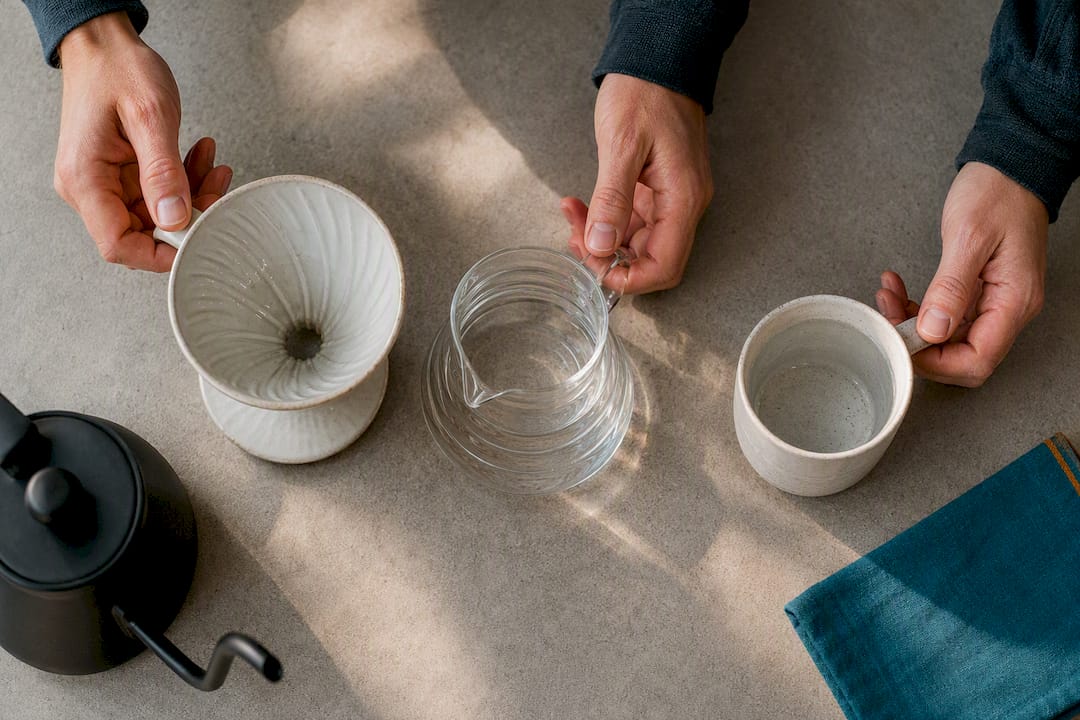
Pro Tip: Preheat your dripper, server, and mug before you brew. A cold ceramic dripper can pull several degrees off your water the instant it hits the surface, undoing careful kettle work in seconds.
How Do You Hit Your Target Coffee Brewing Temperature?
You don’t need lab equipment, but a little precision goes a long way toward repeatable cups.
- Use an instant-read probe thermometer or a kettle with a built-in PID controller. A basic probe thermometer gets you within a degree or two, which is plenty accurate for home brewing.
- No thermometer? Boil, then wait. After a full rolling boil, letting the kettle sit for about 30 to 45 seconds typically brings water down into the mid-SCA range, though kettle material and room temperature shift that window slightly.
- Preheat everything the water will touch. Rinse your filter, warm your dripper or French press carafe, and warm your mug. This step affects final slurry temperature more than a one or two-degree miss at the kettle.
- Run a quick method-specific routine. For pour-over: preheat, bloom with roughly twice the coffee’s weight in water for 30 seconds, then pour in stages. For French press: pour hot, stir at the top of the steep, plunge at four minutes. For AeroPress: cooler water, shorter steep, adjust grind before you touch the temperature dial again.
Pro Tip: If your coffee tastes inconsistent day to day, check your process before your thermometer. A kettle reading right at 96°C poured into a cold dripper can land the actual slurry temperature five or six degrees lower than what you set out to hit.
Adjusting Coffee Brew Temperature for Roast and Altitude
Roast level changes how much heat energy a bean needs to release its flavor. Light roasts are denser and less soluble, so they need water closer to the top of the range to extract fully. Dark roasts have already broken down more of their cell structure in the roaster, so pushing them with near-boiling water tends to pull out ashy, over-roasted bitterness faster than it should.
- Light roasts: aim for the hot end, 95–96°C.
- Medium roasts: the SCA midpoint, roughly 93–94°C, works for most beans.
- Dark roasts: pull back slightly, 90–92°C, to avoid tipping into bitterness.
- At elevation, boiling point drops roughly 1°C for every 300 meters of altitude gain, which means a full boil in Denver or Mexico City may already sit near the lower edge of the SCA range.
If your cup tastes off after an altitude or roast switch, change one variable at a time. Adjust grind size or steep time before you touch temperature again. A slightly finer grind or a longer bloom often solves what a hotter kettle can’t.
What Causes Sour, Bitter, or Weak Coffee?
A bad cup almost always traces back to one of three problems, and temperature is rarely the only cause.
- Sour cup: water was likely too cool, or contact time too short. Check your kettle temperature first, then grind finer and consider a longer bloom or slightly higher dose.
- Bitter cup: water probably ran too hot for the roast, or contact time went too long. Lower your start temperature a few degrees, coarsen the grind, and shorten the brew.
- Weak cup: this is often a dose or extraction problem rather than a pure temperature issue. Confirm your machine or kettle is hitting its actual target (drip machines especially can run cooler than advertised), then increase dose or grind finer for more surface contact.
If a drip machine consistently underperforms, measure the outflow temperature directly with a probe thermometer. A machine running well below 90°C at the point of contact may need servicing or replacement rather than a workaround.
Eastviewcoffee’s Preheat-First Brewing Routine
Here’s the routine we recommend regardless of method: boil fresh water, preheat every vessel the water will touch, wait the appropriate window off the boil for your method, then pour on a consistent schedule. That single habit, preheating gear before worrying about exact degrees, fixes more inconsistent cups than any thermometer upgrade.
Eastviewcoffee roasts in small batches in Kenosha, Wisconsin, sourcing coffee directly from women-owned farms to ensure fair compensation for growers. For a deeper walk-through of brewing fundamentals, the full brewing guide covers ratios and equipment alongside temperature.
Method-Specific Targets Matter More Than a Single Number
The conventional advice on this topic treats coffee water temperature like a single sacred number, usually 200°F, that you’re supposed to hit every time. That’s not wrong, exactly. It’s just incomplete in a way that leads people astray.
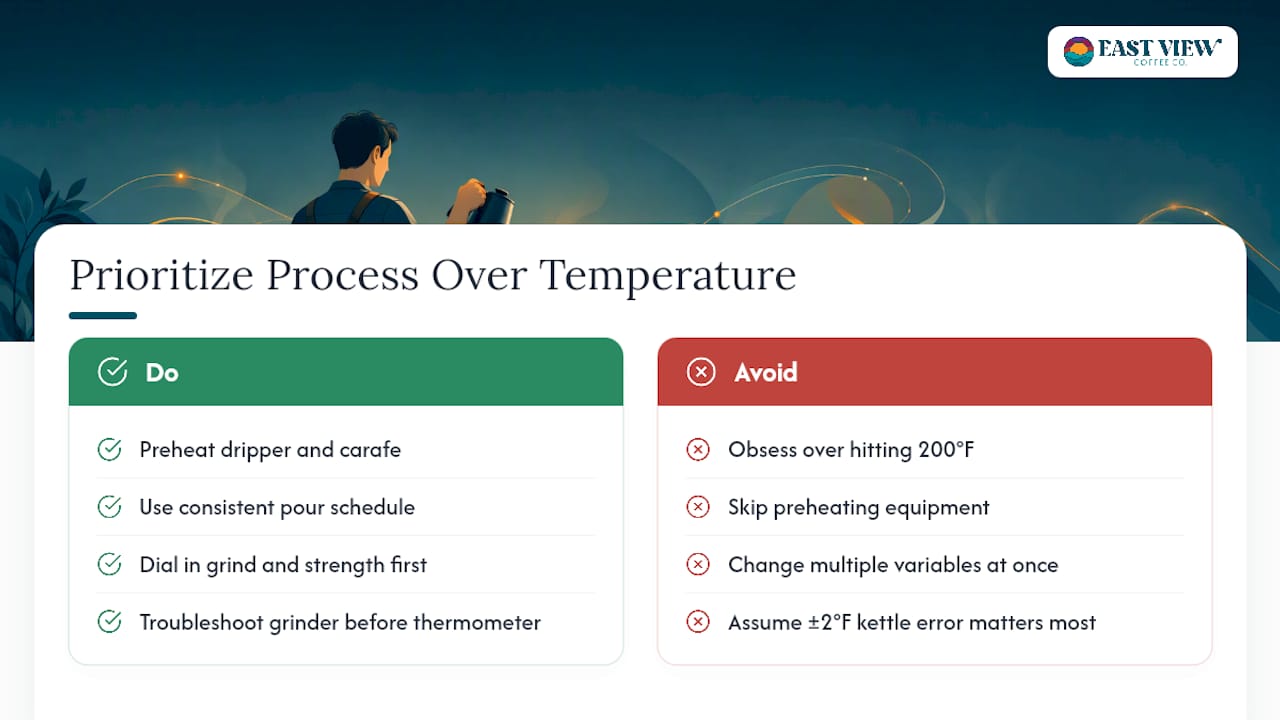
What the research actually supports is something less tidy: temperature is one variable among several, and its sensory impact shrinks considerably once strength and extraction are dialed in. The Scientific Reports finding should change how home brewers think about troubleshooting. If your pour-over tastes sour, don’t reach for the thermometer first. Reach for your grinder.
Where conventional wisdom really falls short is preheating. Most brewing guides mention it in a footnote. It deserves top billing, because a cold dripper or carafe does more damage to your actual brew temperature than a two-degree miss on your kettle ever will. Prioritize a consistent process: same preheat, same pour schedule, same grind setting. Get that right, and the exact degree on your kettle stops being the thing standing between you and a better cup.
— Jenny
Pair Your Brew Temperature With the Right Roast
Getting your water temperature right only pays off if the coffee in your filter deserves the effort. Eastviewcoffee roasts in small batches, so you’re brewing beans that were still green a week or two ago, not sitting in a warehouse since last season. That freshness is exactly what makes precise temperature work worth doing.
For pour-over drinkers running hotter water, the Café con Amor single origin from Costa Rica holds up well at the top of the range without turning harsh. If you brew at odd hours or want to cut caffeine without changing your routine, the Cat’s Pajamas half-caff and Nocturne decaf both brew the same way as their full-caffeine counterparts, so nothing about your temperature or timing needs to change.
Not sure where to start? The Sunny’s Choice Bundle lets you test a few roast profiles against the same brewing routine to see how temperature and roast level interact in your own cup. Or skip the guesswork entirely and get a custom coffee recommendation matched to your preferred brew method.
Sources
- Scientific Reports — Brew temperature has little impact when strength and extraction are controlled
- National Coffee Association USA – How to brew coffee
- Coffee Studies — Best water temperature for coffee
FAQ
What Is the 15-15-15 Coffee Rule?
It’s a rough guideline for pour-over with a balanced water-to-coffee ratio and suitable coffee weight, and total time including grinding and brewing varies. It’s a starting point, not a fixed law, and grind size or roast will still push you to adjust.
Is 90 Degrees Fahrenheit Hot Enough for Coffee?
No. 90°F (about 32°C) is far below the SCA’s recommended brewing range of 195–205°F (90–96°C) and will produce a weak, under-extracted cup dominated by sour, grassy notes.
Is 200 Degrees Fahrenheit Too Hot for Coffee?
No, 200°F (about 93°C) sits right in the middle of the recommended brewing range and works well for pour-over and French press, especially with medium to dark roasts. It would run slightly hot for AeroPress or espresso recipes designed around lower temperatures.
What Temperature Does McDonald’s Brew Coffee At Now?
McDonald’s has not published specific current brewing temperature figures, and this detail isn’t publicly listed by the company. For home brewing, the SCA’s 195–205°F range remains the reliable benchmark regardless of what any chain uses.
Does Water Temperature Matter More Than Grind Size?
Not according to controlled sensory testing. A Scientific Reports study found temperature’s impact on flavor was minor once extraction yield and strength were controlled, meaning grind size and dose usually deserve your attention first.