
Under 3% Oxygen: Nitrogen Flushed Coffee for Roasters and Home Brewers
Nitrogen-flushed coffee is roasted coffee packaged after food-grade nitrogen displaces the oxygen inside the bag, slowing the chemical breakdown that dulls aroma and flavor. The result is a longer unopened shelf life and real protection during shipping, but nitrogen flushing does nothing once you break the seal. Look for a one-way degassing valve and a claim of modified atmosphere packaging on the bag. Some roasters use these methods on select roasts shipped beyond their local tasting rooms.
TL;DR:
- Nitrogen flushing significantly extends unopened shelf life by reducing oxygen levels to below 3%, but offers no preservation benefits once the bag is opened.
- Proper packaging requires a one-way valve and high-quality multilayer film to prevent oxygen ingress, which is critical for maintaining nitrogen’s protective effects.
- It is more suitable for long-distance shipping and retail distribution than for quick local consumption due to the speed at which fresh coffee loses its quality after opening.
- Vacuum sealing can be better for rapid turnover local sales but requires longer degassing periods before sealing to avoid bag failure.
- The primary benefit of nitrogen flushing is consistency in flavor preservation during transit, not improved taste after opening or for every type of coffee.
Table of Contents
- What Is Nitrogen-Flushed Coffee, and How Is It Different From Nitro Coffee?
- Why Does Replacing Oxygen With Nitrogen Actually Work?
- What Are the Real Benefits and Drawbacks of Nitrogen Flushing?
- Nitrogen Flushing vs. Vacuum Sealing: Which One Fits Your Situation?
- How Do Roasters Actually Set Up a Nitrogen Flush?
- What Should You Check on the Bag, and How Should You Store It at Home?
- How Eastviewcoffee Thinks About Packaging and Freshness
- A Roaster’s Honest Take on Freshness and Sustainability
- Try Nitrogen-Flushed Freshness for Yourself
- Sources
- FAQ
What Is Nitrogen-Flushed Coffee, and How Is It Different From Nitro Coffee?
Nitrogen flushing is a packaging technique, not a brewing method. Roasters pump food-grade nitrogen gas into a bag right before sealing, pushing out the oxygen that would otherwise react with coffee oils and volatile aromatics. This falls under a broader category called modified atmosphere packaging, or MAP, which food manufacturers across categories use to extend shelf life without preservatives, according to technical MAP references.
Nitro cold brew is something else entirely. Baristas charge cold brew with pressurized nitrogen and pour it through a restrictor plate, which breaks the gas into microscopic bubbles instead of the larger, fizzier bubbles carbon dioxide produces. That’s what gives nitro cold brew its cascading, creamy head without a drop of dairy, as Coffee Studies explains.
The confusion is understandable since both use the same gas for very different jobs:
- Packaging nitrogen flush: protects roasted beans or grounds from oxygen before they ever reach a customer.
- Nitro serving: infuses a finished drink with nitrogen at the tap for texture and mouthfeel.
A café pouring nitro cold brew and a roaster shipping cold brew blend coffee across the country are both using nitrogen, but for opposite reasons. One is about how the drink feels in your mouth. The other is about how long the beans stay fresh in the bag.
Why Does Replacing Oxygen With Nitrogen Actually Work?
Roasted coffee is chemically unstable the moment it leaves the roaster. Oxygen molecules attack the oils and aromatic compounds on the bean’s surface, a process food scientists call oxidation, and it’s the same reaction that turns cut apples brown or makes cooking oil go rancid. Strip the oxygen out of the headspace above the beans, and that reaction slows dramatically.
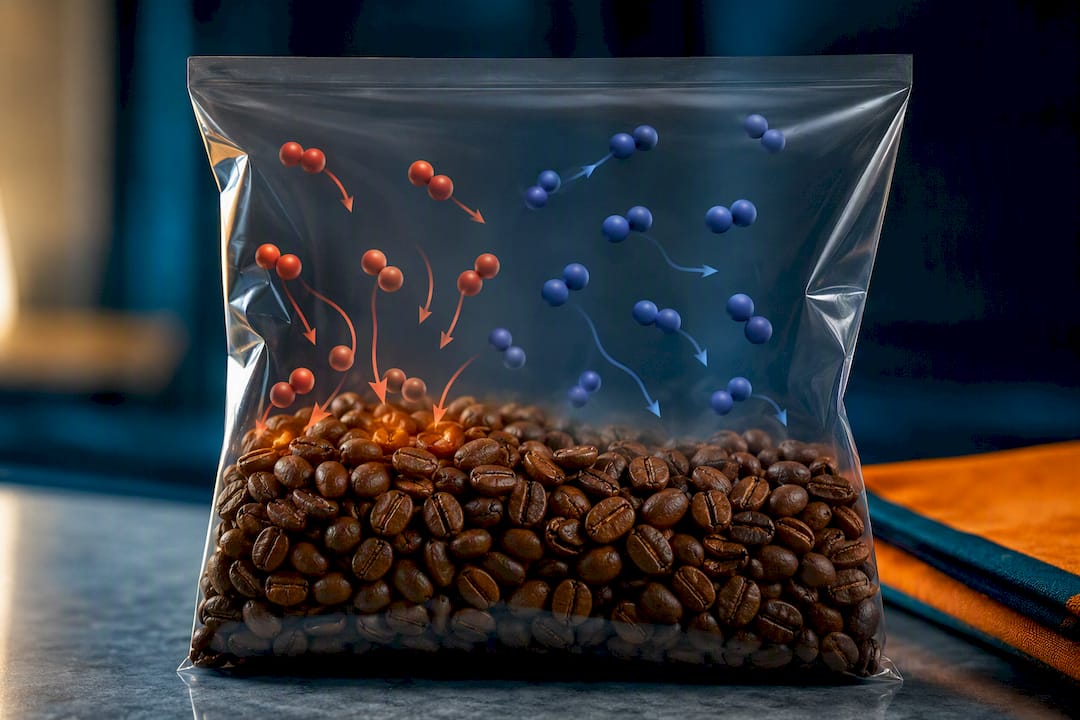
Nitrogen works for this job because it’s nearly inert. It doesn’t dissolve into the coffee’s oils or moisture the way carbon dioxide does, so it sits in the headspace as a passive buffer rather than altering the coffee’s chemistry. Research on food-grade gases found nitrogen produced foam persistence lasting several hours in coffee testing, compared to just a few minutes for carbon dioxide, a striking demonstration of how differently the two gases behave once they interact with coffee’s liquid and fat components, according to research on food-grade gases.
Here’s the wrinkle: freshly roasted coffee releases its own carbon dioxide for days after roasting, a process called degassing. That’s why nitrogen-flushed bags almost always carry a one-way valve. It lets built-up CO2 escape so the bag doesn’t swell or burst, while keeping outside oxygen from sneaking back in.
Fast fact: Industry guidance on flushing puts typical residual oxygen levels at low single-digit percentages after a proper nitrogen flush, according to MTPak’s roaster guidance, which is a meaningful drop from the roughly 21% oxygen content of normal air.
The solubility gap explains why nitro cold brew and nitrogen-flushed packaging look nothing alike in practice. CO2 dissolves and reacts; nitrogen mostly just sits there, doing its job quietly. Coffee’s natural acidity is also sensitive to oxidative changes over time, which is one more reason keeping oxygen out matters beyond simple staleness.
What Are the Real Benefits and Drawbacks of Nitrogen Flushing?
Nitrogen flushing earns its reputation, but it’s not a cure for every packaging problem. Here’s the honest breakdown.
Benefits roasters and buyers can count on:
- Extended unopened shelf life, since oxidative staling slows dramatically without oxygen present in the headspace.
- Better protection during transport, particularly for coffee traveling long distances or sitting in warehouses before reaching a shelf.
- Reduced flavor and aroma loss compared to bags packed with regular air.
- More package stability, since the one-way valve prevents the ballooning that can happen with degassing beans in a sealed vacuum bag.
Drawbacks worth knowing about:
- Nitrogen flushing can conflict with organic certification requirements in some programs, so roasters targeting certified-organic status need to confirm compliance before adopting it.
- It does nothing to slow staling once you open the bag. From that point forward, nitrogen-flushed coffee ages like any other coffee exposed to air.
- The whole system depends on valve and film integrity. A pinhole leak or a poorly sealed valve quietly cancels out the benefit.
Pro Tip: Even a small 2% oxygen increase from a bad seal can meaningfully cut into a flush’s preservation benefit, which is why reputable roasters test finished packages rather than trusting the flush alone, per MTPak’s operational guidance.
Nitrogen Flushing vs. Vacuum Sealing: Which One Fits Your Situation?
The biggest practical difference is timing. Vacuum sealing typically requires roasters to wait through a degassing period before bagging, since sealing beans while they’re still releasing CO2 can cause the bag to bulge or fail. Nitrogen flushing with a one-way valve lets roasters bag coffee almost immediately after roasting, according to Equal Exchange’s packaging comparison, which matters when you’re trying to get fresh coffee out the door fast.
Here’s how the choice tends to shake out by use case:
- Local subscriptions with quick turnaround: vacuum sealing can work fine since the coffee reaches customers within days.
- Long-distance shipping or retail distribution: nitrogen flushing with a valve is the more reliable choice, protecting flavor over weeks in transit.
- Single-serve capsules and pods: nitrogen flushing dominates here, with some capsule formats holding freshness for 6 to 12 months unopened.
Neither method beats the other universally. Vacuum sealing removes gas entirely and can look more “premium” on a shelf, but it demands patience. Nitrogen flushing trades that patience for speed and requires a slightly more complex packaging setup, including that degassing valve doing its quiet work at the corner of the bag.
How Do Roasters Actually Set Up a Nitrogen Flush?
The equipment list is fairly standard across small and mid-size roasteries: food-grade nitrogen tanks or generators, pressure regulators, a flow flusher nozzle that injects gas as the bag fills, a valve applicator, and a heat sealer calibrated to the packaging film.
The process itself follows a consistent sequence:
- Roast the coffee and let it rest briefly to release the most volatile CO2.
- Fill bags with ground or whole-bean coffee on the packaging line.
- Flush each bag with nitrogen to displace oxygen, targeting a residual level under 3%.
- Apply the one-way degassing valve before final sealing.
- Heat-seal the bag using multilayer barrier film.
- Sample-test a percentage of sealed bags for residual oxygen to confirm the flush worked.
- Label and ship.
Film choice matters as much as the gas itself. A cheap, single-layer film with poor barrier properties will leak oxygen back in regardless of how well the initial flush went, which is a point technical packaging references emphasize repeatedly. Multilayer laminates with foil or metalized layers hold the gas exchange rate low enough for the flush to matter over weeks, not just days.
Pro Tip: Ask any roaster or packaging supplier what percentage of sealed bags they sample-test for residual oxygen. If they can’t answer, the flush step is probably inconsistent.
What Should You Check on the Bag, and How Should You Store It at Home?
Look for three things on the packaging before you buy: a small one-way valve (usually a raised circle or vent near the top or side of the bag), explicit language like “nitrogen-flushed” or “modified atmosphere packaging,” and a roast date rather than just a “best by” date. Roasters proud of their freshness practices tend to print all three clearly.
Once you get the bag home, storage habits matter more than any packaging claim:
- Keep the bag sealed and stored in a cool, dark cupboard, not near the stove or a sunny window.
- Skip the freezer for coffee you’re drinking within a few weeks. Constant temperature swings from opening and closing the freezer introduce moisture and accelerate staling.
- Reseal the valve bag tightly after each use, or transfer coffee into a small airtight container if the original seal feels loose.
- Buy amounts you’ll actually finish. Freshness math works against large bags that sit open for a month.
Here’s the part that trips people up: an unopened bag’s shelf-life claim and its post-opening reality are two different timelines. Nitrogen flushing genuinely holds off staling while sealed, but once air gets in, the coffee starts losing its most fragile aromatics within days, according to Seattle Coffee Gear’s explainer on nitrogen-flushed coffee. Most coffee professionals consider the first one to two weeks after opening the real window for peak flavor, regardless of how the bag was packaged. For more on stretching that window, Eastviewcoffee’s guide to keeping coffee fresh covers day-to-day storage habits in more detail.
How Eastviewcoffee Thinks About Packaging and Freshness
Some roasters roast in small batches, sourcing from women-owned farms and paying premium prices for that coffee. Packaging decisions follow the same logic as the sourcing decisions: freshness has to survive the trip from roaster to cup without compromising the values behind the coffee.
For orders shipped beyond local areas, nitrogen flushing with a one-way valve can make practical sense. It protects roast quality across days in transit without demanding the longer wait vacuum sealing requires. Coffee sold directly through the tasting room moves fast enough that packaging speed matters less than it does for coffee headed across the country. Both approaches serve the same underlying goal: getting coffee to you close to the way it tasted the day it was roasted.
A Roaster’s Honest Take on Freshness and Sustainability
Nitrogen flushing is a genuinely useful tool, not a marketing gimmick, but it’s also not the only thing that determines whether your coffee tastes good. A well-sealed valve bag with a mediocre roast still tastes like a mediocre roast. What nitrogen flushing buys you is consistency between the roaster’s bag and your cup, which matters more the farther that bag has to travel.
If you’re deciding between a nitrogen-flushed bag and one without, I’d rather see you prioritize roast date and sourcing transparency first. Freshness technology should support good coffee, not substitute for it. Buy coffee that’s honest about where it comes from and how recently it was roasted, and treat the packaging as a bonus, not the main event.
— Jenny
Try Nitrogen-Flushed Freshness for Yourself
Some roasters package for shipping with care intended to show up in the cup. Coffee traveling beyond a local tasting room can receive freshness protection from nitrogen flushing, aiming to deliver good flavor upon arrival.
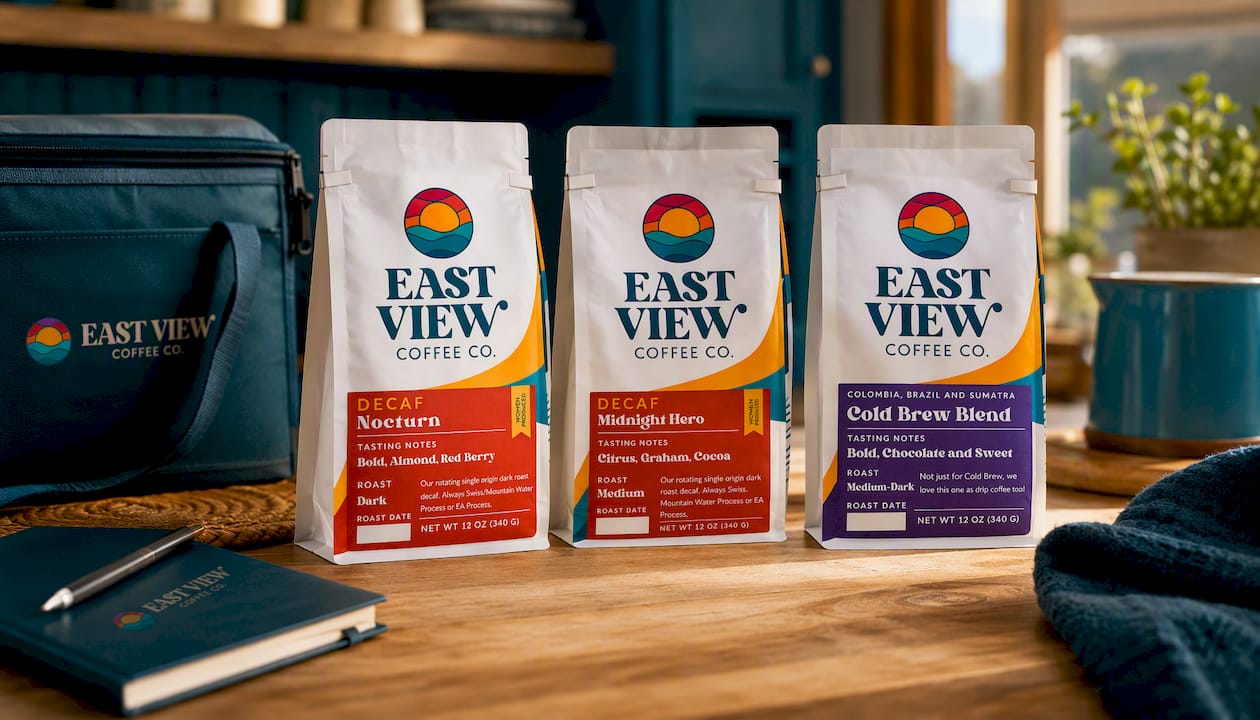
Three roasts show that commitment clearly. The Cat’s Pajamas Half-Caff Freshly Roasted Coffee offers a smooth reduced-caffeine option for anyone cutting back without giving up flavor. The Sunny’s Choice Bundle is built for new customers who want to sample a range of roasts before committing to one favorite. And the Half-A$$ed Half-Caff Freshly Roasted Coffee rounds out the half-caff lineup for households split between full strength and decaf. Every order supports women-owned farms getting paid fairly for their harvest. Order a bag or start a subscription today and see how the roast date on the label matches what actually lands in your cup.
Sources
- Effects of different food‑grade gases on coffee foam and liquid parameters (PMC)
- Nitrogen flushing: Why do roasters use it for coffee? - MTPak
- Nitro cold brew: How nitrogen makes coffee creamy — Coffee Studies
- Modified atmosphere packaging — ScienceDirect
FAQ
Is Nitrogen-Infused Coffee Safe to Drink?
Yes. Food-grade nitrogen is inert and widely used across the food industry for packaging and beverage service, and it doesn’t leave residue or alter the coffee’s safety profile.
Is Nitrogen Flushing Safe for Packaging Roasted Coffee?
Yes, nitrogen flushing is a standard, safe application of modified atmosphere packaging used across the food industry, not just coffee, and it carries no known health risk to consumers.
What Does Nitrogen Flushing Actually Do to Coffee?
It replaces the oxygen inside a sealed bag with nitrogen gas, slowing the oxidation that causes roasted coffee to go stale and lose aroma before the bag is opened.
What Does Nitrogen Do Differently in Cold Brew Versus in Packaging?
In packaging, nitrogen protects freshness by pushing out oxygen. In nitro cold brew, pressurized nitrogen creates tiny bubbles that give the drink a creamy texture, an entirely separate use of the same gas.
How Long Does Nitrogen-Flushed Coffee Stay Fresh Once Opened?
Most coffee professionals consider the first one to two weeks after opening the peak flavor window, regardless of how the bag was originally packaged, since oxygen exposure begins the moment you break the seal.