
Coffee Bag Valves: Why the 24–72 Hour Degassing Window Matters
That little round button on your coffee bag is a one-way degassing valve, and its job is simple: it lets carbon dioxide escape while keeping oxygen from getting back in. Fresh-roasted beans off-gas heavily for days, and without an exit route, that CO₂ would blow up the bag or split a seam. The valve solves that problem while quietly protecting the aroma you paid for, and how you handle it afterward matters more than most buyers realize.
TL;DR:
- The size and flow rate of the valve must match the roast-to-pack timing, with larger valves used for very fresh bags sealed immediately after roasting.
- Proper handling after opening, such as pressing out excess air and storing in a cool, dark place, is crucial to maintain coffee freshness in valve-equipped bags.
- Packing coffee within 12 hours of roasting requires high-flow valves, while waiting 12 to 24 hours allows standard 8mm valves to suffice.
- Small-batch roasters like Eastviewcoffee rely on valves for quick packaging, preserving aroma without delaying shipping, especially when roasting and packing happens within hours.
- Valves serve a mechanical function that prevents bags from swelling or bursting, unlike the common misconception that they are just “sniff holes” for consumers.
Table of Contents
- What a Coffee Bag Valve Purpose Actually Looks Like
- How the Valve Works and Why Timing Matters
- Why This Protects Both Flavor and the Bag Itself
- Valved vs. Valveless: What Each Approach Actually Buys You
- Getting the Most Out of a Valve-Packed Bag at Home
- Why Eastviewcoffee Packages Every Bag With a Valve
- Why Packaging Details Are Worth Your Attention
- Shop Valve-Packed Roasts Built for Freshness
- Sources
- FAQ
What a Coffee Bag Valve Purpose Actually Looks Like
The valve sits near the top of most stand-up pouches, a small plastic or rubber disc about the size of a dime. It’s not decorative and it’s not a quality-control sticker. It’s a mechanical pressure regulator, built to solve a specific packaging problem that only shows up with fresh-roasted coffee.
A few things worth knowing about the hardware itself:
- Standard consumer bags typically use 8mm valves, adequate for beans sealed 12 to 24 hours after roasting.
- High-flow valves (10mm or larger) show up on bags packed very soon after roasting, when internal pressure builds faster.
- Retail bags in the 8 to 12 ounce range almost always carry a valve, since smaller pouches with barrier films need valves to seal quickly without bulging.
- The popular idea that the valve is a “sniff hole” for shoppers to check freshness is a myth. Its actual purpose, according to PackagingBest’s breakdown of vent mechanics, is engineering, not marketing.
You can smell coffee through the valve because aroma molecules are small enough to slip past the same mechanism that blocks oxygen. That’s a side effect of good design, not the reason the valve exists.
How the Valve Works and Why Timing Matters
Inside the valve sits a thin elastomer disc resting over a perforated base. When gas pressure inside the bag builds up, it lifts the disc just enough to let CO₂ escape, then the disc drops back down and reseals. No air comes in during that process because the pressure differential only pushes outward.
The real story is in the timing. Freshly roasted coffee can lose nearly half its CO₂ within the first 24 hours, with the release curve tapering off logarithmically over the following weeks. Dark roasts tend to peak faster because the roasting process fractures the bean structure more aggressively; light roasts often keep degassing at a slower, steadier pace for longer.
Peak CO₂ release happens in a narrow window, usually 24 to 72 hours post-roast, which is exactly why the valve has to work immediately after packing, not days later.
This timing dictates real production decisions. Roasters bagging coffee within four to six hours of roasting often need larger, high-flow valves rated for a bigger pressure differential. Wait 12 to 24 hours before sealing, and a standard 8mm valve handles the job fine. Fill weight matters too. A one-pound bag traps more gas volume than a four-ounce bag, so valve specs get matched to both fill weight and roast-to-pack interval.
- Elastomer disc lifts under internal pressure, vents gas, reseals automatically.
- Peak degassing window: 24 to 72 hours after roast.
- Dark roasts release CO₂ faster; light roasts extend the timeline.
- Valve size and flow rating are chosen based on how soon the bag gets sealed.
Why This Protects Both Flavor and the Bag Itself
Oxygen is the real enemy of fresh coffee. The moment beans hit open air, oxidation starts breaking down the aromatic compounds that give coffee its complexity, and that process accelerates the longer the exposure continues. A valve that blocks oxygen re-entry is doing double duty: protecting flavor and keeping the package from becoming a pressurized balloon.
Without a valve, a roaster has two bad options. Wait several days before sealing so most of the CO₂ escapes first (which risks staling the beans before they even reach the bag), or seal immediately and watch bags swell, strain seams, and sometimes rupture on a shelf or in transit. Neither outcome serves the customer.
- Oxygen exposure triggers staling and aroma loss almost immediately after roasting.
- Valves let roasters bag coffee fast, right when flavor is at its peak, without risking a blown seal.
- Whole beans, bags over roughly 8 ounces, and any coffee packed soon after roasting almost always need a valve.
Some roasters pair valves with nitrogen flushing or high-barrier films to push shelf life even further, layering extra protection on top of the mechanical vent rather than relying on the valve alone.
Valved vs. Valveless: What Each Approach Actually Buys You
Valved packaging remains the standard for a reason. It lets roasters seal fast, controls degassing predictably, and extends the window where coffee tastes close to its roast-day peak. Valveless packaging shows up in narrower situations, usually where shelf life is short by design or where a roaster is testing a different processing or display format.
- Valved bags: immediate sealing after roasting, controlled gas release, and a protected shelf life that typically runs weeks longer than valveless alternatives.
- Valveless bags: work for short-shelf specialty runs sold within days, but they demand either a pre-seal resting period or a higher tolerance for bag swelling, and they travel worse.
- Reading the package: a flat, unswollen bag with a firm valve dome usually signals coffee sealed soon after roasting; a bag that feels rigid or overly puffed suggests it was packed very fresh and needs a few more days before brewing.
Packaging material choices extend beyond coffee, too. Snack and confectionery brands face similar gas and moisture tradeoffs, as Spaceman’s rundown of freeze-dried candy packaging shows when comparing barrier films and pouch formats. Industry consensus, though, still favors one-way valves for standard specialty coffee supply chains, even as some roasters experiment with valveless formats for niche cases.
Getting the Most Out of a Valve-Packed Bag at Home
Buying valve-packed coffee is only half the equation. What you do with the bag after opening it decides whether that freshness actually reaches your cup.
- Press out excess air after each use, fold the top down two or three times, and clip or reseal it tightly.
- Store the folded bag in a cool, dark cabinet, away from the stove and direct sunlight, which both accelerate staling.
- Leave whole beans in the original valve bag rather than transferring them daily. America’s Test Kitchen’s testing found the original bag, folded and sealed, outperforms frequent transfers for keeping beans fresh.
- Move to an airtight canister only if you’re storing beans for several weeks beyond the bag’s protective window, or if the valve itself has been damaged.
- Buy ground coffee only in amounts you’ll use within days. Ground coffee has far more surface area exposed to oxygen, so it degasses and stales considerably faster than whole beans.
Pro Tip: Never repurpose an empty valve bag to store other foods. The elastomer in the valve absorbs coffee oils and aromatics over time, and that residue can transfer contamination to whatever you put in next.
Learn more in our full guide to storing coffee beans for week-by-week storage specifics.
Why Eastviewcoffee Packages Every Bag With a Valve
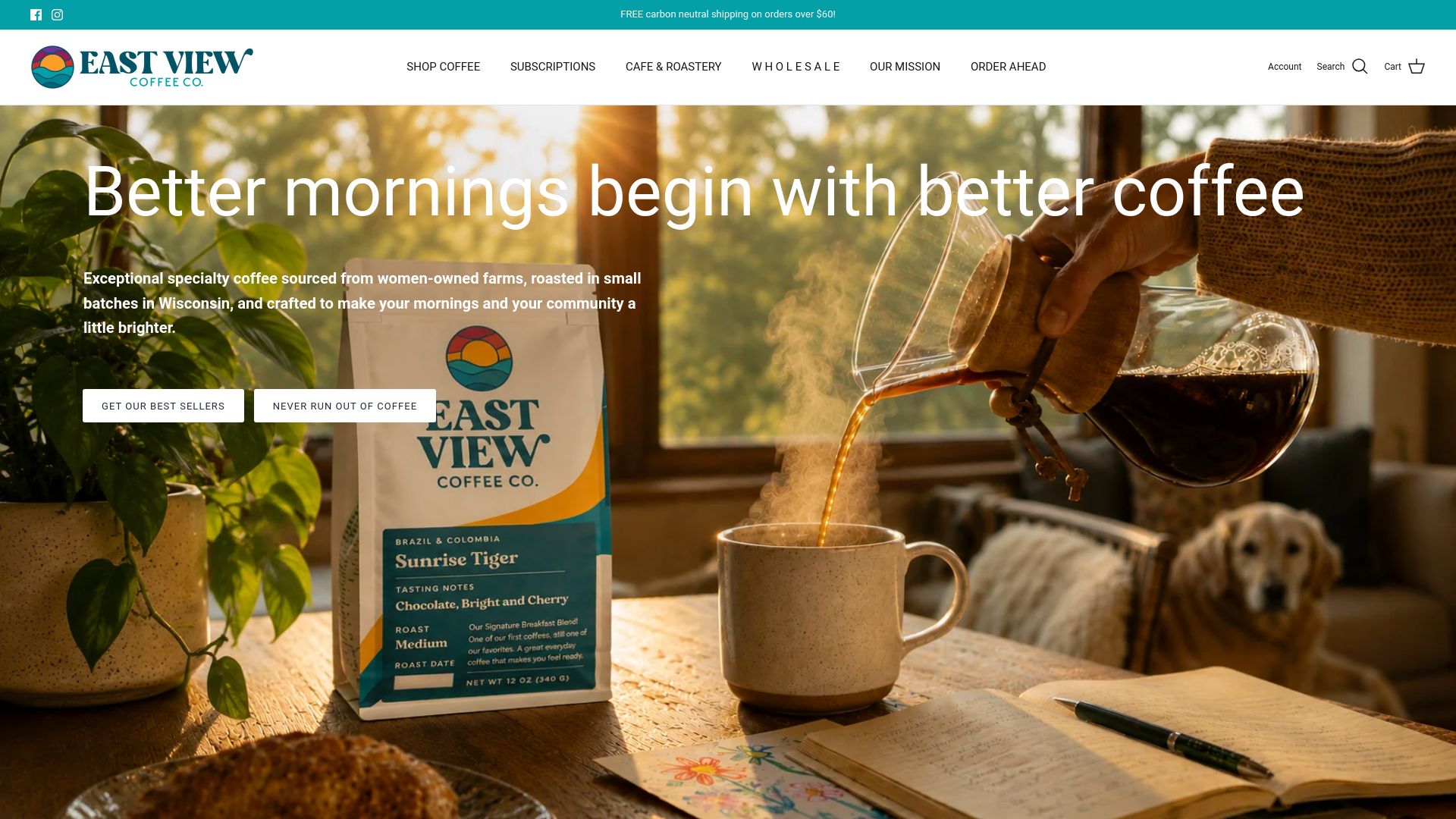
Eastviewcoffee roasts in small batches in Kenosha, Wisconsin, sourcing beans from women-owned farms that we compensate at a premium. Small-batch roasting means faster turnaround from roaster to bag, and that fast schedule is exactly the scenario where a properly specified valve matters most.
- Fresh roast-to-ship timelines mean higher CO₂ pressure at the point of sealing, so valve performance isn’t optional.
- Valve-equipped bags let us protect aroma without delaying shipment to wait out degassing.
- Our packaging philosophy reflects both freshness priorities and environmental responsibility.
Packaging decisions are a direct extension of how seriously a roaster treats the coffee itself.
Why Packaging Details Are Worth Your Attention
Small-batch roasting creates constant packaging tradeoffs, speed against shelf stability, aroma protection against cost, and getting those tradeoffs right shows up in every cup. The valve is a small piece of engineering that quietly does a lot of work. If you’re buying fresh-roasted coffee, check for it, and treat it as one more sign the roaster cared about what happens between the roaster and your mug.
— Jenny
Shop Valve-Packed Roasts Built for Freshness
Every bag Eastviewcoffee ships uses a properly specified one-way valve, matched to our roast-to-pack schedule so the coffee inside stays as close to roast-day flavor as possible. That’s not a marketing detail. It’s the difference between beans that taste bright and complex versus ones that taste flat by the time they reach your kitchen.
If you want a lighter cup with less caffeine, the Cat’s Pajamas Half-Caff Freshly Roasted Coffee and Half-A$$ed Half-Caff Freshly Roasted Coffee both ship in the same valve-equipped bags as our full-caffeine roasts. Prefer something bolder? The Dark Roast Bundle pairs well with the faster degassing timeline dark roasts naturally have. And if you’d rather skip the guesswork entirely, get a custom coffee recommendation built around your roast preference and brewing habits.
Sources
- Degassing - Roastopedia
- SCA: Coffee decoded—fresh coffee
- Why Coffee Bags Have Vents: The Valve Truth Roasters Miss - PackagingBest
- What Is That Valve on My Coffee Bean Bag? | America’s Test Kitchen
- Degassing Valves: What Are They & Are They Necessary for Coffee Packaging? - EPAC Flexibles
FAQ
What is the hole in the coffee bag for?
It’s not a hole but a one-way valve, designed to let carbon dioxide escape from freshly roasted coffee while blocking oxygen from entering and staling the beans.
What is the 15-15-15 rule for coffee?
There’s no formal industry standard by that name. The Specialty Coffee Association recommends resting freshly roasted coffee for several days instead, letting CO₂ stabilize before brewing for cleaner extraction.
What is the button on a coffee bag?
The “button” is the visible top of the one-way degassing valve. Pressing it doesn’t affect freshness, and smelling coffee through it happens because aroma molecules are small enough to pass through even though oxygen can’t get back in.
Are there coffee storage bags with valves available?
Yes. Most fresh-roasted coffee, including Eastviewcoffee’s lineup like the Obsidian Freshly Roasted Coffee and Community Freshly Roasted Coffee, ships in valve-equipped bags built to protect aroma from roast day through your last cup.