
Drinkable Coffee in Under 5 Minutes Without a Machine
Cowboy coffee, a DIY coffee bag, and mason-jar cold brew are the three easiest ways to make coffee without a machine, and which one you pick depends on gear and patience. Cowboy coffee (grounds steeped straight in hot water) is fastest and needs almost nothing. A coffee bag gives you the cleanest cup with zero sediment. Cold brew takes 12 to 18 hours but rewards you with a smooth batch that lasts days.
TL;DR:
- Cowboy coffee is quick and simple but includes unavoidable sediment, making it ideal for camping with minimal gear.
- DIY coffee bags produce the cleanest cup with almost no residue, suitable for situations where a sediment-free brew is critical.
- Mason-jar cold brew requires 12 to 18 hours of steeping and provides a smooth, less acidic coffee that keeps well for up to two weeks.
- Achieving optimal flavor depends on water temperature (195–205°F), a 2:6 ounce grounds-to-water ratio, and coarser grind sizes for cowboy coffee and cold brew.
- Fixing coffee quality issues involves ensuring fresh beans, proper grind size, and correct steeping time rather than solely relying on brewing method choices.
Table of Contents
- Which No-Machine Method Fits Your Situation?
- How Do You Make Cowboy Coffee on a Stovetop?
- How Do You Make a DIY Coffee Bag?
- How Do You Make Mason-Jar Cold Brew?
- Can You Do a Pour-Over Without a Pour-Over Cone?
- How Do You Fake a French Press With What’s in Your Kitchen?
- What’s the Fastest No-Machine Option in a Pinch?
- The Water Temperature, Ratio, and Grind Rules That Actually Matter
- Why Does My Coffee Taste Bitter, Weak, or Gritty?
- Why Roast Freshness Changes How You Should Brew
- What Most Guides Get Wrong About Brewing Without Equipment
- Bring Better Beans to Whatever Method You Choose
- Sources
- FAQ
Which No-Machine Method Fits Your Situation?
Not every method suits every setup. A campsite with a fire pit calls for different tools than a hotel room with a mini fridge and nothing else.
- Camping or a fire pit: Cowboy coffee wins because it only needs a pot, water, and heat, though you’ll get some sediment at the bottom of the cup.
- Hotel room or office with no filter: A DIY coffee bag made from a spare tea bag or paper towel gives you a clean cup with almost no cleanup.
- No heat source at all: Mason-jar cold brew is your only real option, and it happens to taste smoother and less acidic than hot-brewed coffee anyway.
- Want the cleanest possible cup: Pour-over improv with a rinsed paper towel or coffee filter beats cowboy coffee on clarity, though it takes a few extra minutes of attention.
- Need caffeine in under two minutes: Instant coffee or the microwave method gets you there fastest, at the cost of flavor.
Gear availability usually decides the method before taste preference does. If you’ve got a mug, hot water, and grounds, you can make something drinkable in under five minutes.
How Do You Make Cowboy Coffee on a Stovetop?
This is the oldest trick in the book, and it still works because it asks so little of you.
- Boil water in any pot or kettle.
- Pull it off the heat and let it rest about 30 seconds. This gets you close to the ideal 195–205°F range that most brewing guides recommend.
- Stir in 2 tablespoons of medium-coarse grounds per 6 ounces of water.
- Steep for about 4 minutes.
- Let the grounds settle for a minute, then pour slowly, stopping before the last inch to leave sediment behind.
Pro Tip: A splash of cold water poured gently onto the surface right before you serve helps grounds sink faster, so you get less grit in the cup.
How Do You Make a DIY Coffee Bag?
This method borrows the tea bag concept and turns a countertop coffee scoop into a filtered pouch.
- Empty a spare tea bag, or cut a small square of cheesecloth or a paper coffee filter.
- Add 2 tablespoons of grounds and tie it off tightly with string or a twist tie.
- Drop the bag into a mug of water heated to around 200°F.
- Steep for 4 minutes, then remove and squeeze gently.
This is the cleanest option when you have zero equipment, since the bag traps almost every particle. Use it whenever a gritty cup would ruin your morning.
How Do You Make Mason-Jar Cold Brew?
Cold brew skips heat entirely, which makes it the safest bet when there’s no stove, kettle, or microwave around.
- Add coarse grounds to a mason jar at roughly 1 cup of coffee to 4 cups of cold water.
- Stir once to make sure every ground gets wet.
- Seal the jar and refrigerate for about 12 to 18 hours.
- Strain through a cloth, paper towel, or fine mesh into a clean jar.
- Dilute the concentrate roughly 1:1 with water or milk before drinking.
Pro Tip: Batch a full jar on Sunday night and you’ve got a ready-made concentrate for the entire work week. It keeps well in the refrigerator for up to two weeks.
Can You Do a Pour-Over Without a Pour-Over Cone?
Yes, and it’s closer to a real pour-over than most people expect once you get the folding right.
- Fold a clean paper towel into a cone, or use a coffee filter if you have one, and rinse it under warm water first to remove any paper taste.
- Set the cone over a mug and add 2 tablespoons of medium-fine grounds.
- Pour a small splash of hot water over the grounds and wait 30 to 45 seconds. This bloom step lets trapped gas escape and improves flavor extraction.
- Pour the rest of the water slowly in a circular motion.
Total drawdown usually runs 2 to 3 minutes for a single cup, which is roughly what a standard pour-over cone delivers.
How Do You Fake a French Press With What’s in Your Kitchen?
A fine-mesh strainer or even the back of a spoon can approximate the pressing action of a French press.
- Steep 2 tablespoons of coarse grounds in 6 ounces of hot water for 4 minutes in any heat-safe cup or bowl.
- Press a spoon flat against the surface and hold the grounds down while you pour off the liquid, or pour the whole batch through a fine-mesh sieve into your mug.
- Use a coarser grind than you would for a coffee bag. Fine particles slip through a sieve and end up as sludge.
Reach for this method when you want more body than a coffee bag gives you, but you don’t want the sediment that comes with straight cowboy coffee.
What’s the Fastest No-Machine Option in a Pinch?
Sometimes you don’t have four minutes to spare. These two shortcuts trade flavor for speed.
- Microwave method: Heat a mug of water for 60 to 90 seconds, stir in grounds, wait 2 minutes, then strain through a paper towel. Stir the water before heating and avoid microwaving it in a perfectly smooth, undisturbed container, since superheated water can erupt violently once disturbed.
- Instant coffee: A specialty instant blend dissolved in hot water beats old-fashioned supermarket crystals by a wide margin and takes under a minute.
- When to use these: Reach for them only when time genuinely trumps taste. A rushed morning or a hotel room with no other options are the classic cases.
The Water Temperature, Ratio, and Grind Rules That Actually Matter
Every method above depends on the same three variables, whether you’re using a mason jar or a campfire pot.
- Temperature: Aim for 195°F to 205°F. Boiling water scalds grounds and pulls out bitterness; letting boiled water rest for 30 to 60 seconds gets you close enough without a thermometer.
- Ratio: A household rule of 2 tablespoons of grounds per 6 ounces of water works for most methods, translating roughly to a 1:15 to 1:18 coffee-to-water ratio by weight.
- Grind size: Coarser grinds reduce sediment and work better for cowboy coffee, cold brew, and faux French press. Finer grinds suit coffee bags and pour-over, where the filter traps the fines.
- Blooming: A short 30 to 45 second pour before the main brew releases carbon dioxide trapped in fresh grounds, which noticeably smooths out the final cup.
Grinding beans right before brewing matters more than most people realize. Aromatics start fading within 15 to 120 minutes of grinding, so a small hand grinder, or even a rolling pin and a sealed bag, beats using pre-ground coffee that’s been sitting open for a week. If you’re stuck with pre-ground, store it in an airtight container away from light and heat rather than in the bag it came in. Our guide to coffee water temperature breaks down exact targets by brew method if you want more precision.
Why Does My Coffee Taste Bitter, Weak, or Gritty?
Almost every improvised-coffee complaint traces back to one of three fixable problems.
- Bitter cup: Your water was too hot, your steep ran too long, or your grind was too fine. Drop the water temperature slightly, cut steep time by a minute, and switch to a coarser grind.
- Weak or watery cup: Add more grounds, extend steep time by a minute, or check that your grind isn’t too coarse for the method you’re using.
- Gritty or sandy cup: Go coarser on the grind and add a second filtration pass. Straining is the single most reliable fix for sediment when no built-in filter exists.
Pro Tip: Keep a square of clean cheesecloth or a rinsed paper towel in a kitchen drawer specifically for coffee duty. Double-straining through it catches almost everything a first pour misses.
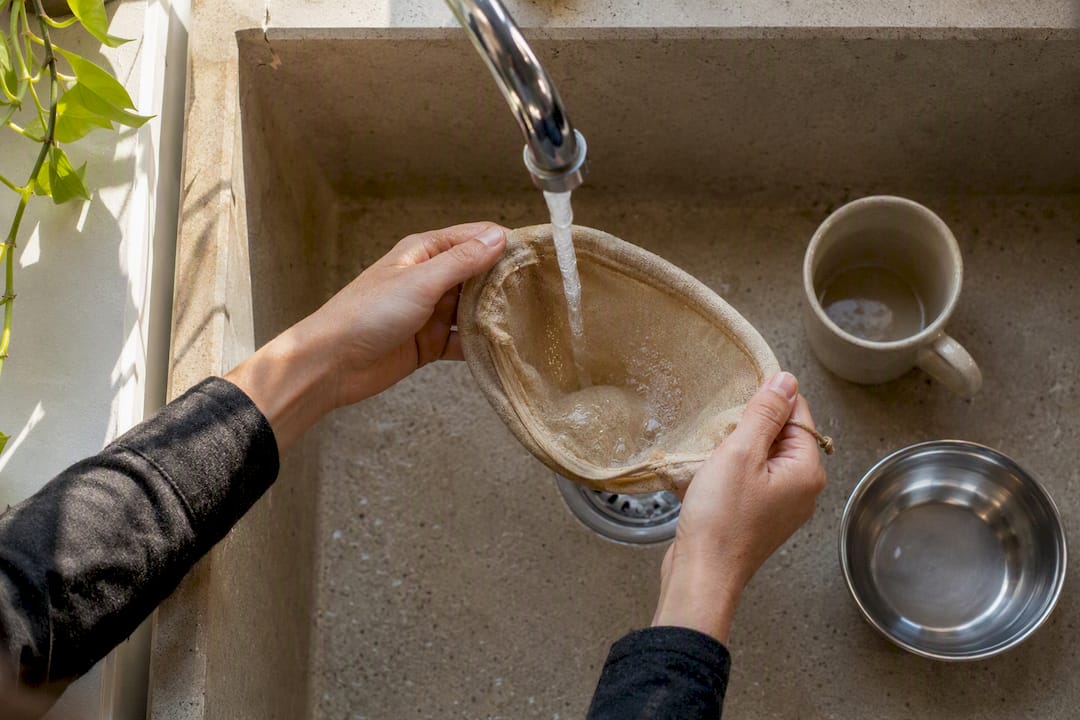
If you’re using a paper towel or cloth as a filter, rinse it under hot water first. Unrinsed paper can leave a papery aftertaste, and a dry cloth filter will soak up some of the coffee’s natural oils before your drink ever hits the mug.
Why Roast Freshness Changes How You Should Brew
Specialty coffee roasters sourcing beans from women-owned farms often roast in small batches, and that roasting schedule directly affects how you should approach any no-machine method. A coffee roasted within the past two weeks releases more carbon dioxide during blooming, so it needs that 30 to 45 second bloom step more than a bag that’s been sitting on a grocery shelf for months. Darker roasts also grind finer more easily, which means you’ll want a coarser grind setting for cowboy coffee or cold brew than a lighter roast would need. For more on matching grind and ratio to roast level, our pour-over coffee guide covers the specifics.
What Most Guides Get Wrong About Brewing Without Equipment
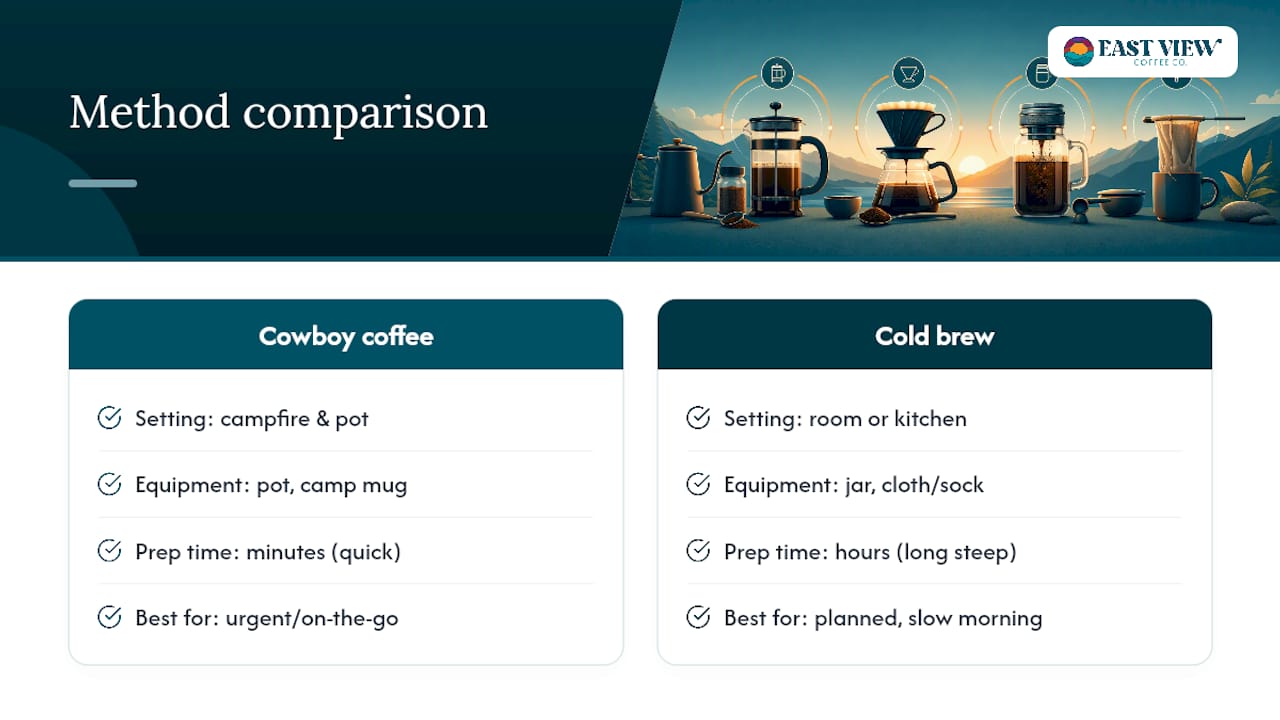
Most articles on this topic treat every method as interchangeable, as if cowboy coffee and cold brew solve the same problem. They don’t. The real decision isn’t “which method is best,” it’s “what does your morning actually look like today.” A camper with a fire and a pot has a completely different set of constraints than someone stranded in a hotel room with a coffee maker they don’t trust.
The advice that gets skipped most often is the freshness piece. People will meticulously measure water temperature to the degree, then brew with grounds that have been open on a counter for three weeks. Grind size and steep time matter, but they can’t fix beans that lost their aromatics days ago. If you’re only going to fix one variable in your no-machine setup, fix the coffee itself before you fix the method.
The other thing worth saying plainly: sediment is not a failure. Cowboy coffee has grit at the bottom by design, and that’s fine for a camp mug. Chasing a filter-cafe clean cup out of a mason jar and a sock is a losing battle. Match your expectations to your method, and you’ll enjoy the process a lot more than if you’re fighting it every step.
— Jenny
Bring Better Beans to Whatever Method You Choose
None of these methods can outperform the coffee you put into them, and that’s where Eastviewcoffee comes in. Every one of these techniques, cowboy coffee, a coffee bag, cold brew, works better with beans that were roasted recently and ground with intention rather than left sitting in a pantry for months.
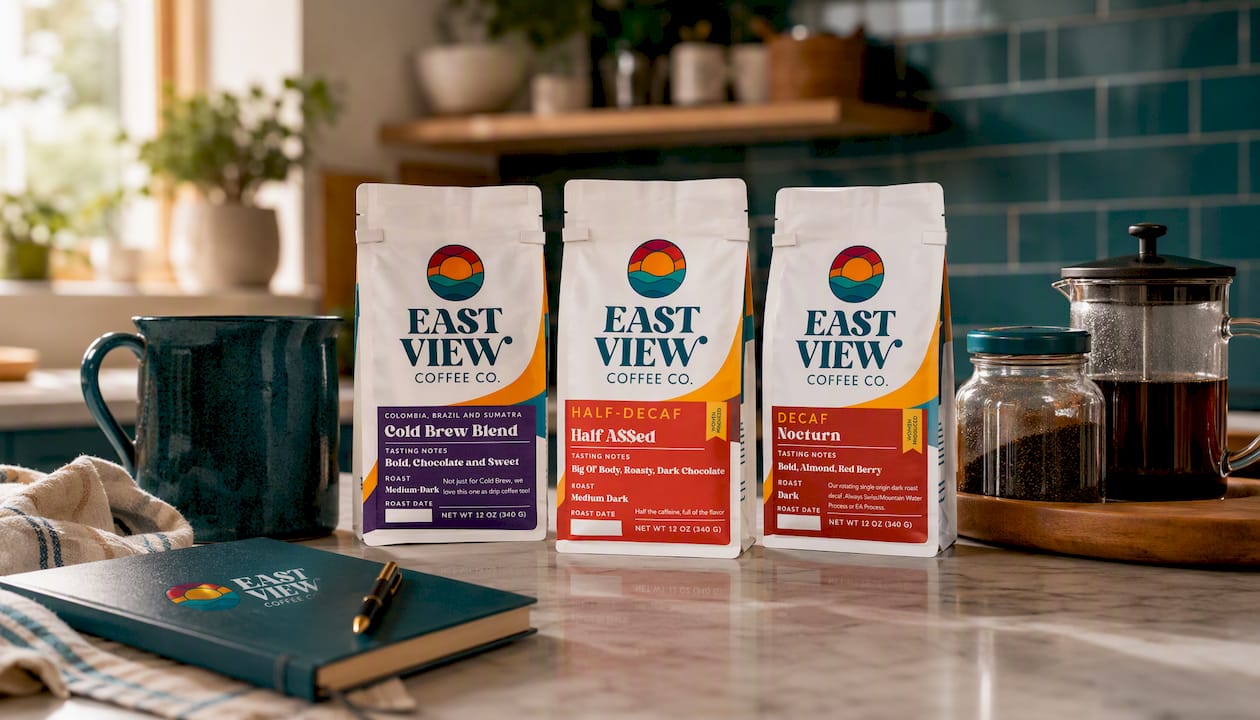
If cold brew is your go-to, the Cold Brew Blend is built specifically for a 12 to 18 hour steep, with a flavor profile designed to hold up through dilution. Mornings where you want flavor without a full jolt of caffeine call for the Half-A$$ed Half-Caff, which works well in a coffee bag or pour-over setup. And if you’re brewing in the evening or skipping caffeine altogether, the Nocturne Decaf holds its flavor just as well in a mason jar as any of the caffeinated blends. Order a bag or start a subscription, and the next cup you make without a machine will taste like it came from one.
Sources
- Make Your Own Coffee Single Bags WikiHow
- Yes, You Can Make Coffee Without a Coffee Maker. Heres How Food & Wine
- How to Make Coffee Without a Coffee Maker A Couple Cooks
- How to brew coffee without a coffee maker The Art of Manliness
FAQ
What Can I Use Instead of a Coffee Maker?
A pot for cowboy coffee, a mason jar for cold brew, a tea bag or cheesecloth for a DIY coffee bag, or a paper towel folded into a cone for pour-over improv all work. Pick based on whether you have heat available and how much sediment you’re willing to tolerate.
Can I Just Mix Ground Coffee With Water?
Yes, that’s essentially cowboy coffee: stir grounds directly into hot water, let it steep about 4 minutes, then let the grounds settle before pouring slowly to leave sediment behind.
How Much Coffee Grounds Do I Use for One Cup of Coffee?
Use about 2 tablespoons of grounds per 6 ounces of water as a household starting ratio, which lands close to the 1:15 to 1:18 coffee-to-water ratio brewing guides recommend.
How Do I Use Ground Coffee to Make Coffee Without a Filter?
Steep the grounds directly in hot water for about 4 minutes, then either strain through cheesecloth or a rinsed paper towel, or let the grounds settle to the bottom and pour off the liquid on top.