
Raise Money Fast: Two Week Coffee Fundraiser Ideas for Schools
Run a two to three week campaign built around a drop-off table or online order form, add a limited-edition roast to create urgency, and use show-and-sell samples to convert browsers into buyers on the spot. Those three moves cover most of what makes a coffee fundraiser profitable. East View Coffee works with organizers on exactly this kind of campaign, and the format you pick matters less than keeping it simple and short.
TL;DR:
- Keeping campaigns short to two or three weeks maximizes urgency and improves conversion rates, especially with a limited-edition roast to motivate immediate purchase.
- Fast-selling methods like drop-off tables and drive-by pickups are ideal for high-traffic areas, with show-and-sell tasting stations often outperforming pre-order models in immediate sales.
- Using online or no-inventory order forms reduces logistical complexity and preserves profit margins, which typically range from 25% to 40% depending on fulfillment methods.
- Bundling coffee with popular food items or local treats, along with seasonal limited-time roasts, significantly increases average sales per supporter without added effort.
- Clear, consistent messaging through parent, school, or community channels, combined with tracking daily sales metrics and timely thank-yous, ensures ongoing engagement and a successful fundraiser outcome.
Table of Contents
- Coffee Fundraiser Ideas Ranked by Effort and Payoff
- Running a Drop-Off Table or Coffee Bar: A Day-Of Checklist
- Pricing, Timeline, and How Much Profit to Expect
- Bundles and Partnerships That Raise Your Average Sale
- Getting the Word Out Without a Marketing Budget
- Legal and Health Rules You Need to Check First
- Keeping Track of Money While the Fundraiser Is Running
- What to Do After the Fundraiser Ends
- The East View Coffee Take on What Actually Works
- How East View Coffee Can Support Your Fundraiser
- Where This Information Comes From
- Sources
- FAQ
Coffee Fundraiser Ideas Ranked by Effort and Payoff
Not every coffee fundraiser idea fits every group. A PTA with six volunteers and a two-week window needs something different than an office manager collecting orders from forty coworkers. Here’s how the best options break down by how much work they take to run.
Quick to set up, fast to sell:
- Drop-off table. Set up during morning drop-off or pickup with brewed samples and bagged coffee for sale. Parents already walking by are your easiest customers.
- Drive-by morning pickup. Volunteers hand pre-bagged coffee through car windows in the pickup line, like a mini drive-thru. No table, no chairs, just a cooler and a cash box.
- Show-and-sell sample station. Brew a pot, offer tiny cups, and sell bags on the spot. Selling physical inventory people can taste and take home right away consistently outperforms models that make buyers wait for delivery.
Moderate effort, bigger draw:
- Staffed coffee bar at a school event. Set up at a football game, open house, or holiday concert where foot traffic is already high.
- Pop-up at a community fair. A folding table and an urn at a farmers market or church bazaar can outsell a quiet weekday drop-off table.
- Ticketed tasting or cupping. Charge a small entry fee for a guided tasting of two or three roasts. It works well paired with a silent auction or raffle.
Low-effort and remote:
- No-upfront online order form. Supporters order and pay online; you collect no cash and carry no inventory risk.
- Direct-ship webstore link. Share a link, and the coffee ships straight to the buyer. Ideal for grandparents and out-of-town supporters.
- Gift subscription sales. A one-time purchase that keeps giving, and it’s an easy upsell during the holidays.
High-engagement options:
- Limited-edition seasonal roast. A one-time-only blend gives supporters a reason to buy now instead of waiting.
- Office bulk sales. One coordinator collects orders from an entire workplace in a single email thread.
- Gift bundles. Pairing coffee with a mug or a local treat raises the average sale without adding much work.
Running a Drop-Off Table or Coffee Bar: A Day-Of Checklist
Getting the logistics right matters more than the concept itself. Here’s the groundwork before volunteers show up.
Permissions and location. Confirm with the school office or facility manager where you can set up: the pickup lane, the entry vestibule, or a community center lobby. Get this in writing, even if it’s just a confirmation email, so nobody questions your table on the day of the event.
Volunteer roles. Three people cover most setups: a greeter who waves people over and explains what’s for sale, a cashier who handles payment, and a runner who restocks cups and bags. For a drive-by pickup line, add a fourth person to direct traffic.
Equipment list. Airpots or urns for brewed coffee, to-go cups with lids, a simple sign with prices, a sample brewer if you’re doing tastings, and a cash box or a phone with a contactless payment reader.
Show-and-sell versus order-taker. Show-and-sell means you bring inventory and sell what you have, which works best for high-traffic events like drop-off lines. Order-taker means supporters pre-order and pick up later, which fits smaller volunteer teams that can’t staff a table daily.
Here’s the sequence to print and hand to volunteers:
- Arrive 30 minutes early to set up tables, signage, and brew the first pot.
- Brief volunteers on prices, payment methods, and where to direct questions.
- Open sales at the scheduled time and keep the sample cups flowing.
- Restock cups and bags every 20 to 30 minutes.
- Close sales, count the cash box, and log the total before anyone leaves.
- Pack up equipment and note what sold out for next time.
Pro Tip: Put your best-selling roast at eye level and closest to the cashier. People buy what’s easiest to grab, not necessarily what’s best.
Pricing, Timeline, and How Much Profit to Expect
Keep the campaign to two to three weeks. Shorter windows create urgency and tend to convert better than open-ended sales that drag on and lose momentum after the first few days.
Here’s the math on two common setups:
- Single bag sale: Sell a 12-ounce bag for $16. If your cost per bag runs around $10 to $11, you keep roughly $5 to $6 per bag.
- Office bulk box: Sell a six-bag box to a workplace for $90. At a similar per-bag cost, that’s around $30 to $36 profit per box, with almost no extra labor since one order covers six sales.
Order-form-and-bulk-fulfillment programs like this typically net organizers somewhere between 25% and 40% profit, depending on how fulfillment is handled.
A few ways to protect that margin:
- Skip upfront inventory costs by using a no-upfront order model.
- Price a limited-edition roast slightly higher since scarcity supports a premium.
- Set bundle discounts as flat dollar amounts, not percentages, so you’re not eating into margin on your highest-cost items.
Bundles and Partnerships That Raise Your Average Sale
The fastest way to boost revenue without adding volunteers is to raise how much each supporter spends per visit, not how many supporters show up.
Bundles that work:
- Coffee paired with a muffin or pastry from a local bakery. Food-and-coffee combinations pull in buyers who might walk past a stand-alone coffee table.
- Sampler packs with two or three roasts, good for gift-giving season.
- A bag paired with a branded mug or simple gift wrap for an easy $5 to $8 upsell.
Partnership plays:
- Cross-promote with a local bakery or bagel shop, splitting the table and the foot traffic.
- Pitch a bulk order to a nearby office through a parent who works there.
- Ask a local coffee shop or roaster if they’ll let you post a flyer near their register.
Seasonal urgency: A pumpkin spice or peppermint mocha roast available for two weeks only gives supporters a reason to buy now instead of putting it off.
Pro Tip: Cap your bundle menu at three or four options. More choices sound generous but actually slow down decisions and shrink sales.
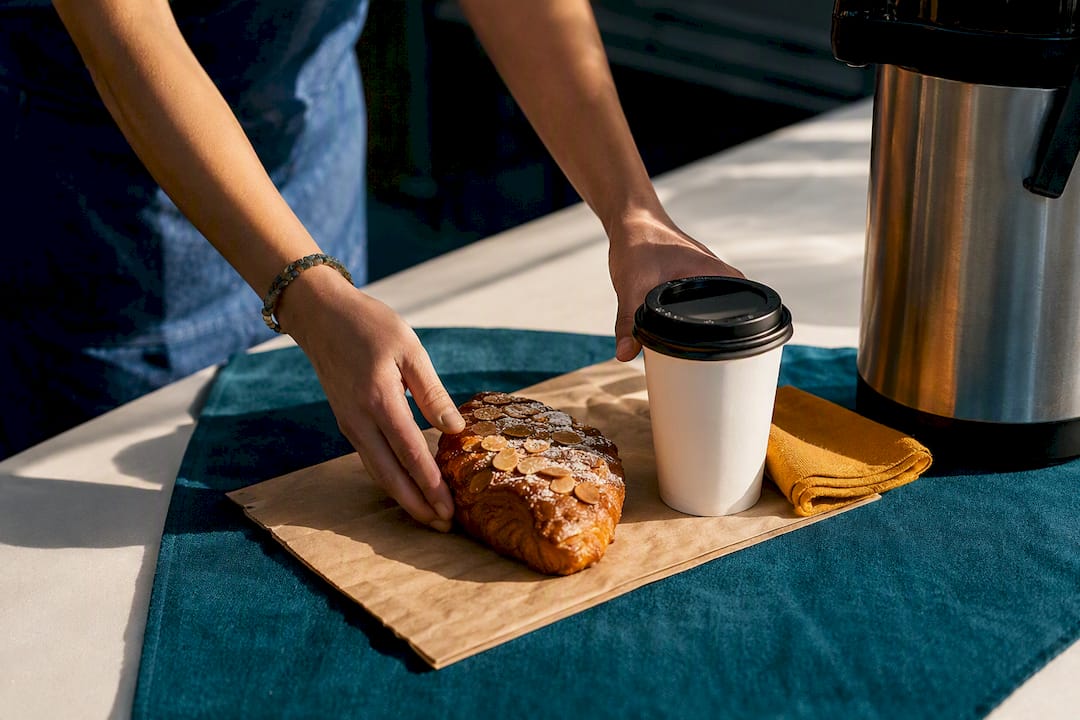
Pairing coffee with a local food vendor does double duty: it raises your average order and builds goodwill with a business you might partner with again next year. For visual inspiration on how to pair and present food with coffee, presentation ideas from other food businesses can spark simple ways to make a bundle look more appealing on the table.
Getting the Word Out Without a Marketing Budget
Your fundraiser doesn’t need paid ads. It needs the right five channels hit consistently for two weeks.
Where to post:
- Class email lists and PTA newsletters
- Neighborhood Facebook groups
- Staff breakrooms and workplace listservs
- School app or text alert systems
What to prepare in advance:
- A printable flyer with a QR code linking straight to your order form
- One or two social post templates volunteers can copy and paste
- A short script for volunteers greeting people at the table
- Counter cards listing prices for show-and-sell setups
Messaging that works: Use a deadline (“orders close Friday”), name the cause plainly (“supports the fifth-grade field trip”), and call out anything limited-time. Digital assets like QR-coded flyers shared parent-to-parent are cheap and reliably drive orders.
Track three numbers daily: orders per day, average order value, and which channel is sending the most traffic. If Facebook posts outperform flyers, put your remaining effort there instead of splitting it evenly.
Legal and Health Rules You Need to Check First
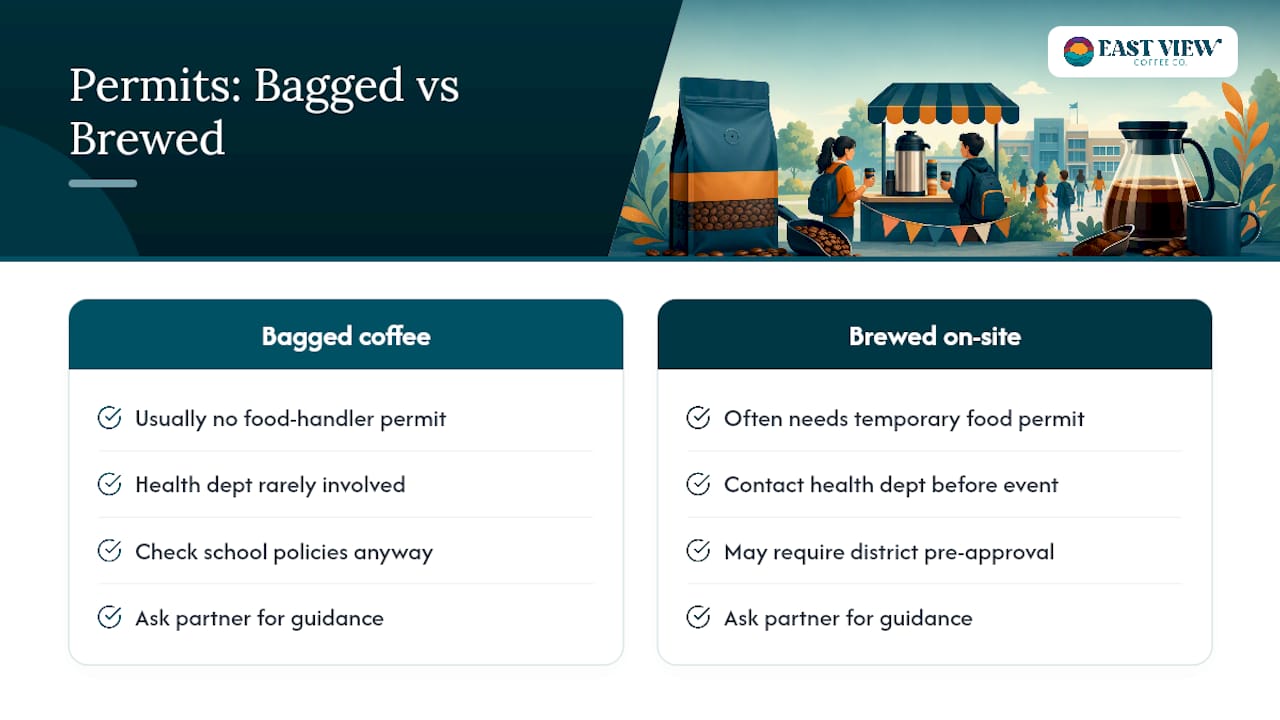
Selling packaged, sealed coffee at a table or drop-off line is generally treated differently than selling brewed coffee for immediate consumption. Bagged, factory-sealed coffee sold as-is typically doesn’t require a food handler’s permit in most jurisdictions, since it’s a prepackaged, non-perishable product.
Brewing coffee on-site for samples is where the rules tighten. Many local health departments require a temporary food service permit for events serving brewed beverages to the public, especially on school or municipal property. Contact your local health department before the event, not after you’ve already promoted it. Some districts fold this into a general facility-use agreement; others require a separate application with a small fee.
Check with your school or venue about their own policies too. Some schools cap what can be sold on campus or require pre-approval from the district for any fundraiser involving food or beverages. If you’re using a fundraising or wholesale partner, ask them directly whether their program includes any guidance on local permitting since rules vary by state and even by county.
A simple rule of thumb: bagged coffee sales rarely trigger extra paperwork, but anything brewed and served on-site probably needs a quick call to confirm you’re covered.
Keeping Track of Money While the Fundraiser Is Running
Cash and card sales pile up fast during a busy drop-off line, and small discrepancies are easy to miss if you’re not tracking as you go.
Assign one person as the money owner for each shift. That person counts the cash box at the start and end of every session and logs the total on a simple sheet, even a shared spreadsheet on a phone works. If you’re using a contactless payment reader, reconcile that total against the cash total daily rather than waiting until the campaign ends.
For online orders, most order-form platforms give you a running dashboard of orders and totals, which removes the guesswork entirely. Check it daily against your goal so you know early if you need to push harder on promotion.
Keep a simple three-column log: date, amount collected, and who collected it. This protects volunteers from being blamed for shortfalls and gives you a clean number to report when the fundraiser wraps. Deposit cash promptly rather than letting it sit in a car or a desk drawer overnight.
What to Do After the Fundraiser Ends
The fundraiser isn’t done when the last bag sells. Send a thank-you note to every supporter within a week, whether it’s a group email, a printed note home with students, or a post in the same Facebook group you used to promote sales. Specific numbers matter here: “We raised $2,400 for new library books” lands better than a vague thank-you.
Report the final total to whoever approved the fundraiser, the PTA board, the school principal, or the community group leader, along with a short breakdown of what sold best. That record helps the next organizer skip the guesswork you just worked through.
If a local business partnered with you, a personal thank-you note or a shoutout goes a long way toward getting them to say yes again next year. Save your flyer templates, your pricing sheet, and your volunteer schedule in a shared folder. The next person running this fundraiser will thank you for it.
The East View Coffee Take on What Actually Works
Most organizers overthink the concept and underthink the logistics. The format barely matters if the campaign is too long, the pricing is confusing, or nobody knows the deadline. What separates a fundraiser that clears a few hundred dollars from one that clears a few thousand isn’t a clever idea. It’s a short window, a simple menu, and a volunteer who shows up on time with a full urn.
This coffee fundraiser sources its coffee from women-owned farms and roasts it in small batches, providing organizers a compelling story to share with supporters, not just a product to sell. A school coffee fundraiser guide walks through the exact setup steps covered here, and a rotating seasonal coffee lineup gives organizers a built-in reason to create urgency without inventing one from scratch.
One school group we’ve supported ran a two-week drop-off table paired with a limited fall roast and hit their goal a full week early, largely because they kept the order form to three products and pushed hard on the deadline messaging in their weekly parent email. Simple menus convert better than long ones, and a clear cutoff date does more work than any discount.
— Jenny
How East View Coffee Can Support Your Fundraiser
This company offers small-batch roasts with a story behind every bag, sourced from women-owned farms, and priced to give organizers real margin. The Cold Brew Blend Coffee works well for office bulk orders and summer fundraisers, since it’s an easy sell to coworkers who want something smooth without a brewer. The Cat’s Pajamas Half-Caff Freshly Roasted Coffee fits teacher-appreciation bundles and family-friendly sales, since the lighter caffeine content appeals to a wider range of buyers, including parents shopping for an evening cup.
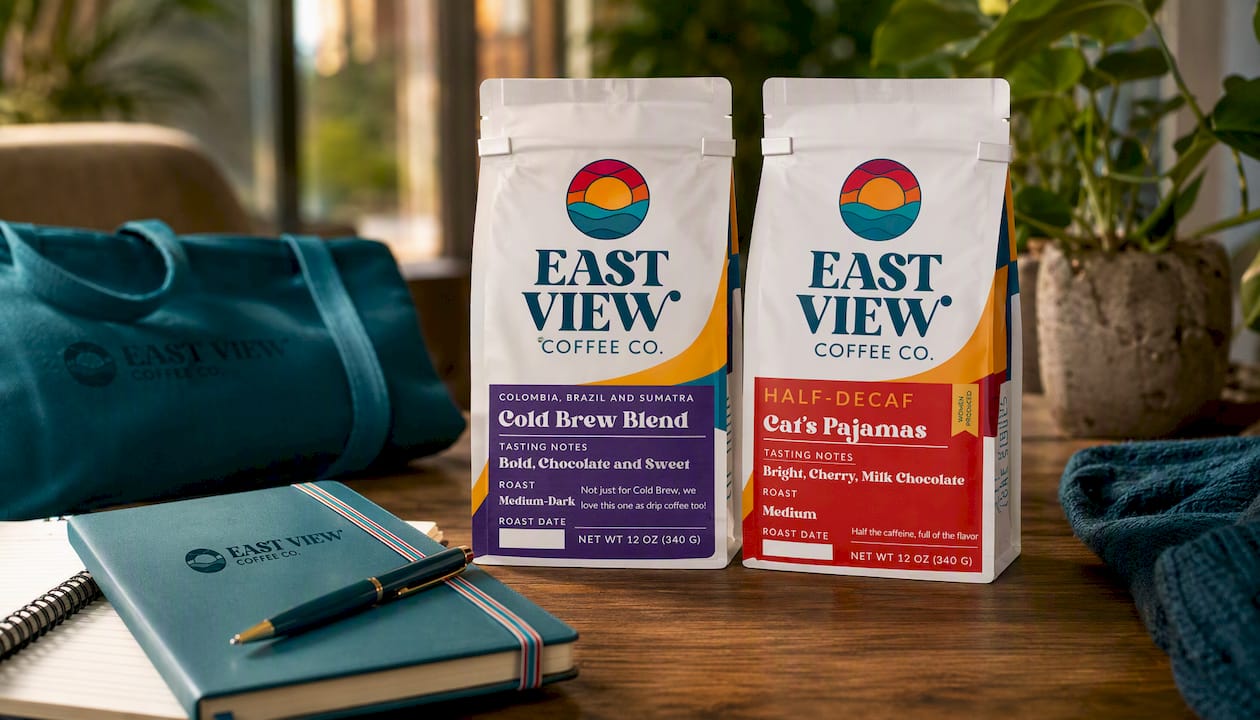
Bundle either roast with a coffee bundle pairing for an easy upsell, or reach out directly to set up a fundraising or wholesale order for your group. Getting started is as simple as picking a roast, choosing your timeline, and placing your first order today.
Where This Information Comes From
- Fundraising IP’s coffee fundraising guide covers why on-site sales outperform wait-and-fulfill models.
- CheddarUp’s coffee fundraiser ideas breaks down bundling and seasonal urgency tactics.
- Fundraising Zone’s coffee fundraising guide supports the recommended two to three week campaign window.
- Giving Bean’s fundraising program page details typical profit ranges for order-form models.
Sources
- Take a break for coffee fundraising
- Coffee fundraiser ideas (CheddarUp)
- 65 Easy High-Profit Coffee Fundraising Ideas (Fundraising Zone)
- Giving Bean fundraising program
FAQ
What are some effective fundraising ideas for a coffee shop?
A coffee shop can run a percentage-of-sales night, a limited-edition roast release, or a punch card promotion tied to a local cause, all of which pair well with a short, clearly dated campaign.
What is the most profitable fundraiser?
Bulk office orders and bundle sales tend to generate the highest profit per transaction because they raise the average order size without adding extra staffing or setup time.
What is the easiest fundraiser to do?
A no-upfront online order form is the easiest to run since it requires no inventory, no cash handling, and no staffed table, making it ideal for smaller volunteer teams.
How do I raise money at a coffee morning?
Set up brewed samples alongside bagged coffee for sale, keep pricing simple and visible, and pair the coffee with a pastry or baked good to raise the average sale per visitor.