
40–50 L/kg Water or Fruit Bomb? Natural vs Washed Coffee
Natural (dry) processed coffee tends to be fruitier, sweeter, and heavier in body; washed (wet) processed coffee tends to be cleaner, brighter, and more transparent about where it’s from. Neither wins outright. The choice comes down to what you want in the cup and how much water and land you’re comfortable trading for it: washed processing runs through a lot of water at the mill, while natural processing eats up drying space and time instead.
TL;DR:
- Washed coffees require about one to two weeks of processing time and use roughly 40 to 50 liters of water per kilogram, with high consistency in flavor.
- Natural processing involves drying whole cherries for up to six weeks, producing heavier body and fruitier flavors but with greater lot-to-lot variability.
- Hybrid honey processing balances water use and flavor, leaving some mucilage on during drying, which adds sweetness and complexity without the lengthy natural process.
- Execution matters more than process alone; a poorly managed washed or natural coffee can taste worse than a well-produced one of the other type.
- Your choice should depend on your flavor preferences and brewing method, with washed generally suited for clarity and naturals for intensity.
Table of Contents
- Natural Process vs Washed Coffee: How Washed Processing Works
- What Natural (Dry) Processing Does Differently
- Washed vs Natural Process: Side-by-Side Differences
- The Sustainability Trade-Off Nobody Simplifies Correctly
- How Processing Changes Your Roast and Your Brew
- How to Pick Between Natural and Washed for Your Cup
- How East View Coffee Approaches Processing Choices
- Hybrid Methods: What Honey Process Fits Into the Picture
- Why the “Better Process” Debate Misses the Point
- Taste the Difference for Yourself
- Sources
- FAQ
Natural Process vs Washed Coffee: How Washed Processing Works
Washed coffee starts with removing the skin and fruit pulp almost immediately after harvest, usually the same day. From there, the beans (still coated in sticky mucilage) sit in fermentation tanks anywhere from 8 to 72 hours, depending on the mill, the climate, and the flavor the producer is chasing. Longer fermentation tends to push acidity and complexity; shorter runs keep things simple and clean.
The basic sequence looks like this:
- Depulping to strip the outer skin and fruit
- Fermentation in water or dry tanks for 8 to 72 hours to break down the mucilage
- Washing to rinse away the loosened mucilage completely
- Drying on patios or raised beds for 10 to 14 days until moisture hits target levels
Pro Tip: If a bag says “fully washed” with no fermentation time listed, ask your roaster. Producers proud of a long, controlled ferment usually put the number right on the label.
The payoff is clarity. Washed coffees tend to show bright acidity, lighter body, and origin characteristics that come through clearly instead of getting masked by fruit sugars. The tradeoff is water. Washed processing runs roughly 40 to 50 liters of water per kilogram of coffee, and what happens to that wastewater afterward says a lot about how responsibly a mill operates.
What Natural (Dry) Processing Does Differently
Natural processing skips the pulping step entirely. Whole cherries go straight from the tree to drying beds, fruit skin and all, and stay there anywhere from 2 to 6 weeks depending on humidity, sun exposure, and how thick the layer is spread. Workers rake and turn the cherries constantly to keep mold from taking hold and to dry them evenly.
The process, roughly:
- Harvest whole, ripe cherries
- Spread them on raised beds or patios in a thin, even layer
- Turn them multiple times daily for 2 to 6 weeks until the fruit shrivels around the seed
- Hull the dried cherry to release the green coffee bean inside
As the fruit dries around the seed, sugars migrate inward. That’s why naturals tend toward syrupy body, intense fruit sweetness, and softer acidity, sometimes with a “winey” or boozy edge when fermentation runs a little wild. It’s also why naturals show more lot-to-lot variability than washed coffee. A few overripe or damaged cherries in the mix can throw off an entire batch.
Pro Tip: Natural coffees ferment slightly whether producers intend it or not, since sugars are sitting right there with the seed for weeks. That’s the source of the funky, fruit-bomb flavor some drinkers love and others find overwhelming.
Longer drying ties up more physical space and labor than washing does, and it demands aggressive sorting afterward to pull defective beans before roasting. Regions with reliable dry seasons and strong sun, much of Ethiopia and parts of Brazil, lean on this method partly because water is scarce and partly because the climate supports it.
Washed vs Natural Process: Side-by-Side Differences
The same coffee cherry, split and processed two different ways, can produce two cups that barely resemble each other. That’s the real headline here: processing often shapes the final flavor more than the origin itself.
| Factor | Washed | Natural |
|---|---|---|
| Flavor clarity | High, origin-forward | Lower, fruit-forward |
| Acidity | Bright, crisp | Softer, sometimes winey |
| Body | Lighter, tea-like | Heavier, syrupy |
| Lot consistency | High | More variable |
| Processing time | about one to two weeks | up to several weeks |
| Water use | ~40 to 50 L/kg | Minimal at the mill |
| Defect risk | Lower, controlled fermentation | Higher, needs heavy sorting |
Washed lots reward patience with consistency. Buy the same washed lot in back to back years and you’ll generally know what you’re getting. Naturals ask you to accept some unpredictability in exchange for flavor intensity you won’t find any other way.
Space and labor matter more than people assume. A washed mill can turn cherries into dry parchment in under two weeks and move on to the next lot. A natural lot occupies drying beds for a month or more, which limits how much a small farm can process during peak harvest.
The Sustainability Trade-Off Nobody Simplifies Correctly
Water use is the number everyone quotes, and it’s real: washed processing consumes an estimated 40 to 50 liters per kilogram of coffee. What matters just as much is what happens to that water afterward. Mills that treat or recycle wastewater before releasing it protect local streams; mills that don’t create real environmental damage downstream, regardless of how good the coffee tastes.
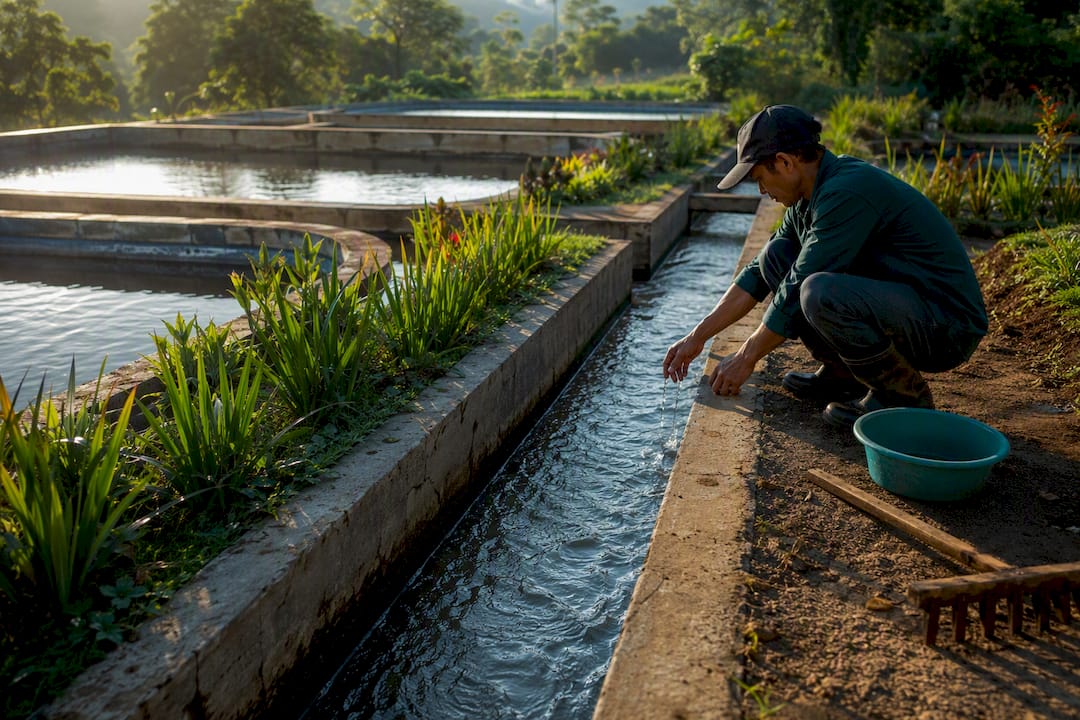
Natural processing isn’t automatically the greener choice just because it skips the wash tank. It demands more drying infrastructure, more raised beds or patio space, and more labor hours spent turning cherries by hand. Higher defect rates mean more cherries get discarded post drying, which is its own form of waste. A full sustainability picture weighs land use and labor intensity against water volume, not water volume alone.
Signals worth checking on a bag or a producer’s notes:
- Does the roaster mention wastewater treatment or water recycling at the mill?
- Is drying done on raised beds (better airflow, fewer defects) or ground patios?
- Does the label note defect sorting or cupping scores that suggest quality control?
How Processing Changes Your Roast and Your Brew
Washed coffees reward a lighter touch. Because the flavor clarity is the whole point, roasters generally pull these earlier to preserve acidity and let origin character show instead of masking it with roast development. Push a washed Ethiopian too dark and you lose exactly what made it worth buying.
Naturals can handle, and sometimes need, slightly different development to tame heavy fruit or boozy notes that get more intense with a longer roast. Extraction behaves differently too: naturals carry more dissolved solids into the cup, which is part of why they shine in immersion brewing and milk-based drinks.
Practical starting points by method:
- Pour-over: Favors washed coffee. Use a medium grind, water around 200°F, and a 1:16 ratio to let clarity and acidity come through.
- French press or other immersion: Favors natural coffee. The fuller extraction plays to its syrupy body and sweetness.
- Espresso: Both work, but naturals often need a slightly coarser grind to avoid over-extracting the fruit sugars into bitterness.
- Cold brew: Naturals hold up well here since heavy body and sweetness survive the long, cold steep better than delicate acidity does.
How to Pick Between Natural and Washed for Your Cup
Start with what you actually drink most. If you gravitate toward black coffee and want to taste the difference between a Kenyan and a Colombian, washed is your answer. If you want a cup that tastes like it has fruit stirred into it, without adding anything, go natural.
Quick checklist before you buy:
- What’s your target flavor: clean and bright, or fruity and heavy?
- What’s your primary brew method: pour-over favors washed, immersion favors natural?
- How much lot-to-lot variation can you tolerate?
- Does water use or land use matter more to your buying decision?
Ask your roaster for fermentation time, drying method, and wastewater practices. If you’re still undecided, buy two small bags of the same origin processed differently and taste them side by side. It’s the fastest way to learn your own palate.
How East View Coffee Approaches Processing Choices
East View Coffee sources exceptional specialty coffee from women-owned farms and roasts every batch small in Kenosha, Wisconsin. Process selection isn’t arbitrary. It’s a conversation with each producer about what their land, climate, and water access make possible, and what flavor profile actually fits the bean.
That’s consistent with how industry voices frame the choice: processing isn’t a hierarchy with a winner. It’s a deliberate tool. A women-owned farm with reliable sun and limited water infrastructure might lean natural out of necessity and turn that into a strength. Another, with access to clean water and treatment systems, might wash to highlight a distinctive terroir. Either way, the goal stays the same: fair compensation for the farmer and a cup worth the price.
Hybrid Methods: What Honey Process Fits Into the Picture
Honey process, sometimes called semi-washed, splits the difference between washed and natural. Producers depulp the cherry like they would for washed coffee, but instead of fully washing away the mucilage, they leave some or all of it on the bean during drying. That sticky layer (which actually has nothing to do with honey, the name refers to its texture) continues to feed sugars into the seed as it dries, similar to what happens in natural processing, just less intensely.
The result sits in the middle for sweetness, acidity, and body. Comparative data supports this positioning: honey processed coffees typically show more sweetness and body than washed lots, but with far more predictability than naturals. Producers also grade honey process by color, yellow, red, and black honey, based on how much mucilage stays on the bean and how long it dries. Black honey, with the most mucilage retained, pushes closest to a natural profile. Yellow honey stays closer to washed.
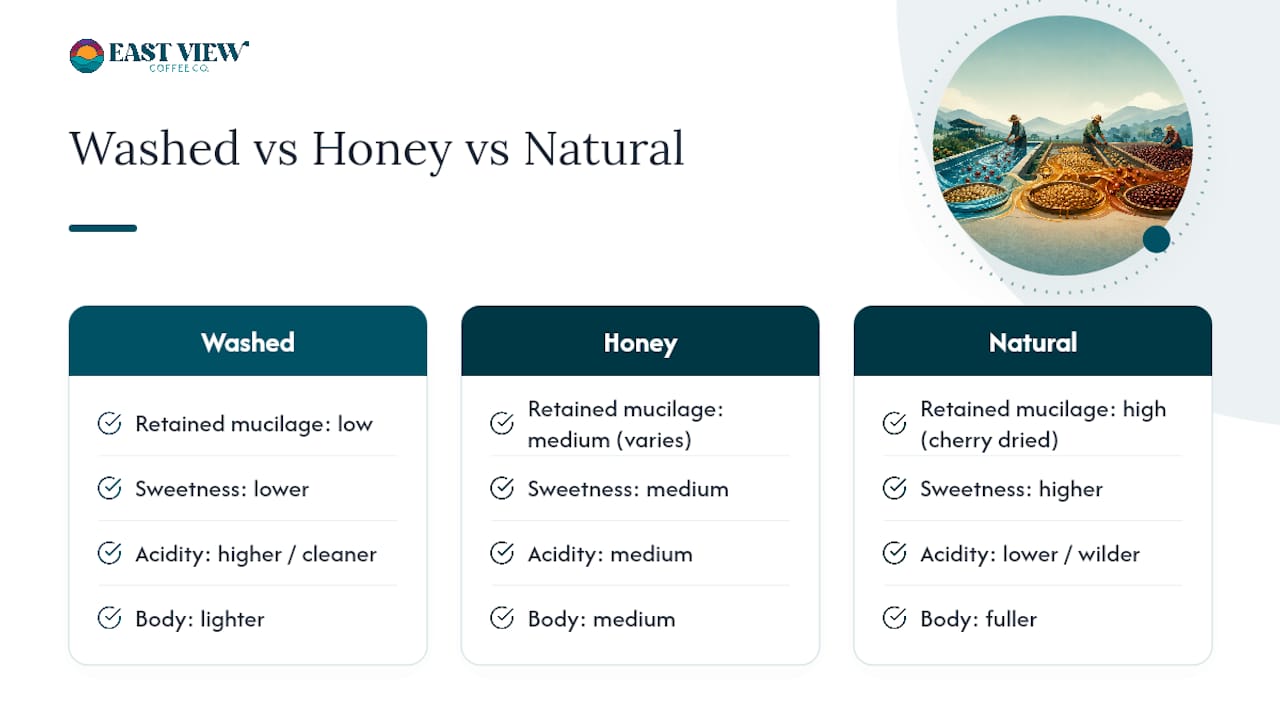
For drinkers who find washed coffee too clean or naturals too wild, honey process is worth exploring. You can read more about how honey processing works and why it splits the difference so effectively. It also solves a practical problem: honey processing uses less water than fully washed coffee while avoiding the extended drying time and defect risk that comes with full natural processing, making it appealing in regions with limited water access but less reliable sun than natural processing ideally needs.
Why the “Better Process” Debate Misses the Point
The most common mistake in coffee conversations is treating natural and washed like a quality ladder, with one process sitting above the other. It isn’t. A poorly executed washed coffee with sloppy fermentation control tastes worse than a well-managed natural, and vice versa. Execution matters more than method.
What gets underestimated is how much processing choice reflects a producer’s actual constraints, not just their aesthetic preference. A farm without reliable water access doesn’t process naturally because it’s trendy. It processes naturally because that’s what the land and infrastructure allow. Treating natural process coffee as an “artisanal upgrade” ignores that reality, and treating washed coffee as the “serious” choice ignores how much skill goes into managing a good natural.
My advice: stop asking which process is objectively best and start asking which process matches what you’re brewing and what you’re craving that morning. Buy based on flavor goals, not process bias. The producers who consistently deliver excellent coffee, regardless of method, are the ones worth your repeat business.
— Jenny
Taste the Difference for Yourself
Reading about processing only gets you so far. East View Coffee roasts small batches from women-owned farms in Kenosha, Wisconsin, which means you can actually taste how process shapes flavor instead of just taking our word for it. The Café con Amor Direct Relationship coffee from Costa Rica is a strong starting point if you want to explore origin-driven flavor with full traceability back to the farm.

If decaf is your thing, the Nocturne Decaf Freshly Roasted Coffee gives you the same small-batch attention without the caffeine trade-off. Want something built around shared impact? The Community Freshly Roasted Coffee reflects the collaborative, farmer-first sourcing that defines the whole lineup. Try brewing two side by side, same ratio, same water temperature, and taste the process differences firsthand. Browse the full coffee collection to build your own comparison order today.
Sources
These sources back the timelines, water-use figures, and flavor comparisons cited throughout this article: Perfect Daily Grind’s washed vs natural breakdown for processing timelines and expert framing, CoffeeTrove’s side-by-side comparison for sensory and hybrid-process data, and Coffeenatics’ processing guide for brewing and extraction notes.
- Washed vs natural processing: Why specialty coffee shouldn’t have a favourite - Perfect Daily Grind
- Washed vs Natural Processing - Side-by-Side Coffee Comparison | CoffeeTrove
- Washed vs Natural Coffee Process - Coffeenatics
FAQ
Which Is Better, Washed or Natural Coffee?
Neither is objectively better. Washed coffee delivers clean, bright, origin-forward flavor, while natural coffee delivers fruit-forward sweetness and heavier body, so the right choice depends entirely on your taste preference and brew method.
What Is the Cleanest, Healthiest Coffee Processing Method?
Washed coffee is generally considered the “cleanest” in flavor terms because controlled fermentation and thorough rinsing produce the most consistent, defect-free cup, though “healthiest” isn’t a meaningful distinction between processing methods themselves.
What Is the Healthiest Decaffeination Process?
Decaffeination is separate from wet or dry processing and happens after the coffee is already processed; East View Coffee’s Nocturne Decaf is freshly roasted in small batches, and current details on its decaf method are listed on the product page.
Which Coffee Processing Method Is Best for Beginners?
Washed coffee is usually the easiest starting point for new specialty coffee drinkers because its clarity and consistency make it simpler to identify origin characteristics before exploring the bolder variability of naturals.
How Long Does Natural Processing Take Compared to Washed?
Washed processing typically takes 10 to 14 days from depulping to dry parchment, while natural processing takes 2 to 6 weeks since whole cherries dry slowly with the fruit still attached.