
Act in Five Minutes to Support Women-Owned Businesses
Buy directly from certified women-owned sellers, push procurement teams to add women-owned vendors to RFPs, pay small suppliers faster, and put money into grants or matching funds. WBENC’s Buy Women Owned directory and the SBA’s counseling resources are the two fastest ways to find legitimate businesses to support. East View Coffee, which sources beans from women-owned farms, is one place to start spending today.
TL;DR:
- Supporting women-owned businesses can be most effective through quick actions like shopping with certification, making recurring purchases, and sharing positive reviews.
- Verifying certification through WBENC or SBA resources is crucial to ensure dollars support truly women-owned businesses and avoid greenwashing.
- Organizations can boost impact by setting clear supplier diversity targets, auditing current vendors, and prioritizing certified women-owned vendors in procurement processes.
- Small consistent actions, such as making monthly purchases or adding women-owned vendors to preferred lists, can generate long-term community and economic benefits.
- Buying directly from women producers, like East View Coffee, demonstrates a proven model of reinvesting in women-led farms and community development.
Table of Contents
- How to Support Women-Owned Businesses Right Now
- Where to Find Verified Women-Owned Businesses
- Building Supplier Diversity Into Procurement
- Grants and Funding Options Worth Knowing About
- East View Coffee’s Model: Buying Directly From Women Producers
- Turning a One-Time Purchase Into a Habit
- Why This Guide Exists
- Ways to Support Women Producers Today
- Sources
- FAQ
How to Support Women-Owned Businesses Right Now
Supporting women-owned businesses is not a single action. It is a habit built from small, repeatable choices, and most of them take less than five minutes. The order below runs from fastest impact to longer-term commitment, so start at the top if you only have a few minutes to give.
- Shop with certification in mind. Look for the WBENC seal or a “Women Owned” badge before you check out. Certification means the business is at least 51% owned, controlled, and operated by women, which rules out companies that just slap the label on for marketing.
- Buy bundles and subscriptions, not one-off items. A recurring coffee subscription or a gift bundle gives a small business predictable revenue it can plan around, instead of a single spike that disappears the next month.
- Amplify for free. Tag the business in a social post, leave a detailed review, or mention them by name the next time a friend asks for a recommendation. Word of mouth still drives more small-business sales than paid ads for most local sellers.
- Pay faster than you have to. If you hire a woman-owned freelance shop or small supplier, pre-pay deposits and settle invoices early. Cash flow problems kill more small businesses than lack of demand does.
- Give your time or your network. Volunteer a skill (bookkeeping, photography, web design) or refer a project. A single warm introduction can matter more than a purchase.
Here is what each of these looks like in practice:
- Gifting: Swap a generic corporate gift basket for a coffee gift subscription from a woman-owned roaster instead of a big-box gift card.
- Reviews: Write a specific, detailed review (not just five stars) mentioning what the business does well. Detailed reviews rank higher in search and carry more weight with future customers.
- Referrals: When a colleague asks for a vendor recommendation, default to naming a woman-owned business you have personally used.
- Social proof: Share a founder’s story, not just a product photo. Followers engage more with the person behind the brand than with the product alone.
- Deposits: For seasonal or event-based women-owned businesses (florists, caterers, photographers), paying a deposit months ahead helps them plan staffing and inventory.
Pro Tip: Set a recurring calendar reminder, monthly or quarterly, to make one purchase from a woman-owned business you have not tried before. Discovery is the hardest part; a reminder removes the friction.
None of this requires a big budget or a grand gesture. It requires attention, and a willingness to choose the woman-owned option when it is genuinely comparable to the alternative.
Where to Find Verified Women-Owned Businesses
Finding a business that claims to be women-owned is easy. Verifying it is the part most people skip, and it is the part that actually matters if you want your dollars to go where you intend.
WBENC is the largest third-party certifier of women-owned businesses in the U.S., and its Buy Women Owned initiative gives consumers a searchable directory. WEConnect International runs a similar certification model but focuses more heavily on connecting certified women-owned suppliers with large corporate buyers, so it is the better stop if you are sourcing for a company rather than shopping for yourself.
For government-adjacent resources, the SBA offers counseling, training, and specific funding programs aimed at women entrepreneurs, and it is a reliable starting point for anyone trying to find vetted local businesses or understand federal contracting paths. The National Women’s Business Council (NWBC) publishes annual data on the economic footprint of women-owned businesses, which is useful if you are building a case internally for why a supplier-diversity policy is worth the effort.
A few more places worth bookmarking:
- Woman-Owned Wallet curates gift guides and vendor lists by category, useful for holiday shopping or event planning.
- State economic development portals, like the Office of the Texas Governor’s women-owned business page, list regional programs and procurement opportunities specific to that state.
- Local shopping maps, often maintained by chambers of commerce, that flag women-owned storefronts in a given city or neighborhood.
Certification status is a strong verification step, but treat it as one signal among several rather than the entire vetting process. A small business that has not gone through the WBENC process yet, because certification costs time and money, can still be legitimately women-owned. Ask directly, check the “About” page, and look for the owner’s name attached to public filings when in doubt.
Building Supplier Diversity Into Procurement
Individual purchases matter, but organizations move real money. A company or nonprofit that intentionally routes even a modest share of its spend toward women-owned suppliers changes outcomes at a scale no single consumer can match.
Here is a workable playbook for procurement or purchasing teams:
- Set a measurable target. Something concrete, like “10% of vendor spend” or “at least three certified women-owned vendors per RFP cycle,” gives the goal teeth. Vague commitments to “diversity” rarely survive budget season.
- Audit your current supplier list. Most organizations are surprised by how few of their existing vendors are women-owned once they actually check.
- Write certification into your RFP process. Require or prioritize WBENC or WOSB/EDWOSB certification during vendor qualification, not as an afterthought after the shortlist is already set.
- Run a pilot before you scale. Bring on one or two new women-owned vendors for a defined project, track the results, then expand.
- Shorten payment terms. Net-30 sounds standard until you are a small business waiting on it. Offering net-15 terms, or paying a deposit upfront, is often more valuable to a small supplier than the contract itself.
Pro Tip: Ask every vendor claiming women-owned status for their certification number or documentation before signing, not after. It takes thirty seconds and it is the single easiest way to avoid greenwashing your own supply chain.
Watch for red flags: a business that cannot produce certification documentation, ownership structures that list a woman as a figurehead while decisions run through someone else, or marketing that leans heavily on “women-owned” language without any verifiable proof attached. None of these automatically mean fraud, but they are worth a direct question before a contract gets signed.
Grants and Funding Options Worth Knowing About
Money is still the biggest gap for most women entrepreneurs, and pointing someone toward the right grant can matter more than any single purchase.
A few funding sources come up again and again:
- The Amber Grant awards monthly grants to women entrepreneurs and is one of the more accessible, recurring options since it does not require a lengthy business plan to apply.
- Ladies Who Launch offers grants, mentorship, and a resource navigator built specifically for women and under-resourced founders trying to access capital and education.
- SBA-backed programs include women-focused lending and counseling tied to the broader SBA growth resources, including guidance on federal contracting set-asides for women-owned small businesses.
- Community microlending funds, often run through local credit unions or community development financial institutions, fill gaps that traditional bank loans do not reach.
If you are a donor or a business owner rather than an applicant, you can amplify these funds directly: sponsor a grant round, create a matching fund tied to an existing program, or underwrite a mentorship cohort. Most grant programs run on annual or quarterly cycles with published deadlines, so check application windows well ahead of time rather than scrambling the week before they close.
East View Coffee’s Model: Buying Directly From Women Producers
East View Coffee Company built its sourcing model around a simple idea: pay women coffee farmers a premium, not a minimum. Every bag roasted in small batches in Kenosha, Wisconsin traces back to women-owned farms, and that sourcing choice is not a marketing layer added after the fact. It is the reason the women’s coffee project exists in the first place.
The logic behind it is straightforward, and it mirrors research on the multiplier effect: women farmers who are paid fairly tend to reinvest in their households and communities at higher rates, and successful women entrepreneurs are more likely to mentor others coming up behind them. Premium pay does not stop at one farm. It moves through a community.
Buyers looking to support this model directly have a few concrete paths:
- Order a bag or subscription for personal use.
- Send a gift subscription instead of a generic gift basket.
- Reach out about wholesale or office coffee programs if you run a business or organization.
- Ask about fundraising partnerships if you represent a school, nonprofit, or community group.
| Buyer type | Best entry point | Why it fits |
|---|---|---|
| Individual consumer | Single-bag purchase or subscription | Predictable, recurring support with no commitment |
| Gift buyer | Gift subscription | Turns a one-time gift into months of ongoing revenue for producers |
| Small business | Wholesale or office coffee program | Supports women producers at scale while stocking a break room |
| Nonprofit or school | Fundraising partnership | Converts an existing event into direct funding for women-owned farms |
Organizations interested in a wholesale or fundraising relationship can reach out directly and reference the women producers story when describing what they are looking for. It speeds up the conversation and signals you already understand the sourcing model, not just the coffee.
Turning a One-Time Purchase Into a Habit
The hardest part of supporting women-owned businesses is not finding the first one. It is remembering to keep going after the initial good feeling fades.
A few habits make it stick:
- Build an annual buying calendar tied to holidays, client gifts, and employee recognition, so women-owned purchases become the default rather than a special exception.
- Set up a preferred vendor list at work, and default new purchase requests to it before shopping around elsewhere.
- Track basic numbers: total spend with women-owned businesses, number of distinct businesses supported, and, where you can find out, jobs sustained by that spend.
- Ask your employer about matching programs, sponsorships, or mentorship stipends tied to women-owned suppliers, since a company match doubles the impact of an individual’s giving without doubling the cost to any one person.
None of this needs to be complicated. A recurring coffee subscription or a standing vendor list does more over a year than a single big purchase ever will.
Why This Guide Exists
Small, repeated actions add up faster than most people expect. The multiplier effect research on women entrepreneurs backs this up directly: when women succeed in business, they tend to reinvest in their communities and mentor other women at higher rates than the alternative. That means every purchase, referral, or fair payment term you extend does not stop with the transaction in front of you.
I would rather see someone make one small, verified purchase this week than bookmark this guide and never act on it. Pick one action from the list above, whether it is buying a bag of coffee or adding a certification requirement to your next RFP, and do it before the day is over.
— Jenny
Ways to Support Women Producers Today
Cat’s Pajamas Half-Caff gives you a freshly roasted, lower-caffeine option without giving up flavor, and every bag traces back to women-owned farms in East View’s sourcing network. If you want something to gift or keep stocked at home on a schedule, the Sunny’s Choice Bundle bundles multiple roasts together, which is the easiest way to turn a single order into recurring revenue for the farms behind it. Prefer a fuller-flavored half-caff? Half-A$$ed Half-Caff covers that without asking you to give up the ritual of a full-bodied cup.
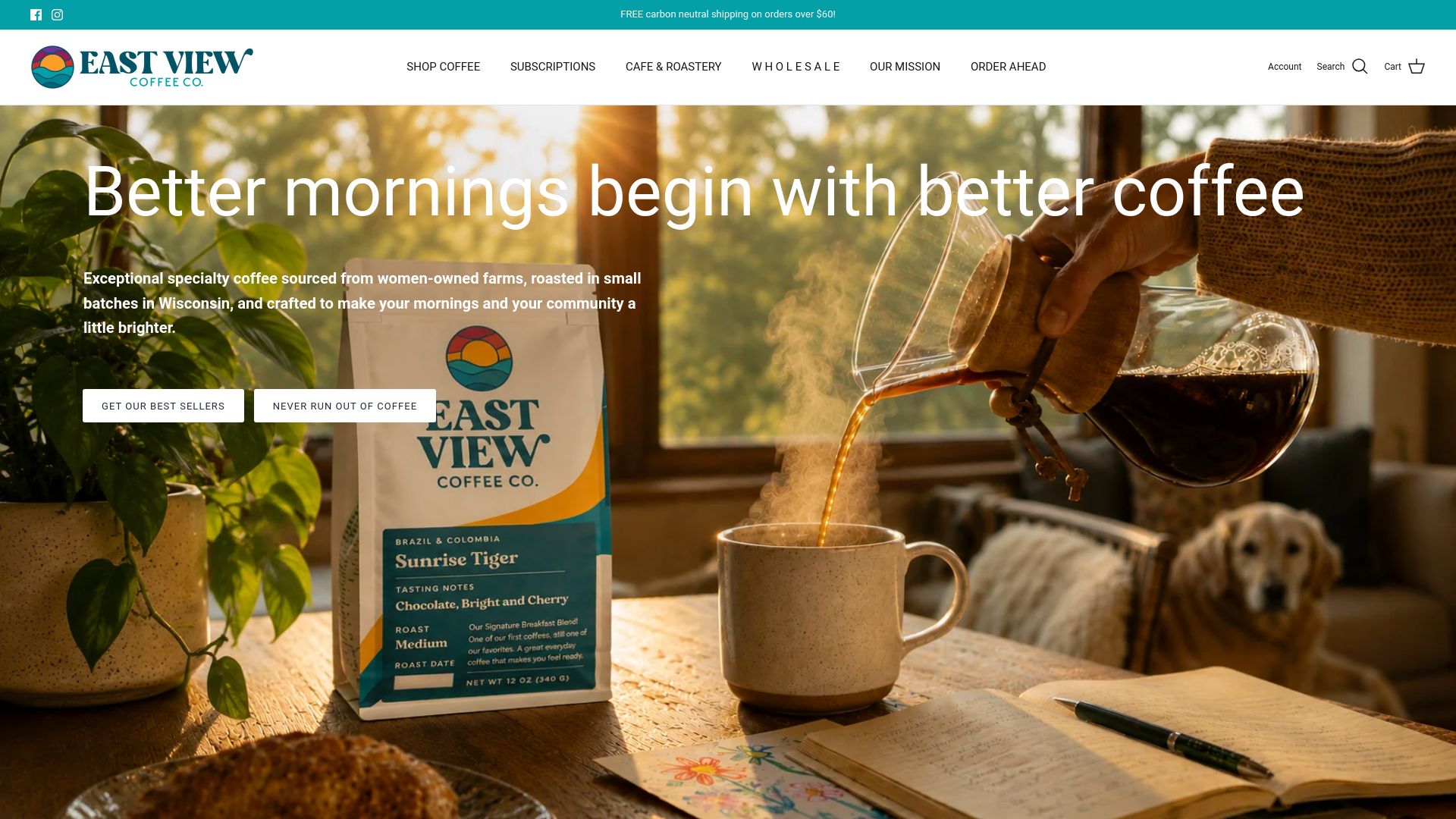
Grab the Cat’s Pajamas Half-Caff for your own kitchen, send the Sunny’s Choice Bundle as a gift that keeps giving past the unboxing moment, or explore the full women producers collection if you want to see the range beyond these three. If you manage an office, run a nonprofit, or want to set up a fundraising partnership, reach out about wholesale pricing directly through East View Coffee and mention your organization’s size so the team can put together the right proposal.
Sources
- Grow your business - Small Business Administration
- Empowering women entrepreneurs can have a multiplier effect
- Ladies Who Launch | Resources for Women-Owned Businesses
FAQ
What are some good women-owned businesses to start with?
Start with any business carrying WBENC certification in a category you already buy from regularly, such as coffee, skincare, or apparel, since recurring purchases create the most predictable revenue. East View Coffee’s women-produced coffee line is one direct option if you drink coffee daily.
What companies support women’s rights?
Support looks different company to company, but the strongest signals are third-party certification (WBENC, WOSB/EDWOSB), transparent supply-chain sourcing, and documented reinvestment in women producers or employees, rather than a marketing statement alone.
What organizations support women in business?
The SBA, WBENC, the National Women’s Business Council, and nonprofit groups like Ladies Who Launch all provide direct support through counseling, certification, funding, or mentorship for women entrepreneurs.
Are there really grants for female-owned businesses?
Yes. The Amber Grant awards funding to women entrepreneurs on a recurring monthly basis, and programs through Ladies Who Launch and the SBA offer additional grant, loan, and mentorship pathways with published eligibility rules and deadlines.