
Single Origin vs Blend: Which Coffee Fits Your Cup?
Single-origin coffee highlights a specific place and season; a blend is an engineered profile built for balance and consistency. If you want to taste terroir, chase clarity, and don’t mind a rotating lineup, buy single origin. If you want a dependable daily cup that behaves well with milk and forgives a sloppy grind setting, buy a blend. Roast level and freshness matter as much as the label. East View Coffee Company roasts both in small batches from women-owned farms, which is a useful real-world example of how the two coexist on one shelf.
- Single origin: one farm, region, or lot, showing a distinct, seasonal flavor.
- Blend: multiple lots combined for a consistent, repeatable cup.
- Modifier to watch: roast date and roast level change both categories more than the label alone does.
Key Takeaways
Single origin delivers place-specific clarity best suited to pour-over brewing, while a blend delivers engineered consistency best suited to espresso and milk drinks.
| Point | Details |
|---|---|
| Definitions differ by design intent | Single origin traces one farm or lot; a blend combines lots to hit a repeatable target flavor. |
| Roast level changes both | Light roasts preserve acidity and origin character; dark roasts push toward bitterness and body regardless of category. |
| Brew method should drive the choice | Pour-over and AeroPress favor single origin; espresso and milk drinks favor a blend’s forgiving extraction range. |
| Freshness beats the label | A fresh blend consistently outperforms a stale single origin, so roast date matters more than the category. |
| East View Coffee Company covers both | Their small-batch roasts include single-origin releases and daily blends like Cat’s Pajamas Half-Caff, sourced from women-owned farms. |
Table of Contents
- Single Origin vs Blend: What Does “Single Origin” Actually Mean?
- How Do Roasters Build a Coffee Blend?
- Does Single Origin Taste Different From a Blend?
- Why Do Single Origins Often Cost More Than Blends?
- Which Brew Method Works Best for Single Origin or Blend?
- How Often Do Single-Origin Coffees Change, and What Should That Cost You?
- How Do You Decide Between Single Origin and a Blend?
- East View Coffee Company: One Roaster, Both Categories
- Is Single Origin More Ethical or Sustainable Than a Blend?
- What Do People Get Wrong About Single Origin and Blends?
- How Do Roasters Actually Build a Blend Recipe?
- How Does Freshness Affect Single Origin and Blend Coffee Differently?
- What Actually Matters More Than the Single Origin vs Blend Debate
- Find Your Match: Single Origin, Blend, or Somewhere in Between
- Sources
- FAQ
Single Origin vs Blend: What Does “Single Origin” Actually Mean?
“Single origin” gets used loosely, but it has layers. A bag might name a country (Ethiopia), a region (Yirgacheffe), a specific farm or estate, or even a single lot picked and processed separately from the rest of that farm’s harvest, sometimes called a microlot.
- Country or region level is the broadest claim, common on entry-level single-origin bags.
- Farm or estate level narrows it to one producer, often with a named farmer or cooperative.
- Lot or microlot level is the most specific, tracking one small batch through processing and roasting.
- Processing method (washed, natural, or honey) shapes flavor as much as origin does, since it changes how the fruit sugars interact with the bean during drying.
Because these lots come from one harvest, single origins are usually seasonal. A washed Kenyan lot available in March may sell out and not return until the next crop cycle, which is why traceability details like farm and altitude on the label are worth reading closely before you buy.
How Do Roasters Build a Coffee Blend?
A blend isn’t a shortcut. It’s a deliberate combination of two or more origins chosen to hit a target flavor that stays the same no matter what the harvest calendar is doing. Roasters typically design blends around three goals: consistency, body, and stability under milk.
- One component might bring sweetness and low acidity for backbone.
- Another might add brightness or fruit-forward top notes.
- A third might contribute body and crema for espresso.
Roasters test these ratios in cupping sessions, adjusting percentages until the combined cup tastes balanced and forgiving in milk-based drinks and espresso. When one component’s harvest ends or a lot runs out, the roaster swaps in a comparable bean and retests the recipe so the final cup tastes the same to a regular customer, even though the beans inside changed.
Does Single Origin Taste Different From a Blend?
Yes, and the difference is usually obvious within the first sip. Single origins tend to show clearer, more origin-specific character: stone fruit and florals in a washed Ethiopian, tea-like acidity in a high-altitude Central American lot, heavy body and dark chocolate in a natural-processed Brazilian. Because nothing is blended in to soften it, whatever the terroir produced shows up directly in the cup. That’s the appeal for enthusiasts and also the risk. A single origin you love in one bag can taste noticeably different in the next release once the harvest shifts.
Blends trade that specificity for roundness. Combining components smooths out sharp edges, producing a fuller-bodied, sweeter cup that holds up under steamed milk instead of getting lost in it. This is why nearly every espresso blend on the market leans into chocolate, caramel, and nut notes rather than bright citrus. Single origin and blend serve different jobs, and roast level pushes both further in the same direction: light roasts preserve acidity and origin character, while dark roasts push toward bitterness and body regardless of what’s in the bag.
- A light-roast Ethiopian natural: blueberry, wine-like acidity, tea body.
- A medium-roast espresso blend: milk chocolate, brown sugar, syrupy body.
- A dark-roast blend: smoky, low acidity, heavy mouthfeel that cuts through milk.
Pro Tip: If a single origin tastes too sharp or thin for your taste, it’s often the roast level, not the origin, that’s the problem. Ask for a slightly darker roast of the same lot before writing off the region entirely.
Why Do Single Origins Often Cost More Than Blends?
Scarcity is the biggest driver. A microlot might yield a few hundred bags total, while a blend’s component lots are sourced in volume specifically because the recipe needs a steady supply. That scarcity, combined with the extra work of sourcing, cupping, and separately roasting a small batch, pushes single-origin pricing higher per bag in many cases.
- Seasonal microlots sell in limited runs and disappear once the harvest is gone.
- Blend components are usually sourced at volume, which keeps year-round pricing more stable.
- Traceability premiums reflect real costs: farm visits, direct relationships, and higher payments to producers.
- Cupping scores and processing notes on a bag are a genuine signal of quality, not just marketing language.
Roasters who publish farm names, altitude, and processing method are usually doing that work because it matters to how the coffee tastes, not just how it markets. That level of detail is worth checking on single-origin product pages before you commit to a bag, especially if you’re new to a region and want to know what you’re actually paying for.
Which Brew Method Works Best for Single Origin or Blend?
Brew method matters almost as much as bean choice. Pour-over methods like a V60, Chemex, or AeroPress are built to highlight clarity and separate flavor notes, which makes them a natural match for single origins. Espresso and milk drinks lean the other way, favoring the body and forgiving extraction window that blends are engineered to deliver.
- Pour-over and immersion brewers (V60, Chemex, AeroPress) suit single origins because slower extraction reveals acidity and aromatics.
- Espresso machines generally reward blends, since bright, high-acid single origins can turn intense or sour under pressure unless the grind and dose are dialed precisely.
- Cold brew and milk-forward drinks favor blends built for body, which stay smooth and don’t get lost under ice or dairy.
- Home dialing for a single origin means smaller grind adjustments and closer attention to dose, while blends usually tolerate a wider margin of error.
Whichever method you use, buy whole bean. Grinding right before brewing preserves the volatile aromatics that pre-ground coffee loses within days of grinding, and it’s the single biggest upgrade most home brewers can make without buying new equipment.
How Often Do Single-Origin Coffees Change, and What Should That Cost You?
Expect single origins to rotate. A roaster’s single-origin shelf might turn over every few months as harvests come in and microlots sell out, while a core blend lineup usually stays available year-round because it’s formulated to survive component changes.
- Check the roast date on every bag; a “sell by” date is not the same thing and tells you nothing about freshness.
- Buy single-origin bags in smaller quantities since they’re meant to be enjoyed fresh within their season, not stockpiled.
- If you found a single origin you loved, ask the roaster whether it’s likely to return next harvest, or look at their seasonal coffee collection to track upcoming releases.
- Subscriptions can help you catch limited releases before they sell out, since most single-origin lots don’t get restocked once they’re gone.
How Do You Decide Between Single Origin and a Blend?
The decision comes down to three questions: what you’re brewing with, whether you want variety or reliability, and how much you’re willing to dial in a grinder.
- Ask yourself if you brew mostly pour-over or mostly espresso and milk drinks. Pour-over leans single origin; espresso leans blend.
- Ask whether you want to taste something new each month or want the same cup every morning without adjustment. Exploration favors single origin; routine favors a blend.
- Ask whether you’re willing to fine-tune grind size and dose for a brighter, less forgiving bean, since that’s often the tradeoff for single-origin clarity.
Before buying, check the bag or product page for a roast date within the last few weeks, a specific origin (not just “South America blend” with no further detail), the processing method, and a suggested brew method. Vague country-only labeling, no roast date, or a bag that’s been sitting on a shelf for months are all signs to skip it.
| Best For | Flavor Profile | Consistency | Price / Lot Size | Espresso Dial-In |
|---|---|---|---|---|
| Pour-over, exploration | Clear, origin-specific, high clarity | Rotates seasonally, limited runs | Higher per bag, small lots | Harder, narrow sweet spot |
| Espresso, milk drinks, daily use | Round, balanced, full body | Steady, reformulated to stay consistent | Lower per bag, sourced at volume | Easier, wider sweet spot |
East View Coffee Company: One Roaster, Both Categories
East View Coffee Company roasts both categories in small batches out of Kenosha, Wisconsin, sourcing beans from women-owned farms so the traceability behind each bag is more than a marketing line.
- Single-origin releases rotate through the single-origin collection, suited to V60 or Chemex brewing.
- Everyday blends, like the espresso blend and cold brew blend, are built for milk drinks and forgiving extraction.
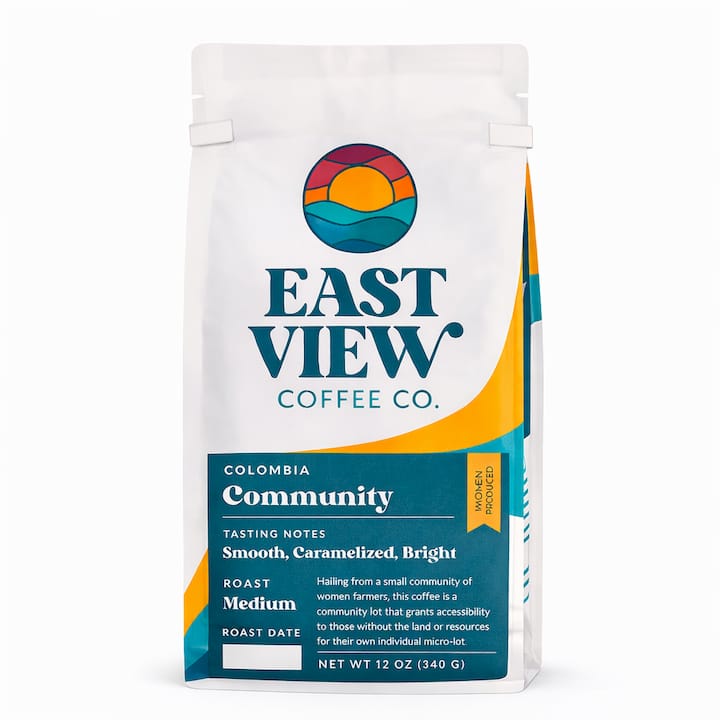
- Whole-bean options, like the Community Freshly Roasted Coffee, support grinding fresh right before brewing.
- Small-batch roasting means bags move faster from roaster to shelf, which helps freshness on both single origins and blends.
Is Single Origin More Ethical or Sustainable Than a Blend?
This is where a lot of well-meaning coffee talk goes sideways. Single origin isn’t inherently more ethical, and blends aren’t inherently less sustainable. What actually matters is who grows the coffee, how they’re paid, and how the roaster sources it, regardless of which category the bag falls into.
Single-origin marketing often leans on farm stories and direct-trade language, and that can be genuine: paying a premium for a traceable microlot frequently does put more money in a specific farmer’s hands. But a blend built from carefully sourced, fairly paid components can carry the same ethical weight, just spread across multiple farms instead of one. The label tells you about flavor structure, not about labor practices or environmental stewardship.
Environmental impact runs on a similar logic. Shade-grown, bird-friendly, or organic-certified coffee can appear in either category. What tends to matter more is farming method (shade cover, water use, chemical inputs) and how the roaster handles the supply chain afterward: packaging, shipping distance, and roasting energy all add up regardless of whether the bag says single origin or blend.
If sustainability and fair pay matter to you, look past the single-origin-versus-blend distinction and check whether the roaster publishes where the coffee comes from, who grows it, and what they’re paid. Roasters who work directly with women-owned farms or smallholder cooperatives, and who are transparent about it, are giving you a better signal than the origin label alone. That transparency is worth more than the country name printed on the front of the bag.
What Do People Get Wrong About Single Origin and Blends?
The biggest myth is that single origin automatically means higher quality. It doesn’t. A well-built blend can be speciality grade, and a poorly handled single-origin lot, roasted wrong or sold stale, can taste worse than a mediocre blend. Quality tracks bean selection, processing, roasting skill, and freshness, not the category on the label.
A second misconception: that blends are made from lower-grade “leftover” beans. In reality, quality-focused roasters treat blend components with the same sourcing standards as their single origins. The components are chosen deliberately for how they behave in combination, not because they failed to qualify as single origin on their own.
Third, plenty of drinkers assume single origin always tastes better because it’s “purer” or more “authentic.” Purity isn’t the same as pleasant. Some single-origin lots taste sharp, funky, or unbalanced by design, which is exactly why some drinkers prefer them and others don’t. A blend’s smoothness isn’t a compromise; it’s an intentional design choice.
Finally, there’s a belief that blends never change. They do, constantly, behind the scenes. Roasters swap components and retest recipes every time a lot runs low, which is a big part of the technical work that goes into keeping a blend tasting the same year after year. The bag looks static; the recipe underneath rarely is.
None of this means one category beats the other across the board. It means the label is a starting point for what to expect in the cup, not a guarantee of quality, ethics, or how much you’ll personally enjoy it.
How Do Roasters Actually Build a Blend Recipe?
Blend building starts with a target: a flavor profile the roaster wants the final cup to hit, whether that’s “chocolatey and low-acid for espresso” or “bright but round enough for pour-over.” From there, the process is closer to recipe development than simple mixing.
Roasters typically start by cupping individual components separately, scoring each for acidity, sweetness, body, and aftertaste. Then they blend small test batches at different ratios, often starting broad (60/40, 50/30/20) and narrowing from there based on cupping feedback. A common approach pairs a high-acid, aromatic component (often a washed Central American or East African lot) with a heavier-bodied, lower-acid component (often a natural-processed Brazilian or Sumatran lot) to balance brightness against weight.
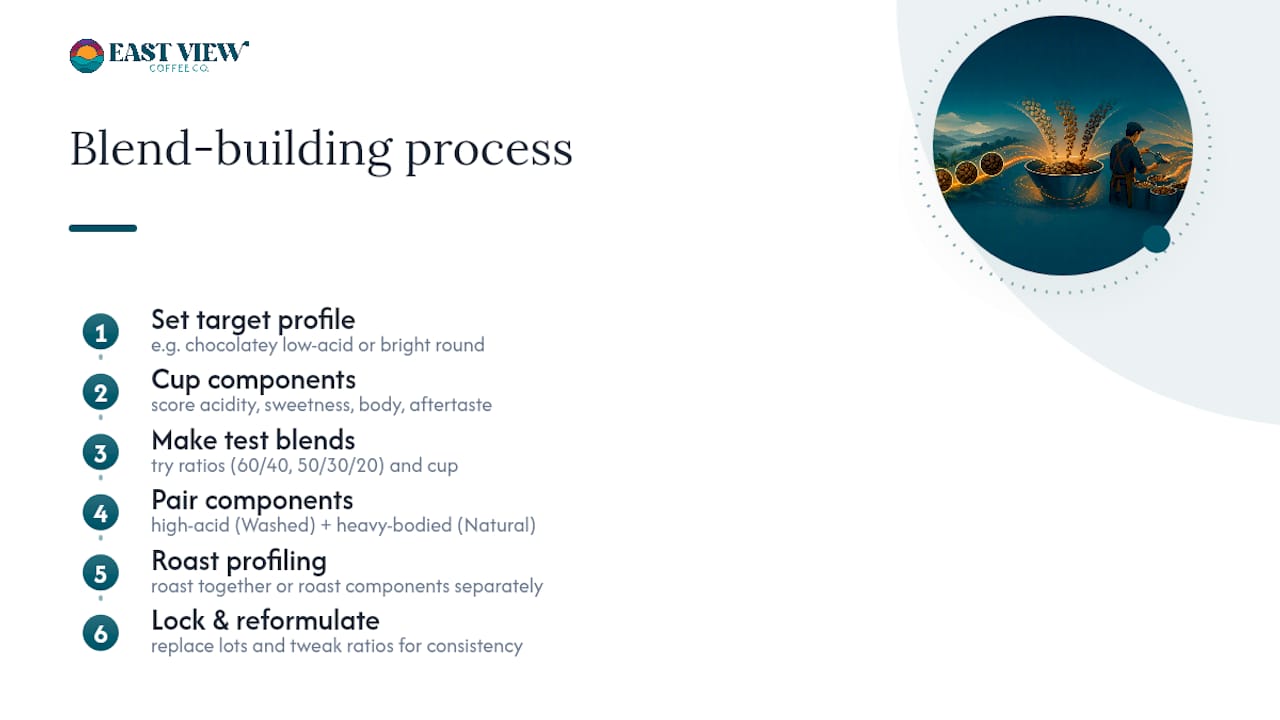
Roast profiling adds another layer. Some blends are roasted together, which is simpler but can under-roast dense beans while over-roasting softer ones. Others are roasted separately by component, then blended after roasting, which takes more work but lets the roaster hit the ideal roast curve for each bean before combining them. Higher-end blends tend to use this separate-roast approach specifically because it avoids the compromise of one-size-fits-all roasting.
Once a formula is locked in, it isn’t permanent. When a component’s harvest ends, the roaster sources a comparable replacement lot, cups it against the original, and adjusts the ratio until the blend matches its established profile again. That reformulation cycle is invisible to most drinkers, which is exactly the point: consistency is the product, even when the underlying beans are quietly changing behind it.
How Does Freshness Affect Single Origin and Blend Coffee Differently?
Freshness affects every coffee, but it doesn’t hit single origins and blends the same way. Single origins tend to carry more delicate, high-note aromatics: florals, stone fruit, tea-like acidity. Those compounds are the first to fade once a bean is roasted, and even faster once it’s ground. A single origin that’s brilliant at the two-week mark can taste flat and generic by week five, even if it’s technically still drinkable.
Blends are more forgiving because their flavor profile leans on body, sweetness, and chocolate or nut notes rather than fragile aromatics. That doesn’t mean blends are immune to staling; it means the decline is less dramatic and harder to notice without a side-by-side comparison.
Storage matters just as much as roast date. Whole beans kept in an airtight container away from light, heat, and moisture hold their character far longer than beans left in a bag on the counter. Ground coffee, by contrast, starts losing aromatic compounds within hours of grinding, which is exactly why grinding whole beans right before brewing preserves far more flavor than buying pre-ground, regardless of whether the bag says single origin or blend.
The practical rule: buy whole bean, buy less at a time if you’re drinking single origins, and check the roast date before the origin name. A proper storage setup does more for flavor than chasing a rarer microlot that’s already three months past its roast date.
What Actually Matters More Than the Single Origin vs Blend Debate
Most coffee content treats single origin versus blend like a quality hierarchy, with single origin sitting on top. That framing misses the point. The real variable is freshness, and it’s not close. A blend roasted two weeks ago and ground fresh will beat a single-origin microlot that’s been sitting ground in a bag for a month, every time.
The conventional advice to “always buy single origin if you’re serious about coffee” also ignores brew method entirely. If you’re pulling espresso shots on a machine you’re still learning to dial, a bright Ethiopian natural will frustrate you far more than it will delight you. A blend built for espresso will make you look like a better home barista than you actually are, and that’s not a compromise. It’s the smarter starting point.
What I’d prioritize first: buy whole bean, check the roast date before anything else, and match the bean to your brew method before you match it to your curiosity. Once those basics are locked in, single origin becomes a genuinely rewarding way to taste terroir and support specific farms. Skip the basics, and no origin story will save a stale cup.
— Jenny
Find Your Match: Single Origin, Blend, or Somewhere in Between
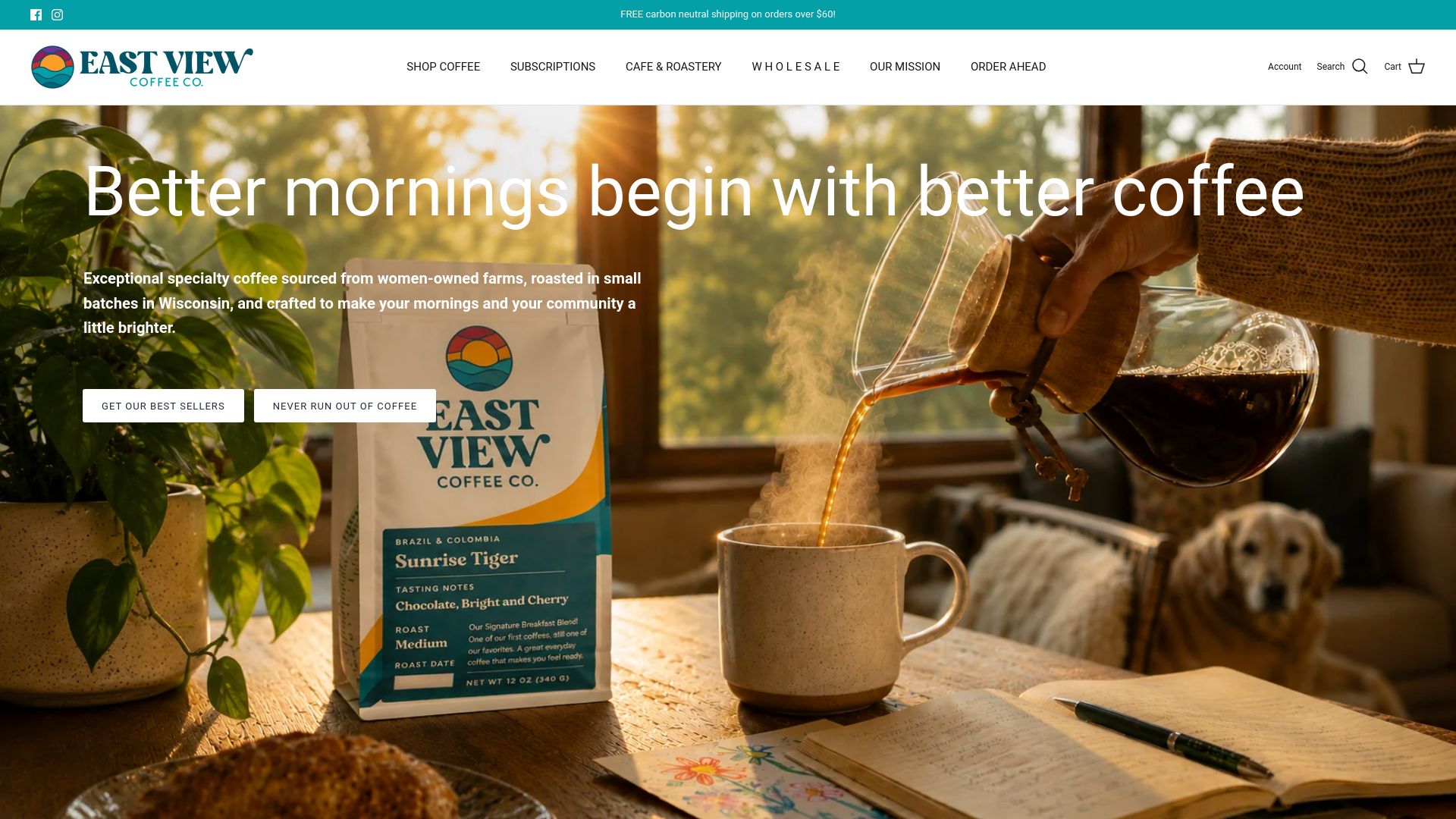
You don’t have to choose blind. East View Coffee Company roasts both categories in small batches, so whether you’re chasing exploration or a dependable daily cup, there’s a specific bag built for that goal instead of a generic “medium roast” guess.
If mornings are about reliability, the Cat’s Pajamas Half-Caff is a blend built for a consistent cup with lower caffeine, and the Half-A$$ed Half-Caff offers a different flavor take on the same idea if you want to compare. If you’d rather explore, the Sunny’s Choice Bundle mixes origins and profiles so you can taste the difference this article just walked through, instead of taking our word for it. Not sure where you land? Get a custom coffee recommendation built around your brew method and taste, and order your next bag with a clear reason behind the choice.
Sources
- What’s the Difference Between Single Origin and Coffee Blends?
- Coffee Blends vs. Single Origins: All About Blends
- Whole bean vs. ground coffee: Important differences
- Single Origin vs Blend: What’s the Difference?
FAQ
Is Single Origin Better Than a Blend?
Not automatically. Quality depends on bean selection, processing, and roasting, not the category, and a well-built blend can outperform a poorly handled single origin.
Is Pre-Ground Coffee Bad for Flavor?
Pre-ground coffee loses volatile aromatics within hours, so it tastes noticeably flatter than coffee ground right before brewing, especially for single origins with delicate notes.
Is Whole Bean Better Than Ground Coffee?
Yes, whole bean holds its flavor and aroma far longer than ground coffee, since grinding accelerates the loss of the compounds that give coffee its character.
What’s the Best Single-Origin Coffee for Beginners?
A washed, medium-roast single origin from a well-documented farm or region is a gentle starting point, since it offers clarity without the intensity of a light-roast natural.
Should I Choose a Blend for Espresso?
Usually, yes. Blends are built with a wider extraction window and steadier body, which makes them easier to dial in on a home espresso machine than most single origins.
Does East View Coffee Company Sell Both Single Origin and Blends?
Yes, East View roasts single-origin releases and everyday blends in small batches, sourcing from women-owned farms and rotating single origins seasonally.