
How to Store Coffee Beans and Keep Them Fresh
Keep whole beans in their original one-way-valved bag or an opaque, airtight container, stored somewhere cool, dark, and dry. That single rule covers 90% of home storage situations. The Specialty Coffee Association backs this approach, and Eastviewcoffee stamps every small-batch bag with a roast date precisely because peak flavor typically develops within a couple of weeks after the roast date, not the vague “best by” printed on most commercial packaging.
Before you read further, run through this quick checklist:
- Away from heat and light. A cabinet above the stove or a sunny counter is the worst spot in your kitchen.
- Minimal headspace. Press excess air out of the bag before resealing, or use a container sized to what you have left.
- Skip the fridge. Coffee absorbs odors and moisture from refrigerator air fast.
- Freeze only what you won’t open soon. Unopened bags or tightly portioned, vacuum-sealed packs only.
Table of Contents
- Should you ever put coffee in the freezer?
- How long do coffee beans actually stay fresh?
- What are the best containers for storing coffee at home?
- Daily use vs. long-term storage: two simple routines
- Whole beans vs. ground: when to grind matters
- Key Takeaways
- What small-batch roasting taught us about storage
- Fresh from the roaster, sized for your routine
- Useful sources and further reading
Should you ever put coffee in the freezer?
Short answer: yes, but only under specific conditions. The freezer is a legitimate long-term tool, not a default storage spot.
Use it when you have more coffee than you can reasonably finish in a few weeks. An unopened bag from a recent order, a bulk purchase, or a gift bag you want to save all qualify. What does not qualify: the half-open bag you pull from every morning.
How to freeze correctly:
- Tape over any one-way degassing valve on the bag before freezing. Under temperature cycling, these valves can let small amounts of air in and accelerate staling.
- Portion beans into single-use, freezer-safe airtight bags or vacuum-seal them before freezing. Each portion should be exactly what you’ll use in one brew session or one week.
- Never move beans in and out of the freezer repeatedly. Condensation forms on thawing beans and degrades both cellular structure and flavor.
- Ziploc bags work in a pinch, but vacuum-sealed or freezer-grade airtight containers are far better for anything beyond a week or two.
The decision rule: if you’ll use the beans within the next two to three weeks, room-temperature storage in a good container beats freezing every time. Freeze only what you genuinely won’t touch for a month or more.
Pro Tip: Label every frozen portion with the roast date and portion size before it goes in. Frozen bags look identical after a few weeks, and you will not remember which is which.
How long do coffee beans actually stay fresh?
Freshness depends on three variables: form (whole bean vs. ground), whether the bag has been opened, and where you store it.
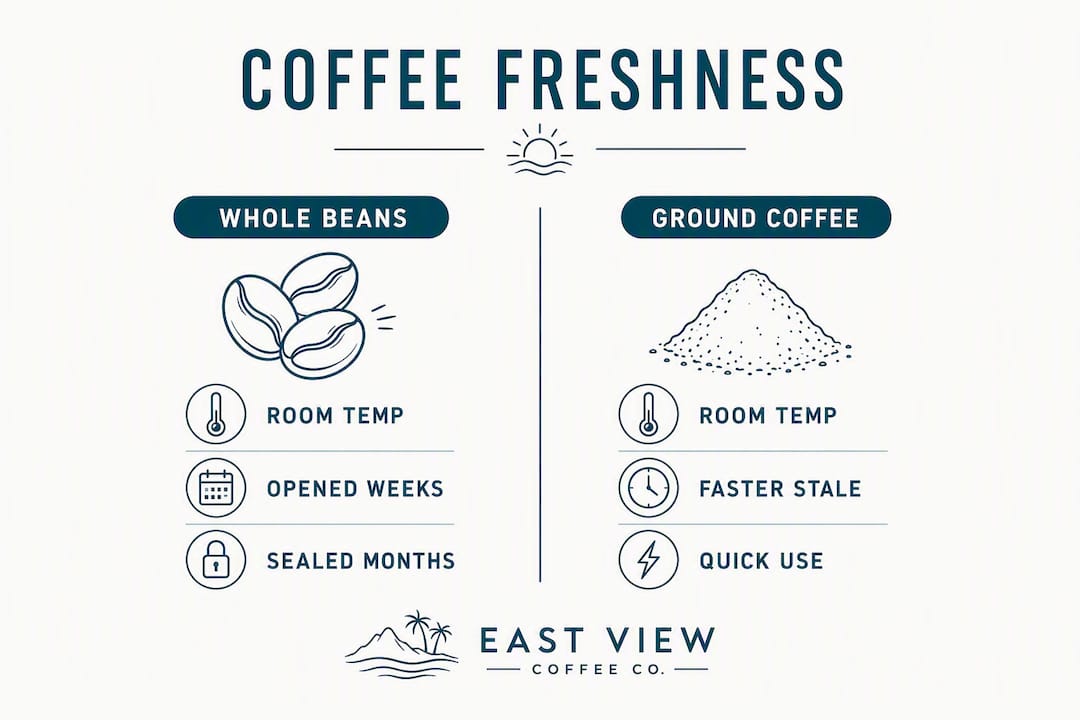
Unopened roasted beans kept away from heat, moisture, and light stay fresh until the manufacturer’s best-by date. Once you open the bag, the clock speeds up. Opened whole beans at room temperature typically hold their best aroma for 1–3 weeks. Ground coffee loses volatile aromatics faster because grinding dramatically increases surface area exposed to oxygen, so expect closer to 1–2 weeks before the flavor flattens noticeably.
Peak flavor window: Specialty roasters and tasting panels consistently find that most roasted beans hit their best cup quality around 1–2 weeks after the roast date, as CO₂ off-gassing settles and aromatics fully develop. After that, flavor compounds begin to fade.
The fridge is not a neutral option. It introduces moisture and odor absorption that actively harm flavor, making room-temperature storage in a sealed container the better choice for anything you’ll use within a month.
| Storage condition | Whole beans | Ground coffee |
|---|---|---|
| Room temp, opened | several weeks peak freshness | a shorter period of peak freshness |
| Room temp, unopened | Until best-by date | Until best-by date |
| Freezer, properly sealed | Up to 3–4 months | Up to 3–4 months |
| Refrigerator | Not recommended | Not recommended |
What are the best containers for storing coffee at home?
Air, light, heat, and moisture are the four things that degrade coffee fastest. Your container choice determines how well you control all four.
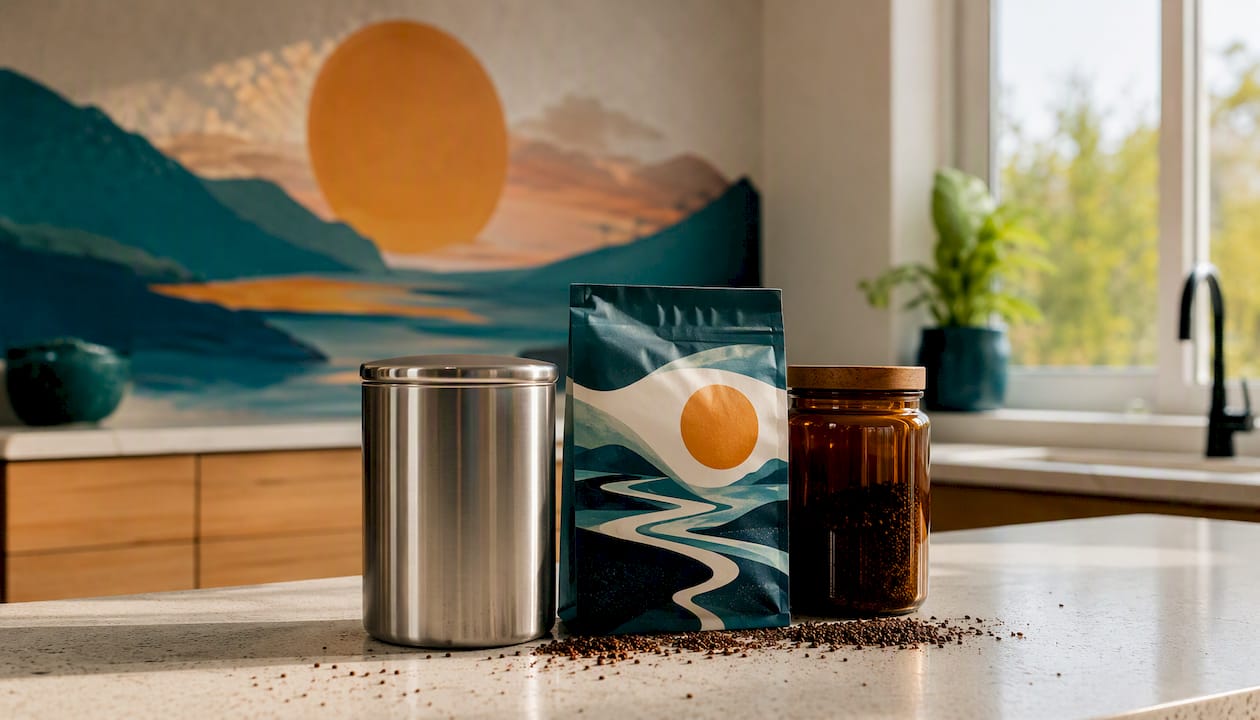
The original roaster bag with a one-way degassing valve often wins for daily use. It was designed to let CO₂ escape while blocking oxygen, costs nothing extra, and works well as long as you press out excess air and reseal tightly after each use. Coffee experts consistently recommend it as the most practical option for beans you’ll finish within two to three weeks.
When you transfer to a canister, opaque and airtight beats clear every time. Light degrades coffee oils, and a glass jar on the counter looks nice but works against you.
| Container type | Oxygen control | Light protection | Headspace management |
|---|---|---|---|
| Original one-way valve bag | Good (valve design) | Good (opaque) | Manual (press out air) |
| Opaque airtight canister | Good (seal) | Excellent | Match size to quantity |
| Vacuum canister | Excellent | Good to excellent | Minimal headspace needed |
| Clear glass jar | Poor to moderate | Poor | Difficult |
| Freezer-safe vacuum bag | Excellent | Good | Portion-controlled |
Reducing oxygen to near-zero via minimal headspace or displaced air is one of the most effective ways to extend sensory shelf life at home. That means matching your container to the amount of coffee you have left, not always using the same large canister regardless of how full it is.
A few practical rules:
- Use a smaller container as beans run low rather than leaving a quarter-pound rattling around in a half-gallon canister.
- Opaque ceramic or stainless canisters outperform glass for light protection.
- Vacuum canisters add real value for beans you’ll keep longer than two weeks, but for most home drinkers, the original bag plus a cool dark cabinet delivers equivalent results without the extra cost.
Daily use vs. long-term storage: two simple routines
These are not complicated systems. Pick the one that matches how you buy coffee.
Daily routine (beans you’ll finish in 1–2 weeks):
- Keep the beans in their original one-way-valved bag or transfer to an opaque airtight canister.
- Store in a cabinet away from the stove, oven, and any window.
- Press excess air out of the bag and reseal tightly after every use.
- Grind immediately before brewing, every time.
- Buy amounts you’ll realistically finish in one to two weeks. Smaller, more frequent orders beat a large bag that sits open for a month.
Long-term routine (beans you won’t use for a month or more):
- Tape over the one-way degassing valve on each bag before freezing.
- Portion into single-use, freezer-safe airtight bags or vacuum-seal. Each portion = one week’s worth of beans.
- Label every portion with the roast date and portion size.
- Freeze immediately. Do not thaw and refreeze.
- When ready to use, remove one portion and let it come to room temperature before opening. Never open a cold bag.
Pro Tip: When a canister is less than half full, drop in a smaller jar or a folded piece of parchment to reduce headspace. It sounds low-tech because it is, and it works.
Whole beans vs. ground: when to grind matters
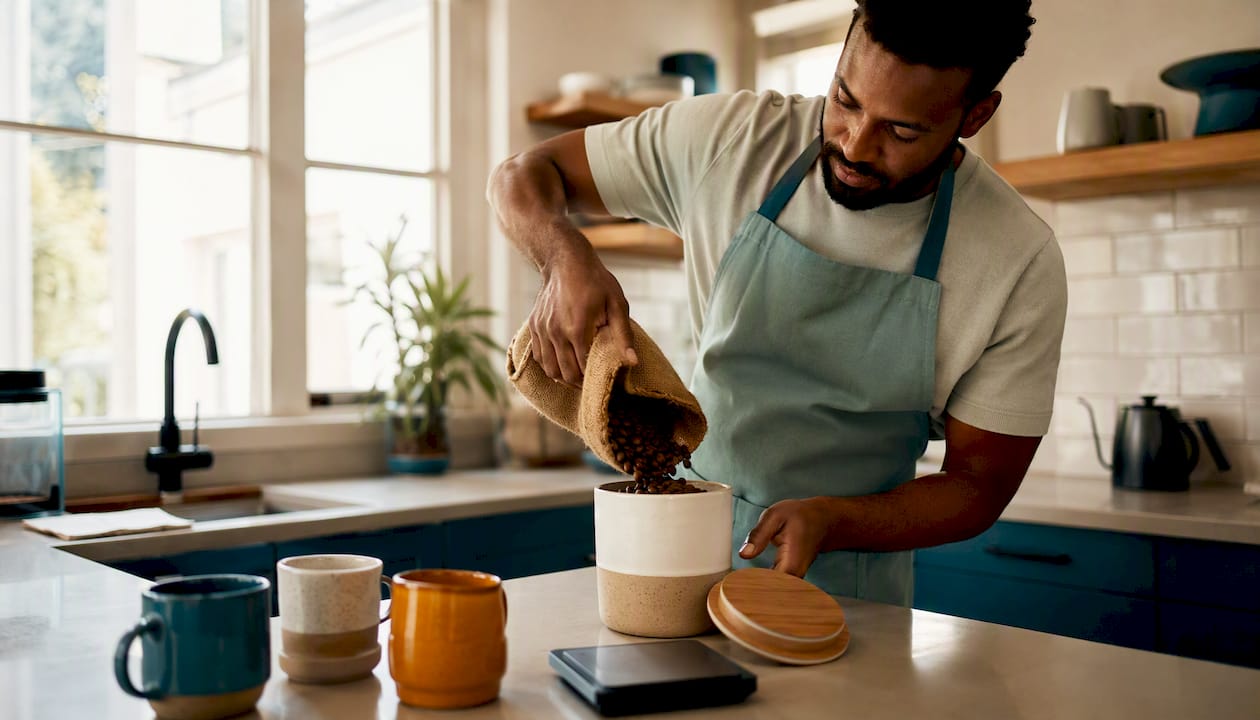
Grinding is the single biggest accelerant of flavor loss. When you grind, you shatter the bean’s protective structure and expose hundreds of times more surface area to oxygen. CO₂, which acts as a natural preservative inside the bean, escapes within minutes. Flavor compounds follow.
The practical rule: buy whole beans and grind just before brewing. For a single cup, grind that morning. For a batch brew you’ll drink over two days, grind the full amount at once and store the pre-ground portion in a small, sealed airtight container for no more than 48 hours.
- Espresso is more sensitive to grind freshness than filter coffee. Stale grounds produce flat, under-extracted shots even when the dose and tamp are correct.
- If pre-ground is unavoidable, keep it in the smallest airtight container that fits, away from heat and light, and use it within 1–2 weeks.
- Whole beans from a roast-date-forward purchase give you a longer freshness window to work with before grinding becomes urgent.
Pro Tip: A burr grinder set to the right coarseness for your brew method makes a bigger flavor difference than any storage container upgrade. If you are still on a blade grinder, that is the first thing to change.
Key Takeaways
The single most effective home storage habit is keeping whole beans in their original one-way-valved bag, sealed tight, in a cool dark cabinet, and grinding only what you need right before brewing.
| Point | Details |
|---|---|
| Use the original bag or opaque canister | One-way valve bags and opaque airtight canisters protect against air, light, and moisture. |
| Watch the roast date, not best-by | Peak flavor hits 1–2 weeks after roast; use roast date as your freshness guide. |
| Freeze only for long-term storage | Portion and vacuum-seal before freezing; never thaw and refreeze. |
| Grind just before brewing | Whole beans stay fresh 1–3 weeks opened; ground coffee fades in 1–2 weeks. |
| Eastviewcoffee bags ship roast-date-labeled | Small-batch bags from Eastviewcoffee are sized and labeled to match the buy-small, use-fresh approach in this guide. |
What small-batch roasting taught us about storage
There is a gap between how most people think about coffee storage and what actually matters. The conversation usually goes straight to containers: which canister, which vacuum system, which gadget. But the container is the last variable, not the first.
The first variable is how fresh the coffee is when it arrives. A bag roasted three weeks ago and stored in a perfect vacuum canister will still taste flatter than a bag roasted five days ago kept in its original valve bag in a kitchen cabinet. Freshness at the point of purchase sets the ceiling. Storage only determines how fast you fall from it.
Eastviewcoffee’s small-batch model exists partly because of this. Roasting in small quantities in Kenosha, Wisconsin means beans ship closer to roast date, which gives you a longer window of peak flavor to work with at home. The roast date on every bag is not a formality. It is the number that tells you where you are in that window.
One practical note for customers: when your Eastviewcoffee bag arrives, check the roast date and plan your use accordingly. If you ordered more than you’ll finish in two weeks, portion and freeze the remainder that same day, before the clock runs further. The coffee processing method and origin also affect how a bean ages, so natural-processed and washed coffees may behave slightly differently in storage, but the core rules apply across the board.
Fresh from the roaster, sized for your routine
The storage problems this guide describes, buying too much, losing track of roast dates, watching a bag go stale, mostly come down to one thing: buying more coffee than you can use while it is at its best.
Eastviewcoffee’s small-batch, roast-date-labeled bags are built around exactly the buy-small, use-fresh approach outlined here. Every bag ships from Kenosha with the roast date printed clearly, sourced from women-owned farms, and roasted in quantities designed for quick turnover rather than warehouse shelf life. If you want a consistent supply without the guesswork of timing orders, the subscription and full coffee collection lets you set a cadence that matches how fast you actually drink coffee.
Disclosure: Eastviewcoffee publishes this guide and sells the products linked above. The storage advice is based on independent sources cited throughout.
Browse the collection and pick a bag size that fits your weekly routine.
Useful sources and further reading
The recommendations in this guide draw from the following sources:
- National Coffee Association: How to Store Coffee — The NCA’s foundational guidance on airtight containers, cool/dark storage, and avoiding the fridge; one of the most-cited primary sources on home coffee storage.
- Serious Eats: I Asked Coffee Experts How to Keep Beans Fresh — Expert consensus on the original valve bag, headspace management, and why vacuum canisters help but aren’t always necessary.
- Healthline: How Long Does Coffee Last? — Evidence-backed shelf-life timelines for opened and unopened whole beans and ground coffee.
- The Kitchn: How to Store Coffee Beans — Step-by-step freezer protocol including portioning, valve-taping, and thawing rules.
- Food52: How to Store Coffee Beans After Roasting — Explains why roast date matters more than best-by and how flavor compounds fade after the two-week mark.
- About Coffee: Storage and Shelf Life — Practical retention ranges for opened whole beans and properly frozen coffee.