
Decaf Coffee Isn't Caffeine-Free: Here's the Actual Amount
Decaf coffee contains small but measurable caffeine, typically a small amount per cup, compared with the much higher mg range in a regular cup. That’s still not zero, and if you’re counting milligrams for a pregnancy, a sensitivity, or a medication interaction, the distinction matters.
- A typical 8 oz decaf: about 2 to 7 mg
- A 16 oz decaf from a coffee shop: often 9 to 14 mg
- Decaf espresso shot: usually under 5 mg
For context, the FDA says most healthy adults can handle up to 400 mg of caffeine a day, and pregnancy guidance generally caps intake around 200 mg. Decaf barely registers against either number, but if you’re drinking six cups, it stops being trivial.
TL;DR:
- Decaf coffee usually contains between 2 and 15 mg of caffeine per standard serving, depending on cup size, brew method, and decaffeination process.
- The caffeine removal process typically eliminates about 97% of the caffeine, but absolute amounts vary based on bean type and decaffeination method used.
- Larger cups, longer extraction times, and certain brew techniques can increase the residual caffeine content in decaf coffee.
- People with caffeine sensitivities or strict medical guidelines should still monitor their total intake since even trace amounts can trigger reactions.
- Small-batch roasters like East View Coffee prioritize flavor and transparency, offering decafs that deliver rich taste despite low caffeine levels.
Table of Contents
- How Much Caffeine Is in Decaf Coffee, by Serving Size
- Why Caffeine Levels in Decaffeinated Coffee Aren’t Fixed
- How Decaf Coffee Is Made, and Why It’s Regulated for Safety
- Decaf vs. Regular Coffee (and Everything Else You Drink)
- Who Needs to Watch Decaf’s Trace Caffeine
- East View Coffee’s Approach to Low-Caffeine Roasting
- Why Transparency About Decaf Matters More Than the Marketing
- Try a Decaf That Doesn’t Taste Like an Afterthought
- Key Takeaways
- Sources
- FAQ
How Much Caffeine Is in Decaf Coffee, by Serving Size
The numbers shift depending on how much coffee you’re actually drinking and where it came from. An 8 oz home-brewed decaf typically lands between 2 and 7 mg. Bump that up to a 12 oz cup and you’re usually looking at 3 to 10 mg. A full 16 oz mug, the size most coffee shops pour by default, can run higher: some chain samples test between 9 and 13.9 mg, according to research cited by Healthline.
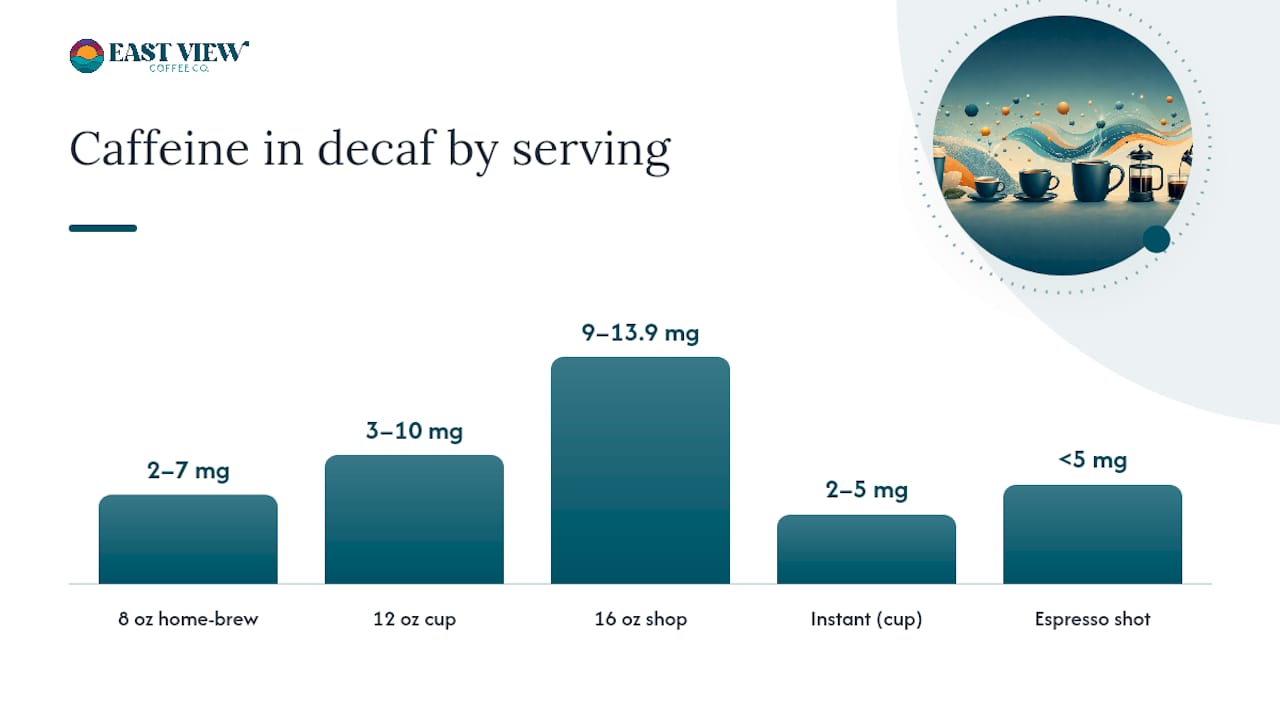
Decaf espresso is its own case. A single shot is a small volume of liquid, so even though the extraction is concentrated, the absolute caffeine usually stays under 5 mg. Instant decaf tends to sit at the low end too, often 2 to 5 mg per cup, since instant coffee generally starts with less caffeine before decaffeination even happens.
The pattern to remember: bigger cup, more grounds, more extraction time, more milligrams. A 2006 University of Florida study and later chain-beverage testing both found the same thing. Serving size and brew method swing the final number more than most people expect, sometimes by a factor of five between the smallest and largest samples tested.
Why Caffeine Levels in Decaffeinated Coffee Aren’t Fixed
Decaf isn’t one standardized product with one fixed number. It’s a category, and the caffeine content inside that category depends on several variables stacking on top of each other.
- Percentage removal versus absolute milligrams. Decaffeination standards generally require removing about 97% of the original caffeine, not reducing it to a specific mg target. Ninety-seven percent of a lot with more starting caffeine still leaves more behind.
- Bean species. Robusta beans naturally carry roughly double the caffeine of arabica beans. Decaffeinate both to the same percentage standard and the robusta batch still finishes higher in absolute mg.
- Decaffeination method. Water-based processing, CO2 processing, and solvent-based methods all pull caffeine out through different mechanisms, and none of them guarantees an identical finishing point across every batch.
- Brewing choices. Coffee-to-water ratio, extraction time, and grind size all change how much of whatever caffeine remains actually ends up in your cup. A stronger, longer-extracted decaf can outpace a weaker regular brew in absolute terms, though rarely by much.
How Decaf Coffee Is Made, and Why It’s Regulated for Safety
Three processes dominate commercial decaffeination. The water process, often marketed as the Swiss Water Method, soaks green beans and uses a caffeine-saturated solution to draw caffeine out without added chemicals. The CO2 process uses pressurized carbon dioxide to strip caffeine while leaving more flavor compounds intact, a method favored for large-scale operations. Solvent-based methods use approved compounds like ethyl acetate or methylene chloride, both of which fall under FDA safety limits that govern allowable residue levels in the finished bean.
It’s the threshold most methods are built to hit, and it’s why decaf still carries a trace of caffeine no matter which process produced it.
- Water process: no chemical solvents, gentler on flavor
- CO2 process: efficient at scale, preserves more aromatic compounds
- Solvent-based: fast, cost-effective, regulated residue limits
Pro Tip: If flavor matters as much as caffeine content to you, read how East View Coffee makes its decaf before assuming all decaf tastes the same. The process affects taste as much as it affects mg.
Decaf vs. Regular Coffee (and Everything Else You Drink)
Put decaf next to a regular cup and the gap is stark. A typical decaf serving carries less than 10% of the caffeine in a regular cup, sometimes closer to 2%. That’s the headline comparison, but it’s not the whole picture once other drinks enter the frame.
- Regular brewed coffee (8 oz): ~95 mg
- Decaf coffee (8 oz): ~2 to 7 mg
- Black tea (8 oz): ~40 to 70 mg
- Green tea (8 oz): ~25 to 45 mg
- Cola (12 oz): ~30 to 40 mg
- Energy drink (8 oz): ~70 to 100 mg
A single decaf cup barely moves the needle against any of these. The math changes if you’re drinking four or five cups a day, since 5 mg per cup adds up to 25 mg, roughly the same as a can of decaf soda. It’s still nowhere near a regular coffee’s punch, but “decaf” doesn’t mean “zero,” and volume drinkers should know their running total. For a fuller side-by-side across drink types, East View’s caffeine comparison primer breaks down more categories.
Who Needs to Watch Decaf’s Trace Caffeine
Most people can drink decaf without a second thought. A handful of situations call for more attention to the numbers.
Pregnant readers are usually advised to limit total daily caffeine intake, which decaf coffee helps manage, though total sources should be considered. Still, it’s worth tracking total intake across coffee, tea, and chocolate rather than assuming decaf doesn’t count at all. East View’s guide on decaf during pregnancy walks through the specifics.
People with genuine caffeine sensitivity, including some with anxiety disorders or cardiac arrhythmias, can react to even 5 to 10 mg. If you’ve noticed a racing heart or jitteriness after decaf specifically, that’s not in your head. Caffeine also has documented links to bone density over long stretches of heavy use, an area covered in more depth by clinical research on caffeine and bone health.
Practical steps that actually help:
- Ask your barista which decaffeination process they use and how it’s brewed.
- Stick to smaller serving sizes if you’re caffeine-sensitive.
- Choose a water-processed decaf if you want the lowest realistic exposure.
- Talk to a clinician if you’re on medications that interact with caffeine, since even small amounts can matter with certain drugs.
The FDA’s 400 mg daily guidance applies to total intake, not just coffee, so decaf drinkers rarely need to think twice unless they’re combining it with other caffeine sources.
East View Coffee’s Approach to Low-Caffeine Roasting
Small-batch roasting in Kenosha, Wisconsin, means every decaf lot gets the same attention as our fully caffeinated coffees. We source from women-owned farms, and that sourcing standard doesn’t change for decaf.
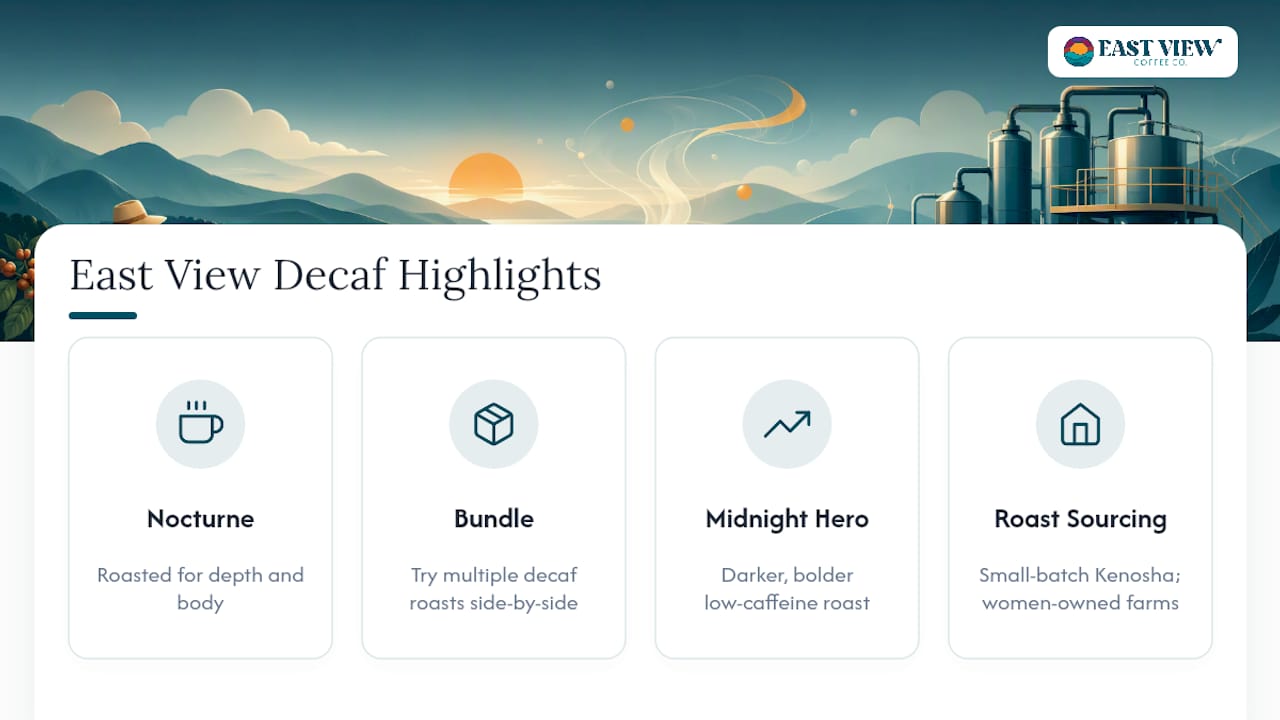
Our lineup gives readers real options depending on what they’re after. Nocturne Decaf is roasted for depth and body, built for anyone who assumes decaf has to taste thin. The Decaf Coffee Bundle lets you try multiple roasts side by side if you’re still figuring out your preference. Midnight Hero leans darker and bolder, proof that low caffeine doesn’t mean low flavor.
Pro Tip: Browse the full decaffeinated coffee collection if you want to compare roast profiles before choosing.
Why Transparency About Decaf Matters More Than the Marketing
We roast decaf with the same flavor-first mindset as everything else in the lineup, not as an afterthought for people avoiding caffeine. Too many roasters treat decaf as a compromise. It shouldn’t be one, and being upfront about actual mg content instead of hiding behind “caffeine-free” language is part of that same standard.
— Jenny
Try a Decaf That Doesn’t Taste Like an Afterthought
Most decaf on grocery shelves gets roasted as a leftover product, not a real coffee. Eastviewcoffee treats decaf as its own category worth getting right, small-batch roasted from the same women-owned farms as the rest of the lineup, so you get real depth without the caffeine load.
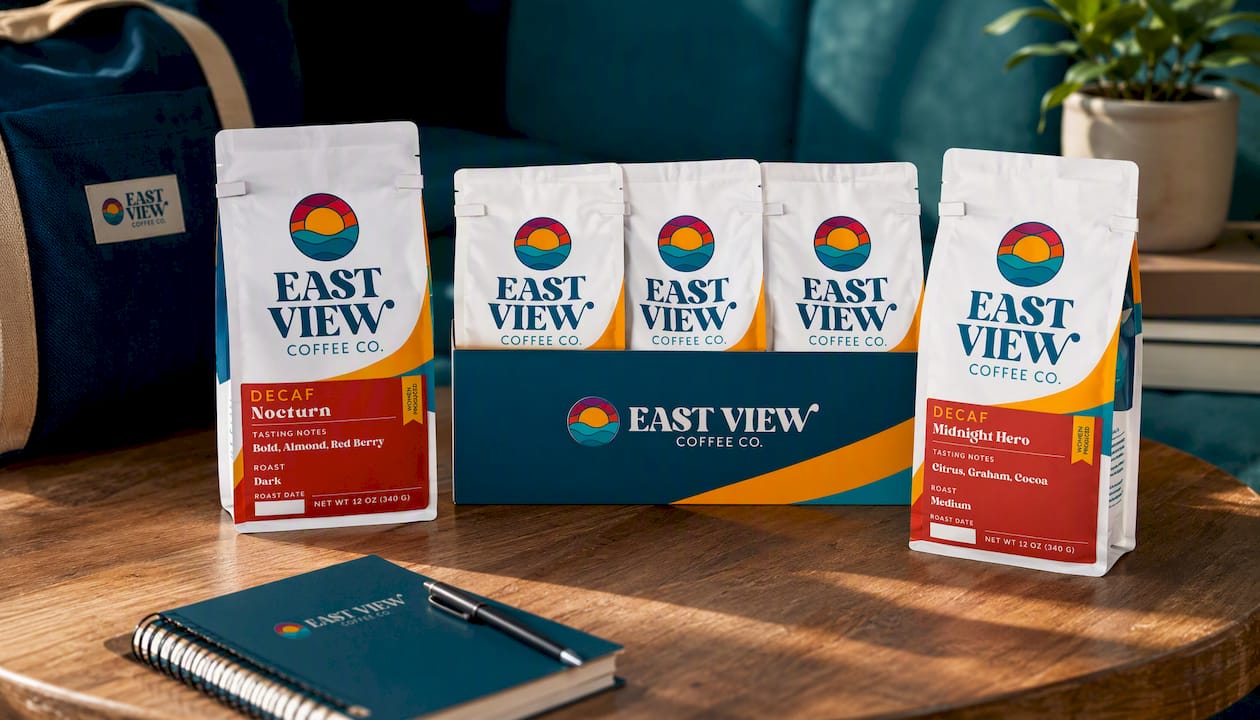
If you want something rich enough for an evening cup, Nocturne Decaf delivers body without the jittery aftermath. Not sure which roast fits your taste yet? The Decaf Coffee Bundle lets you sample a range before committing to one bag. And if you want something bolder for daily drinking, Midnight Hero brings darker, fuller flavor while staying in that same low-caffeine range covered above. Also worth a look: our half-caff options if you want a middle ground between decaf and regular. Order a bag today and taste the difference flavor-first roasting makes.
Key Takeaways
Decaf coffee contains 2 to 15 mg of caffeine per serving depending on size and method, far less than the 70 to 140 mg in regular coffee but never zero.
| Point | Details |
|---|---|
| Decaf isn’t caffeine-free | Expect roughly 2 to 15 mg per cup depending on serving size and brew method. |
| Numbers vary by bean and method | Robusta, water processing, and brew strength all change the final mg count. |
| 97% removal is the standard | Regulations target percentage removal, not a fixed absolute milligram number. |
| Daily limits still apply | The FDA’s 400 mg guidance and pregnancy’s 200 mg cap both include decaf totals. |
| Eastviewcoffee roasts decaf for flavor | Nocturne Decaf, the Decaf Coffee Bundle, and Midnight Hero deliver low-caffeine coffee without sacrificing taste. |
Sources
- Spilling the beans: How much caffeine is too much? | FDA
- Is decaf coffee safe? | National Coffee Association (NCA)
- How much caffeine is in decaf coffee? | Healthline
This article is general information, not a substitute for advice from a qualified doctor. Consult a qualified healthcare professional about your own circumstances before acting on anything here.
FAQ
Is 2 Cups of Decaf Coffee Too Much?
No. Two cups of decaf typically total somewhere between 4 and 30 mg of caffeine, far under the FDA’s 400 mg daily guidance for most healthy adults.
Does Drinking Decaf Count as Quitting Caffeine?
Not entirely. Decaf still contains trace caffeine, so it’s a major reduction, not a complete elimination, which matters if you need zero caffeine for a medical reason.
What Is the Downside of Decaffeinated Coffee?
Some decaffeination methods use chemical solvents, though these fall under regulated safety limits, and many drinkers report decaf tastes flatter unless it’s roasted with the same care as regular coffee, which is why flavor-first roasts like Eastviewcoffee’s Nocturne Decaf exist.
Is Decaf Coffee Low in Caffeine?
Yes.