
Decaf Coffee in Pregnancy: Safety, Caffeine, and Smart Choices
Decaf coffee is generally safe during pregnancy when consumed in moderation. The American College of Obstetricians and Gynecologists sets the daily caffeine ceiling at 200 mg from all sources combined, and a typical 8-oz cup of brewed decaf contains only about 2–5 mg of caffeine. That means several cups of decaf a day still keeps you well below the limit. The bigger questions worth answering: which decaffeination method was used, and how does decaf fit into your total daily caffeine picture?
Here is what to do right now:
- Estimate the caffeine in each decaf cup you drink, which is generally very low per 8-oz brewed cup.
- Count every other caffeine source: tea, chocolate, soda, medications.
- Check the label or ask your roaster whether the decaf was processed with Swiss Water, Mountain Water, or CO2 rather than chemical solvents.
- Talk to your OB/GYN or midwife about your specific health history before making any changes.
Pro Tip: If you are switching from regular coffee, do not quit cold turkey. Mix one part regular with one part decaf for several days, then gradually shift the ratio toward all decaf. This simple taper prevents the withdrawal headaches that can hit in the first trimester.
Table of Contents
- How much caffeine is actually in decaf coffee?
- How decaffeination works and which processes are safest
- What does the evidence actually say about decaf and pregnancy outcomes?
- How to count your daily caffeine and choose decaf wisely
- East View Coffee’s decaf options for pregnant coffee lovers
- Key Takeaways
- The coffee ritual is worth protecting, not abandoning
- Specialty decaf, picked for you
- Further reading and sources
How much caffeine is actually in decaf coffee?
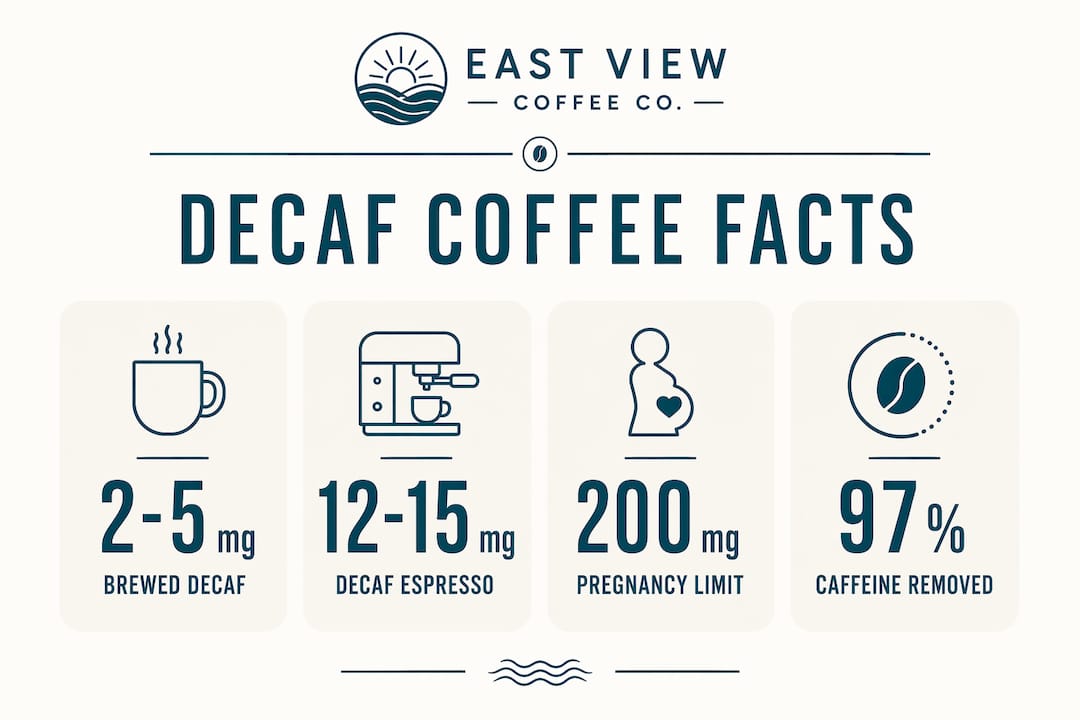
The word “decaf” does not mean caffeine-free. By industry standard, decaffeinated coffee must have roughly 97% or more of its caffeine removed, but small residual amounts always remain. The exact amount varies by bean origin, roast level, and brew method.
That ceiling, endorsed by ACOG, MotherToBaby, and the Cleveland Clinic, is the single most useful number to keep in mind. Here is how common beverages and foods stack up:
| Source | Serving size | Typical caffeine (mg) |
|---|---|---|
| Brewed decaf coffee | 8 oz | 2–5 mg |
| Decaf espresso | 1 shot | 2–5 mg |
| Brewed regular coffee | 8 oz | around 95 to 100 |
| Black tea | 8 oz | about 47 |
| Green tea | 8 oz | about 28 |
| Cola | 8 oz | 4 mg |
| Dark chocolate | 1 oz | 2 mg |
A quick worked example: one 8-oz cup of brewed decaf (4 mg) plus one cup of black tea (47 mg) adds up to roughly 51 mg total. That is well under 200 mg, leaving plenty of room for a second decaf or a small piece of chocolate later in the day. The math is reassuring for most people, as long as decaf stays decaf and portion sizes stay honest.
How decaffeination works and which processes are safest
Not all decaf is made the same way, and the method matters more than most labels suggest. There are four main processes in commercial use today.
- Swiss Water Process: Uses only hot water and a carbon filter to draw out caffeine. No chemical solvents involved. The filter is designed to retain flavor compounds while removing caffeine. Widely considered the cleanest option and commonly certified organic.
- Mountain Water Process: Works on the same principle as Swiss Water but uses water sourced from glaciers in Mexico. Also solvent-free and a reliable choice.
- CO2 Process: Uses pressurized carbon dioxide to selectively extract caffeine while leaving flavor oils largely intact. Favored by specialty roasters for flavor preservation. No chemical residue.
- Solvent-based methods (methylene chloride or ethyl acetate): These use chemical solvents to strip caffeine from the bean. Methylene chloride in particular has drawn scrutiny from journalists and public-health advocates who argue that even trace residues warrant caution, especially for pregnant consumers. Ethyl acetate is sometimes marketed as “natural” because it can be derived from fruit, but it is still a solvent.
The regulatory picture is nuanced. The FDA permits methylene chloride in decaffeination at residue levels it considers safe for the general population, but the agency has not specifically evaluated risk for pregnant people. That gap is exactly why many maternal health advocates and specialty roasters recommend choosing Swiss Water or CO2 decafs when you are pregnant.
Pro Tip: Specialty roasters often publish their decaffeination method on the product page or bag. If you cannot find it, just ask. Any roaster worth buying from will tell you immediately.
When you are shopping, look for these on the label or product page:
- “Swiss Water Process” or “Swiss Water Decaf”
- “Mountain Water Process”
- “CO2 decaffeinated”
- “Decaffeinated without solvents”
- USDA Organic certification (organic decafs are prohibited from using methylene chloride)
What does the evidence actually say about decaf and pregnancy outcomes?
The short answer: low-to-moderate caffeine intake, including from decaf, has not been shown to cause miscarriage or birth defects. MotherToBaby’s fact sheet summarizes the research clearly: studies have not proven that caffeine below 200 mg/day causes miscarriage or fetal harm, though high doses are less well studied and carry more uncertainty.
One reason the limit exists at all is physiology. Caffeine crosses the placenta and the fetus clears it much more slowly than an adult does. That slower clearance is why even moderate amounts warrant attention, and why keeping total intake low is the sensible approach.
The older studies that alarmed many people deserve some context. Research from the 1990s reported associations between decaf consumption and miscarriage, but later expert reviews concluded those findings were likely driven by bias and confounding rather than any causal chemical effect. Women who switched to decaf during pregnancy were often doing so because they felt unwell, and early pregnancy symptoms overlap heavily with miscarriage risk. The decaf was not the cause; the underlying condition was. Contemporary researchers and clinicians largely do not treat decaf as a meaningful risk factor when consumed in reasonable amounts.
A 1999 population-based study of nearly 8,000 California births found that women who drank only decaf coffee showed no increased odds of small-for-gestational-age birth, low birth weight, or preterm delivery compared with women who drank neither type of coffee. That is one of the more direct data points available on decaf specifically, and it is reassuring.
How to count your daily caffeine and choose decaf wisely
Getting your total caffeine under 200 mg/day is straightforward once you map your routine. Here is a simple process:
- List every caffeinated item you consume in a typical day. Include coffee, tea, soda, energy drinks, chocolate, and any medications that contain caffeine (some headache remedies do).
- Estimate the caffeine in each item using the table above as a reference. When in doubt, use the higher end of the range.
- Add them up. If your total is under 200 mg, you are within the guideline. If it is over, identify the biggest contributors and reduce or swap them first.
- Replace regular coffee with decaf or half-caff. Switching one 8-oz regular coffee (about 95–100 mg) for a brewed decaf (2–5 mg) saves roughly 90–95 mg in one move.
- Reassess weekly. Caffeine sensitivity often changes across trimesters, so what felt fine at 10 weeks may feel different at 28 weeks.
For most people, two or even three cups of brewed decaf per day still lands well below 200 mg total, especially if tea and chocolate are the only other sources. The math works in your favor.
A few practical notes on timing and comfort:
- Drinking decaf earlier in the day reduces the chance of heartburn, which tends to worsen in the second and third trimesters.
- Specialty-roasted decafs are often gentler on the stomach than mass-market options because small-batch roasting allows tighter control over roast profile and freshness.
- If you are cutting back from regular coffee, use the taper method: start with a 50/50 mix of regular and decaf, then shift to 25/75 over the following week. Cold-turkey quitting frequently triggers headaches that are hard to distinguish from early pregnancy symptoms.
Pro Tip: East View Coffee’s Cat’s Pajamas Half-Caff is a practical middle step if you are not ready to go full decaf. It cuts your per-cup caffeine roughly in half while keeping the flavor profile you are used to.
East View Coffee’s decaf options for pregnant coffee lovers
Eastviewcoffee roasts specialty decaf in small batches in Kenosha, Wisconsin, sourcing beans from women-owned farms. That sourcing model matters beyond ethics: farms that receive premium compensation tend to invest more in quality control, which shows up in the cup.
Their decaf lineup gives pregnant coffee drinkers real options:
- Nocturne Decaf: A small-batch specialty decaf roasted for flavor depth. Check the product page for current process details, or reach out directly to confirm the decaffeination method.
- Decaf Coffee Bundle: A curated package for those who want variety without hunting down individual bags. Useful if you are stocking up for the third trimester.
- Midnight Hero Decaf: Another roast option for those who prefer a different flavor profile.
Eastviewcoffee also publishes sourcing details and sustainability commitments, which means you are not guessing about what went into your cup. For pregnant consumers who want to know exactly how their decaf was processed, that transparency is worth more than a generic grocery-store label. If you want a personalized pick, their custom recommendation page matches you with the right roast based on your preferences.
Key Takeaways
Decaf coffee is safe for most pregnant people in moderation, and keeping total daily caffeine under 200 mg is the single most important metric to track.
| Point | Details |
|---|---|
| Daily caffeine limit | ACOG and Cleveland Clinic recommend limiting daily caffeine to a moderate level from all sources combined. |
| Decaf caffeine content | Brewed decaf typically contains 2–5 mg per 8-oz cup, far below the daily limit. |
| Decaffeination method matters | Choose Swiss Water, Mountain Water, or CO2 decafs to avoid chemical solvent exposure. |
| Older studies were misleading | 1990s research linking decaf to miscarriage is now attributed to bias, not chemical causation. |
| Eastviewcoffee specialty decaf | Nocturne Decaf and the Decaf Coffee Bundle offer small-batch, specialty-roasted options with sourcing transparency. |
The coffee ritual is worth protecting, not abandoning
There is a version of pregnancy advice that treats every pleasure as a liability, and coffee tends to get caught in that net. The evidence does not support that framing. Decaf, chosen carefully and consumed in reasonable amounts, lets you keep the morning ritual that anchors so many people’s days without adding meaningful caffeine to the pregnancy.
What actually deserves attention is not whether you drink decaf, but which decaf you choose and how it fits into your total daily picture. A Swiss Water or CO2 decaf from a specialty roaster who publishes their sourcing and process is a genuinely different product from a generic supermarket bag with no process information. That distinction is worth caring about, especially during pregnancy.
Use this guidance as a starting point, not a substitute for your own provider’s advice. Your OB/GYN or midwife knows your specific health history, and a five-minute conversation with them about caffeine is always worth having.
Specialty decaf, picked for you
Eastviewcoffee’s decaf lineup was built for people who care about what is in their cup, not just what is on the label. The Nocturne Decaf and the Decaf Coffee Bundle are roasted in small batches in Kenosha, Wisconsin, from beans sourced directly from women-owned farms. That means fresher coffee, tighter roast control, and a roaster you can actually ask about process.
Not sure which decaf fits your taste? The custom coffee recommendation page walks you through a short set of questions and matches you with the right roast. No guesswork, no generic suggestions.
This article is general information, not medical advice. Confirm your caffeine choices with your OB/GYN or midwife based on your individual health history.
Further reading and sources
The following sources informed this article. Each covers a distinct piece of the decaf and pregnancy picture:
- MotherToBaby / NCBI Bookshelf — Caffeine Fact Sheet: The most thorough public-health summary of caffeine research during pregnancy, including what the evidence does and does not show about miscarriage risk.
- Cleveland Clinic — Can You Drink Coffee While Pregnant?: Clinical guidance from maternal-fetal medicine specialists on the 200 mg/day limit, decaf as a strategy, and tapering advice.
- Cleveland Clinic — Caffeine and Pregnancy: Explains why caffeine crosses the placenta and why fetal clearance is slower than the mother’s.
- Healthline — Can You Drink Decaf Coffee During Pregnancy?: A well-sourced consumer summary covering residual caffeine levels, the 97% removal standard, and the older miscarriage studies.
- ABC News — Should We Worry About Chemicals in Decaf Coffee?: Journalistic investigation into methylene chloride and other solvents used in decaffeination, with expert commentary on consumer risk.
- Harvard Health — Coffee Early in Pregnancy: A concise Harvard Medical School Q&A on caffeine limits, the ACOG recommendation, and why the total amount matters more than the beverage type.
- PubMed — Maternal Decaffeinated Coffee and Fetal Growth: The California population study of nearly 8,000 births that found no increased risk of low birth weight or preterm delivery among women who drank only decaf.
Always consult your OB/GYN or midwife for guidance tailored to your own pregnancy.