
How Decaf Coffee Is Made: A Flavor-First Guide
Decaf coffee is made by extracting caffeine from green, unroasted beans using one of four main methods: solvent-based (direct or indirect), water-based (Swiss Water Process), supercritical CO2, or the triglyceride method. No process removes caffeine completely. The FDA standard for decaffeinated coffee requires roughly 97% caffeine removal, but in practice, the Swiss Water Process reports caffeine removal in the range of about 94%–96%. This means a typical cup of decaf still contains a small but measurable amount of caffeine.
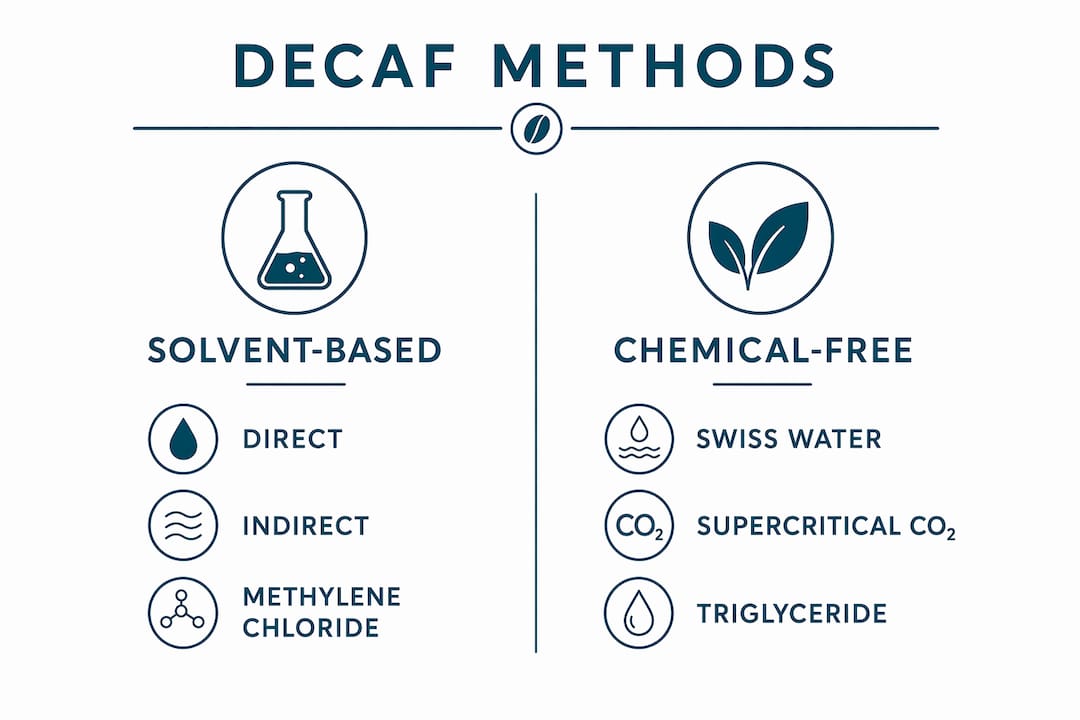
Here is what each method prioritizes at a glance:
- Solvent-based (direct and indirect): Cost efficiency at scale; uses methylene chloride or ethyl acetate
- Swiss Water Process: Chemical-free; preserves origin flavor; preferred by specialty roasters
- Supercritical CO2: High selectivity for caffeine; good flavor retention; industrial scale
- Triglyceride method: Uses coffee oils; niche use today; gentle on flavor compounds
The method on the label is not just a marketing detail. It tells you how the caffeine was pulled out, what compounds may have left with it, and whether any solvent touched the bean.
Table of Contents
- How decaf coffee is made: from green bean to roasted cup
- How do solvent-based decaffeination methods work?
- What are the chemical-free decaffeination methods?
- Is decaf really caffeine-free?
- How does decaffeination change the taste of your coffee?
- Is decaf coffee safe? What you need to know about health
- How do you choose a good decaf coffee?
- Key Takeaways
- Why method transparency is the real quality signal in decaf
- Eastviewcoffee’s decaf: small-batch, transparent, and ethically sourced
How decaf coffee is made: from green bean to roasted cup
Decaffeination always happens before roasting. Once beans are roasted, the heat-driven chemical reactions that create aroma and flavor make post-roast decaffeination impractical. The physical structure changes, and the volatile compounds you want to preserve are already locked in. So every decaf you have ever brewed started as a green bean that went through a caffeine extraction facility before it ever saw a roaster’s drum.
The standard sequence looks like this:
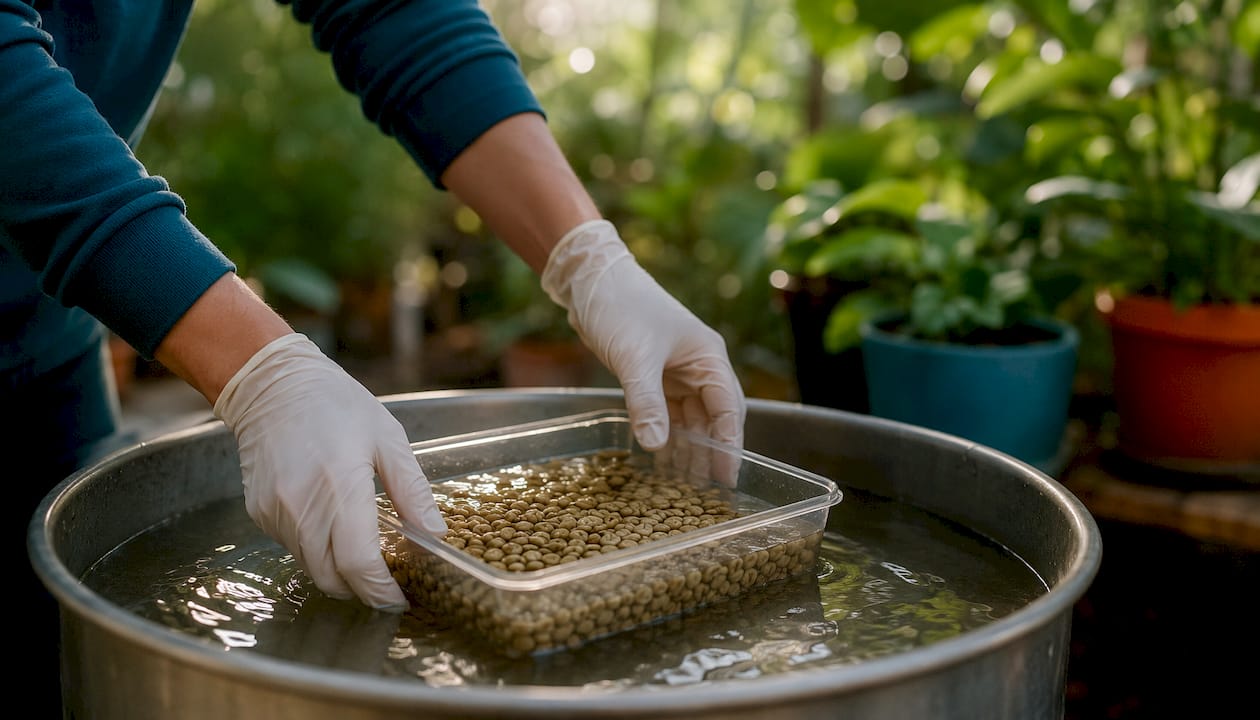
- Cleaning and hydration: Green beans are washed and steamed or soaked in water to swell the cell structure, making caffeine more accessible.
- Caffeine extraction: Depending on the method, beans are exposed to a solvent, water-based solution, pressurized CO2, or coffee oils. Caffeine migrates out of the bean.
- Separation: The caffeine-laden solvent, water, or CO2 is separated from the beans and either discarded, filtered, or recycled.
- Drying and reconditioning: Beans are dried back to an appropriate moisture level so they behave normally during roasting.
- Roasting: The decaffeinated green beans are shipped to roasters and treated like any other green coffee, though roasters often adjust their profiles slightly to account for structural changes from processing.
From a supply chain perspective, decaffeination adds a step between the origin farm and the roaster. Specialty lots often go to dedicated facilities, such as the Swiss Water facility in Burnaby, British Columbia, before returning to roasters. Commodity decaf typically runs through large-scale solvent operations closer to major import hubs.
Pro Tip: When buying decaf, look for a roast date on the bag, not just a “best by” date. Decaf beans are more porous after processing and tend to go stale faster than regular green coffee. Freshness matters even more here.
How do solvent-based decaffeination methods work?
Solvent-based methods are the most common approach to decaffeination because they are cost-effective at the volumes commodity coffee demands. Two solvents dominate: methylene chloride (also called dichloromethane) and ethyl acetate (EA). Both bind selectively to caffeine molecules, though neither is perfectly selective — some flavor compounds leave with the caffeine.
Direct solvent method
Beans are steamed to open their pores, then soaked directly in solvent. The solvent bonds with caffeine and is drained off. Beans are steamed again to remove residual solvent before drying. The whole cycle typically repeats several times to hit the required removal threshold.
Indirect solvent method
Here, beans are soaked in hot water first, which pulls out caffeine along with flavor compounds. The water is then separated from the beans and treated with solvent to extract the caffeine. Once the caffeine is removed, the solvent is separated from the water, and the now-caffeine-free, flavor-rich water is returned to the beans. The beans reabsorb their flavor compounds. It is more involved than the direct method, but it tends to preserve more of the cup character.
The solvents themselves
Methylene chloride is the more efficient of the two and widely used in commercial operations. Ethyl acetate is sometimes marketed as “natural” because it occurs in fruit fermentation, but most commercial EA is synthesized from ethanol and acetic acid. The “natural” label is technically defensible but worth understanding.
After extraction, steaming and roasting evaporate residual solvents. Modern processing controls keep any remaining traces within regulatory safety limits. The FDA and other food safety bodies have reviewed both solvents and consider them safe at the residue levels found in finished decaf.
Key trade-offs at a glance:
- Cost: Solvent methods are cheaper per pound than Swiss Water or CO2
- Flavor: Indirect solvent tends to preserve more flavor than direct; both can strip some delicate aromatics
- Consumer perception: A growing segment of buyers actively avoids solvent-processed decaf, regardless of safety data
- Commodity fit: Solvent methods dominate large-scale commercial decaf production
Pro Tip: If a bag says “water-processed” but does not name Swiss Water specifically, it may be using a different water-based or indirect solvent process. Ask the roaster which facility handled the decaffeination.
The consumer preference for solvent-free labeling has grown steadily, driven less by safety concerns and more by a general preference for minimal processing. That shift has pushed specialty roasters toward water and CO2 methods even when solvent-processed decaf meets every regulatory standard.
What are the chemical-free decaffeination methods?
Three methods avoid synthetic solvents entirely: the Swiss Water Process, supercritical CO2, and the triglyceride method. Each takes a different approach to the same chemistry problem: how do you pull caffeine out of a bean without taking the flavor with it?
Swiss Water Process
The Swiss Water Process uses water, time, and carbon filtration. The key is what kind of water. Rather than plain water, it uses Green Coffee Extract (GCE), a solution already saturated with the water-soluble flavor compounds found in green coffee. When fresh beans are soaked in GCE, caffeine migrates out due to concentration gradients, but flavor compounds stay put because the GCE is already saturated with them. The caffeine-laden GCE is then passed through activated carbon filters that trap caffeine molecules. The cleaned GCE is reused in a closed loop.
This is why specialty roasters reach for Swiss Water when they want decaf that still tastes like the origin. The process is certified organic-compatible and third-party verified, which matters for roasters who carry organic certifications.
Supercritical CO2 method
CO2 becomes “supercritical” at high pressure and temperature, meaning it behaves like both a liquid and a gas simultaneously. In this state, pressurized CO2 is highly selective for caffeine molecules and leaves most flavor compounds alone. The CO2 is pumped into a chamber with the green beans, dissolves the caffeine, and is then depressurized. The caffeine drops out and is captured; the CO2 is recycled. Because CO2 targets caffeine so precisely, flavor retention is generally excellent. The downside is infrastructure: the equipment is expensive, which is why CO2 decaffeination runs at industrial scale and is less common among smaller specialty operations.
Triglyceride method
This older approach uses coffee oils extracted from spent green beans. Those oils are rich in triglycerides that bond with caffeine. Green beans are soaked in hot water and coffee solution, then the caffeine-laden water is treated with the coffee oils. The triglycerides pull caffeine out of the water, and the oils are then heated to release and discard the caffeine. The oils are reused. The triglyceride method is gentle on flavor, but it is largely a niche process today, used by a small number of specialty producers.
Pro Tip: CO2-processed decaf is worth seeking out if you want the cleanest cup and can find it. It is less common on retail shelves than Swiss Water, but several specialty importers carry it. Check the roaster’s website for processing details.
Is decaf really caffeine-free?
Not completely. The 97% removal threshold commonly cited in the industry and referenced by the FDA means a standard cup of decaf still contains some caffeine. How much depends on the method, the bean, and the brew.
| Method | Reported Caffeine Removal | Residual Caffeine (approx. per 8 oz cup) | Flavor Retention | Typical Use |
|---|---|---|---|---|
| Swiss Water Process | 94%–96% | — | High | Specialty |
| Supercritical CO2 | High caffeine removal | Low residual caffeine | Very high flavor retention | Industrial/Specialty |
| Solvent-based (direct) | High caffeine removal | Low residual caffeine | Moderate flavor retention | Commodity |
| Solvent-based (indirect) | High caffeine removal | Low residual caffeine | Moderate to higher flavor retention | Commodity/Specialty |
| Triglyceride | High caffeine removal | Low residual caffeine | High flavor retention | Niche |
A regular brewed cup of coffee contains a high amount of caffeine. A decaf cup contains a much lower but still measurable amount of caffeine depending on the method and batch. That is a dramatic reduction, but it is not zero.
A few caveats worth knowing. Decaf espresso tends to run higher in residual caffeine than brewed decaf because espresso uses more coffee per ounce of liquid. Batch variability is real: two bags labeled “decaf” from the same roaster can differ in residual caffeine depending on the lot and processing run. For most people, the difference is irrelevant. For pregnant women, people with caffeine sensitivity, or those on medications that interact with caffeine, even small amounts matter. The American College of Obstetricians and Gynecologists recommends limiting caffeine during pregnancy, and decaf is not a guaranteed zero-caffeine option.
The practical takeaway: decaf dramatically reduces caffeine intake, but if you need to avoid caffeine entirely for medical reasons, confirm residual levels with your doctor rather than assuming the label means zero.
How does decaffeination change the taste of your coffee?
Decaf has a reputation for tasting flat, and that reputation is partly earned. The extraction process that removes caffeine also removes or alters other water-soluble compounds, including some of the aromatic molecules responsible for brightness, complexity, and body. But the gap between good decaf and regular coffee has narrowed considerably, and the method is the biggest variable.
What changes during decaffeination:
- Acidity: Often reduced, especially with solvent methods. Some drinkers prefer this; others miss the brightness.
- Body: Can become thinner as oils and soluble solids are partially stripped.
- Aroma: The most volatile compounds are the most vulnerable. Decaf frequently smells less complex than its caffeinated counterpart.
- Sweetness: Generally well-preserved, particularly with water and CO2 methods.
Roasters who take decaf seriously adjust their roast profiles to compensate. Because decaffeinated green beans have already been through a hydration and drying cycle, their cellular structure is slightly more fragile. A roaster might drop the charge temperature slightly or extend the drying phase to avoid scorching. Small-batch roasting makes these adjustments easier to dial in.
The label is your best guide to flavor expectations. “Swiss Water Process” or “CO2-processed” signals that the roaster chose a method specifically for flavor preservation. “Decaf” with no method listed usually means solvent processing, which is not necessarily bad, but it tells you the roaster did not prioritize method transparency.
Pro Tip: If you want to evaluate decaf flavor properly, try it as a pour-over or Chemex rather than espresso. The longer extraction highlights origin character and makes method differences more apparent. Eastviewcoffee’s coffee cupping guide walks through how to assess flavor systematically.
Specialty roasters who label their decaf method are signaling something real: they paid more for a specific process because they believe it produces a better cup. That transparency is worth paying attention to when you are choosing between bags.
Is decaf coffee safe? What you need to know about health
Modern decaf is safe for the vast majority of people. The main health question used to center on solvent residues, particularly methylene chloride. After steaming and roasting, residual solvents are reduced to levels that regulatory bodies consider safe. The FDA monitors these limits, and finished decaf coffee consistently comes in well below thresholds of concern.
That said, health considerations around decaf go beyond solvents.
Potential benefits of switching to decaf:
- Reduced caffeine-related insomnia and anxiety
- Lower likelihood of acid reflux triggered by caffeine (though coffee’s acidity itself remains)
- Suitable for people with certain heart conditions or medication interactions
Potential disadvantages:
- Slight reduction in antioxidant content compared to regular coffee, though decaf still retains meaningful levels of chlorogenic acids
- Possible flavor trade-offs that reduce enjoyment, which matters if coffee is part of a daily ritual
- Not caffeine-free, which matters for highly sensitive individuals
For pregnant women, the guidance from major health organizations is to limit total caffeine intake rather than eliminate it entirely, but decaf is generally considered a lower-risk option. Anyone managing a condition affected by caffeine should confirm their specific threshold with a clinician rather than relying on general guidance.
Pro Tip: If you are switching to decaf for health reasons, choose a Swiss Water or CO2-processed option. You get the same antioxidant profile as solvent-processed decaf without any residue question, however small.
This article is general information, not medical advice. Confirm caffeine limits and decaf suitability for your specific situation with a qualified healthcare provider.
How do you choose a good decaf coffee?
The difference between a forgettable decaf and a genuinely good one usually comes down to three things: method, freshness, and origin. Here is a practical checklist.
What to look for on the label or product page:
- Method declared: “Swiss Water Process,” “CO2-processed,” or “water-processed” (in order of transparency)
- Roast date visible (not just a best-by date)
- Origin or farm named (single origin decaf is a strong quality signal)
- Organic certification if solvent-free processing matters to you
- Small-batch roaster (more likely to adjust roast profiles for decaf)
Questions worth asking a roaster directly:
- Which facility handled the decaffeination, and which method did they use?
- Was the green coffee certified organic before decaffeination?
- Do you adjust your roast profile for decaf lots?
- What is the roast date on current inventory?
Red flags:
- “Decaf” with no method listed anywhere on the bag or website
- No roast date
- “Natural solvent” claims without specifying ethyl acetate or its source
- Vague language like “chemical-free” without naming the actual process
The method label is the single most useful piece of information on a decaf bag. Roasters who list it are telling you they chose deliberately. Roasters who omit it usually did not.
How a small-batch roaster approaches decaf: Eastviewcoffee
Eastviewcoffee, based in Kenosha, Wisconsin, sources its coffee exclusively from women-owned farms and roasts in small batches. That model applies directly to their decaf offerings. Small-batch roasting means each decaf lot gets individual attention rather than running through a high-volume production line where profile adjustments are impractical.
Eastviewcoffee’s Nocturne Decaf is a concrete example of this approach: the product page names the decaffeination method, lists the origin, and carries a roast date. That combination, method transparency plus freshness dating plus traceable sourcing, is the benchmark for what good decaf labeling looks like. Their sourcing from women producers adds another layer of accountability: when you know who grew the coffee, you are more likely to know how it was processed.
For roasters working at this scale, the choice of decaffeination method is also an extension of their sourcing values. Choosing Swiss Water or CO2 processing aligns with organic-compatible supply chains and avoids synthetic solvents, which fits naturally with a commitment to environmental stewardship.
Key Takeaways
Decaf coffee is made by removing caffeine from green beans before roasting, and no method removes 100% of caffeine. The Swiss Water Process, for example, reports 94%–96% caffeine removal, while the FDA-referenced standard requires roughly 97% removal, leaving a small but real residual amount in every cup.
| Point | Details |
|---|---|
| Four main methods | Solvent-based, Swiss Water, supercritical CO2, and triglyceride each differ in chemicals used, flavor retention, and cost. |
| Always green-bean stage | Decaffeination happens before roasting; post-roast decaffeination is not practical. |
| Not caffeine-free | Most methods remove between 94% and 97% of caffeine, so a typical decaf cup contains a small but nonzero amount. |
| Method label matters | “Swiss Water” or “CO2-processed” on the bag signals deliberate flavor preservation and process transparency. |
| Eastviewcoffee’s approach | Eastviewcoffee’s Nocturne Decaf lists method, origin, and roast date — the standard for transparent specialty decaf. |
Why method transparency is the real quality signal in decaf
The conventional wisdom on decaf is that it is a compromise: you give up caffeine and get a worse cup in return. That framing misses what has actually changed in specialty decaf over the past decade.
The real divide in decaf quality is not between caffeinated and decaffeinated coffee. It is between roasters who treat decaf as an afterthought and those who apply the same sourcing and roasting discipline they bring to their best single-origin lots. Swiss Water and CO2 methods exist precisely because someone decided flavor mattered enough to pay more for a better process. When a roaster names the method on the bag, they are not just checking a transparency box. They are telling you that the decision was deliberate.
What most guides understate is how much the green coffee itself matters. A mediocre bean processed through Swiss Water is still a mediocre bean. The method preserves what is there; it does not create quality that was never present. This is why the combination of ethical sourcing, traceable origin, and method transparency is more meaningful than any single factor alone. Eastviewcoffee’s model, sourcing from women producers who receive premium compensation, roasting in small batches, and labeling honestly, reflects exactly this logic. The decaf is good because the coffee was good before decaffeination started.
The sustainability angle is also underappreciated. Swiss Water’s closed-loop GCE system and CO2 recycling represent genuinely lower-impact processing compared to solvent methods that generate chemical waste. For buyers who care about the full supply chain, method choice is an environmental decision, not just a flavor one.
Eastviewcoffee’s decaf: small-batch, transparent, and ethically sourced
If this guide has you thinking more carefully about what is in your decaf bag, Eastviewcoffee makes that decision straightforward. Their decaf offerings are roasted in small batches in Kenosha, Wisconsin, from coffee sourced directly from women-owned farms. Every bag carries a roast date and method information so you know exactly what you are buying.
The Nocturne Decaf is a strong starting point: it delivers the origin character that solvent-processed commodity decaf typically loses, with full transparency about how the caffeine was removed. If you want to explore the full range, the decaf coffee bundle lets you compare options side by side. Not sure where to start? Eastviewcoffee’s custom coffee recommendation tool matches you to the right roast based on your preferences. Eastviewcoffee is the publisher of this guide and sells the products mentioned above.
Useful sources and further reading
| Source | What it covers | Why it is trustworthy |
|---|---|---|
| Swiss Water® Process — decaffeination process | GCE chemistry, carbon filtration, closed-loop reuse | Primary source from the process operator |
| The Conversation — chemist explains decaf chemistry | CO2 method, Swiss Water Process flavor chemistry | Peer-reviewed academic commentary |
| The Conversation — is decaf caffeine-free? | Green-bean stage requirement, solvent methods, method overview | Academic source, University of Queensland |
| Britannica — Decaffeination | 97% removal standard, method definitions | Established reference encyclopedia |
| Swiss Water — water-process vs solvent comparison | Residue removal, steaming/roasting safety steps, consumer preference data | Primary source from process operator |
| CoffeeHow — decaf coffee methods | Method labeling as trust signal, specialty vs commodity use | Industry-focused coffee education resource |
| University of Queensland — public health article | Health and safety overview, pregnancy guidance context | University public health faculty |