
What Is Honey Process Coffee and Why Does It Taste So Different?
Honey process coffee is depulped coffee dried with its sticky mucilage left on the seed. That mucilage layer, not any added sweetener, gives the method its name and its signature effect on flavor. No honey touches the bean at any point.
The result usually lands between washed and natural: cleaner than most naturals, sweeter and fuller in body than most washed lots. That range depends heavily on how much mucilage stays on and how the farm manages drying.
- Cherries get depulped mechanically, but the fruit’s sugary mucilage stays on the parchment
- “Honey” describes the tacky, amber texture of that drying mucilage, not an ingredient
- Expect more sweetness and body than washed coffee, with more clarity than most naturals
- The exact flavor swing depends on the honey color grade and drying discipline used
Costa Rican micro-mills popularized the technique, and it now shows up across Central America wherever producers have the drying infrastructure and patience to manage it well.
Key Takeaways
Honey process coffee sits between washed and natural because retained mucilage adds sweetness and body while drying discipline keeps defects in check.
| Point | Details |
|---|---|
| Definition matters | Honey process means depulped coffee dried with mucilage on the seed, not added honey. |
| Color grade predicts cup | White honey stays closest to washed; black honey brings the most sweetness, body, and risk. |
| Drying control is everything | Frequent turning and moisture targets near 11 to 12% prevent mold and off-flavors. |
| Roast gentler for sugar | Sugar-dense green beans scorch faster, so a gentler charge and earlier drop help. |
| East View sources direct | Eastviewcoffee’s Costa Rica and women-farm lots reflect the traceability honey buyers should demand. |
Table of Contents
- How Honey Process Coffee Is Made, Step by Step
- What Do White, Yellow, Red, and Black Honey Actually Mean?
- What Does Honey Process Coffee Taste Like?
- Why Honey Processing Carries Real Risk on the Farm
- How Should You Roast Honey-Processed Green Coffee?
- Does Honey Processing Cost More, and Is It Worth It?
- How East View Coffee Approaches Honey and Microlot Sourcing
- What the Honey Process Debate Gets Wrong
- Taste the Sweetness Difference for Yourself
- Sources
- FAQ
How Honey Process Coffee Is Made, Step by Step
Every honey lot starts the same way: fresh cherries get sorted by density and ripeness, then run through a depulper that strips the outer skin and most of the fruit. What separates honey from washed processing happens right after that. Washed coffee gets fermented in tanks and scrubbed clean; honey-processed coffee skips the wash and goes straight to drying with its mucilage layer intact.
That mucilage doesn’t come off in one uniform amount. Mills can strip a little, a lot, or almost none of it mechanically before drying begins, and that choice determines which color grade the lot ends up as. More retained mucilage means more sugar contact time with the seed, but it also means a slower, riskier dry.
- Harvest and sort ripe cherries by hand or with flotation tanks to remove underripes and defects.
- Depulp mechanically, removing the skin while leaving a controlled percentage of mucilage on the parchment.
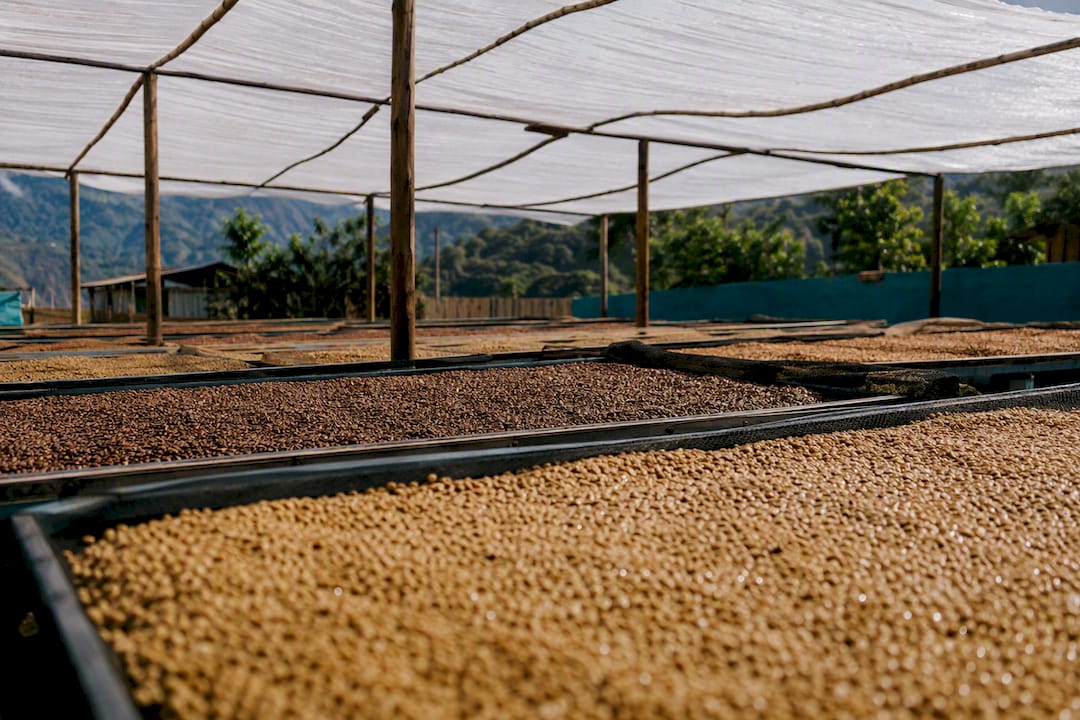
- Spread on drying beds, usually raised mesh tables rather than concrete patios, so air circulates on all sides.
- Turn and rake the beans repeatedly through the day to prevent clumping and uneven fermentation.
- Monitor overnight humidity, often covering beds when the risk of dew or rain rises.
- Dry to target moisture, typically over 10 to 20 days depending on grade and climate.
Honey lots generally take longer to dry than washed coffee, which loses its mucilage before drying even starts, but they can dry faster than sun-dried naturals that keep the whole cherry intact. Buyers increasingly ask mills to hit specific numbers before accepting a lot: dried parchment moisture near 11 to 12%, with water activity under 0.60 as a defect-prevention threshold.
Pro Tip: If you’re buying green coffee or just reading a bag’s back label, look for a stated drying duration alongside the honey grade. A red or black honey listed at under ten days of drying is a red flag. It suggests rushed processing, not diligent farm work.
Producers who understand coffee processing fundamentals treat honey as a spectrum of choices rather than a single fixed technique. Two farms using the same variety and altitude can produce noticeably different honey lots just by adjusting mucilage removal and drying speed.
What Do White, Yellow, Red, and Black Honey Actually Mean?
Color grades track how much mucilage stayed on the bean and how slowly it dried, and they’re the single most useful shorthand for predicting what’s in the cup before you brew it.
- White honey removes most mucilage mechanically and dries fast, landing closest to washed coffee in clarity and acidity.
- Yellow honey keeps a moderate mucilage layer, balancing sweetness against a cleaner cup profile. It’s the most common grade you’ll see on shelves.
- Red honey retains more mucilage and dries considerably slower, pushing toward heavier body and more pronounced fruit character.
- Black honey keeps nearly all the mucilage and stretches the drying window the longest, producing the most intense sweetness and body along with the highest defect risk.
This grading system isn’t regulated by any central body, so one mill’s yellow honey might resemble another’s red. Treat the labels as a useful starting point, not a guarantee. The safest move as a buyer is to ask for drying notes alongside the color name, since “honey” by itself tells you almost nothing about what actually happened on the drying beds.
Black honey also carries the steepest operational cost. It needs the most drying-bed space and the longest labor commitment per kilogram of green coffee, since beans have to be raked more often over a longer stretch to avoid clumping and mold. That’s part of why black honey lots tend to show up in smaller volumes and carry higher price tags than white or yellow honey from the same farm.
What Does Honey Process Coffee Taste Like?
Sweetness is the most reliable signature of honey processing, showing up as brown sugar, caramel, or toffee notes that washed coffee rarely produces on its own. Layered underneath that sweetness, you’ll typically find stone fruit, dried fruit, or light chocolate, with the intensity climbing as you move from white toward black honey grades.

Body follows the same pattern. White honey feels close to a washed coffee’s lighter mouthfeel, while red and black honeys can feel almost syrupy. Acidity moves the opposite direction: it softens and rounds out as mucilage retention increases, which is why heavier honey grades taste less bright and more dense than a washed coffee from the same farm.
Brewing can push these characteristics further in either direction:
- Pour-over: Use a slightly coarser grind than you would for washed coffee to avoid over-extracting the extra sugars into bitterness.
- Filter drip: Drop your water temperature by two or three degrees Fahrenheit; honey lots can taste muddled at the same temps that suit washed coffee.
- Espresso: Pull a slightly shorter yield to concentrate the sweetness without tipping into syrupy heaviness.
Sweetness is honey processing’s most consistent trait across grades, with body and fruit intensity scaling up from white to black and acidity scaling down the same direction, according to roast-focused analysis of the method.
Want to hear the difference for yourself? Cup a honey lot against a washed or natural coffee from the same farm and harvest, side by side, using identical grind and water. The gap in sweetness and body is usually obvious within the first two slurps, and comparing tasting-note vocabulary while you do it helps you name what’s actually in the cup rather than guessing. Pairing that tasting session with a quick primer on cupping versus casual tasting sharpens your palate for spotting the differences faster next time.
Why Honey Processing Carries Real Risk on the Farm
Retained mucilage isn’t free sweetness. It’s a sugar-rich coating sitting on a warm, humid bean for days or weeks, and that’s exactly the environment mold and unwanted bacteria thrive in. Honey processing is riskier than washed processing precisely because that mucilage layer invites over-fermentation if drying isn’t managed with real discipline.
- Beans need frequent raking and turning throughout the day to prevent clumping, which traps moisture and heat.
- Overnight humidity and dew are a constant threat, often requiring beds to be covered before nightfall.
- Shading strategy matters too much sun too fast can crack parchment before the interior dries evenly.
- Moisture readings near 11 to 12% and water activity under 0.60 give buyers a defensible line for lot acceptance.
Careful drying management is the difference between a honey lot that tastes vibrant and one that tastes muddled or outright fermented. Perfect Daily Grind’s reporting on the method is blunt about this: poor drying control commonly produces off-flavors regardless of how good the cherry was at harvest. Honey processing rewards skill and punishes shortcuts more visibly than washed processing does.
Pro Tip: When shopping for honey-processed coffee, ask whether the roaster has lot-specific notes from the mill, not just a generic “honey process” label. Microlot traceability, including harvest dates and drying duration, is your best signal that the farm took the extra risk seriously.
How Should You Roast Honey-Processed Green Coffee?
Sugar-dense green beans caramelize faster than washed coffee, which means honey lots scorch more easily if you charge too hot or push development too aggressively.
- Start with a gentler charge temperature and stretch the early drying phase slightly longer than you would for a washed lot of the same origin.
- Watch first crack closely: honey beans often hit it a touch sooner than expected given their density.
- Lighter grades (white, yellow) hold up well as single-origin showcases, letting their cleaner character shine through a lighter roast.
- Heavier grades (red, black) often perform better blended, where their intense sweetness and body round out a lighter component rather than dominating a solo cup.
- Trust aroma over the clock. Sugar-forward beans can smell “done” earlier than the actual development curve suggests.
Roasters who work with honey lots regularly tend to favor a slightly earlier drop than instinct suggests, treating the extra sugar load as a reason for restraint rather than a green light to push color further.
Does Honey Processing Cost More, and Is It Worth It?
Honey processing uses meaningfully less water than washed processing, since it skips the fermentation tanks and rinse cycles that washing requires. That’s a real advantage in regions where water access during harvest season is tight or costly to manage.
- Skipping wash tanks conserves water, an advantage in drier growing regions where washing infrastructure is expensive to run.
- Extended drying and constant turning increase labor hours per kilogram compared to washed coffee.
- Farms that absorb that labor cost often see it returned through higher per-pound pricing on the finished lot.
- Honey coffee’s labor intensity makes it a natural fit for microlot marketing, where traceability and fixed pricing reward the extra farm-level effort.
Whether a red or black honey lot is worth its premium comes down to one question: did the extra labor produce genuinely better sweetness and body, or just a rarer label? Roasters who buy samples before committing to full lots, and who ask for drying notes rather than trusting the color name alone, generally end up with a better read on whether the price matches the cup.
How East View Coffee Approaches Honey and Microlot Sourcing
Eastviewcoffee’s roasting practice centers on small batches from women-owned farms, and that same attention to farm-level detail is exactly what evaluating a honey lot demands. Direct relationships with producers mean access to real lot notes, not just a color grade printed on a bag.
- The Café con Amor Direct Relationship coffee from Costa Rica reflects the kind of origin, Costa Rica, where honey processing culture runs deepest.
- Catalyst Freshly Roasted Coffee showcases sourcing from women-owned farms committed to careful post-harvest work.
- Community Freshly Roasted Coffee, Cat’s Pajamas Half-Caff, and the Sunny’s Choice Bundle round out a catalog worth exploring for readers comparing processing styles side by side.
- Half-A$$ed Half-Caff Freshly Roasted Coffee offers a lower-caffeine option for readers who want to taste-test honey character without a full-caffeine cup.
What the Honey Process Debate Gets Wrong
Most explainers treat honey processing as a fixed recipe, when it’s really a spectrum of farm decisions dressed up in four color names. That framing does readers a disservice. Two “yellow honey” bags from different mills can taste nothing alike, because the color grades describe a general direction, not a controlled specification.
The bigger blind spot is how often sweetness gets marketed as the whole story. Sweetness is real and it’s the most consistent trait of the method, but it’s a byproduct of risk management, not a guarantee. A rushed, poorly dried honey lot can taste worse than a well-executed washed coffee from the same farm. The reader’s real priority should be asking for drying duration and moisture readings, not just trusting a color name on a bag.
If there’s one thing worth prioritizing, it’s traceability over terminology. A microlot with real farm notes beats a vague “honey process” label every time, regardless of which color grade gets stamped on it.
Taste the Sweetness Difference for Yourself
Reading about honey processing only gets you so far. Eastviewcoffee sources direct-relationship lots from women-owned farms in Costa Rica, the same region that built honey processing’s reputation, and roasts every batch small in Kenosha, Wisconsin, so the sweetness and body these lots are known for actually survive to your cup.

That direct relationship means Eastviewcoffee can tell you more about a lot’s origin and farm practices than a bag label ever could, which matters if you’re trying to understand what’s actually behind the sweetness you’re tasting. Start with the Café con Amor Direct Relationship coffee from Costa Rica to taste a lot connected to the origin most associated with this processing style, or browse the current seasonal coffee selection to see what’s roasting now.
Sources
- What is Honey Processed Coffee? | Sprudge
- Everything you need to know about honey processing | Perfect Daily Grind
- Honey Process - Sweet Maria’s Coffee Library
- The Honey Process: Roastopedia
- What is a microlot coffee? | Royal Coffee
FAQ
What Is the Honey Process of Coffee?
Honey process coffee is depulped coffee dried with its mucilage layer left on the seed, which typically produces more sweetness and body than washed coffee while staying cleaner than most naturals.
Is Honey Process Coffee Actually Sweet?
Yes, increased sweetness is the most consistent trait of honey-processed coffee, though the intensity depends on the color grade and how well the farm managed drying.
Is Honey Processed Coffee Good?
Well-executed honey lots, dried with careful moisture control and documented lot notes, tend to deliver a distinctly rich, balanced cup, but poorly managed drying can produce off-flavors regardless of the method’s potential.
What Is the “Honey” Process Used For in Costa Rican Coffee?
Costa Rican micro-mills helped popularize honey processing as a way to add sweetness and body to their coffee without the water use and infrastructure that full washing requires, and the country remains closely associated with the technique today.
Recommended
- A Guide to Coffee Processing: What Does It Mean and Why Does It Matter – East View Coffee Company
- Coffee Cupping vs. Coffee Tasting: What’s the difference? – East View Coffee Company
- What’s Really Inside Those Tasting Notes? – East View Coffee Company
- Women-Produced Coffee – East View Coffee Company