
Shade Grown Coffee: Why Canopy Cover Changes What's in Your Cup
Shade grown coffee is coffee cultivated under a canopy of trees rather than in cleared, sun-exposed rows, and it matters because that canopy supports bird and insect life, holds soil in place, stores carbon, and slows cherry ripening in ways that build more complex flavor. If you want proof that a bag on the shelf actually comes from a shaded farm, the most reliable signal is Smithsonian Bird Friendly® certification or a roaster willing to name the farm, the co-op, and the premium paid. Everything else, the canopy science, the tradeoffs farmers face, the labels that mean less than they sound like, and how to shop with confidence, follows below.
Key Takeaways
Shade grown coffee protects bird habitat, soil, water, and carbon storage while often producing denser beans that build more complex flavor, but those benefits only reach farmers when buyers pay premiums that make lower yields worthwhile.
| Point | Details |
|---|---|
| Canopy structure defines the claim | Overstory, midstory, and understory layers each provide a distinct ecological function, from bird habitat to nitrogen fixing. |
| Biodiversity gains are substantial | Reviews of more than 40 studies show shaded farms supporting far higher bird diversity than full-sun plantations. |
| Yield tradeoffs are real | Shade systems typically produce less coffee per acre, so farmer income depends on premiums or secondary crops like fruit and timber. |
| Certification separates fact from marketing | Bird Friendly® requires organic certification plus specific canopy and species criteria that generic “shade-grown” claims don’t guarantee. |
| Cup quality often improves | Slower ripening under shade tends to build denser beans with more layered acidity, sweetness, and body. |
| Eastviewcoffee sources with transparency | Small-batch roasting from women-owned farms ties premiums directly to named producer groups rather than blended commodity lots. |
Table of Contents
- What Does Shade Grown Coffee Actually Mean?
- What Ecological Benefits Come From Shade Grown Coffee?
- How Do Farmers Design and Manage a Shade System?
- Shade Grown vs. Sun Grown: What Are the Real Tradeoffs?
- How Can You Tell Real Shade Grown Coffee From Marketing Language?
- Does Shade Growing Change How Coffee Tastes?
- How Do You Buy Coffee That Actually Supports Shade-Grown Farms?
- How Does East View Coffee Source Its Shade-Grown Beans?
- What Are the Biggest Myths About Shade-Grown Coffee?
- Why This Issue Deserves More Attention Than It Gets
- Choose Coffee That Keeps Farmers Committed to Shade Systems
- Sources
- FAQ
What Does Shade Grown Coffee Actually Mean?
On a working farm, shade grown coffee means coffee plants growing beneath other trees that form one or more canopy layers above the crop. It’s an agroforestry method: coffee shares the field with species chosen for shade density, root structure, and often a second income stream, rather than growing alone in cleared, full-sun rows.
Farms structure this canopy in layers. The overstory sits highest, usually native hardwoods or tall timber trees that block direct sun and create the forest-like microclimate migratory birds rely on. A midstory layer, often fruit trees like citrus or banana, fills the middle height and gives farmers something to sell besides coffee cherries. Below that, the understory is the coffee itself, along with low ground cover that protects topsoil. Nitrogen-fixing legumes get planted through any of these layers because their root systems pull nitrogen from the air and feed it into the soil, cutting the farm’s need for synthetic fertilizer.
Not every shade system looks the same. Agronomists generally sort them into a few categories:
- Rustic shade: coffee planted directly into existing native forest with minimal clearing, the closest thing to a wild system.
- Traditional polyculture: a diverse mix of native and useful trees deliberately planted around coffee, usually the richest system for wildlife.
- Commercial polyculture: fewer tree species, chosen mainly for income (fruit, timber) with less concern for native habitat value.
- Shaded monoculture: a single shade species, often a nitrogen-fixing legume like Inga, planted in rows purely for canopy function.
- Full sun: no shade canopy at all, the industrial baseline these systems are compared against.
Picture a three-layer plot in the highlands of Guatemala: tall native oaks overhead providing bird habitat and windbreak, a mid-height band of Inga trees fixing nitrogen and dropping leaf litter that becomes mulch, and coffee shrubs underneath benefiting from filtered light and cooler soil. That structure is what separates a genuinely shade grown coffee farm from one that plants a token row of trees along a fence line and calls it shade grown coffee benefits for marketing purposes.
What Ecological Benefits Come From Shade Grown Coffee?
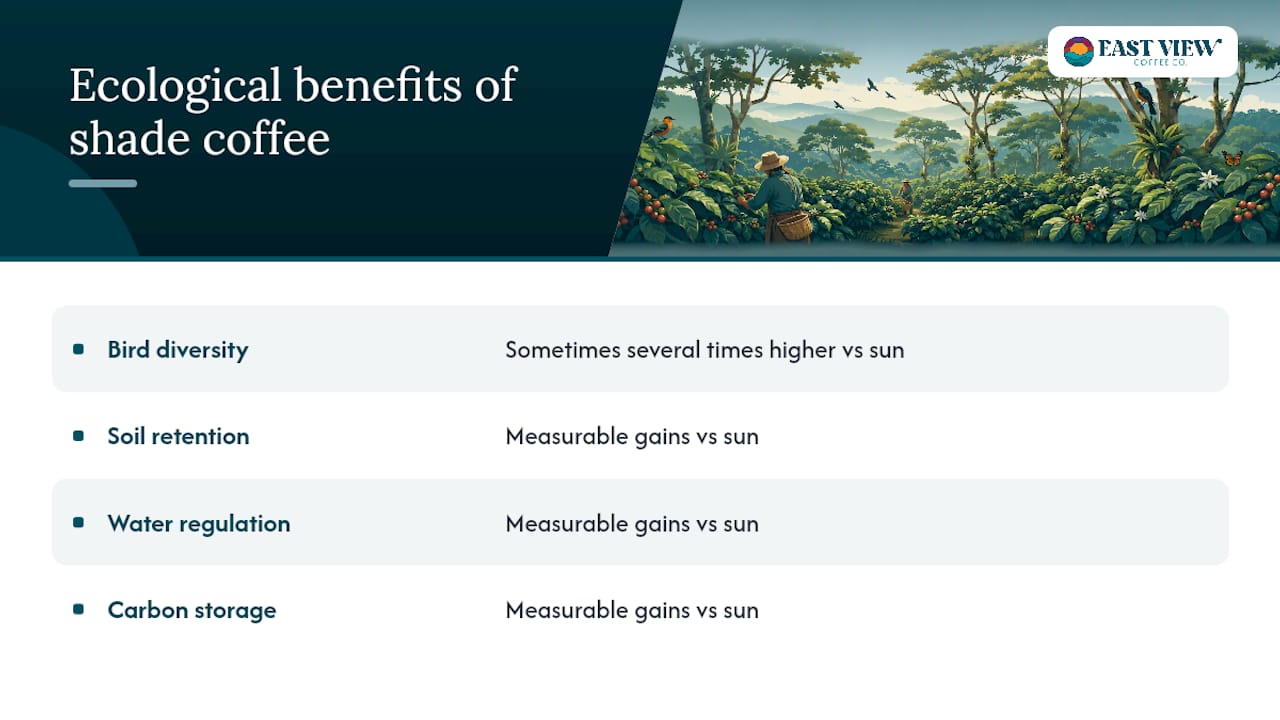
Shade grown systems generally support far higher biodiversity and a wider range of ecosystem services than full-sun monocultures, and the evidence for this is not thin. Reviews spanning more than 40 studies over two decades show shaded coffee plantations hosting sometimes several times the bird diversity of sun-grown fields, along with measurable gains in soil retention, water regulation, and carbon storage.
Birds and wildlife
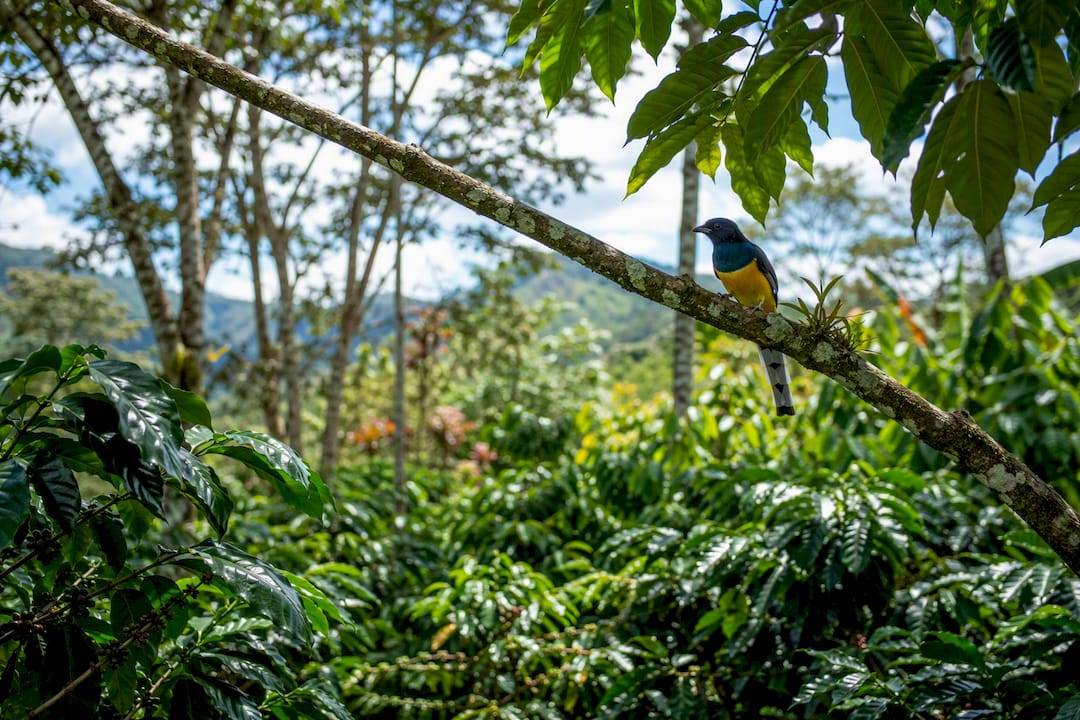
The bird data is the most cited piece of this puzzle, and for good reason, especially as specialty coffee products like adaptogenic coffee blends gain popularity in markets valuing complex flavors and functional benefits. Migratory songbirds that winter in Central and South America depend on structurally complex habitat, and a well-designed shade farm approximates that structure closely enough to function as a wintering ground. Species richness climbs with structural and species diversity in the canopy: more layers and more tree species generally mean more niches for insects, which in turn support more birds and bats that prey on coffee pests. This is not an incidental side effect. It is a functioning food web operating inside a working farm.
Soil and erosion control
Shade canopies intercept rainfall before it hits bare soil, and root systems from multiple tree species anchor topsoil against the kind of sheet erosion that strips nutrients from cleared hillsides. Root Capital’s analysis of shade systems describes how leaf litter breaking down under a canopy builds organic matter over years, something a bare monoculture row rarely achieves at the same pace. On steep terrain, common in coffee-growing regions from Colombia to Ethiopia, that root structure is often the difference between a farm that survives a decade of heavy rains and one that loses its topsoil.
Water retention and watershed protection
Canopy cover slows water movement across a field, letting more rainfall soak into the ground instead of running off. That matters for the farm itself, since better-retained moisture reduces irrigation dependence during dry spells, and it matters downstream, since watersheds below shaded coffee zones tend to see steadier flow and less sediment load than those below cleared land.
Carbon storage and climate buffering
Shaded coffee systems can store carbon at levels that rival nearby forest. Some Indonesian shade systems hold roughly 60% of the soil carbon found in primary forest within the top 30 centimeters, and certain Costa Rican shaded plots have been estimated at around 99 tons of carbon per hectare, figures that put well-managed coffee agroforestry in the same conversation as secondary forest, not cleared farmland.
Beyond storage, the canopy itself acts as a climate buffer. Trees overhead lower peak daytime temperatures and cut solar radiation reaching the coffee plant, which reduces heat stress on Arabica, a variety that struggles above certain temperature thresholds. As growing regions warm, that buffering function looks less like an ecological bonus and more like a survival mechanism for the crop itself.
Pest control and pollination
A diverse canopy hosts insect-eating birds and bats that suppress the coffee berry borer and other pests without chemical intervention, and the same structural diversity that supports birds tends to support wild pollinators, which improves fruit set on the coffee plants below.
None of this holds evenly across every region or every farm. Benefits scale with shade density and species diversity, so a rustic or traditional polyculture farm delivers far more of these outcomes than a shaded monoculture with a single tree species planted purely for canopy function. Results also shift with local rainfall, soil type, and elevation, which is part of why a single “shade grown” label can describe farms with genuinely different ecological footprints.
How Do Farmers Design and Manage a Shade System?
Shade systems are not accidental leftover forest. They are deliberate agroforestry designs where farmers select tree species for specific jobs, whether that’s habitat, nitrogen, fruit, or timber, and manage the canopy over years to keep it productive for coffee.
Tree selection follows a rough division of labor:
- Native habitat species (oaks, native hardwoods) anchor the overstory and provide the structural complexity birds need.
- Fruit trees (citrus, banana, avocado) sit in the midstory and give farmers a second harvest to sell when coffee prices dip.
- Timber species offer a long-term asset that can be selectively harvested without clearing the whole plot.
- Nitrogen-fixing legumes, Inga and Erythrina among the most common, cycle nutrients into the soil and reduce fertilizer costs.
Documented designs like café arbolado systems specify actual tree densities and species mixes calibrated to balance shade coverage against sunlight the coffee still needs to fruit properly. Too much shade cuts yield further than farmers can tolerate; too little erases the ecological services that justify the system.
A mature shade canopy doesn’t happen fast. Fruit and legume trees can start providing meaningful shade within three to five years, but a hardwood overstory takes considerably longer, often a decade or more, to reach full canopy height. That’s part of why converting a full-sun farm to shade is a multi-year commitment, not a single season’s decision.
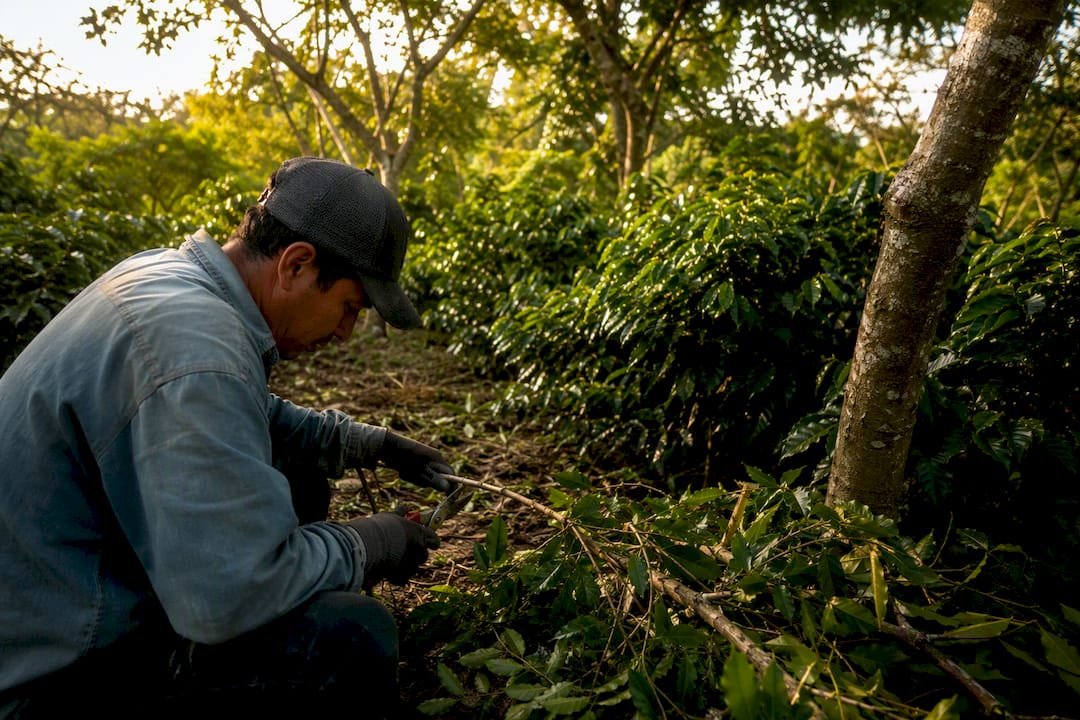
Ongoing management adds real labor. Farmers prune shade trees to control light penetration as seasons change, replace aging or diseased trees, and often intercrop short-cycle plants like beans or vegetables in the early establishment years before the canopy closes in. That labor cost is one reason shade systems tend to be more feasible for smallholders with available household labor than for large operations optimizing for minimal per-acre input.
Shade Grown vs. Sun Grown: What Are the Real Tradeoffs?
Shade grown coffee typically produces less per acre than full-sun coffee, but it tends to hold up better over time, cost less in synthetic inputs, and produce beans that specialty buyers pay more for. Whether that math works for a given farmer depends heavily on premiums, diversified income, and market access.
The category shift toward sun-grown coffee is not ancient history. Roughly 40% of global coffee land now sits under full sun, with a notable share under partial shade and a smaller proportion under diverse shade, a balance that tilted hard toward sun starting in the 1970s as farmers chased higher yields. That conversion boosted short-term output but also drove habitat loss and pushed farms toward greater reliance on synthetic fertilizer and pesticide to replace the ecological work the canopy used to do for free.
Here’s how the two systems compare across the dimensions that matter most to a buyer trying to understand what a premium is actually paying for:
- Ecological impact and biodiversity: shade systems support meaningfully more bird and insect diversity; sun systems function closer to a conventional row crop with minimal habitat value.
- Coffee quality and flavor: shade-grown cherries generally ripen slower, which specialty buyers associate with more complex, higher-scoring cups; sun-grown coffee ripens faster and often reads flatter in the cup.
- Yield and farmer income: sun-grown coffee produces more cherries per acre in the short term; shade systems produce less per acre but can add income through fruit or timber and often carry a price premium.
- Agrochemical inputs: shade systems generally need less synthetic fertilizer thanks to nitrogen-fixing trees and leaf litter; sun systems usually require more fertilizer and pest control to compensate for lost ecological services.
- Climate resilience and carbon: shade canopies buffer heat and store meaningfully more carbon than cleared fields, which matters as growing regions warm; sun systems offer no buffering and store far less carbon.
- Verification: shade claims range from certified (Bird Friendly®) to entirely unverified marketing language; sun-grown coffee rarely markets itself on ecological grounds at all.
Pro Tip: When a roaster’s marketing leans hard on “sustainably sourced” without naming a certification, a farm, or a premium amount, ask what that claim is actually backed by. A genuine shade-grown relationship usually comes with a multi-year sourcing commitment and a specific price the farmer received, not just a phrase on a bag.
The economics vary by region. In areas where fruit or timber byproducts have strong local markets, shade systems can be more profitable than sun-grown farms even before factoring in coffee premiums. In regions without that secondary market, shade only pencils out if buyers pay enough extra for the beans to offset the lower cherry yield, which is exactly why certification and direct sourcing relationships matter as much as the farming method itself.
How Can You Tell Real Shade Grown Coffee From Marketing Language?
The most rigorous standard available is Smithsonian Bird Friendly® certification, which requires farms to be certified organic and to meet specific canopy height, tree species diversity, and foliage cover thresholds before the seal goes on a bag. Other labels touch on shade indirectly but rarely with the same rigor, and plenty of “shade-grown” language on packaging carries no verification at all.
What separates Bird Friendly® from a generic shade claim is specificity. It’s the only major standard that combines 100% organic certification with measurable habitat criteria, rather than a general reference to trees on the property. Farms that meet the bar also receive a premium tied to implementing those conservation practices, which gives the certification teeth beyond a marketing checkbox.
Rainforest Alliance and similar broader sustainability seals include shade and biodiversity criteria, but their thresholds are less specific about canopy structure than Bird Friendly’s habitat metrics, and they cover a wider set of sustainability goals beyond bird habitat alone. That’s not a knock on the standard, but it does mean the seal alone doesn’t guarantee the same canopy density Bird Friendly® requires.
When you’re evaluating a bag on the shelf or a listing online, run through this checklist:
- Look for the Bird Friendly® seal itself, the most concrete guarantee currently available.
- Check whether the roaster names the farm, cooperative, or producer group, not just a country of origin.
- Confirm organic certification, since Bird Friendly® requires it as a baseline.
- Look for disclosed producer group transparency, meaning the roaster can tell you who grew it.
- Ask whether the listing mentions a price premium paid to farmers, a strong sign of a real sourcing relationship.
- Watch for roast-level sourcing notes on the product page itself, not buried in a general company mission statement.
A bag that says “shade-grown” with no certification, no farm name, and no premium disclosed isn’t necessarily lying, but it’s also not giving you anything you can verify.
Does Shade Growing Change How Coffee Tastes?
Slower cherry ripening under a canopy tends to produce denser beans, and denser beans are strongly associated with the layered acidity, sweetness, and body that specialty buyers pay extra for. Direct sun accelerates ripening, which can leave cherries less developed at harvest and translate to a simpler, flatter cup.
Cuppers who taste shade-grown Arabica regularly report a recognizable set of sensory markers:
- Bright, structured acidity rather than a flat or muddy sourness.
- Layered sweetness, often described in fruit or brown-sugar terms rather than one-note.
- Fuller body, a product of the bean’s denser cellular structure.
- More complexity across the cup, meaning the flavor shifts as the coffee cools rather than staying static.
Processing interacts with these traits rather than replacing them. Washed processing tends to spotlight the acidity and clarity that shade-grown beans already carry, while natural processing layers additional fruit-forward sweetness on top, and honey processing lands somewhere between the two. None of these methods invent complexity that isn’t already in the bean, they showcase what slower ripening already built.
Pro Tip: If you want a shade-grown lot to show its full character, use a medium roast rather than a dark one, since heavy roasting can mask the acidity and layered sweetness that make these beans distinct. A pour-over or manual brew method with a slightly coarser grind tends to highlight that complexity better than an espresso machine built for punch and crema.
How Do You Buy Coffee That Actually Supports Shade-Grown Farms?
Buy Bird Friendly® certified coffee when it’s available, or buy from roasters willing to publish farm-level sourcing details and the premium paid to producers. Certification is the fastest signal; roaster transparency is the fallback that works when a certified option isn’t on the shelf.
Before you check out, run through a short list of questions a roaster’s product page should answer:
- Does it name the producer or farm group, not just a country?
- Is there a stated certification (Bird Friendly®, organic, or both)?
- Does the listing mention a premium amount or price paid above commodity rates?
- Can you trace origin details down to a region or cooperative, not just “Latin America”?
- Does the roaster explain how long they’ve sourced from that relationship?
Look for these details on a roaster’s seasonal or single-origin collection pages, where farm-level detail tends to surface most clearly, as well as on producer-group listings and direct-trade pages that name importers by relationship rather than just by port of entry.
Certification isn’t the only path to confidence. A long-term sourcing relationship documented over multiple years, cooperative records naming the farms involved, or an importer’s own transparency reporting can all substitute for a formal seal, especially with smaller farms that can’t afford certification costs even when their practices meet the bar. The absence of a seal isn’t automatically a red flag; the absence of any detail at all is.
How Does East View Coffee Source Its Shade-Grown Beans?
Eastviewcoffee builds its sourcing around women-owned farms, roasting in small batches in Kenosha, Wisconsin, rather than scaling toward volume at the expense of the sourcing relationship. That model matters here because shade systems, with their added labor and slower cherry development, depend on exactly the kind of premium and long-term commitment a small-batch roaster is positioned to offer.
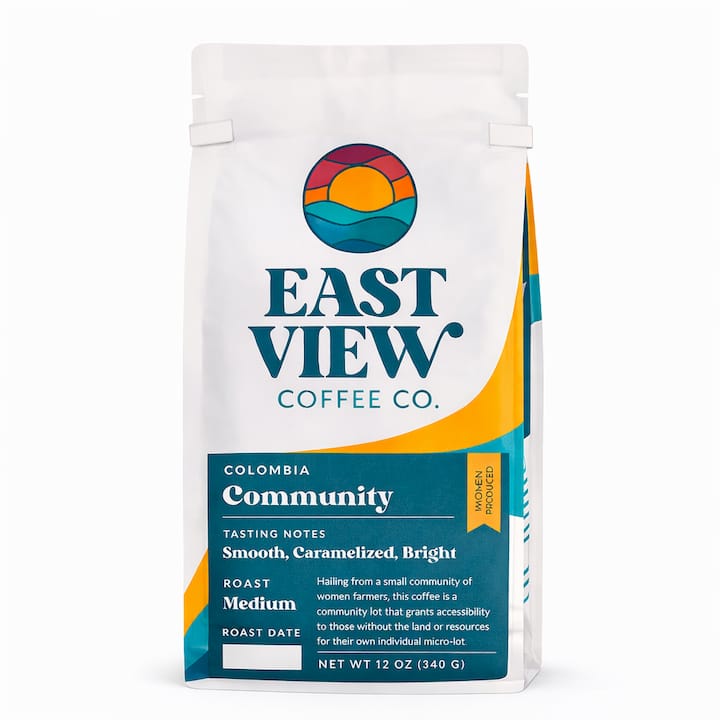
The Women’s Coffee Project reflects that approach in practice: working directly with women producer groups, ensuring premium compensation reaches the farm level rather than getting absorbed by intermediaries, and disclosing sourcing details on individual product listings instead of burying them in general marketing copy. Small-batch roasting also means Eastviewcoffee can commit to specific lots long enough for a farm to plan around that income, which is the kind of stability shade systems need to stay economically viable over the years it takes a canopy to mature.
Pro Tip: When you’re reading any roaster’s product page, including Eastviewcoffee’s, check for three things: a named producer group, any stated certification, and roast batch notes that reference the specific harvest. Those three details together tell you more about real sourcing than any single sustainability buzzword on the label.
What Are the Biggest Myths About Shade-Grown Coffee?
The biggest myth is that all shade-grown coffee automatically equals meaningful bird habitat. It doesn’t. A shaded monoculture with a single tree species planted only for canopy function delivers a fraction of the ecological value a traditional polyculture does, even though both can legally use the phrase “shade-grown” on a bag.
Watch for these red flags when a claim looks thin:
- Vague language like “grown in harmony with nature” with no farm name or certification attached.
- No mention of a specific certification, farm, or cooperative anywhere on the packaging or product page.
- Stock photography of generic mountains or forest instead of actual farm or producer photos.
- No disclosed premium or producer group, meaning there’s no way to confirm money reached the farm.
- Country-only origin claims with no region, elevation, or farm-level detail at all.
If a claim looks thin, ask the roaster directly for the farm name, the certification paperwork, or the importer they source through. A roaster with a genuine shade-grown relationship can usually answer within one email; one relying on marketing language alone often can’t.
Why This Issue Deserves More Attention Than It Gets
Most coverage of sustainable coffee farming treats shade cover as a nice-to-have, a feel-good detail buried below the tasting notes. That framing gets it backward. The canopy is doing structural work, buffering heat, holding soil, feeding nitrogen back into depleted ground, and none of that is optional as growing regions warm and margins tighten for smallholders.
What I think gets underestimated is how much the burden sits on the buying end of the relationship, not the growing end. A farmer choosing to keep or restore shade cover is often accepting lower yield in exchange for benefits that take years to show up as income. That bet only pays off if buyers keep paying premiums long enough for it to matter, which means the most useful thing a coffee drinker can do isn’t just picking a bag with the right words on it. It’s favoring roasters who commit to those farms for more than one harvest cycle.
Buy Bird Friendly® certified coffee when you can find it, and when you can’t, buy from roasters who tell you exactly which farm your money reached and what premium it paid. That single habit does more for shade grown coffee’s future than any amount of reading about carbon stocks ever will.
Choose Coffee That Keeps Farmers Committed to Shade Systems
Eastviewcoffee’s model is built around the same premise this article makes the case for: a shade system only survives if the farmer growing it gets paid enough to keep choosing it over a higher-yield sun-grown alternative. That’s the specific problem small-batch, direct-relationship roasting solves better than a commodity supply chain ever can, since every lot ties back to a named producer group instead of a blended, anonymous harvest.
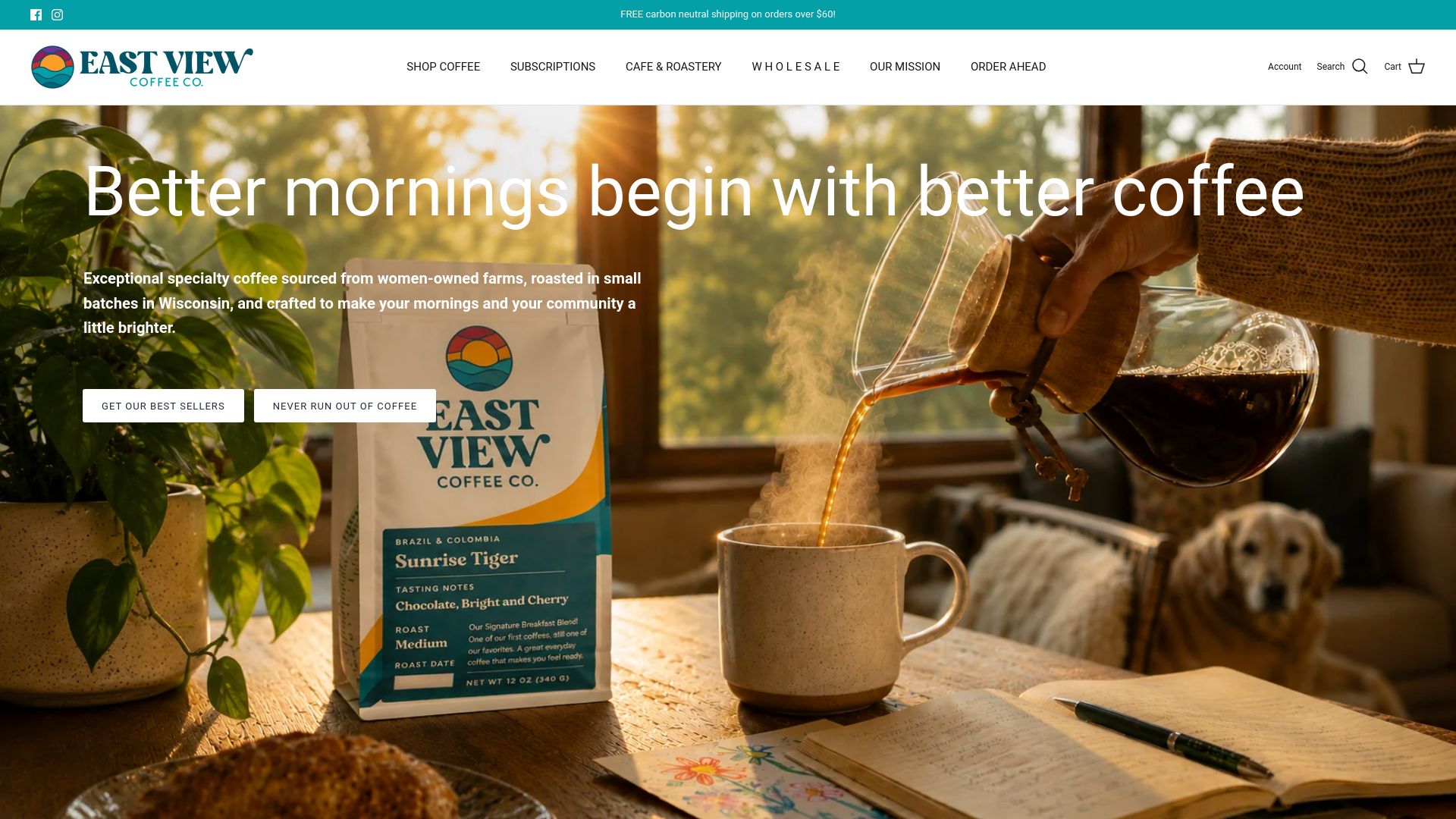
Eastviewcoffee’s seasonal coffee collection rotates through single-origin lots tied to specific harvests, and the Women’s Coffee Project puts producer-level sourcing front and center rather than treating it as a footnote. Every purchase routes premium compensation directly to the women-owned farms behind it. If you’d rather have a recommendation matched to your taste preferences before you commit, get a custom coffee recommendation and start your next bag with a roaster that shows you exactly where it came from.
Sources
- Ecological Benefits of Shade-grown Coffee - Smithsonian Migratory Bird Center
- Shade-grown Coffee: What’s the big deal? - Root Capital
- Shade-grown coffee as a climate buffer - Frontiers in Sustainable Food Systems
- Shade-grown coffee | Science, Technology and Innovation (STI) Portal - FAO
FAQ
What coffee is shade-grown?
Coffee grown under a canopy of taller trees rather than in cleared, sun-exposed rows qualifies as shade-grown, and common regions producing it include parts of Guatemala, Ethiopia, Colombia, and Mexico, though the practice varies widely from farm to farm.
Is shade-grown coffee better?
It generally supports more biodiversity, better soil and water retention, and higher carbon storage than sun-grown coffee, and many cuppers find shade-grown Arabica has more complex acidity and body, though “better” ultimately depends on your priorities around ecology versus yield economics.
Is Tony’s coffee shade-grown?
Sourcing practices vary by roaster and specific product line, so the most reliable way to confirm whether a particular coffee is genuinely shade-grown is to check for Bird Friendly® certification or farm-level sourcing details on that roaster’s own product page.
What does “shade grown” mean?
It means the coffee plants were cultivated under a canopy of other trees that provide habitat, soil protection, and microclimate buffering, though the term itself isn’t regulated, which is why certifications like Bird Friendly® matter more than the phrase alone.
How can I verify a roaster’s shade-grown claims?
Look for the Bird Friendly® seal, a named farm or producer group, organic certification, and a disclosed price premium; Eastviewcoffee, for example, publishes producer-group sourcing details through its Women’s Coffee Project rather than relying on the phrase “shade-grown” without backup.