
How to Choose a Wholesale Coffee Supplier for Your Business
Pick a supplier that matches your service model, guarantees roast-date transparency, and supports on-site sample testing before you sign anything. That single filter eliminates most bad fits faster than any spreadsheet comparison of per-pound pricing.
Here’s the sequence that actually works: define your daily volume and service style first, then request samples with written terms attached, then run a small trial order before committing to anything larger. Skip a step and you’ll find out the hard way, usually during a Saturday rush when the espresso pulls wrong and the supplier’s “next-day support” turns into a three-day email chain.
Non-negotiables before you sign anything:
- Roast dates and batch IDs printed on every bag
- Written delivery windows, not vague promises
- Some form of training or equipment support included
Pro Tip: Brew every sample on your own machine with your own water. A cup that tastes great in a roaster’s cupping room can taste completely different through your grinder and your tap water.
Key Takeaways
Choosing the right wholesale coffee supplier comes down to matching their service model to yours, verifying roast-date transparency, and testing every sample on your own equipment before committing.
| Point | Details |
|---|---|
| Match service model first | Define your daily volume and service style before comparing suppliers on price. |
| Test in your own shop | Brew samples on your actual equipment and water, not just in a roastery cupping. |
| Compare total cost, not per-pound price | A higher price with reliable delivery and training often beats a lower price with neither. |
| Run a measured trial order | Track waste, accept rate, and pull times for two to three weeks before scaling up. |
| East View Coffee fits shop-tested trials | Roast-to-order, small-batch coffee from women-owned farms with roast-date transparency on every bag. |
Table of Contents
- How to Choose Wholesale Coffee Suppliers: Where to Start Looking
- What Should You Look for in a Wholesale Coffee Supplier?
- How Do You Vet a Coffee Supplier Before Committing?
- What Does Wholesale Coffee Pricing and Lead Time Usually Look Like?
- What Are the Red Flags When Choosing a Coffee Supplier?
- How Do You Run a Low-Risk Trial Order?
- How Do Single-Origin, Blends, and Certified Coffees Differ for Wholesale Buyers?
- What Logistics and Shipping Details Should You Confirm Upfront?
- A Publisher’s Note on Sourcing Coffee the Right Way
- How East View Coffee Makes Supplier Trials Easy
- Sources
- FAQ
How to Choose Wholesale Coffee Suppliers: Where to Start Looking
Start by defining your own operation before you shop the market. As one sourcing guide puts it, figuring out your service model, daily volume, and what success looks like should come before you ever taste a sample, because the best-tasting coffee from a supplier who can’t hit your delivery schedule is worthless.
Once you know your parameters, here’s where wholesale coffee distributors and roasters actually show up:
- Local roasters — shortest lead times, most flexibility, often the easiest to visit in person
- Regional and national roasters — broader catalogs, more consistent capacity, sometimes less personal service
- Distributors and brokers — useful when you need multiple brands or ingredients under one account
- Trade shows and industry directories — good for comparing several coffee sourcing options in one trip
- Referrals from other local cafes — an underused shortcut; ask owners you trust who they use and why they stayed or switched
Large integrated suppliers add another layer worth knowing about. Companies like Volcafe operate procurement and logistics networks that touch a huge share of global coffee volume, which affects pricing and availability even for buyers who never deal with them directly. If your growth plans include multiple locations or private-label products down the road, ask any prospective supplier how they source their green coffee, since that answer often reveals whether you’re dealing with a boutique roaster or an operation backed by a much larger supply chain.
What Should You Look for in a Wholesale Coffee Supplier?
Quality matters, but it’s not the only thing that determines whether a supplier relationship survives past month three. Here’s what actually predicts long-term success:
Quality and consistency. Ask whether every bag carries a roast date and batch ID. A supplier who can’t tell you when a bag was roasted can’t tell you why two batches taste different, either. Look for a documented cupping or sampling process you can request before committing.
Operational fit. Minimum order quantities, lead times, and delivery reliability determine whether you’re restocking on your schedule or theirs. A supplier with a two-week MOQ cycle works fine for a slow-moving retail shelf and terribly for a busy espresso bar.
Service and support. The strongest wholesale relationships function more like an operations partner than a vendor. Ask early about technician referrals, bar-flow guidance, and whether they’ve helped businesses like yours troubleshoot grind settings or brew ratios.
Commercial terms. Pricing structure, payment terms, contract length, exclusivity clauses, and cancellation policies all deserve a close read before signing. A cheap rate locked into a rigid 12-month exclusivity clause can cost you more than a slightly higher rate with monthly flexibility.
Traceability and certifications. Organic, Fair Trade, and Rainforest Alliance certifications matter for menu storytelling and for customers who ask. Origin transparency, down to farm or cooperative, reduces the risk of unexpected flavor shifts and gives your staff something real to say when a customer asks where the coffee comes from.
Contract roasters built for large-scale private-label work, like Cascade Coffee, operate on a different model entirely from specialty small-batch roasters. Neither is wrong, but they solve different problems.
How Do You Vet a Coffee Supplier Before Committing?
A phone call and a nice website tell you almost nothing. Real vetting happens on your counter, with your equipment, using coffee you requested specifically.
Start your sample request with specifics: the exact roast profile you plan to serve, the grind size, the packaging format, and a firm roast date and batch ID attached to the bag. Vague requests get vague samples.
- Request two to three samples matching your actual menu needs, not generic “best sellers”
- Brew each one in your own shop, controlling grinder setting, dose, and water the same way across every test
- Run espresso and drip side by side against your current coffee, not just against each other
- Log staff and customer reactions for at least a few days, not one shift
- Confirm logistics in writing: delivery windows, return policy, and equipment service response times
Before moving forward, ask for two or three customer references, ideally businesses with a similar service style to yours. A supplier confident in their consistency won’t hesitate to connect you.
Pro Tip: Ask directly whether they offer roast-to-order production. A “yes” usually signals a supplier built around freshness rather than warehouse turnover, and it’s one of the fastest ways to separate serious wholesale coffee distributors from commodity resellers.
What Does Wholesale Coffee Pricing and Lead Time Usually Look Like?
Per-pound price is the number everyone fixates on, and it’s often the wrong one. Green coffee cost, roasting, packaging, freight, and margin all stack into that final figure, so two suppliers quoting the same price per pound can deliver very different value once you factor in reliability and support.
A slightly higher price frequently buys something more valuable: fewer stockouts, consistent roast profiles, and training that keeps your baristas from wasting product. That difference shows up on your bottom line even when it doesn’t show up on the invoice.
- MOQs for small-batch specialty roasters typically run lighter than bulk distributors, though roast-to-order models may ask for more advance notice
- Lead times range from a few days for local roasters to a couple of weeks for larger private-label or import-supported operations
- Payment terms vary between prepay and net-30; prepay often comes with a discount, while net terms protect your cash flow
Negotiate terms before volume, not after. Suppliers are far more flexible before the first invoice than after.
What Are the Red Flags When Choosing a Coffee Supplier?
Some warning signs show up before you ever place an order, if you know what to listen for during that first call.
Red flags to watch for:
- No roast dates printed anywhere on the bag or invoice
- Delivery windows described as “usually” or “typically” instead of a written commitment
- Reluctance to send samples before you commit to volume
- No references, or references that feel rehearsed
- A history of stockouts mentioned casually, like it’s normal
Questions worth asking on that first call:
- Do you roast to order, or hold pre-roasted inventory?
- What happens if I need an emergency order outside your normal cycle?
- Who handles equipment troubleshooting, and how fast do they respond?
- What’s your process if a batch doesn’t meet spec?
A supplier who answers these clearly and specifically, without hedging, is telling you something important about how they’ll behave once you’re a paying account instead of a prospect.
How Do You Run a Low-Risk Trial Order?
A trial order only works if you measure it like an experiment, not a vibe check. Set it up before the coffee arrives, not after.
- Place a small order, sized to run two to three weeks at normal volume
- Keep your current supplier’s coffee running as a control for direct comparison
- Run an A/B tasting with regular customers, not just staff
- Track measurable outcomes daily rather than relying on end-of-week memory
| Metric | What to track |
|---|---|
| Waste rate | Grounds or brewed coffee discarded per day |
| Customer accept rate | Repeat orders or feedback on the new coffee vs. the old |
| Espresso pull time | Consistency of shot timing across baristas |
| Stock variance | Difference between expected and actual usage |
Two to three weeks usually gives you enough data to decide. Shorter than that, and normal daily variation can look like a trend that isn’t real.
Pro Tip: Ask one barista to log pull times and taste notes at the same time each day. Consistency in your own testing process matters as much as consistency from the supplier.
How Do Single-Origin, Blends, and Certified Coffees Differ for Wholesale Buyers?
Not every coffee on a supplier’s list solves the same problem for your business, and matching the right type to your menu matters more than picking whatever’s cheapest that week.
Single-origin coffees come from one farm, region, or cooperative, and they carry a story worth telling on your menu. Café con Amor style direct-relationship coffee from Costa Rica is a good example of what this looks like done well: full origin transparency, a named farm relationship, and a flavor profile tied to a specific place. These work best for pour-over programs or a rotating “featured origin” slot.
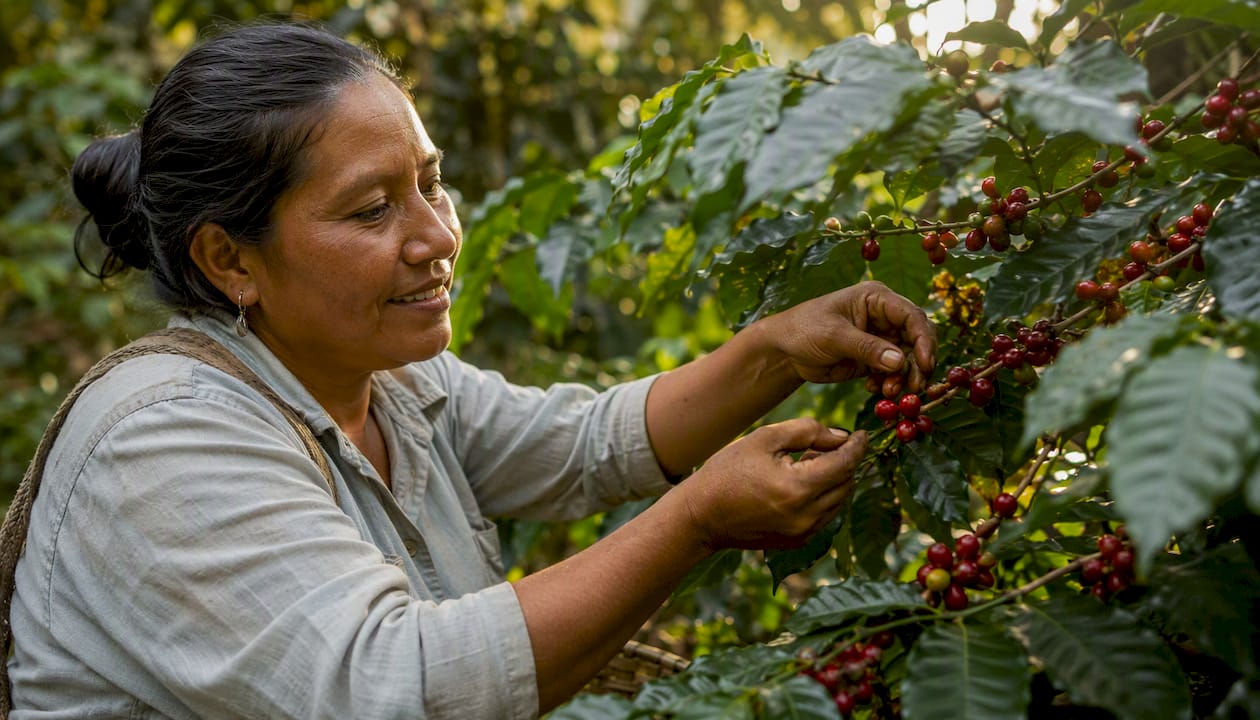
Blends exist for consistency. A house espresso blend is built to taste the same in January as it does in July, which matters far more for a shop pulling 200 shots a day than any single origin’s seasonal nuance. If your bar runs on volume and speed, a dependable blend belongs at the center of your program.
Organic and Fair Trade certified coffees matter for a specific customer segment that actively looks for those labels, and they can justify a slightly higher menu price. But certification alone doesn’t guarantee flavor or freshness, so don’t let a label substitute for an actual cupping.
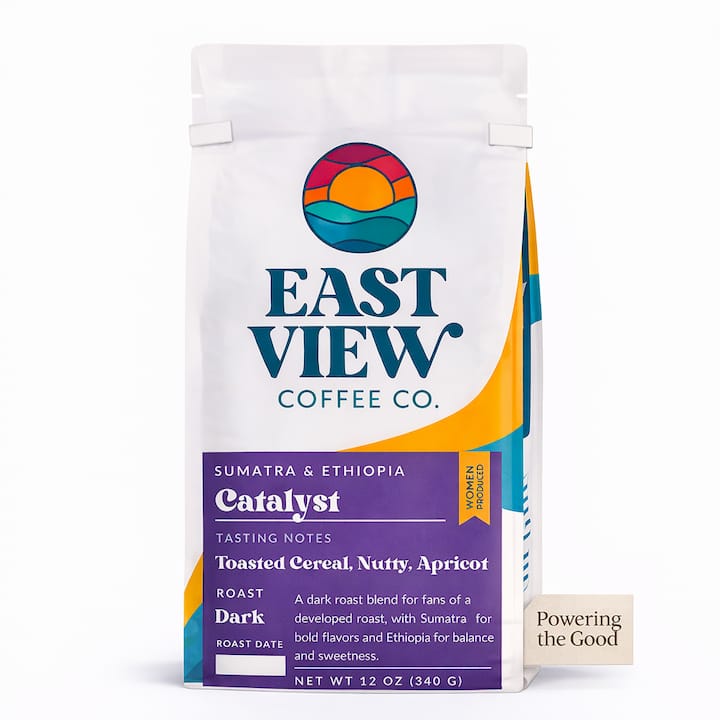
Coffee from women-owned farms represents a growing category buyers ask about directly, tied to specific sourcing relationships rather than a generic certification. Products like Catalyst, sourced from women-owned farms, give you a concrete story to share with customers who care where their coffee dollars go.
Most small businesses end up running two or three of these categories at once: a reliable blend for the espresso bar, a rotating single origin for pour-over, and maybe a certified option for customers who ask specifically.
What Logistics and Shipping Details Should You Confirm Upfront?
Coffee that tastes perfect in a sample bag can arrive stale, crushed, or three days late if logistics get overlooked during the sales conversation.
Packaging affects freshness more than most buyers realize. Ask whether bags include one-way degassing valves, since coffee releases carbon dioxide for days after roasting and trapped gas can blow out a poorly sealed bag or push out flavor prematurely. Confirm whether you’re getting whole bean or ground, and whether bulk formats (five-pound bags versus twelve-ounce retail bags) fit your actual brewing setup.
Shipping reliability deserves a direct question, not an assumption. Ask how the supplier handles weather delays, carrier issues, or a truck that breaks down on delivery day. A supplier with a backup plan will describe one specifically; a supplier without one will change the subject.
Customs and import considerations apply mainly if you’re buying directly from an overseas source rather than through a domestic roaster. Integrated supply-chain groups that handle milling, warehousing, and customs clearance exist specifically to absorb that complexity for buyers who don’t want to manage it themselves. For most small businesses working with a domestic wholesale roaster, this layer is already handled upstream, but it’s worth confirming rather than assuming.
If you’re building out a broader vendor list alongside your coffee supplier, sourcing decisions for restaurant textiles or licensed music for your space follow a similar logic: reliability and clear terms matter more than the lowest quoted price.
A Publisher’s Note on Sourcing Coffee the Right Way
Working closely with small businesses on sourcing decisions has made one thing clear: the suppliers who last are the ones who treat your shop like a partner, not an account number. East View Coffee Company builds its own sourcing around that same principle, working directly with women-owned farms and roasting in small batches out of Kenosha, Wisconsin, with a tasting room where anyone can taste the coffee before deciding.
How East View Coffee Makes Supplier Trials Easy
Most wholesale coffee distributors want you locked into pallet-sized minimums before they’ll even send a real sample. East View Coffee runs the opposite way: small-batch, roast-to-order production out of Kenosha, Wisconsin, sized for businesses that want to test before they commit to volume.
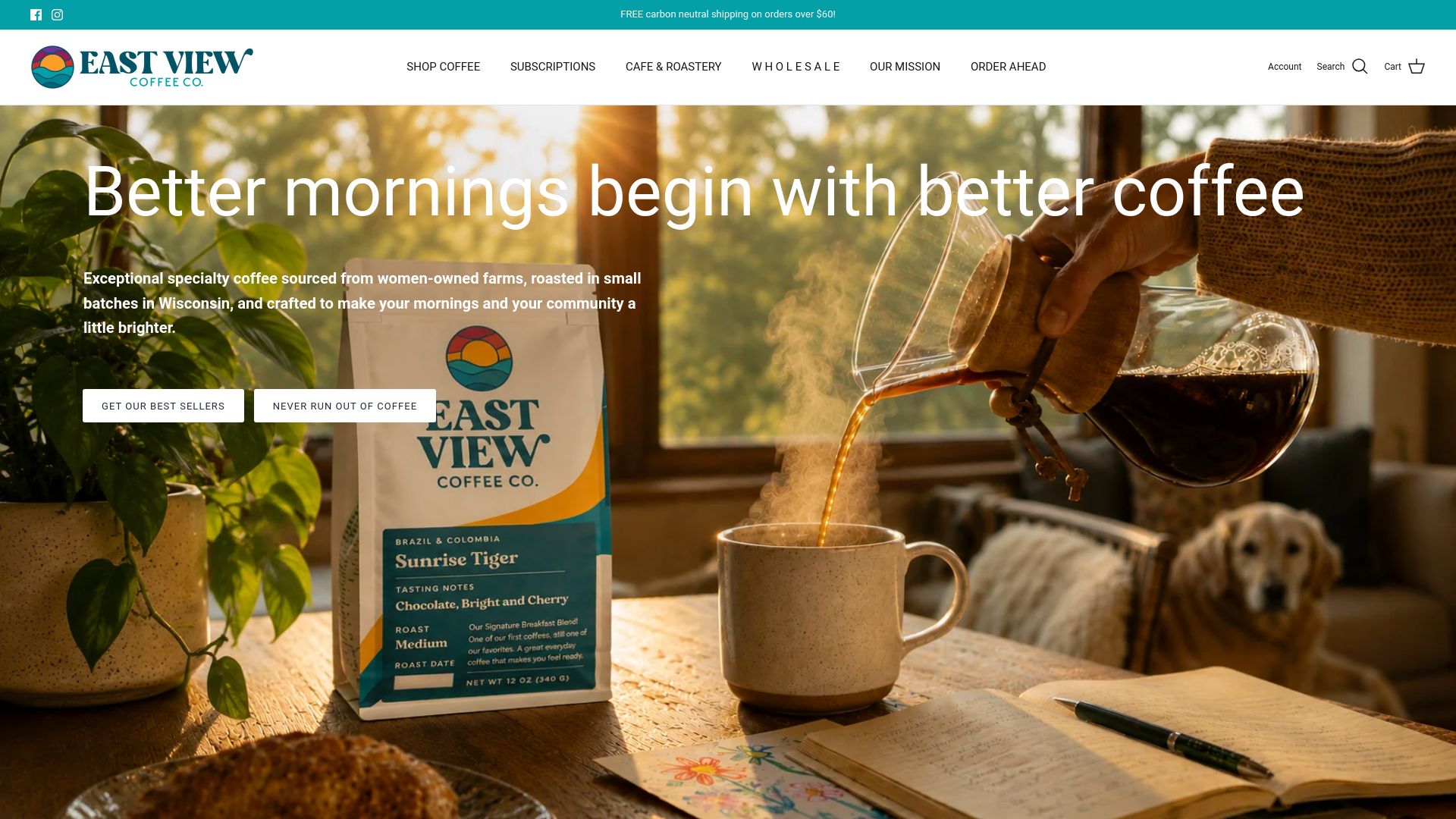
Every bag ships with a roast date and batch ID, sourced directly from women-owned farms, so you’re never guessing how fresh what’s in your hopper actually is. If you’re comparing coffee sourcing options and want a partner who’ll walk you through equipment setup and bar-flow questions rather than just processing an order, get a custom coffee recommendation built around your actual service model, or start smaller with a trial batch of Community Freshly Roasted Coffee to see how it performs on your own equipment this week.
Sources
FAQ
How Do You Get Wholesale Coffee for a Small Business?
Contact local or regional roasters directly, ask about their minimum order quantities and sample process, and request a small trial before signing a contract. Most specialty roasters, including East View Coffee, offer sample bags or small first orders specifically for this reason.
What Is the 80/20 Rule for Coffee?
Definitions vary across sources, so treat it as a general brewing guideline rather than a fixed formula.
What Is the Cheapest Coffee to Buy in Bulk?
Commodity-grade robusta and lower-grade arabica blends from large distributors tend to carry the lowest per-pound price, but they usually sacrifice consistency and roast-date freshness. For a business that depends on repeat customers, the cheapest bean rarely produces the lowest total cost once waste and inconsistency get factored in.
How Many Suppliers Should a Small Cafe Work With?
Most small cafes do well with one primary wholesale coffee supplier and a backup contact for emergencies. Spreading orders across too many suppliers makes it harder to build the kind of relationship where they know your equipment, your volume, and your standards.
What’s the Difference Between a Wholesale Distributor and a Roaster?
A distributor typically resells coffee from multiple roasters or brands, while a roaster like East View Coffee controls the entire process from sourcing to roast profile. Working directly with a roaster usually means more control over freshness and faster answers when something needs to change.