
What Is Peaberry Coffee, and Why Does It Taste Different?
A peaberry is a single, round seed that forms inside a coffee cherry when only one ovule develops instead of the usual two. That solo shape changes how heat moves through the bean during roasting, and it often produces a brighter, more concentrated cup than the flat-sided beans sitting next to it in the same harvest.
Here’s what that means for you as a drinker:
- Peaberries make up roughly 5 to 10 percent of any given harvest, which is why they get pulled out and sold separately.
- Their rounder, denser shape roasts a little differently than standard flat beans, so a roaster who knows what they’re doing will treat them as their own batch.
- The flavor reputation (brighter acid, cleaner sweetness) is real, but it’s tangled up with the fact that peaberry lots get extra sorting attention most flat-bean lots never see.
- Brewing peaberry well takes a few small adjustments in grind and ratio, not a whole new setup.
Key Takeaways
Peaberry coffee forms when a single seed develops inside the cherry instead of two, and its reputation for a brighter, cleaner cup comes from a mix of that shape and the extra sorting peaberry lots typically receive.
| Point | Details |
|---|---|
| Formation is genetic, not varietal | A peaberry is a single-seed mutation that can occur in any coffee variety, not a distinct cultivar. |
| Rarity drives price | Peaberries make up about 5 to 10 percent of any harvest, limiting available volume and raising cost. |
| Sorting shapes the flavor story | Much of peaberry’s clean, bright reputation traces to extra post-harvest sorting and dedicated roast profiles. |
| Roast it separately | Rounder, denser beans roast differently than flat beans, so mixing the two in one batch causes uneven results. |
| Taste it side by side | Cupping peaberry against flat beans from the same lot and roast is the only reliable way to judge the real difference. |
| East View Coffee Company sources it thoughtfully | Small-batch roasting in Kenosha, Wisconsin, and sourcing from women-owned farms supports the careful handling peaberry needs. |
Table of Contents
- What Is Peaberry Coffee? The Biology Behind the Bean
- How Common Is Peaberry Coffee, and Where Does It Come From?
- What Does Peaberry Coffee Taste Like?
- Why Does Peaberry Coffee Cost More?
- How Peaberry Roasts Differently Than Flat Beans
- How to Brew Peaberry Coffee for the Best Cup
- How to Cup and Evaluate a Peaberry Lot
- What to Look for When Buying and Storing Peaberry
- How Specialty Roasters Handle Peaberry: A Roaster’s Perspective
- Is Peaberry Coffee Actually Worth the Extra Cost?
- Try a Seasonal Peaberry from East View Coffee Company
- Primary Sources and Further Reading
- Sources
- FAQ
What Is Peaberry Coffee? The Biology Behind the Bean
A coffee cherry normally holds two seeds, each with one flat side where they pressed against each other as they grew. When pollination or growing conditions cause only one ovule to develop, that single seed has nothing to flatten against, so it grows into a small, round pellet instead of a half-moon. That’s a peaberry.
Growers and roasters have called this bean by several names over the decades, and you’ll see them on origin labels depending on where the coffee comes from.
- Caracol or caracolillo, Spanish for “snail” or “little snail,” is common on Central and South American labels.
- Peaberry is the standard English-language term used across Africa, Hawaii, and most specialty roasters worldwide.
- Some older trade documents refer to it simply as a “round bean” to distinguish it from “flat bean” lots.
It’s worth being clear about one thing before you spend extra money on a bag labeled peaberry: this is not a coffee variety, cultivar, or growing method. It’s a naturally occurring mutation that can show up in any variety, from Bourbon to Typica to SL28, at any elevation, in any country that grows coffee. A Kenyan farm growing SL28 will produce both flat beans and peaberries from the exact same trees in the exact same harvest. The peaberry is a sorting category, not a different plant.
How Common Is Peaberry Coffee, and Where Does It Come From?
Most estimates put peaberry occurrence at 5 to 10 percent of a given harvest, though the exact figure shifts by farm, variety, and growing season. That range is why you’ll rarely see peaberry sold in the same volume as a farm’s standard lot. A mill processing 10,000 pounds of cherry might yield only 500 to 1,000 pounds of peaberry once everything gets sorted, which caps how much any single roaster can offer at once.
A quick look at the numbers: if peaberries account for roughly one out of every ten to twenty beans a farm harvests, a small cooperative producing a few hundred bags of standard coffee a year might set aside only a handful of bags of pure peaberry. That scarcity is baked into the category before marketing ever enters the picture.
Certain origins have built strong reputations around peaberry specifically, and you’ll see it marketed by name from these regions more than others:
- Tanzania produces some of the most widely recognized peaberry lots, often from the slopes around Mount Kilimanjaro.
- Kenya peaberries show up frequently in specialty auctions and command attention for their density and clarity.
- Kona, from Hawaii’s Big Island, markets peaberry heavily as a premium tier within an already premium origin.
- Papua New Guinea and Costa Rica also produce notable peaberry lots, though they see less consumer marketing than Kenya or Kona.
Because you cannot tell from the outside of a cherry whether it holds one seed or two, mills separate peaberries after processing using density tables, screen sizes, or manual picking. That extra step limits how quickly a mill can process volume, which is one more reason supply stays tight even at large farms.
What Does Peaberry Coffee Taste Like?
Peaberry is commonly described as brighter in acidity, more concentrated in sweetness, and lighter in body than flat beans from the same lot, with aromatics that read as more layered rather than simply “louder.” Whether that comes from the bean’s shape alone or from the sorting process it goes through is a genuinely open question, and honest roasters will tell you both forces are probably at work.
Origin still does most of the heavy lifting when it comes to actual flavor. A few examples show how much variation exists even within the peaberry category:
- Tanzanian peaberry frequently shows bright citrus acidity, sometimes with a black tea quality and a snappy, clean finish.
- Kona peaberry tends toward smooth, low-acid cups with chocolate and light nut notes, reflecting Hawaii’s growing conditions more than the bean shape.
- Kenyan peaberry, like a washed lot from the Ndiaini factory, often delivers juicy, berry-forward notes with honey, lemon, lime, and stone fruit, and roasters commonly adjust heat application to bring those flavors forward.
Here’s the part most marketing copy skips: specialty coffee professionals have pointed out that a meaningful chunk of peaberry’s flavor reputation traces back to extra post-harvest sorting and more uniform roasting, not some inherent property of a round bean. Uniform bean size roasts more evenly than a mixed batch of different shapes and densities, and a more even roast almost always tastes cleaner. That’s not a knock on peaberry. It just means the “magic” is partly mechanical.
Pro Tip: If you want to know whether you’re tasting the bean shape or the sorting quality, ask your roaster whether the flat beans from that same lot are also sold separately. Cupping both side by side, at the same roast level, is the only real way to isolate the variable.
Why Does Peaberry Coffee Cost More?
Peaberry commands a premium at retail for reasons that have almost nothing to do with the coffee inside the bean and almost everything to do with what it takes to get that bean into a bag.
- Sorting labor. Since you can’t visually tell from the cherry whether it contains one seed or two, mills have to separate peaberries from flat beans after drying and hulling, using density tables, screen sizes, or hand-picking for the smallest lots.
- Low yield per harvest. At 5 to 10 percent of total volume, a farm simply doesn’t produce enough peaberry to sell it at the scale of a standard lot, and low-volume goods almost always carry higher per-pound costs.
- Microlot marketing and auction dynamics. Peaberry has built a reputation as a specialty or gift-tier coffee, and that cachet lets producers and roasters price it above a standard offering from the same farm.
- Extra quality control. Producers aiming for a premium peaberry line often add manual inspection passes on top of mechanical sorting, catching broken or defective beans before roasting.
None of this means peaberry is a scam. It means the premium reflects real handling costs, not a guaranteed leap in cup quality. Buy it because you’re curious about the sensory difference, not because you assume “rare” automatically means “better.”
How Peaberry Roasts Differently Than Flat Beans
A round bean behaves differently in a roasting drum than a flat-sided one. Flat beans tend to sit with their flat face against the drum wall or against each other, which affects how heat transfers. Peaberries roll more freely, similar to a marble bouncing around a barrel, and that changes contact time with the hot metal and hot air inside the roaster.
Roasters who work with peaberry regularly report that the beans can hit first crack at slightly different timing than a flat-bean batch from the same lot, largely because of that density and rolling behavior. A few practical adjustments show up again and again among roasters who take peaberry seriously:
- Watch development time closely. Denser beans can look done on the surface before the inside has caught up, so pulling too early risks a grassy or underdeveloped center.
- Adjust heat application through the Maillard phase, easing back slightly if the beans are coloring faster on the outside than expected, to avoid a scorched exterior over a raw interior.
- Roast lighter for brighter origins like Tanzania or Kenya to preserve acidity, and consider a touch more development for smoother origins like Kona where you want to round out the finish.
- Never roast peaberry mixed with flat beans from the same lot. The size and density mismatch causes uneven roasting across the batch, undercutting the entire reason to buy peaberry in the first place.
That last point is where a lot of the peaberry “magic” actually lives. When a roaster separates peaberries and gives them a dedicated profile, bean uniformity reduces the variability that normally creates a muddled cup, and that consistency is a huge part of what people are tasting when they say peaberry seems “cleaner.”
Pro Tip: If you roast at home, resist the urge to eyeball peaberry the way you would flat beans. Their rounder shape means visual cues like “crack and color” can lag slightly behind what’s happening internally, so lean more on smell and sound than sight alone.
How to Brew Peaberry Coffee for the Best Cup
Peaberry doesn’t need an exotic brewing method. It needs the same care you’d give any high-quality single origin, with small tweaks that account for the bean’s density and the flavor characteristics you’re trying to highlight.
Pour-over (V60 or Chemex): Use a 1:16 ratio, roughly 22 grams of coffee to 350 grams of water, ground medium-fine. Bloom with about 45 grams of water for 30 seconds, then pulse-pour in three to four stages, finishing around 2:45 to 3:00. This method favors brighter origins like Tanzanian or Kenyan peaberry, since the paper filter keeps the cup clean and lets acidity shine.
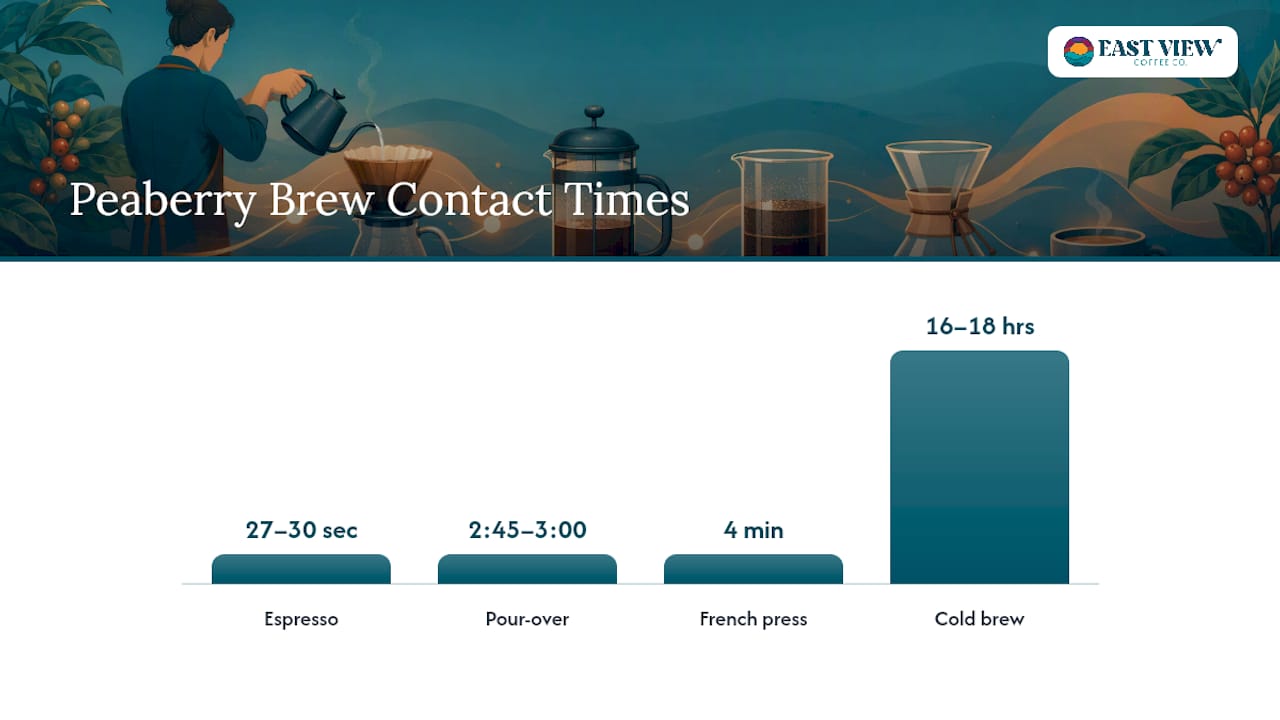
Espresso: Dose 18 grams into an 18 to 20 gram basket, aiming for a 1:2 output (36 grams) in 27 to 30 seconds. Because peaberries are denser, some baristas find they need a slightly finer grind than they’d use for flat beans to hit the same extraction time. If the shot runs fast and sour, tighten the grind before adjusting anything else.
French press: Use a 1:15 ratio, about 30 grams of coffee to 450 grams of water, ground coarse. Steep for four minutes, break the crust, skim the foam, and press gently. This method softens acidity and highlights body, which suits smoother origins like Kona.
Cold brew: Use a 1:8 ratio for concentrate, roughly 100 grams of coarsely ground coffee to 800 grams of room-temperature water, steeped 16 to 18 hours in the refrigerator, then diluted to taste.
| Method | Dose | Grind | Water Temp | Time |
|---|---|---|---|---|
| Pour-over | 22g coffee : 350g water | Medium-fine | around around 200°F | 2:45 to 3:00 |
| Espresso | 18g in, 36g out | Fine | around 195°F | 27 to 30 sec |
| French press | 30g coffee : 450g water | Coarse | around 200°F | four minutes |
| Cold brew | 100g coffee : 800g water | Coarse | Room temp | 16 to 18 hrs |
A few adjustment notes worth keeping in your back pocket:
- If the cup tastes sharp or sour, extend contact time slightly or grind a touch finer before dropping the temperature, since heat loss often masks sweetness rather than fixing acidity.
- Peaberry’s denser structure means it can resist water penetration slightly more than flat beans, so don’t be afraid to grind marginally finer than you would for a flat-bean lot at the same origin.
- Bloom time matters more with fresher roasts. Give peaberry at least 30 seconds to degas before your main pour, especially within the first two weeks of a roast date.
Pro Tip: Brew the same peaberry two ways in one sitting, once as a pour-over and once as a French press, using the same beans and roughly the same ratio. The contrast tells you more about what that specific coffee actually offers than any tasting note on the bag.
For more detail on dialing in ratios and equipment, East View Coffee Company’s brew guide walks through method-specific setups you can adapt for any single-origin lot, peaberry included.
How to Cup and Evaluate a Peaberry Lot
Tasting peaberry with any real rigor means controlling your variables the way a professional cupping session would, not just sipping a cup and deciding you like it.
- Aroma first. Smell the dry grounds, then the wet grounds after adding hot water, and note anything floral, fruity, nutty, or spice-forward before you taste a drop.
- Acidity type, not just intensity. Is it citrusy and sharp, like Kenyan peaberry often is, or more like a mellow malic tartness closer to green apple?
- Body and mouthfeel. Peaberry often reads lighter than flat beans from the same origin, so pay attention to whether it feels thin, silky, or syrupy on the tongue.
- Sweetness and aftertaste. Note whether sweetness lingers after swallowing or fades immediately, and whether the aftertaste is clean or muddled.
- Complexity. Does the flavor shift as the cup cools, revealing new notes, or does it taste the same from first sip to last?
The single most useful thing you can do is a direct comparison: cup the peaberry against the flat-bean lot from the same farm, same processing method, same roast date, and same roast level. Grind both to the same size, use the same water, and brew both at the same ratio and time. Any difference you taste at that point is a real signal about shape, not about origin, processing, or roast variance muddying the result.
East View Coffee Company’s guide on cupping versus casual tasting breaks down how to structure that kind of side-by-side session at home without professional equipment.
What to Look for When Buying and Storing Peaberry
A peaberry bag is only as good as the information printed on it. Before you buy, check for these signals:
- Roast date, not just a “best by” date. Peaberry’s flavor nuances fade fast, so a bag roasted within the last two to three weeks will show far more than one that’s been sitting for two months.
- Origin and farm or cooperative name, since that tells you more about likely flavor than the word “peaberry” ever will on its own.
- Processing method (washed, natural, honey), which shapes the cup as much as or more than the bean shape does.
- How the peaberry was separated, mechanical or hand-sorted, since roasters proud of hand-sorted lots usually say so on the label.
- Bag size. Because peaberry yields are small, expect smaller bag options or limited seasonal runs rather than standing year-round inventory.
Small-batch roasting matters more for peaberry than for standard coffee, precisely because the category’s appeal rests on freshness and careful, dedicated roast profiles. A peaberry roasted in a massive batch alongside unrelated lots loses the exact advantage that made it worth buying in the first place.
Once you’ve got a good bag, store it whole bean in an airtight container, away from light and heat, and grind only what you need right before brewing. Most peaberry is best enjoyed within four to six weeks of the roast date, and grinding it in advance accelerates flavor loss faster than almost anything else you could do wrong.
How Specialty Roasters Handle Peaberry: A Roaster’s Perspective
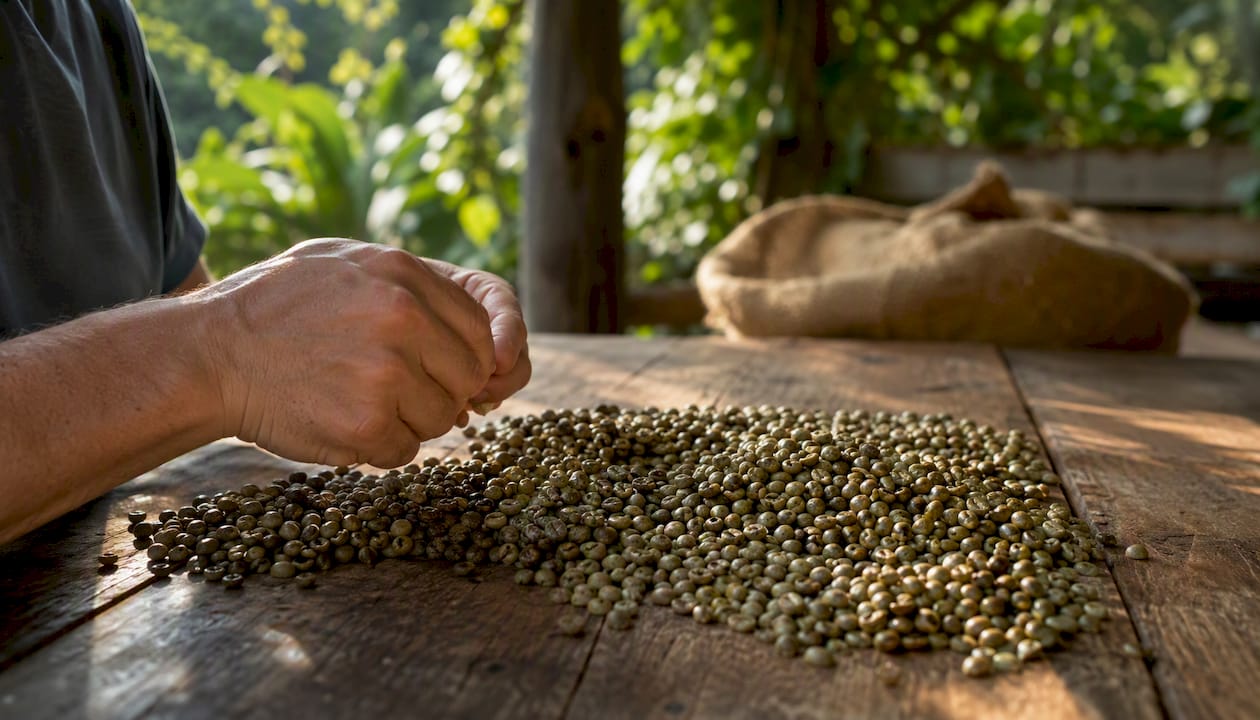
Behind every well-made peaberry lot sits a mill and a roaster who took the extra sorting seriously. Mills commonly use density tables and screen grading to physically separate peaberries by size and weight, then hand-sort the top lots to remove broken or defective beans before they ever reach a roaster’s hands.
On the roasting side, dedicated peaberry profiles usually mean a separate batch schedule, closer attention to first-crack timing, and a willingness to pull a smaller batch rather than fill a drum with mismatched shapes just for efficiency’s sake.
East View Coffee Company applies that same batch-first philosophy across its lineup, roasting in small runs in Kenosha, Wisconsin, rather than large industrial batches, and sourcing from women producers whose farms often yield the kind of carefully sorted lots that make peaberry worth seeking out. Coffee from those women-owned farms frequently includes the sorting and quality-control steps that separate an average peaberry from a genuinely excellent one.
If you’re buying peaberry from any roaster, ask two questions before you spend the extra money: was this batch roasted separately from flat beans of the same lot, and how recently was it roasted? Those two answers tell you more than any tasting note on the packaging.
Pro Tip: Home roasters working with green peaberry should hand-sort out any beans that look unusually small or oddly shaped before roasting. A handful of stray flat beans mixed into a peaberry batch will roast unevenly and throw off your whole profile.
Is Peaberry Coffee Actually Worth the Extra Cost?
The honest answer is that it depends on what you’re paying for. The shape effect on flavor is real but modest. The sorting and roasting effect is bigger, and it’s the part most marketing conveniently glosses over. A peaberry that gets a dedicated roast profile and comes from a farm known for meticulous processing will almost always taste cleaner than a mixed flat-bean batch, but that cleanliness comes from the care taken, not from the bean being round.
Splurge on peaberry when you want to explore a specific origin’s character in its most refined form, or when you’re curious about the sensory experiment itself. Prioritize origin and processing method over the peaberry label when your budget is tight, since a well-processed flat-bean lot from a great farm will usually beat a mediocre peaberry every time.
The only way to settle this for yourself is to cup peaberry against flat beans from the same lot. Trust your own palate over any bag’s marketing copy, because that comparison is the only argument that actually holds up.
Try a Seasonal Peaberry from East View Coffee Company
East View Coffee Company roasts in small batches out of Kenosha, Wisconsin, which means when a peaberry microlot comes through, it gets its own dedicated roast profile instead of getting lost in a massive production run. That’s the exact practice this article just spent several sections explaining matters.

Peaberry availability shifts with the harvest calendar, so the best way to catch one is to check the seasonal coffee collection regularly, where single-origin and limited microlots rotate in throughout the year. If you’d rather start with something reliably in stock, the Community Freshly Roasted Coffee gives you a fresh-roasted baseline from the same small-batch approach, sourced through partnerships with women-owned farms. Not sure what fits your taste? Request a custom coffee recommendation and get matched to a lot worth cupping side by side with whatever you’re drinking now.
Primary Sources and Further Reading
- Peaberry — Wikipedia: the clearest baseline definition and harvest-percentage figures for peaberry formation.
- What are peaberry coffee beans? The myths, the reality — Perfect Daily Grind: an industry-facing breakdown of how much of peaberry’s reputation comes from sorting versus shape.
- Wont you be my peaberry: What are peaberry coffee beans? — Serious Eats: a consumer-facing explainer with a strong tasting-comparison perspective.
- What is Peaberry Coffee? Guide To These Special Beans — Curiosity Coffee: a useful survey of origins commonly marketed as peaberry.
- Crown Jewel Kenya Peaberry Washed Ndiaini Factory — Royal Coffee: a real commercial example showing origin-specific tasting notes and density.
Sources
- Peaberry — Wikipedia
- What are peaberry coffee beans? The myths, the reality — Perfect Daily Grind
- Wont you be my peaberry: What are peaberry coffee beans? — Serious Eats
- What is Peaberry Coffee? Guide To These Special Beans — Curiosity Coffee
- Crown Jewel Kenya Peaberry Washed Ndiaini Factory — Royal Coffee (product page)
FAQ
What Makes Peaberry Coffee Different from Regular Coffee?
Peaberry forms when only one seed develops inside the coffee cherry instead of two, producing a rounder, denser bean that roasts differently and often tastes brighter or more concentrated than flat beans from the same lot.
Why Is Peaberry Coffee So Expensive?
Peaberry costs more mainly because it requires extra post-harvest sorting since mills can’t tell from the outside of a cherry which beans are peaberries, and because it only makes up 5 to 10 percent of any given harvest.
What Does Peaberry Coffee Taste Like?
Peaberry typically shows brighter acidity, more concentrated sweetness, and a lighter body than flat beans, though origin and processing still shape the specific flavor more than the bean shape alone does.
What Is Peaberry Kona Coffee?
Kona peaberry is a peaberry-sorted lot from Hawaii’s Kona region, prized for smooth, low-acid cups with chocolate and light nutty notes, and it’s often marketed as a premium tier within Kona’s already premium reputation.
How Should I Brew Peaberry Coffee at Home?
Treat it like any high-quality single origin: use a 1:16 ratio for pour-over, grind slightly finer if extraction runs fast due to the bean’s density, and always cup it against a flat-bean lot from the same farm to judge the real difference for yourself.
Recommended
- Coffee Cupping vs. Coffee Tasting: What’s the difference? – East View Coffee Company
- A Guide to Coffee Processing: What Does It Mean and Why Does It Matter – East View Coffee Company
- What’s Really Inside Those Tasting Notes? – East View Coffee Company
- Women-Produced Coffee – East View Coffee Company