
How to Choose Decaf Coffee That Actually Tastes Good
The fastest way to choose decaf coffee you’ll enjoy: pick a specialty-roasted bag that lists the decaffeination method (Swiss Water® or CO₂), shows a roast date, and names the farm or origin region. Those three details separate genuinely flavorful decaf from the flat, stale stuff that gave the category its bad reputation.
Before you read further, run this quick check on any bag you’re considering:
- Decaffeination method: Is it Swiss Water® Process, CO₂, or ethyl acetate? If the label just says “naturally decaffeinated” with nothing else, put it back.
- Roast date and whole-bean option: A bag without a roast date is almost certainly not fresh. Whole bean keeps longer and brews better.
- Sourcing transparency: Does the label name a country, region, or producer? Certifications like Organic, Fair Trade, or Rainforest Alliance are a bonus.
East View Coffee Company checks all three, and the sections below explain exactly why each factor matters and how to use them when you shop.
Key Takeaways
Choosing great decaf comes down to three non-negotiable details on the bag: a named decaffeination method, a printed roast date, and traceable origin from a roaster who sources transparently.
| Point | Details |
|---|---|
| Decaffeination method matters | Choose Swiss Water® or CO₂; avoid bags that list no method at all. |
| Roast date is your freshness signal | Buy from roasters who print it; skip any bag without one. |
| Whole bean beats pre-ground | Grind just before brewing to preserve aroma and body in decaf. |
| Adjust your brew for decaf’s porosity | Grind slightly coarser and extend extraction time to build a fuller cup. |
| Eastviewcoffee meets the checklist | Nocturne Decaf and Community Freshly Roasted Coffee list method, origin, and roast date on every bag. |
Table of Contents
- Why does decaf coffee taste flat — and can it actually taste great?
- How to choose decaf coffee: the five factors that actually matter
- Simple brewing adjustments that make decaf taste better
- Where to buy decaf that’s actually worth drinking
- What sourcing from women-owned farms actually changes about the cup
- Eastviewcoffee’s decaf: built around the five-factor checklist
- Sources
- FAQ
Why does decaf coffee taste flat — and can it actually taste great?
Decaf itself is not the cause of poor flavor. The real culprits are low-quality green beans and aggressive processing, not the absence of caffeine. America’s Test Kitchen found several decafs with genuinely complex, specialty-level tasting notes, and concluded that decaffeination method alone does not determine cup quality — roast and origin shape the flavor just as much.
The decaffeination process does matter, though, because it affects which flavor compounds survive.
- Swiss Water® Process uses only water and activated carbon filters to remove caffeine, preserving more of the bean’s original flavor profile. Swiss Water® reports its process removes 99.9% of caffeine while leaving the aromatic compounds largely intact.
- CO₂ (supercritical carbon dioxide) is the most selective method available, targeting caffeine molecules with minimal disruption to flavor. It tends to produce clean, origin-forward cups.
- Ethyl acetate can yield lively, even fruity results in some coffees, though the flavor outcome varies more by roaster and bean than by the solvent itself.
- Methylene chloride is the method drawing the most scrutiny. Barista Magazine has covered ongoing FDA review of this solvent, and many specialty roasters have moved away from it.
Specialty roasters also tailor their roast profiles specifically for decaf. Because decaf beans have already been through a water or solvent process, they behave differently in the drum — they can tip toward bitterness faster if roasted the same way as green, untreated beans. A roaster who adjusts for that, and who lists a roast date on every bag, is giving you a cup with a real chance at complexity.
Trust signals to look for on any product page: roast date, named decaffeination method, farm or region of origin, producer details, and third-party certifications.
How to choose decaf coffee: the five factors that actually matter
Swiss Water® recommends five shopping criteria for great decaf: origin, decaffeination process, roast profile, where you buy, and sourcing transparency. Here’s what each one means in practice.
The five factors:
- Origin (single-origin vs. blend): Single-origin decaf lets you taste the character of one place — a Guatemalan coffee’s chocolate and walnut notes, or an Ethiopian coffee’s floral brightness. Blends trade that specificity for consistency, which is useful if you want the same cup every morning without variation.
- Decaffeination method: Swiss Water® and CO₂ are the two methods most consistently associated with flavor preservation. Ethyl acetate can work well in the right hands. Methylene chloride is worth avoiding if you have concerns about residues, even though the National Coffee Association notes that regulators consider approved decaffeination methods safe at current residue levels.
- Roast profile: Light roasts highlight origin character and acidity; medium roasts balance brightness with body; dark roasts bring out bittersweet, chocolatey notes that hold up well in milk drinks. Specialty roasters often publish tasting notes that tell you exactly what to expect.
- Freshness: Aboutcoffee and roaster-education sources consistently point to roast date as the most reliable freshness indicator. Whole-bean decaf stays fresh longer than pre-ground because grinding dramatically accelerates oxidation.
- Sourcing transparency: Organic certification means no synthetic pesticides in the growing process. Fair Trade and Rainforest Alliance address farmer compensation and environmental practices. Direct trade goes further, with roasters building direct relationships with producers and often paying above Fair Trade minimums.
Shopping checklist — run through this on any product page:
- Is the decaffeination method named (not just “naturally decaffeinated”)?
- Is a roast date printed on the bag?
- Is whole bean available?
- Is the origin country or region listed?
- Are any third-party certifications shown?
Red flags: a label that says only “naturally decaffeinated” with no process listed; no roast date anywhere on the packaging; pre-ground only; no origin information at all.
Pro Tip: Single-origin decaf is worth trying when you want to explore flavor and you’re willing to accept some batch-to-batch variation. A blend is the smarter pick if you’re brewing for a household with mixed preferences or you want a reliable daily cup without surprises. The non-obvious trade-off: blends are often more forgiving to brew, while single-origins reward a little extra attention to grind and water temperature.
Simple brewing adjustments that make decaf taste better
Decaf beans are more porous after processing, which changes how water moves through them during extraction. Barista Magazine explains that this porosity shift affects water absorption and recommends practical adjustments to compensate. Baristas surveyed by Simply Recipes echo the same advice: treat decaf like specialty coffee, and make small grind and extraction tweaks rather than brewing it exactly like a caffeinated bag.
Quick brewing adjustments:
- Grind slightly coarser than your usual setting to avoid over-extraction from the more porous structure.
- Extend extraction time moderately for pour-over or espresso to build body.
- Add a small extra dose (roughly half a gram per cup) if the cup tastes thin.
- Grind whole beans just before brewing — decaf goes stale faster once ground.
- Lower water temperature by 2–3°F if you’re getting bitter notes, especially with darker roasts.
| Symptom | Likely cause | Quick fix |
|---|---|---|
| Thin, watery cup | Underextracted or grind too coarse | Go slightly finer or extend brew time |
| Bitter, harsh finish | Overextracted or water too hot | Coarsen grind or drop water temp 2–3°F |
| Flat, no aroma | Stale beans or pre-ground | Buy whole bean with a recent roast date |
| Sour, sharp taste | Underextracted, especially light roast | Extend brew time or use slightly hotter water |
Pro Tip: Match roast level to brew method. Light-roast decaf shines in pour-over, where the slower extraction highlights delicate origin notes. Medium roast works well in a drip machine. Dark-roast decaf holds its own in espresso and milk-based drinks, where the bold, bittersweet character cuts through steamed milk without disappearing.
Where to buy decaf that’s actually worth drinking
Specialty roasters and direct online ordering give you the best shot at flavorful, transparent decaf. Grocery store decaf is convenient, but most of it is roasted for shelf life rather than peak flavor, and roast dates are rarely printed on the bag.
| Channel | Freshness | Transparency | Selection | Best for |
|---|---|---|---|---|
| Grocery store | Low (no roast date) | Minimal | Limited | Convenience only |
| Specialty roaster / online | High (roast date listed) | High (method, origin, certs) | Wide | Flavor-focused buyers |
| Subscription service | High (ships after roasting) | Varies by roaster | Rotating | Regular decaf drinkers |
Bon Appétit highlights subscriptions as a practical way to get freshly roasted decaf and sample multiple coffees before committing to larger purchases. Look for subscriptions that let you set frequency, choose bag size, and pause or cancel without a penalty.
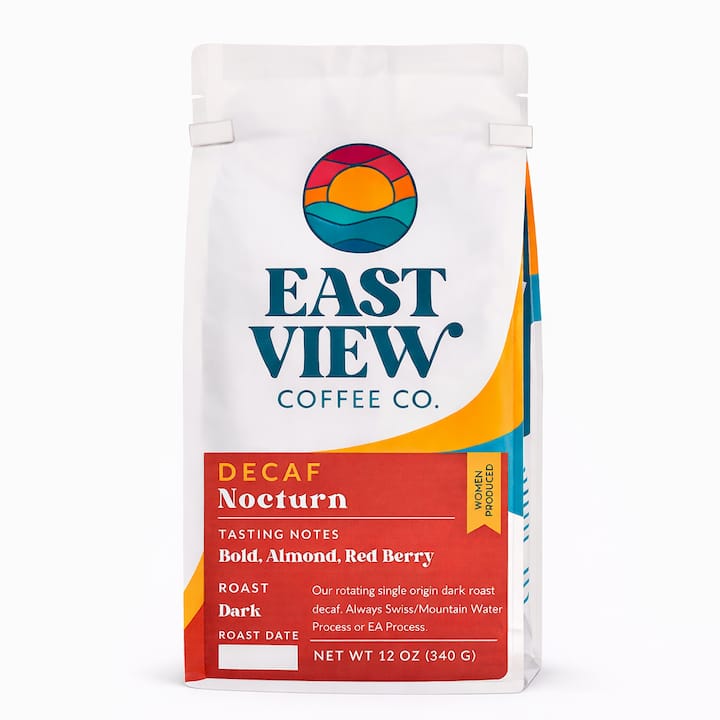
Eastviewcoffee’s Nocturne Decaf is sourced from women-owned farms, roasted in small batches in Kenosha, Wisconsin, and ships with a roast date on every bag. The decaf collection includes whole-bean options and a decaf bundle for first-time buyers who want to sample before committing to a full subscription.
How to order checklist:
- Choose whole bean over pre-ground.
- Confirm the roast date will be within two weeks of your delivery.
- Start with a sample size or bundle if you haven’t tried the roaster before.
- Check whether the subscription lets you pause or swap roast levels.
What sourcing from women-owned farms actually changes about the cup
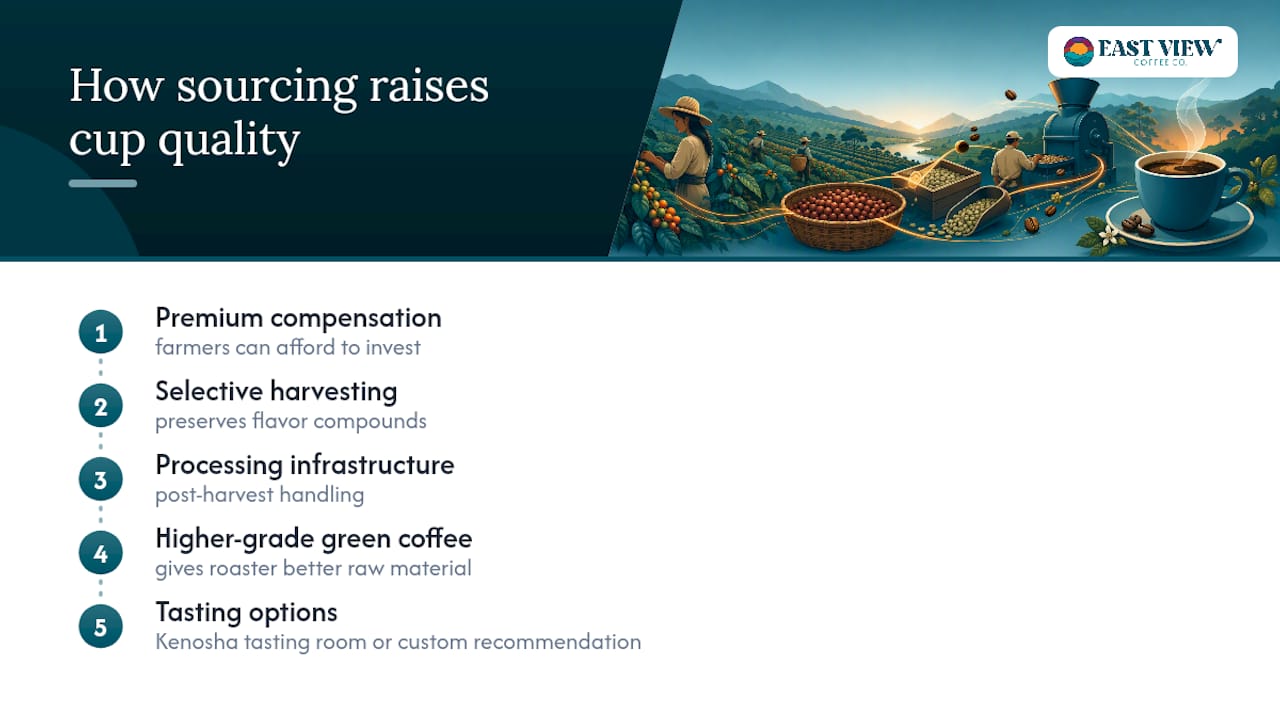
The connection between ethical sourcing and cup quality is more direct than most buyers realize. When farmers receive premium compensation, they can afford to invest in selective harvesting, better processing infrastructure, and the kind of careful post-harvest handling that preserves the flavor compounds a good decaffeination process then has to work with. Cut the farmer’s margin, and you cut the quality ceiling of every bag downstream.
Eastviewcoffee’s model, sourcing from women-owned farms and paying above-market rates, is not just an ethical stance. It’s a quality filter. The farms that can sustain those practices tend to produce more consistent, higher-grade green coffee, which gives the roaster better raw material to work with before a single bean touches the decaffeination process.
If you want to taste the difference that sourcing transparency makes, the tasting room in Kenosha is the most direct way to compare. Alternatively, a custom coffee recommendation from the Eastviewcoffee team can match you to a decaf that fits your brew method and flavor preferences before you order.
Eastviewcoffee’s decaf: built around the five-factor checklist
Eastviewcoffee’s Community Freshly Roasted Coffee and Nocturne Decaf meet every point on the shopping checklist: the decaffeination method is declared on the product page, roast dates are printed on every bag, beans come from women-owned farms with named origins, and whole-bean options are standard.
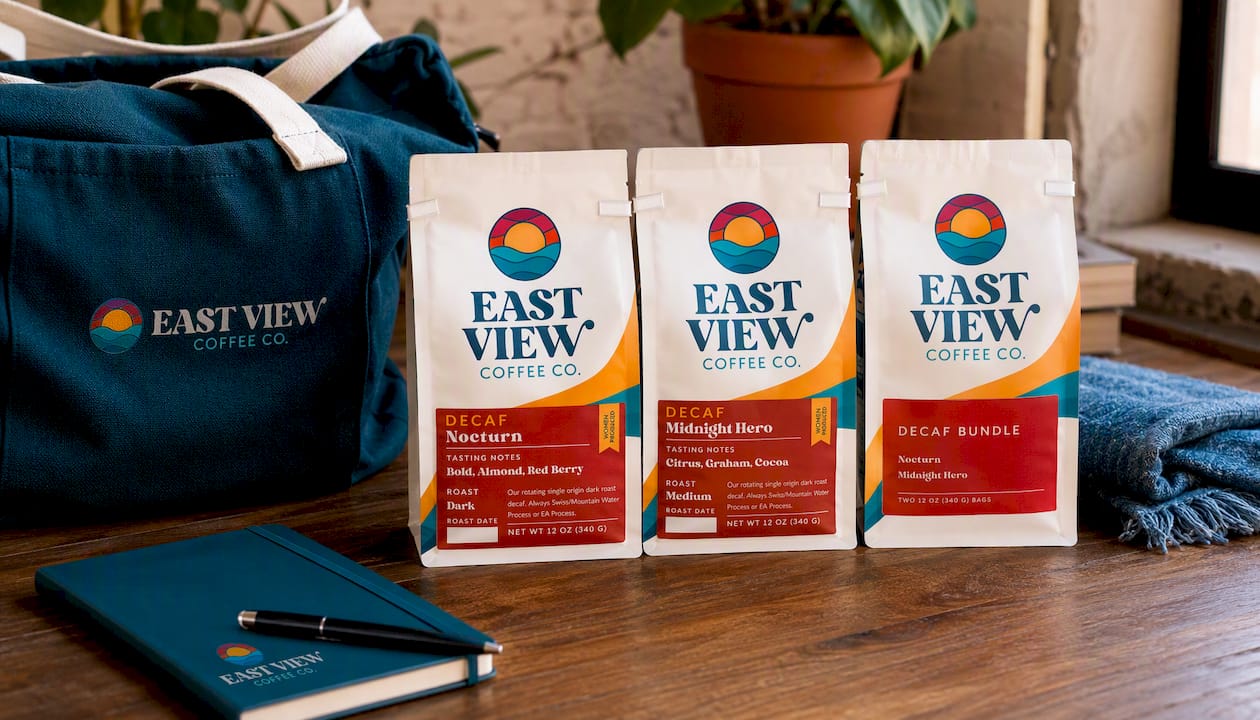
Small-batch roasting in Kenosha means the coffee ships close to its roast date, not weeks after it. The decaf bundle is the lowest-commitment entry point — two bags at a sample price, so you can compare roast levels before choosing a subscription frequency. For buyers who want rotating single-origin decaf, the Delightful Coffee Club ships freshly roasted selections on a schedule you control.
Every purchase supports the women producers at the source. That’s the pitch, and it’s backed by the sourcing model, not just the label.
Sources
- How to Choose Great Decaf Coffee: 5 Factors That Actually Matter | Swiss Water® Process
- The Best Decaf Coffee of 2026 | America’s Test Kitchen
- The Best Decaf Coffee Beans You Can Buy, According to Baristas | Simply Recipes
- The Best Decaf Coffee Subscriptions | Bon Appétit
- Will the FDA ban methylene chloride in decaf coffee? | Barista Magazine
FAQ
What decaffeination method produces the best-tasting coffee?
Swiss Water® and CO₂ consistently preserve the most flavor compounds, making them the top choices for specialty decaf. Ethyl acetate can also produce vibrant results depending on the bean and roaster.
How do I know if a decaf coffee is fresh?
Look for a printed roast date on the bag. Specialty roasters list it; most grocery brands do not. Buy whole bean and grind just before brewing for the best results.
Is decaf coffee safe to drink regularly?
The National Coffee Association notes that regulators consider approved decaffeination methods safe at current residue levels. Swiss Water® and CO₂ methods use no chemical solvents, making them the cleanest options if residue concerns you.
What’s the difference between single-origin and blend decaf?
Single-origin decaf highlights the flavor character of one farm or region; blends prioritize consistency across batches. Single-origin rewards attention to brew technique; blends are more forgiving for everyday use.
Where can I buy decaf that meets all five quality factors?
Eastviewcoffee’s decaf collection lists the decaffeination method, roast date, and origin on every product page, with whole-bean options and a bundle for first-time buyers.